
Entry Nos. 8300–8399
99 Garrison-Morton entries in this range.
1998 CE
#8350
A history of Jewish gynaecological texts in the Middle Ages.
2004 CE
#8351
Questions and answers for physicians: A medieval Arabic study manual by 'Abd al- 'Azīz al-Sulamī. Translated, edited and with an introduction by Gary Leiser and Noury Al-Khaledy.
"....a translation and edition of the medieval Arabic medical work entitled Imtiḥān al-alibbā' li-kāffat al-aṭibbā' ("The Experts' Examination for All Physicians"). It is a study guide for students of medicine prepare…
1963 CE
#8352
The Salernitan questions: An introduction to the history of Medieval and Renaissance problem literature.
1979 CE
#8353
The prose Salernitan questions, edited from a Bodleian manuscript (Auct. F.3.10). An anonymous collection dealing with science and medicine written by an Englishman c. 1200, with an Appendix of ten related collections. (Auctores Britannici Medii Aevi, 5).
1972 CE
#8354
Maurus of Salerno, twelfth-century "optimus physicus" with his commentary on the prognostics of Hippocrates, now first transcribed from manuscript and translated into English by Morris Harold Saffron. (Transactions of the American Philosophical Society, N.S. Vol. 62, pt. 1).
1993 CE
#8355
The High German Bartholomaeus: Text, with critical commentary of a mediaeval medical book based on the London manuscripts Brit. Mus. Add. 16, 892, Brit. Mus. Arundel 164, Brit. Mus. Add. 17, 527, Brit. Mus. Add. 34, 304, by Walter L. Wardale.
1738 CE
#8356
Introductio in historiam litterarium anatomes nova aeque ac antiqua, bseu, Conspectus plerorumque, si non omnium, tam veterum quam recentiorum scriptorum, qui a primis artis medicae originibus usque ad praesentia nostra tempora anatomiam operibus suis illustrarunt: Una cum indice nominum rerumque locupletissimo.
2001 CE
#8357
Anglo-Saxon remedies, charms, and prayers from British Library MS Harley 585: The ‘Lacnunga’. Edited and translated with introduction, appendices and commentary and bibliography by Edward Pettit. 2 vols.
Digital facsimile of British Library MS Harley 585 from the British Library at this link.
2012 CE
#8358
Handbook of religion and health. 2nd edition.
1993 CE
#8359
Medicine and the Reformation. Edited by Ole Peter Grell and Andrew Cunningham.
2000 CE
#8360
The four horsemen of the Apocalypse: Religion, war, famine and death in Reformation Europe.
1964 CE
#8361
Isidore of Seville: The medical writings. An English translation with an introduction and commentary by William D. Sharpe.
Translation of the medical and anatomical portions of the Etymologiae. Digital facsimile from the Internet Archive at this link.
1926 CE
#8362
Anatomies de Mondino dei Luzzi et de Guido de Vigevano. Par Ernest Wickersheimer.
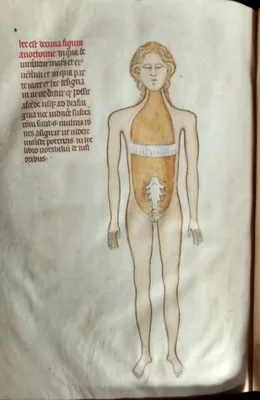
Facsimile of the 1478 edition of Mondino's Anothomia along with the text and 18 plates from Guido de Vigevano's (fl. 14th century) Anathomia. Vigevano's manuscript, completed in 1345, is MS. 569 in the Musée Co…
1903 CE
#8363
Trois traités d'anatomie arabes par Muhammad ibn Zakariyya al-Razi, 'Ali ibn al-'Abbas, et 'Ali ibn Sina. Text inédit de deux traités. Traduction de P. de Koning.
![AVICENNA, [Abū ʿAlī al-Ḥusayn ibn ʿAbd Allāh ibn Al-Hasan ibn Ali ibn Sīnā] (980 – 1037)](/media/portraits/9572)
Parallel Arabic and French texts. Digital facsimile from the Internet Archive at this link.
1971 CE
#8364
The cyrurgie of Guy de Chauliac. I Text (E.E.T.S., 265) Edited by Margaret S. Ogden.
Middle English text of Guy de Chauliac's surgery.
2010 CE
#8365
Healing and society in medieval England. A Middle English translation of the pharmaceutical writings of Gilbertus Anglicus. Edited by Faye Marie Getz.
2006 CE
#8366
Monica H. Green & Linne R. Mooney: Gilbertus Anglicus, "The Sickness of Women," IN: Sex, Aging and Death in a Medieval Medical Compendium: MS Trinity College Cambridge R.14.52, Its Language, Scribe, and Texts. Edited by M. Teresa Tavormina. Vol. 2., pp. 455-568.

"Gilbertus's Compendium medicinae was translated into Middle English in the early 15th century.[4] The gynecological and obstetrical portions of that translation were soon excerpted and circulated widely as an indepen…
2010 CE
#8367
Arab painting: Text and image in illustrated Arabic manuscripts. Edited by Anna Contadini.
1986 CE
#8368
Contraception: A history of its treatment by the Catholic theologians and canonists. Enlarged edition.

1480 CE
#8369
Practica, seu Lilium medicinae.
Includes descriptions of plague, tuberculosis, scabies, epilepsy, anthrax, and leprosy. ISTC No. ib00447000.
1763 CE
#8370
An essay towards solving a problem in the doctrine of chances
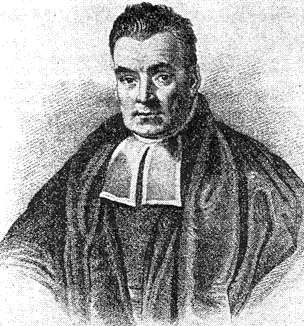
Bayes's paper enunciated Bayes's Theorem for calculating "inverse probabilities”—the basis for methods of extracting patterns from data in decision analysis, data mining, statistical learning machines, Bay…
1789 CE
#8371
An arithmetical and medical analysis of the diseases and mortality of the human species.
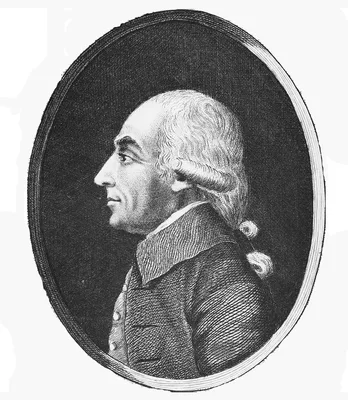
Black analyzed the London bills of mortality from 1701-1776. His work was the only study to provide a numerical account of insanity, a disease on people's minds because of George III's illness.
1801 CE
#8372
Observations on the increase and decrease of different disease, and particularly of the plague.
Heberden observed that the number of deaths from dysentery sharply decreased over the 18th century, but that deaths attributed to apoplexy increased. Digital facsimile from the Internet Archive at this link.
2006 CE
#8373
Divide and conquer: A comparative history of medical specialization.
1985 CE
#8374
Learning to heal: The development of American medical education.
1825 CE
#8375
On the nature of the function expressive of the law of human mortality, and on a new mode of determining the value of life contingencies.
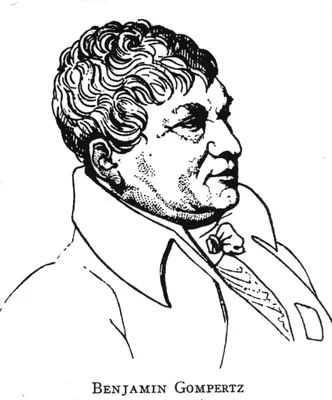
Gompertz function. "Gompertz showed that over much of the adult human lifespan, age-specific mortality rates increased in an exponential manner. Gompertz's work played an important role in shaping the emerging statist…
1860 CE
#8376
On the law of mortality and the construction of annuity tables.
Gompertz-Makeham law. Makeham proposed the age-independent Makeham term that, together with the exponentially age-dependent Gompertz term, compose the Gompertz-Makeham law of mortality--one of the most effective theor…
1892 CE
#8377
"A copy of the earliest known Weekly Bill of Mortality. British Museum. Egerton MSS. 2603, f.4." IN: An inquiry into the trustworthiness of the old bills of mortality.
On p. 452 of his paper Ogle reproduces in type "A copy of the earliest known Weekly Bill of Mortality. British Museum. Egerton MSS. 2603, f.4." Ogle states that Creighton attributed this manuscript bill of mortality t…
1883 CE–1886 CE
#8378
Handbook of geographical and historical pathology. Translated from the second German edition by Charles Creighton. Vol. 1.-Acute infective diseases. Vol. 2.-Chronic infective, toxic, parasitic, septic and constitutional diseases. Vol. 3.-Diseases of organs and parts.
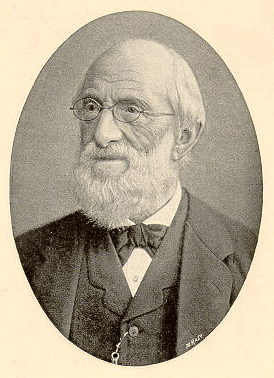
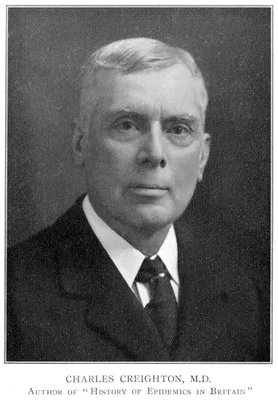
This is the best edition of Hirsch's Handbuch. Digital facsimiles of all 3 vols. from the Internet Archive at this link.
1990 CE
#8379
Proceedings of the first conference on visualization in biomedical computing. May 22-25, 1990. Norbert F. Ezquerra, Chair.
1970 CE
#8380
George A Sacher, Life table modification and life prolongation. IN: Handbook of the biology of aging, edited by Caleb E. Finch and Leonard Hayflick, pp. 582–638.
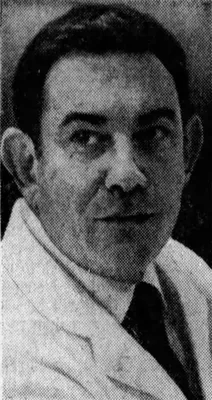
"The building of a connection between the Gompertz equation and the biology of ageing owes much to the work of biophysicist George Sacher [10] of the Argonne National Laboratory, whose introduction to ageing stemmed f…
1961 CE
#8381
The serial cultivation of human diploid cell strains.
The Hayflick limit. Hayflick demonstrated that a population of normal human fetal cells in a cell culture will divide between 40 and 60 times. The population then enters a senescence phase.
1992 CE
#8382
Medicine meets virtual reality: Discovering applications for 3-D multi-media interactive technology in the health sciences. A symposium, June 4-7, 1992, San Diego, California.
The first conference on the medical applications of virtual reality.
1854 CE
#8383
The claims of the Negro, ethnologically considered: An address before the literary societies of Western Reserve College, at commencement, July 12, 1854.
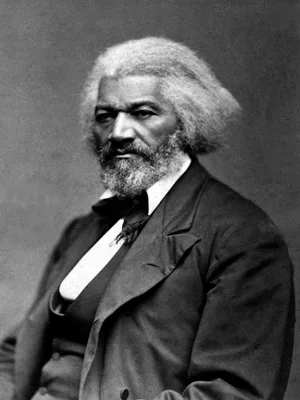
Digital facsimile from the Hathi Trust at this link.
2002 CE
#8384
A traffic of dead bodies: Anatomy and embodied social identity in nineteenth century America.
1944 CE
#8385
An American dilemma: The Negro problem and modern democracy. By Gunnar Myrdal with the assistance of Richard Sterner and Arnold Rose.
Includes considerable anthropological, biological, and health data. Digital facsimile from the Internet Archive at this link.
1974 CE
#8386
Hospital computer systems: How to use computers in medical centers for better patient care. Edited by Morris F. Collen.

This is the first comprehensive book on the subject. The authors describe in detail, with numerous references, the limited hospital computer systems in operation at the time both in the United States and in Europe. Th…
1978 CE
#8387
A tandemly repeated sequence at the termini of the extrachromosomal ribosomal RNA genes in Tetrahymena.

In 1975–1977, Blackburn, working as a postdoctoral fellow at Yale University with Gall, discovered the unusual nature of telomeres, with their simple repeated DNA sequences composing chromosome ends.
1985 CE
#8388
Identification of a specific telomere terminal transferase activity in Tetrahymena extracts.
Blackburn and Grieder discovered telomerase in the ciliate Tetrahymena. In 2009 Blackburn and Grieder shared the Nobel Prize in Physiology or Medicine with Jack W. Szostak "for the discovery of how chromosomes are pro…
2012 CE
#8389
Picturing the book of nature: Image, text, and argument in sixteenth-century human anatomy and medical botany.
1905 CE
#8390
The Hearst Medical Papyrus: Hieratic text in 17 facsimile plates in collotype with introduction and vocabulary by George A. Reisner. University of California Publications. Egyptian Archaeology, Volume 1.
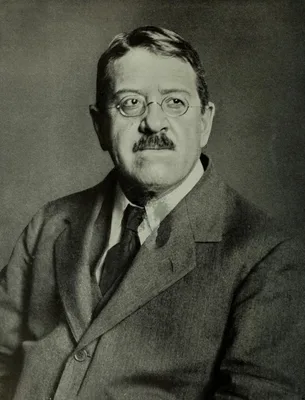
The papyrus has been dated to the 18th Dynasty of Egypt, around the time of pharaoh Tuthmosis III. The text is believed to have been composed earlier, during the Middle Kingdom, around 2000 BCE. The papyrus is so unus…
1955 CE
#8391
The Ramesseum papyri. Edited by Sir Alan Gardiner. 2 vols.
A collection of ancient Egyptian medical documents from the early 18th century BCE, found in the temple of the Ramesseum. As with most ancient Egyptian medical papyri, these documents mainly concern ailments, diseases…
1989 CE
#8392
Un traité égyptien d’ophiologie - Papyrus du Brooklyn Museum nos 47.218.48 et 85. Cairo: Institut français d'archéologie orientale.
Dating from about 450 BCE, this papyrus concerns snakes and the treatments for snake bites, and also the treatment of scorpion bites and spider bites.
1995 CE
#8393
Les papyrus médicaux de l'Egypte pharaonique. Traduction intégrale et commentaire.
French translations, with commentary of the Egyptian medical papyri.
1495 CE–1498 CE
#8395
Aristotle. [Opera omnia]. 5 vols.
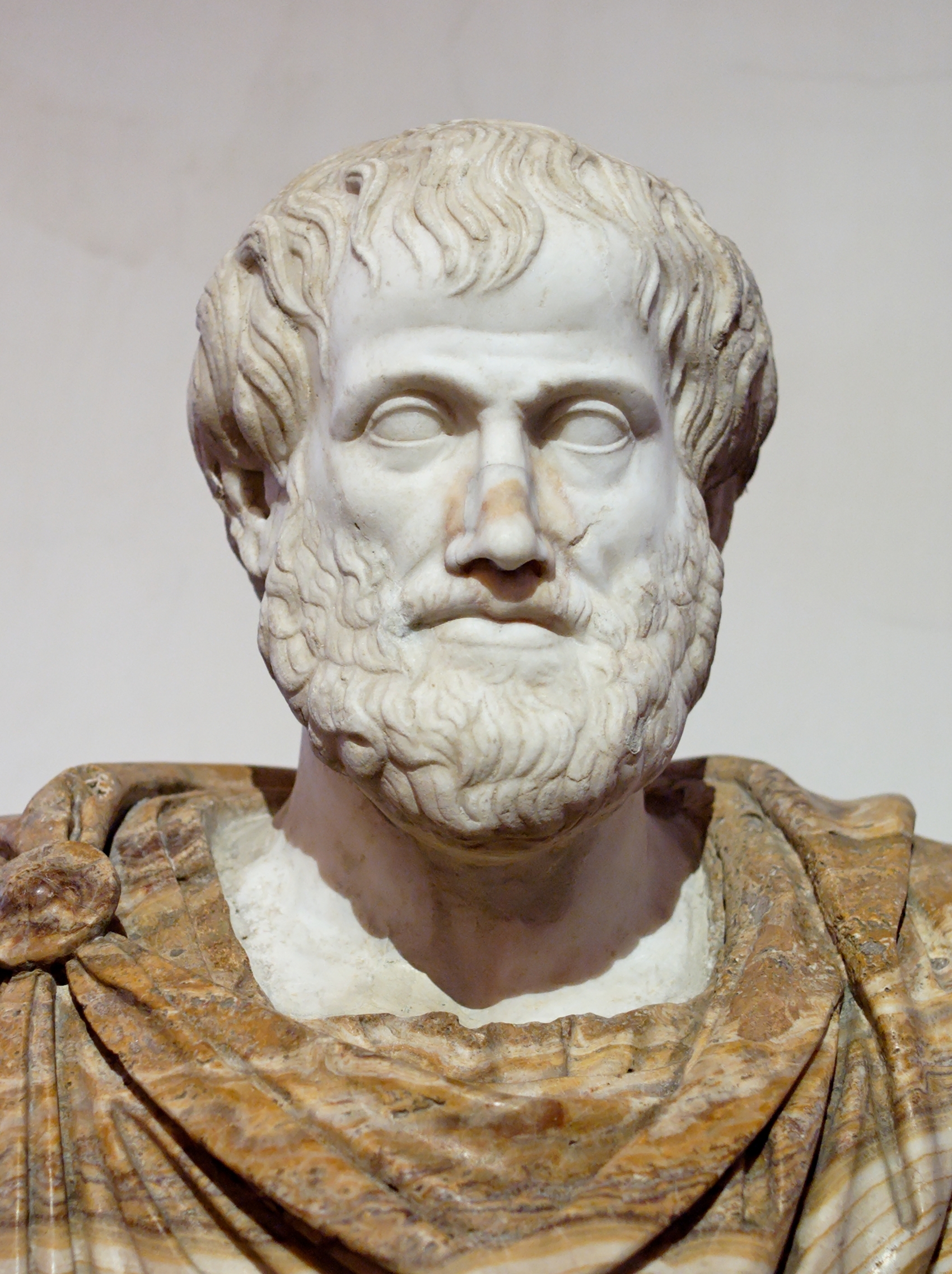
Between November 1495 and June 1498 scholar printer Aldus Manutius (Teobaldo Mannucci) of Venice issued the first edition in the original Greek of Aristotle's Opera omnia. The set appeared in five thick quarto or smal…
2001 CE
#8396
Rising life expectancy: A global history.
"Between 1800 and 2000 life expectancy at birth rose from about 30 years to a global average of 67 years, and to more than 75 years in favored countries. This dramatic change was called a health transition, characteri…
2014 CE
#8397
History of allergy. Edited by K. C. Bergmann and J. Ring. (Chemical Immunology and Allergy Vol. 100.)
Allergy through 20 centuries; most common allergic diseases: historical reflections; mechanisms of allergy: important discoveries; detection and environmental influences and allergens; progress in allergy management; …
1963 CE
#8398
Clinical aspects of immunology.
Gell-Coombs classification of hypersensitivity. Prior to development of this classification, all forms of hypersensitivity were classified as allergies, "and all were thought to be caused by an improper activation of …
1966 CE
#8399
Physico-chemical properties of human reaginic antibody. IV. Presence of a unique immunoglobulin as a carrier of reaginic activity.
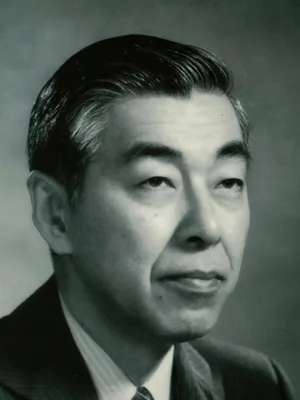
The antibody class labeled immunoglobulin E (IgE) discovered simultanteously by two independent groups: Ishizaka's team at the Children's Asthma Research Institute and Hospital in Denver, Colorado, and by Gunnar Johan…