
Entry Nos. 5800–5899
95 Garrison-Morton entries in this range.
1534 CE
#33
Bιβλίων ὶαтριкω̂ν тομος ά. Librorum medicinalium tomus primus, primi scilicet libri octo nunc primum in lucem editi.
First printed edition in the original Greek of the first half of the Tetrabiblion, issued in Venice by the heirs of Aldus Manutius. In the Tetrabiblion Aetius collected together works of other men which might have bee…
1898 CE
#5800
Geschichte der Chirurgie und ihrer Ausübung. Volkschirugie - Alterthum - Mittelalter - Renaissance. 3 vols.
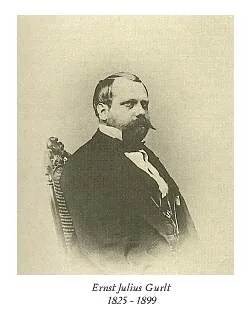
A history of surgery to the end of the 16th century. Includes translations from the literature and illustrations of instruments. Digital facsimile from the Internet Archive at this link.
1898 CE
#5801
Hundert Jahre Chirurgie.
History of 18th-century German surgery.
1902 CE
#5802
Chirurgisches aus der Völkerkunde.
1905 CE
#5803
The historical relations of medicine and surgery to the end of the sixteenth century.
1905 CE
#5804
Geschichte der Chirurgie. In. T. PUSCHMANN’S Handbuch der Geschichte der Medizin, 3, 1-306.
1906 CE
#5805
The evolution of American surgery. IN: American practice of surgery, Edited by J.D. Bryant and A.H. Buck, 2, 1-67.
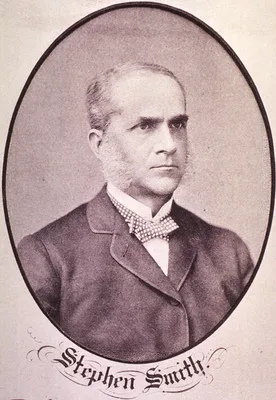
1907 CE
#5806
Surgical instruments in Greek and Roman times.
Reprinted, N.Y., 1970.
1934 CE
#5807
Histoire de la chirurgie française (1790-1920).
1938 CE
#5808
The romance of proctology, which is the story of the history and development of this much neglected branch of surgery.
1942 CE
#5811
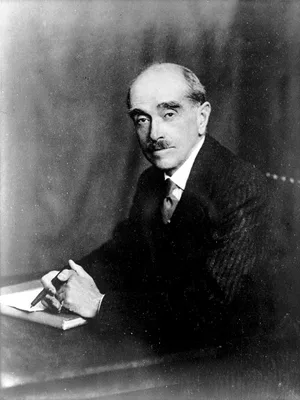
The history and evolution of surgical instruments.
1943 CE
#5812
History of surgery
1951 CE
#5813
Meister der Chirurgie und die Chirurgenschulen im Deutschen Raum.
1936 CE
#5815
Memorandum book of a tenth-century oculist for the use of modern ophthalmologists. A translation of the Tadhkirat.
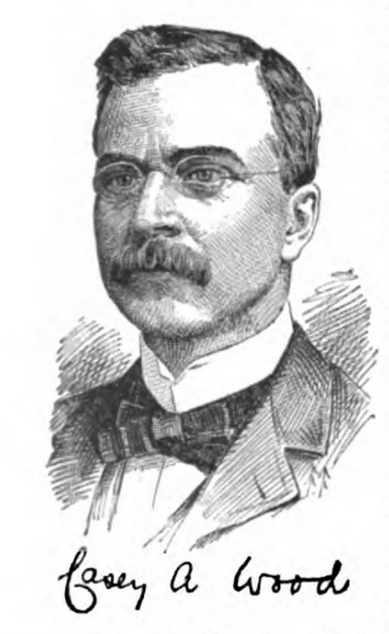
The Tadhkirat al-Kahhalin was one of the oldest and best of the medieval Arabic works on ophthalmology. It carefully described 130 diseases of the eye and became the standard work on the subject in the Middle East. Ge…
1474 CE
#5816
De oculis eorumque egritudinibus et curis.
The earliest printed book on ophthalmology. Grassi was the most celebrated ophthalmic surgeon of the Middle Ages. English translation by Casey A. Wood, 1929. ISTC No. ig00352000.
1583 CE
#5817
̓Oφθαλμоδоύλεια das ist, Augendienst.
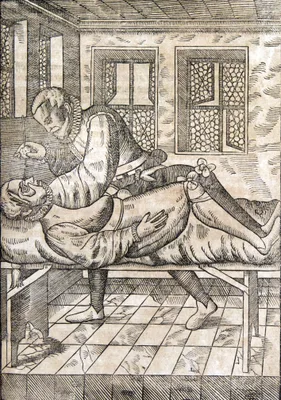
In this treatise on ophthalmic surgery Bartisch, who limited his practice to ophthalmology and hernia repair, left the first extensively illustrated account of any surgical specialty. Bartisch was a skilful operator a…
1585 CE
#5818
Traité des maladies de l’oeil.
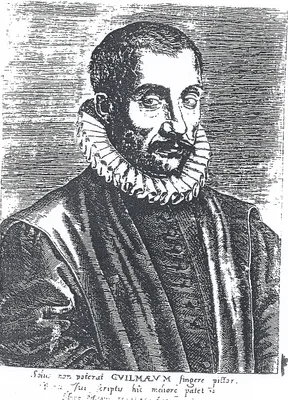
The first French work on ophthalmology. Guillemeau was a pupil and son-in-law of Ambroise Paré; his book was an epitome of the existing knowledge on the subject, chiefly from Greek and Arabian sources. English …
1586 CE
#5819
A briefe treatise touching the preseruation of the eie sight.
This is the first separate work on ophthalmology printed in England.
1622 CE
#5820
A treatise of one hundred and thirteene diseases of the eyes.
Although much of this is a translation of Guillemeau (No. 5818), the first 112 pages are Banister’s own work, “Banister’s Breviary”. He was an itinerant but honest oculist, the first to point o…
1623 CE
#5821
Uso del los antojos para todo genero de vistas, en que se enseña a conocer los grados que a cada uno le faltan de su vista, y los que tienen qualesquier antojos.
The earliest scientific work dealing with spectacles. It includes sight testing tables and points out the value of convex lenses after cataract operations. Digital facsimile from the Internet Archive at this link. Eng…
1684 CE
#5822
Two remarkable cases relating to vision.
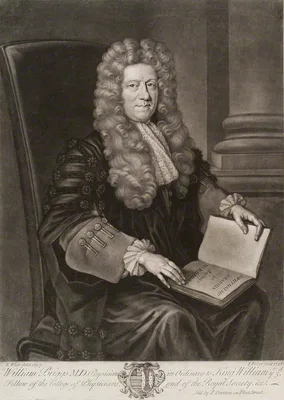
Includes the first known description of nyctalopia.
1702 CE
#5823
Propempticon inaugurale, De fistula lacrimali. Published as addendum to: LANGE, ERNST CHRISTIAN. Disputatio inauguralis medica de affectibus oculorum in genere… sub praesidio… Stahl.
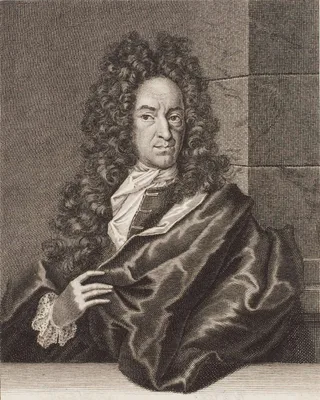
Stahl was the first to treat lacrimal fistula on the basis of correct anatomical understanding. He described his treatment in an addendum to the thesis on eye disease of his student, Lange.
1707 CE
#5824
Traité des maladies de l’oeil
Called “the Father of French ophthalmology”, Maître-Jan energetically supported Brisseau’s doctrine, ensuring its acceptance. As far back as 1692, Maître-Jan had proved that the opaque le…
1709 CE
#5825
Traité de la cataracte et du glaucoma.
Brisseau was the first to demonstrate the true nature and location of cataract. His book was reprinted in facsimile, 1921.
1713 CE
#5826
Observation singulière sur la fistule lacrimale, dans la quelle l’on verrà, que la matière des fistules lacrimales s’evacuë très souvent par les points lacrimaux; en même tems l’on apprendrà la methode de les guérir radicalement, etc.
Lacrimal duct catheterized for the first time. See No. 5823. Digital facsimile from Google Books at this link.
1722 CE
#5827
Nouveau traité des maladies des yeux.
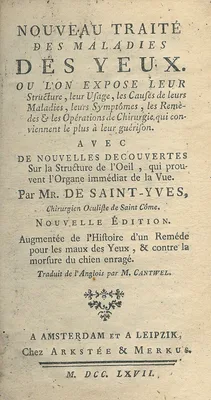
Records the removal of a cataract “en masse” from a living subject. English edition, 1741. Digital facsimile of the 1722 edition from Biu Santé at this link.
1729 CE
#5828
An account of some observations made by a young gentleman who was born blind, or lost his sight so early, that he had no remembrance of ever having seen, and was couch’d between 13 and 14 yrs. of age.
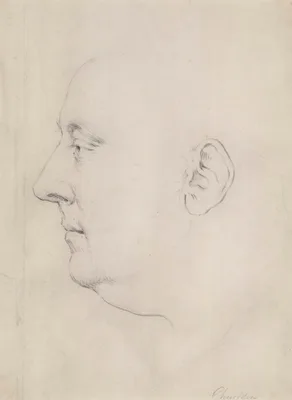
The versatile Cheselden made an artificial pupil in an eye in which the products of inflammation had closed or obscured the natural pupil. This iridotomy operation was, next to Daviel’s cataract operation, the m…
1753 CE
#5829
Sur une nouvelle méthode de guérir la cataracte par l’extraction du cristalin.
Daviel originated the modern method of treating cataract by extraction of the lens. By the time he made this official scientific report to the Academy of Surgery, Daviel had already tested his method on 206 cases, wit…
1768 CE
#5831
Of the night-blindness or nyctalopia.
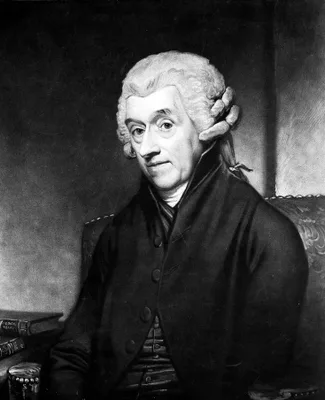
A classic description of nyctalopia. Report of a single case.
1777 CE
#5832
An account of persons who could not distinguish colours.
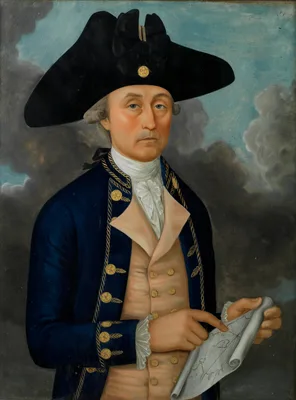
First reliable record of color blindness. Written in the form of a letter to Joseph Priestley, who communicated it to the Royal Society. Huddart was a British hydrographer, engineer and inventor.
1786 CE
#5833
Essai sur l’éducation des aveugles, ou exposé des différens moyens, vérifiés par l'expérience, pour les mettre en état de lire, à l'aide du tact, d'imprimer des livres dans lesquels ils puissent prendre des connoissances, de langues, d'histoire, de géographie, de musique, &c., d'exécuter différens travaux relatifs aux métiers, &c.
Haüy founded the first school for the blind. To him belongs the honor of being the first to emboss paper as a means of creating raised type that could be read by the blind. His Essai originated modern methods of …
1798 CE
#5834
Extraordinary facts relating to the vision of colours.
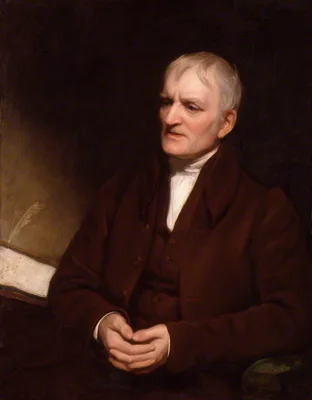
First scientific description of color-blindness, or “Daltonism”. Dalton himself suffered from red–green blindness. His paper was read to the Society in 1794.
1801 CE
#5835
Saggio di osservazioni e d’esperienze sulle principali malattie degli occhi.
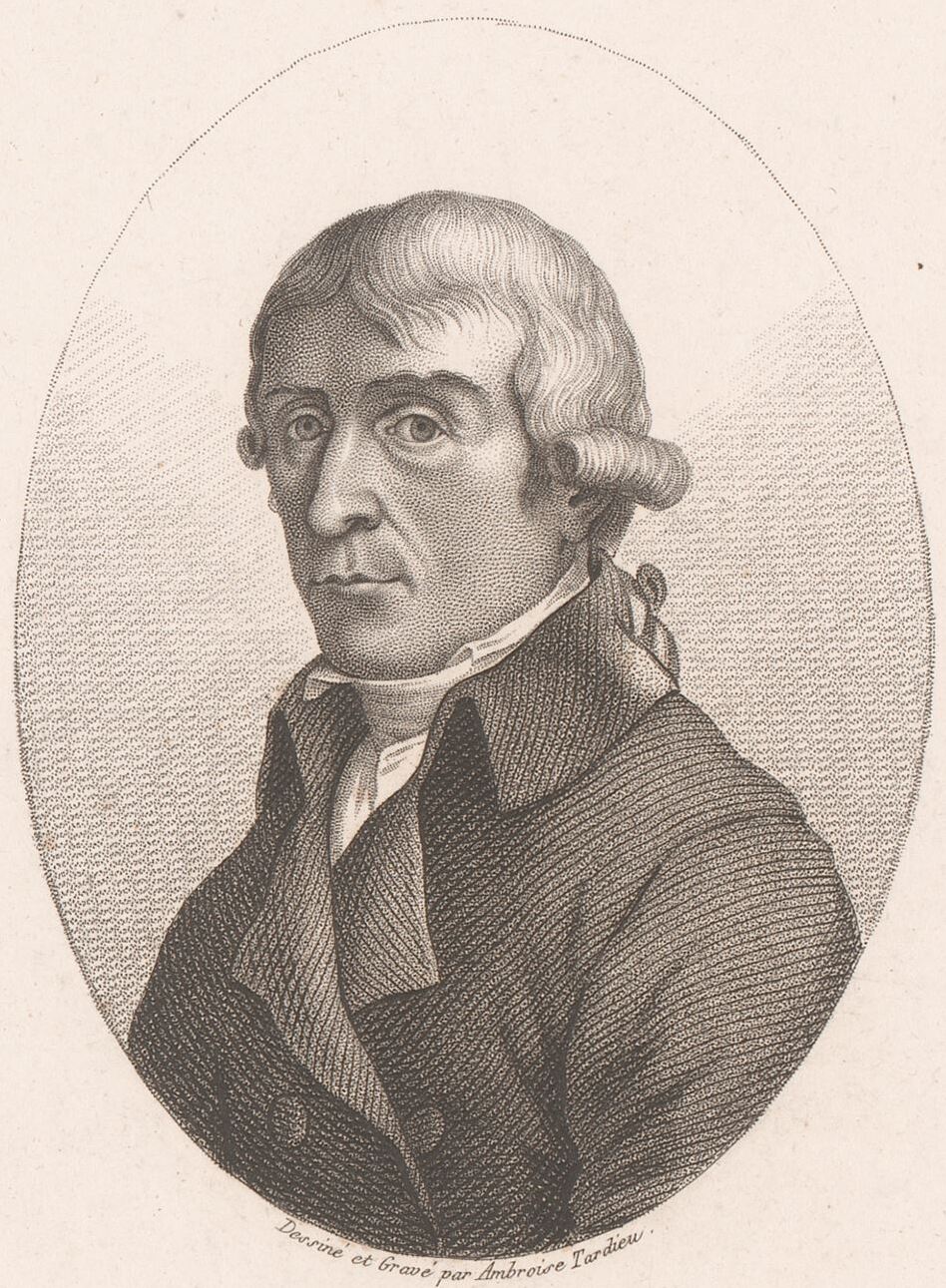
This beautifully illustrated work was the first textbook on the subject to be published in the Italian language. Its author has been called “the father of Italian ophthalmology”. English translation, Londo…
1801 CE
#5836
Ueber Nachstaar und Iritis nach Staaroperationen.
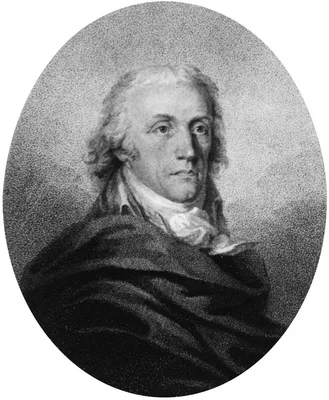
Inflammation of the iris was named iritis by Schmidt. In 1801, with Himly, he founded the first journal devoted to ophthalmology, the Ophthalmologische Bibliothek. Digital facsimile of Schmidt's 1801 work from the Int…
1800 CE–1801 CE
#5837
Mémoire sur l’ophtalmie régnante en Egypte.
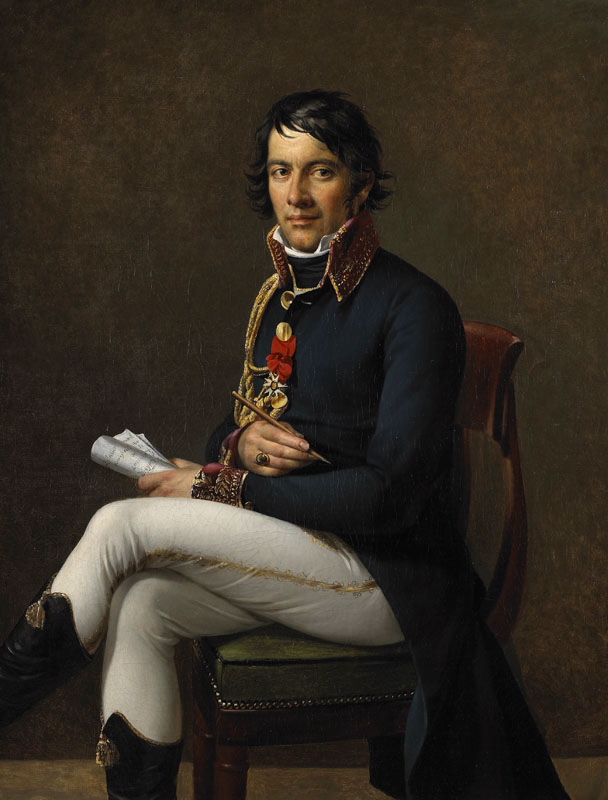
The great military surgeon Larrey served during the Napoleonic campaign in Egypt, where he was the first to observe the contagiousness of trachoma shortly after the successful invasion in 1798. The disease spread to E…
1803 CE
#5838
Ueber die Krankheiten des Thränenorgans.
Schmidt was Professor of Ophthalmology at Vienna. Digital facsimile from Google Books at this link.
1807 CE
#5839
An account of the ophthalmia which has appeared in England since the return of the British Army from Egypt.
Vetch described trachoma.
1808 CE–1818 CE
#5840
Essays on the morbid anatomy of the human eye. 2 vols.
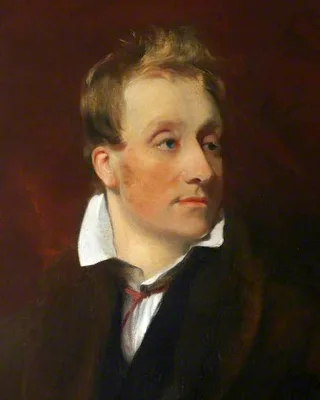
Wardrop was the first to classify the various inflammations of the eye according to the structures attacked. He was also the first to use the term “keratitis”.
1811 CE
#5841
Prüfung der Keratonyxis, einer neuen Methode den grauen Staar durch die Homhaut zu recliniren oder zu zerstückeln.
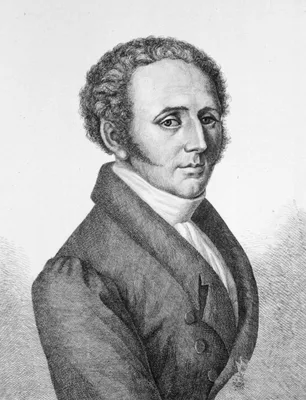
Langenbeck’s operation of iridencleisis for construction of artificial pupil. He was Professor of Anatomy and Surgery at Göttingen.
1813 CE–1817 CE
#5842
Lehre von den Augenkrankheiten. 2 vols.
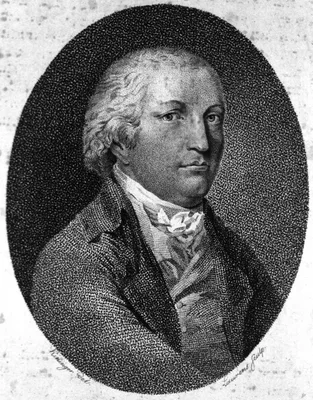
Beer is remembered for his textbook; the doctrines in it dominated practice for many years. He described the symptoms of glaucoma and noted the luminosity of the fundus in aniridia. He also presented for the first tim…
1820 CE
#5843
A synopsis of the diseases of the eye.
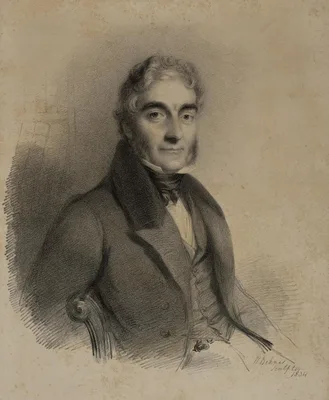
The earliest systematic treatise in English on diseases of the eye. The book became the authority in Europe and America. Travers, a pupil of Sir Astley Cooper, became surgeon to St. Thomas’s Hospital.
1823 CE
#5844
A treatise on the diseases of the eye.
First American textbook of ophthalmology by the first American who is believed to have restricted his practice to diseases of the eye. Frick studied under Georg Beer in Vienna.
1823 CE
#5845
Lectures on the operative surgery of the eye.
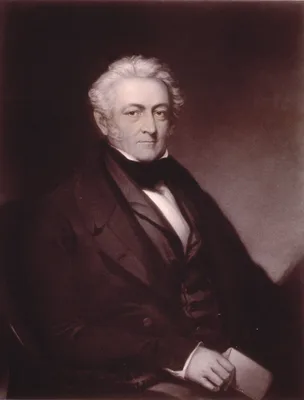
Guthrie founded the Royal Westminster Ophthalmic Hospital, London, in 1816. He was the earliest teacher of the subject in the British Isles. The above includes important work on the artificial pupil.
1827 CE
#5847
On a peculiar defect in the eye, and a mode of correcting it.
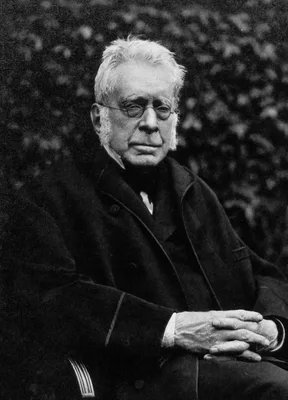
Airy, Britain's Astronomer Royal from 1835 to 1881, was the first to devise a sphereocylindrical lens for correcting astigmatism, a condition from which he himself suffered in his left eye. Airy's method is still used…
1830 CE
#5848
A practical treatise on diseases of the eye.
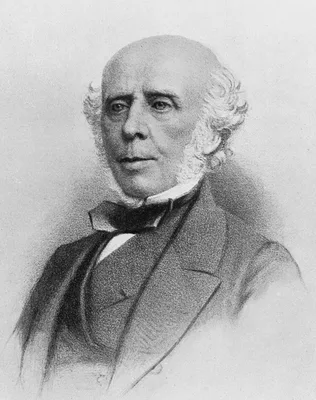
In this book Mackenzie, one of the foremost ophthalmologists of his time, included a classic description of the symptomatology of glaucoma, and was probably the first to draw attention to the increase of intra-ocular …
1833 CE
#5849
A treatise on the diseases of the eye.
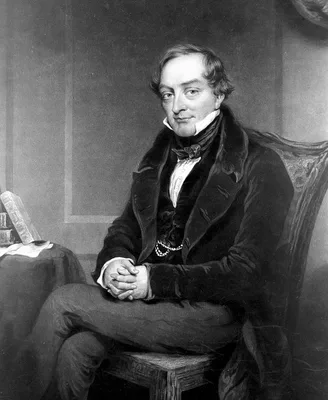
Based on lectures delivered by Lawrence at the London Ophthalmic Infirmary. He was a surgeon to St. Bartholomew’s Hospital; he succeeded Abernethy as lecturer on surgery and did much to advance the surgery of th…
1835 CE
#5850
De l’emploi de l’excision et de la cautérisation à l’aide du nitrate d’argent fondu dans l’ophthalmie blennorrhagique.
Silver nitrate for treatment of gonococcal ophthalmia. Digital facsimile from wellcomecollection.org at this link.
1837 CE
#5851
Procéde pour écrire au moyen des points.
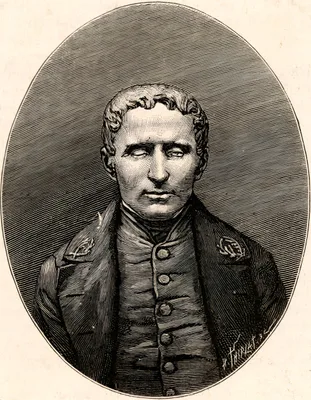
Braille, himself blind, modified the system of elevated points first suggested by Charles Barbier in 1820 for enabling the blind to read. In 1837 he added symbols for mathematics and music to his six dot system.
1838 CE–1847 CE
#5852
Klinische Darstellungen der Krankheiten und Bildungsfehler des menschlichen Auges, der Augenlider und der Thränenwerkzeuge nach eigenen Beobachtungen und Untersuchungen. 4 pts.
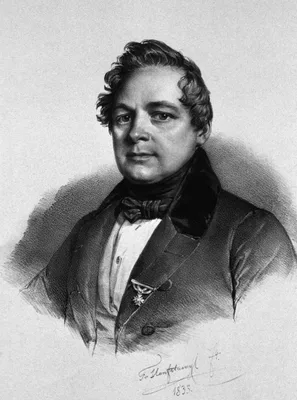
This great color-plate atlas is probably the best summary of the knowledge of diseases of the eye prior to the introduction of the ophthalmoscope.
1838 CE
#5853
Guide pratique pour l’étude et le traitement des maladies des yeux. 2 vols.
Carron du Villards taught ophthalmology in Paris; his book is one of the best of the period.