
Entry Nos. 5300–5399
98 Garrison-Morton entries in this range.
1770 CE
#1772
A chronological history of the weather and seasons and of the prevailing diseases in Dublin. With their various periods, successions, and revolutions, during the space of forty years. With a comparative view of the difference of the Irish climate and diseases, and those of England and other countries ...
Rutty kept continuous records of weather and diseases in Dublin from 1724-64. On page 75 of this work is the first clear description of relapsing fever. Digital facsimile from the Hathi Trust at this link.
1648 CE
#2263.1
Historia naturalis Brasiliae.
Piso's study of the natural history of Brazil was also a pioneer work on tropical medicine, and also the largest work from the standpoint of format published by the Elzeviers. The folio includes De medicina brasiliens…
1862 CE–1876 CE
#2453
Die menschlichen Parasiten und die von ihnen herrührenden Krankheiten. 2 vols.
Includes the first complete and accurate account of the life history and morphology of Taenia echinococcus. Leuckart proved the relationship between hydatid cysts and minute tape-worms in dogs. English translation, Ed…
1546 CE
#2528
De sympathia et antipathia rerum liber unus. De contagione et contagiosis morbis et curatione.
Though Fracastoro wrote this book more than a century before Leewenhoek invented the microscope, and could only express the theory of contagion in very general terms, this book represents a landmark in the development…
1863 CE
#5097
Report on fever (Malta).
Marston wrote the first description of Malta fever as a distinct disease. He contracted the disease while serving in the Mediterranean area and described his own case. Marston was apparently the first to describe &ldq…
1909 CE
#5300
Le kala azar infantile.
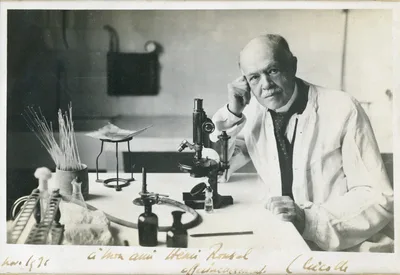
Nicolle considered infantile kala-azar to be caused by a distinct species of Leishmania; to this he gave the name L. infantum.
1914 CE
#5301
Sobre o tratemento de leishmaniose tegumentar.
Vianna introduced tartar emetic in the treatment of S. American leishmaniasis. His preliminary announcement on this form of treatment was made to the Brazilian Dermatological Society and appears in Arch. brasil. Med.,…
1942 CE
#5302
Transmission of Indian kala-azar to man by the bites of Phlebotomus argentipes, Ann. and Brun.
Successful transmission of kala-azar to man by the bite of Phlebotomus argentipes reported, showing it to be the vector of Leishmania. With H. E. Shortt and L. A. P. Anderson.
1769 CE
#5304
Essay on the natural history of Guiana, in South America. Containing a description of many curious productions in the animal and vegetable systems of that country. Together with an account of the religion, manners, and customs of several tribes of its Indian inhabitants. Interspersed with a variety of literary and medical observations. In several letters....
Bancroft was an English physician who lived for many years in South America. He noted the transmission of yaws by flies (p. 385 of his book). Digital facsimile from the Internet Archive at this link.
1905 CE
#5306
On the presence of spirochaetes in two cases of ulcerated parangi (yaws).
Castellani demonstrated in scrapings of yaws tissue a spirochaete, T. pertenue, later found to be the causal organism. He thus finally established it as a distinct organism from the syphilis spirochaete. Preliminary n…
1905 CE
#5307
On a spirochaete found in yaws papules.
Independently of Castellani (No. 5306) Wellmann discovered Treponema pertenue. "In addition to being an author, Wellman was also a doctor of tropical medicine, scientist, administrator, artist, educator, spy, and engi…
1910 CE
#5308
Experimental yaws in the monkey and rabbit.
A monkey was first infected and from it the infection was transmitted to a rabbit.
1843 CE
#5310
Natural history, pathology and treatment of the epidemic fever at present prevailing in Edinburgh and other towns.
The epidemic of relapsing fever in Edinburgh in 1843 was well described by Cormack. He was first editor of the Association Medical Journal which later became the British Medical Journal.
1843 CE
#5311
Notice of a febrile disorder which has prevailed at Edinburgh during the summer of 1843.
Relapsing fever was given its name by Craigie, in his description of the Edinburgh epidemic.
1869 CE
#5312
Fièvre à rechutes. (Thesis.)
Silliau gave a good account of the epidemic of relapsing fever at Réunion, 1865. He showed the contagious nature of the disease.
1870 CE
#5313
Observations on relapsing fever, as it occurred in Philadelphia in the winter of 1869 and 1870.
Parry called attention to infection from articles of clothing worn by victims of the epidemic of relapsing fever in Philadelphia in 1869.
1873 CE
#5314
Vorkommen feinster, eine Eigenbewegung zeigender Fäden im Blute von Recurrenskranken.
Discovery (in 1868) of Borrelia recurrentis, causative agent in relapsing fever.
1879 CE
#5315
Materialien zur Pathologie und Therapie des Rückfallstyphus.
By inoculating healthy subjects with blood of patients suffering from replapsing fever, and producing the fever in the former, Mochutkovski demonstrated not only the communicability of the disease but also the specifi…
1882 CE
#5316
Spirillum fever.
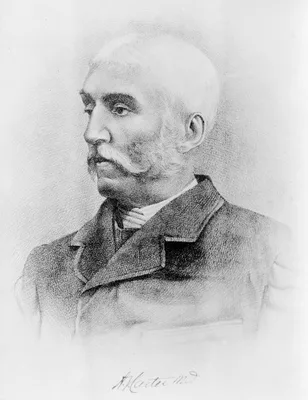
Asiatic relapsing fever; original work on this disease by Carter is remembered by the eponym “Carter’s fever” and the name Borrelia carteri. He reproduced the disease in the monkey.
1904 CE
#5317
“Tick fever”.
Ross and Milne discovered the causative agent in the African variety of relapsing (tick) fever.
1905 CE
#5318
The nature of tick fever in the eastern part of the Congo Free State.
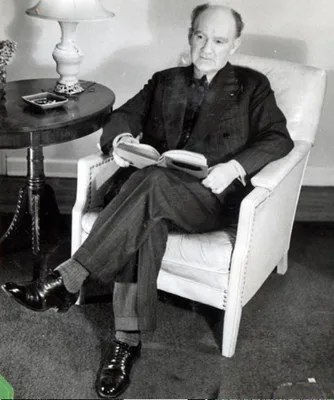
Independently of Ross and Milne, Dutton and Todd demonstrated relapsing fever in monkeys conveyed by infected ticks, Omithodorus moubata. The organism was named Sp. (now Borrelia) duttoni. Both Dutton and Todd contrac…
1906 CE
#5319
Study of a spirochete obtained from a case of relapsing fever in man, with notes on morphology, animal reactions, and attempts at cultivation.
Spirochaete causing the American variety of relapsing fever first isolated. With A. W. Pappenheimer and T. Flournoy.
1906 CE
#5320
Studies in Spirillum obermeieri and related organisms.
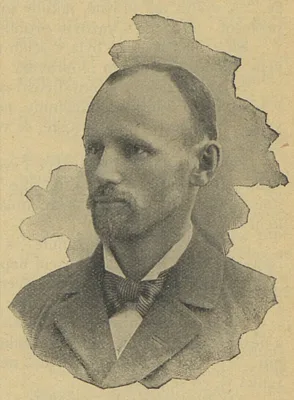
Novy and Knapp made important observations on the spirochaete isolated by Norris et al. from a case of (American) relapsing fever, proving it to be different from Borrelia obermeieri, sometimes referred to as “N…
1907 CE
#5321
The part played by Pediculus corporis in the transmission of relapsing fever.
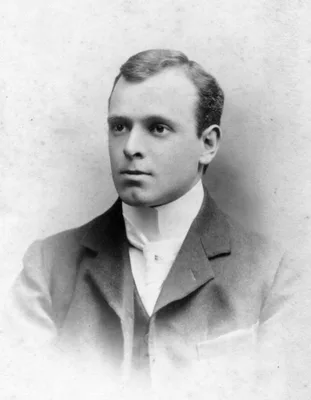
Proof that relapsing fever is conveyed by the body louse, Pediculus corporis.
1840 CE
#5322
Violent symptoms from the bite of a rat.
First report of rat-bite fever to appear in a medical journal.
1888 CE
#5323
Note on the occurrence of a minute blood-spirillum in an Indian rat.
Demonstration of Spirillum minus, later shown to be a cause of rat-bite fever. (See also No. 5327).
1912 CE
#5324
Salvarsantherapie der Rattenbisskrankheit in Japan.
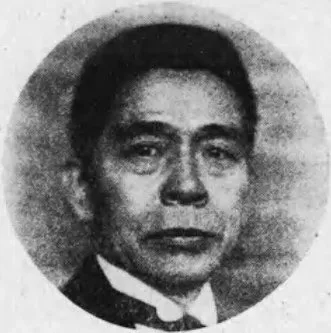
Salvarsan first used in the treatment of rat-bite fever.
1914 CE
#5325
Zurt Aetiologie und Klinik der Bisskrankheit.
Isolation of Streptothrix (Actinomyces) muris ratti from human patients bitten by rats.
1916 CE
#5326
The cause of rat-bite fever.
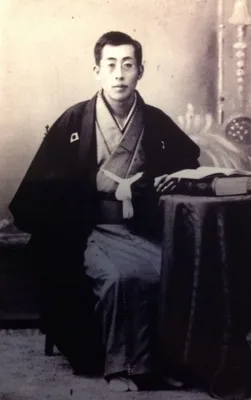
K. Futaki, I. Takaki, T. Taniguchi, and S. Osumi found a spirillum (Sp. morsus muris) in the lymphatic glands and blood stream in cases of rat-bite fever (sodoku).
1924 CE
#5327
Observations on the causal organism of rat-bite fever in man.

Robertson proved one of the causal organisms of rat-bite fever to be Sp. morsus muris. He re-named it Spirillum minus Carter, 1887, identifying it as the first spiral micro-organism to be described from a rodent.
1926 CE
#5328
Erythema arthriticum epidemicum; preliminary report.
“Haverhill fever” first reported. The writers isolated an organism, later found to be identical with Streptothrix muris ratti and Streptobacillus moniliformis. With L. E. Sutton and O. Willner.
1937 CE
#5329
Sur une nouvelle fièvre par morsure de rat.
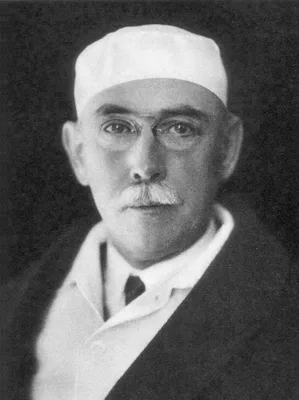
A. Lemierre, J. Reilly, A. Laporte, and M. Morin isolated Streptobacillus moniliformis from a case of rat-bite fever.
1883 CE
#5331
Fièvre bilieuse ou hépatique.
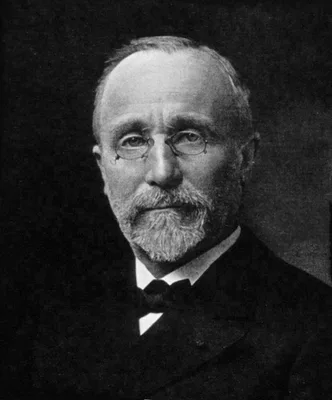
An early account of “Weil’s disease”, Leptospirosis icterohaemorrhagica.
1886 CE
#5332
Ueber eine eigenthümliche, mit Milztumor, Icterus und Nephritis einhergehende, acute Infectionskrankheit.
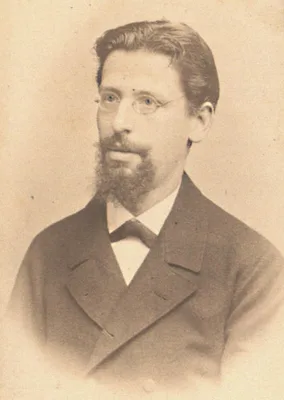
In his classic description of Leptospirosis icterohaemorrhagica Weil differentiated the disease from other types of acute jaundice. It is better known as “Weil’s disease”.
1907 CE
#5333
Note on an organism found in yellow-fever tissue.
Stimson discovered a spirochete in the organs of persons dying of (?) yellow fever. He called it Sp. interrogans, but it was almost certainly Leptospira icterohaemorrhagiae.
1916 CE
#5334
The etiology, mode of infection, and specific therapy of Weil’s disease (Spirochaetosis icterohaemorrhagica)
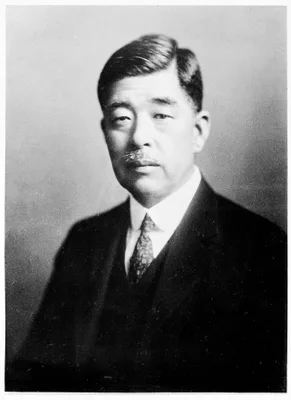
Inada, Y. Ido, R. Hoki, R. Kaneko, and H. Ito proved that Sp. (Leptospira) icterohaemorrhagiae is the causal organism in Weil’s disease (Leptospirosis). Preliminary report (in Japanese) in Tokyo Ijishinshi, 1915…
1933 CE
#5335
Het voorkomen van een afwijkend Leptospira-ras in Nederland.
Leptospira canicola first isolated (1913) from the urine of a dog.
1934 CE
#5336
De leptospiroses bij den hond, en de beteekenis der Leptospira canicola.
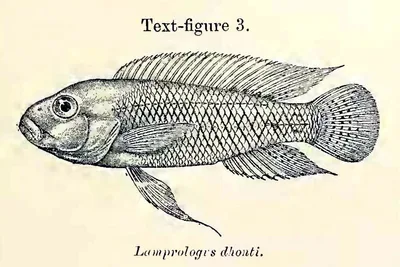
First reported cases of human infection with L. canicola. With A. Klarenbeek, W. A. P. Schüffner, and J. Voet.
1835 CE
#5337
Description of a microscopic entozoon infesting the muscles of the human body.
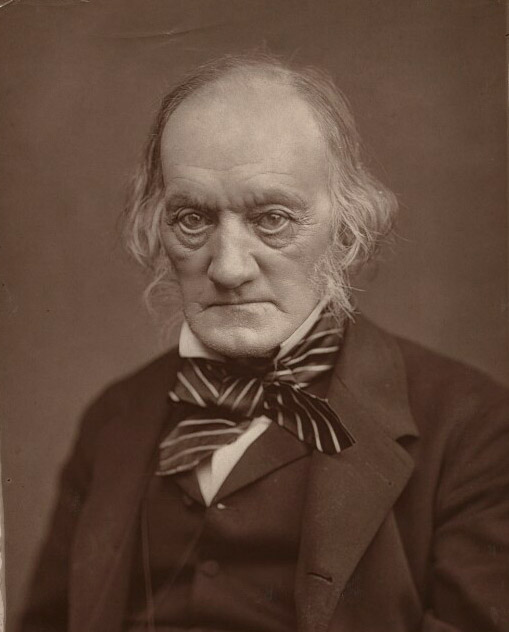
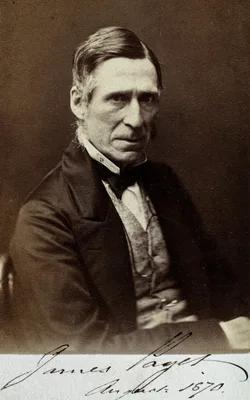
While a first-year student at St. Bartholomew’s Hospital, James Paget discovered trichina in muscle during dissection. Richard Owen, his teacher, named it Trichina spiralis and published an account, barely menti…
1846 CE
#5338
Entozoon in the superficial part of the extensor muscles of the thigh of the hog. Abstract
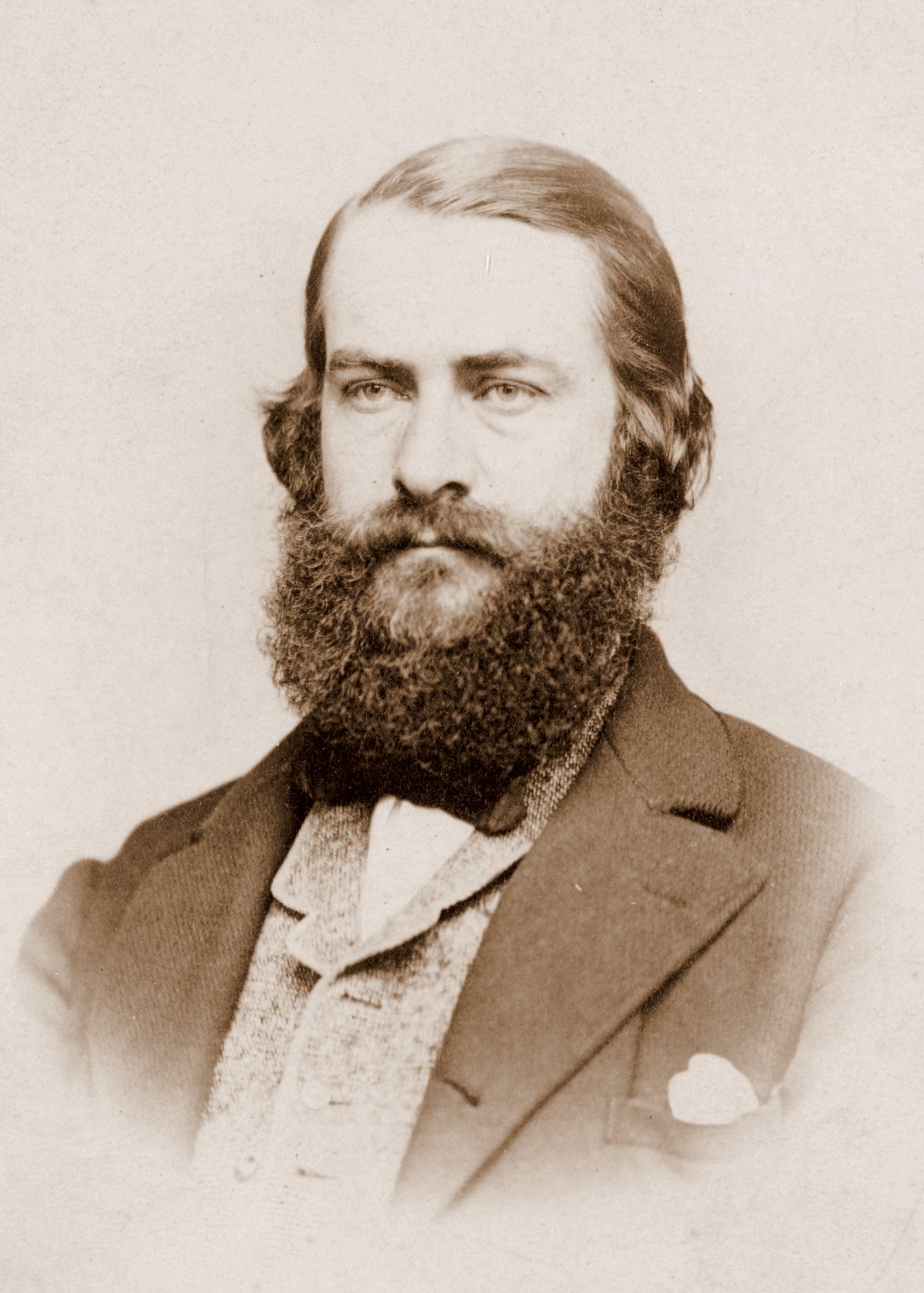
First description of trichinosis in the pig.
1852 CE
#5339
Ein Beitrag zur Helminthographia humana aus brieflichen Mittheilungen des Dr. Bilharz in Cairo, nebst Bemerkungen von C. T. v. Siebold.
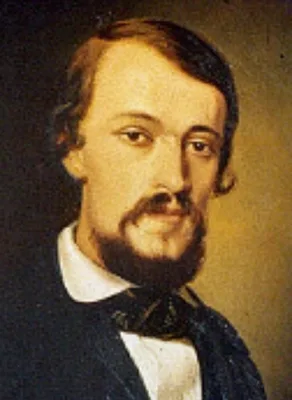
Discovery, in 1851, of Schistosoma haematobium, the parasite of bilharziasis. Bilharz was Professor of Zoology at Cairo. English translation in Rev. infect. Dis., 1984, 4, 727-32, and in Kean (No. 2268.1).
1854 CE
#5340
Ueber die Band-und Blasenwürmer.
![SIEBOLD, Carl Theodor Ernst von [Karl] (1804 – 1885)](/media/portraits/231)
Siebold succeeded in infecting dogs with Taenia echinococcus. Translation by T. H. Huxley Sydenham Society London, 1857.
1855 CE
#5341
Die in und an dem Körper des lebenden Menschen vorkommenden Parasiten. Ein Lehr- und Handbuch der Diagnose und Behandlung der thierischen und pflanzlichen Parasiten des Menschen. Zum Gebrauche für Studirende der Medicin und der Naturwissenschaften, für Lehrer der Zoologie, Botanik, Physiologie, pathologischen Anatomie und für praktische Ärzte. 2 vols.
English translation of 2nd ed. by Edwin Ray Lankester as On animal and vegetable parasites of the human body: A manual of their natural history, diagnosis, and treatment. 2 vols. London: Sydenham Society, 1857. Digita…
1860 CE
#5342
Ueber die Trichinen-Krankheit des Menschen.
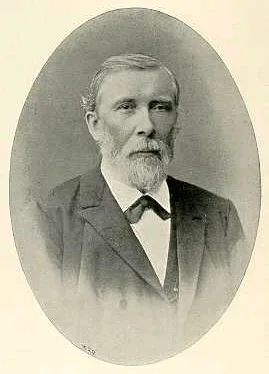
The intestinal and muscular forms of trichinosis were first noted by Zenker, who established their connection with the disease. English translation in Kean (No. 2268.1).
1860 CE
#5343
Untersuchungen über Trichina spiralis.
Leuckart provided an articulate and detailed description of Trichinella spiralis.
1877 CE
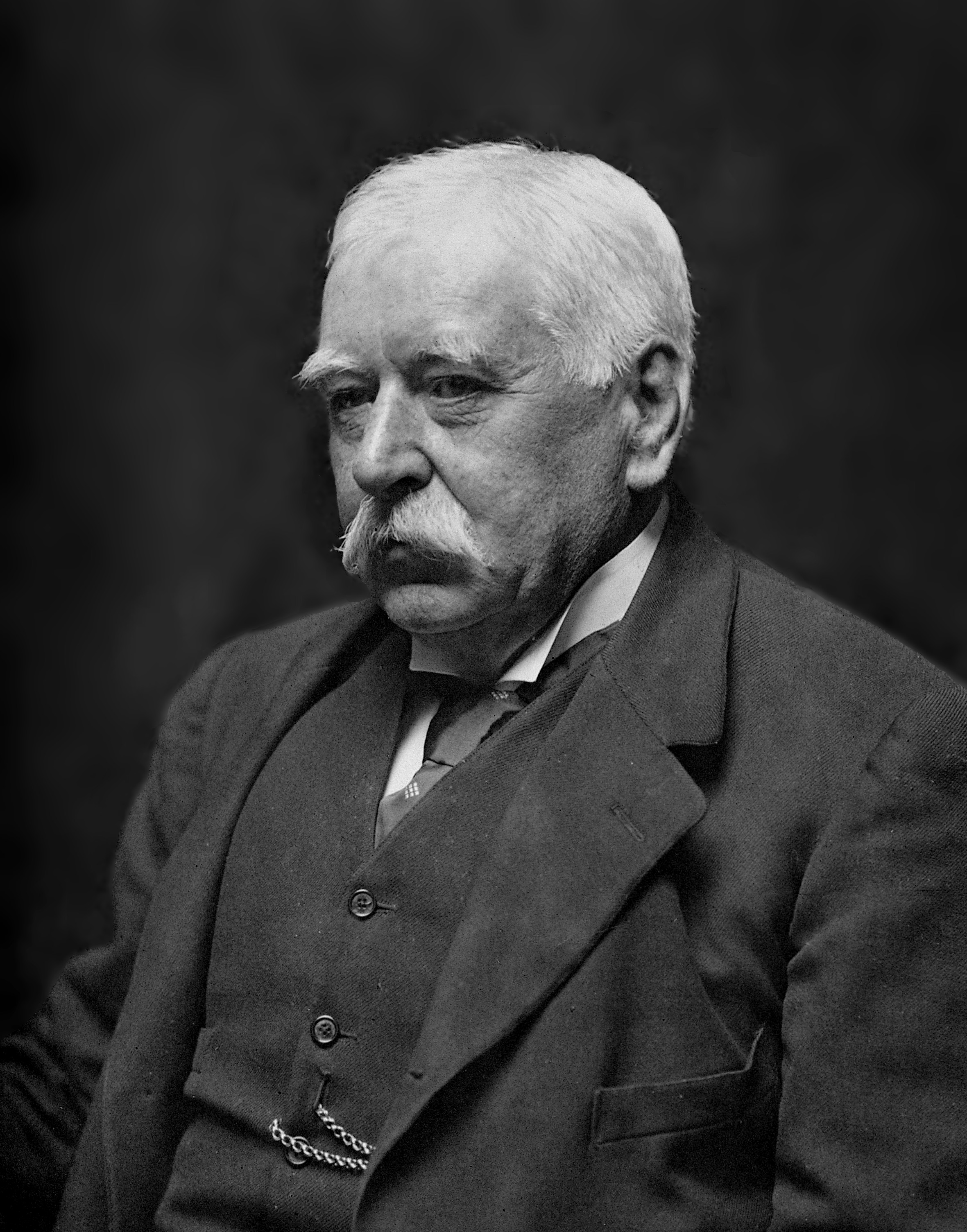
#5345
Filaria sanguinis hominis.
1878 CE
#5346
Cases of filarious disease.
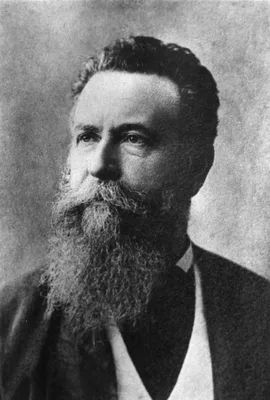
Discovery (1876) of Wuchereria bancrofti. Bancroft’s first report on this was in the form of a letter to T. S. Cobbold, who published it in Lancet, 1877, 2, 70-71.
1885 CE
#5347
Notes upon the experimental breeding of Taenia echinococcus in the dog from the echinococci of man.
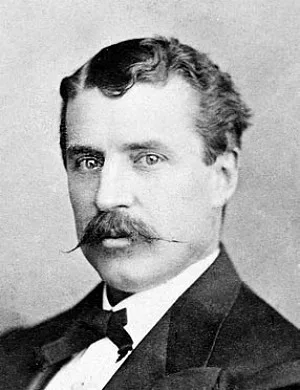
Thomas succeeded in transmitting Taenia echinococcus to the dog from human sources.
1898 CE
#5348
Studies on trichinosis, with especial reference to the increase of the eosinophilic cells in the blood and muscle, the origin of these cells and their diagnostic importance.
Brown pointed out the occurrence of eosinophilia in trichinosis. A preliminary communication upon the subject, by W. S. Thayer, was published in C. R. XII Congr. int. Med., Moscou, 1897, 126-31.
1900 CE
#5349
A recent observation on Filaria nocturna in Culex. probable mode of infection of man.
Demonstration of the complete chain of filarial infection from man-to-mosquito-to-man.