
Entry Nos. 4200–4299
98 Garrison-Morton entries in this range.
1940 CE
#4251
A practical method for the measurement of glomerular filtration rate (inulin clearance) with an evaluation of the clinical significance of this determination.
Inulin clearance test.
1941 CE
#4252
Crush injuries with impairment of renal function.
Bywaters and Beali encountered cases of the “crush syndrome” among victims of the London air-raids of 1940-41.
1941 CE
#4253
The vicious circle in chronic Bright’s disease. Experimental evidence from the hypertensive rat.
1942 CE
#4254
Natural history of Bright’s disease. Clinical, histological and experimental observations.
Ellis’s classification of nephritis.
1944 CE
#4255
The artificial kidney: Dialyser with great area.
The Kolff artificial kidney. With H. T. J. Berk and others. Kolff first published his discovery in a neutral country (Sweden) since in 1944 Holland was occupied by the Germans. See also No. 1976.
1946 CE
#4256
The treatment of acute renal failure by peritoneal irrigation.
With H. A. Frank and A. M. Seligman.
1956 CE
#4257
Successful homotransplantation of the human kidney between identical twins.
This was the first successful kidney transplant. The patient, both of whose own kidneys had been removed, was alive 11 months after the transplant. With Warren R. Guild. See No. 4256.1. In 1990 Joseph Murray shared th…
1817 CE
#4258
Cases of Fungus haematodes, with observations.
Prostatic carcinoma first reported (p. 279).
1839 CE
#4259
A case of enlargement from melanoid tumour of the prostate gland, in a child of five years of age.
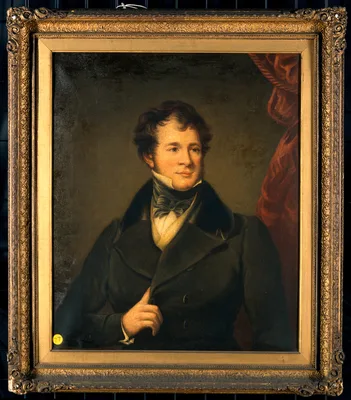
Sarcoma of the prostate was first recorded by Stafford.
1851 CE
#4260
The anatomy and diseases of the prostate gland.
Adams was the first to distinguish between hypertrophy and carcinoma of the prostate. Digital facsimile from the Internet Archive at this link.
1874 CE
#4261
Di un nuovo cauterizzatore ed incisore termo-galvanico contro le iscurie da ipertrofia prostatica.
Bottini’s galvano-cautery for relief of prostatic obstruction.
1890 CE
#4262
Ueber radicale Behandlung der auf Hypertrophie der Prostata beruhenden Ischurie.
Bottini’s Operation for hypertrophy of the prostate.
1895 CE
#4263
Six successful and successive cases of prostatectomy.
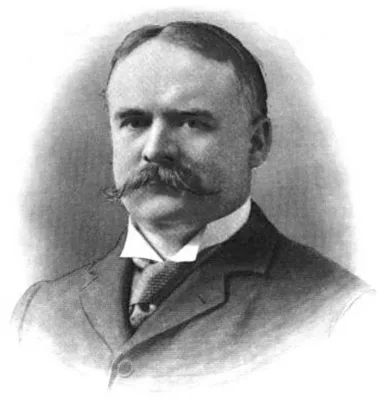
Fuller was the first to accomplish the removal of both intra-vesical and intra-urethral enlargements of the prostate by the process of suprapubic enucleation.
1901 CE
#4264
A clinical lecture on total extirpation of the prostate for radical cure of enlargement of that organ with four successful cases.
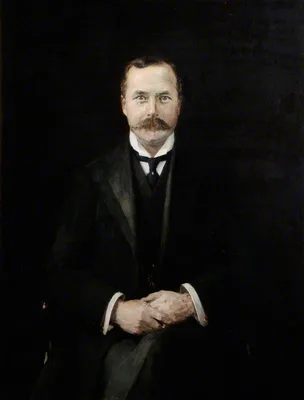
Freyer claimed priority over Fuller (No. 4263) in originating the rectovesical method of prostatectomy. Although mistaken in this claim, Freyer certainly popularized the operation. Regarding the controversy, see Brit.…
1903 CE
#4265
Conservative perineal prostatectomy.
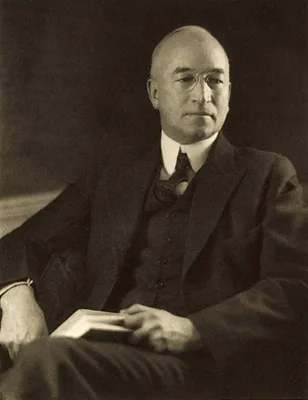
Young’s operation of perineal prostatectomy.
1905 CE
#4266
Some anatomical points connected with the performance of prostatectomy. With remarks upon the operative treatment of prostatic hypertrophy.
Watson first performed median perineal prostatectomy in 1889.
1906 CE
#4267
A method of controlling the bleeding after suprapubic prostatectomy.
The distensible bag for controlling hemorrhage after suprapubic prostatectomy was introduced by Briggs in 1905.
1910 CE
#4268
Removal of neoplasms of the urinary bladder. A new method of employing high-frequency (Oudin) current through a catheterizing cystoscope.
Beer’s method of transurethral fulguration of bladder tumours, from which arose the operation of transurethral prostatectomy.
1911 CE
#4269
Suprapubic intra-urethral enucleation of the prostate.
Squier modified the operation of total suprapubic prostatectomy.
1913 CE
#4270
A new procedure (punch operation) for small prostatic bars and contracture of the prostatic orifice.
Young’s punch prostatectomy operation.
1920 CE
#4271
Infiltration anesthesia of the internal vesical orifice for the removal of minor obstructions: presentation of a cautery punch.
Caulk’s cautery punch.
1922 CE
#4272
A new method of perineal prostatectomy which insures more perfect functional results.
Geraghty’s modification of Young’s perineal prostatectomy.
1926 CE
#4273
Minor surgery of the prostate gland; a new cystoscopic instrument employing a cutting current capable of operation in a water medium.
Stern’s resectoscope.
1931 CE
#4274
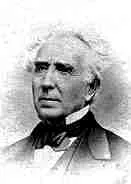
Surgical pathology of prostatic obstructions.
1934 CE–1935 CE
#4275
Suprapubic prostatectomy with closure.
Harris’s operation, first described by him on 26 March, 1927, and briefly reported in Med. J. Aust., 1927, 1, 460.
1941 CE
#4276
Studies on prostatic cancer. I. The effect of castration, of estrogen, and of androgen injection on serum phosphatases in metastatic carcinoma of the prostate.
In 1966 Huggins was awarded the Nobel Prize for Physiology or Medicine for discovering in 1941 "for his discoveries concerning hormonal treatment of prostatic cancer."
1945 CE
#4277
Retropubic prostatectomy. A new extravesical technique.
Retropubic prostatectomy.
1535 CE
#4278
De lapide renum curiosum opusculum nuperrime in lucem aeditum. Eiusdem De lapide vesicae per incisionem extrahendo sequitur aureus libellus.
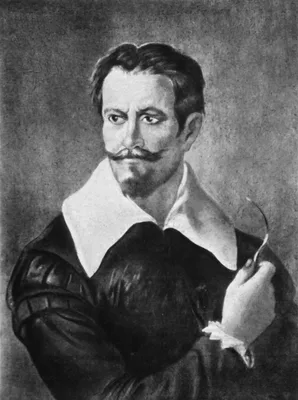
Marianus Sanctus Barolitanus popularized the operation of lithotomy introduced by the father of Giovanni Vigo of Rapallo. This method passed on to Giovanni di Romani and from him to Marianus. It became known as the &l…
1710 CE
#4280
A compleat treatise of the stone and gravel.
Groenveldt was a famous lithotomist, using the suprapubic technique. He also enjoyed a rather unsavoury reputation as a quack for his determination to promote the use of cantharides. He changed his name to Greenfield …
1720 CE
#4281
Lithotomia Douglassiana; or, an account of a new method of making the high operation, in order to extract the stone out of the bladder.
Douglas accused Cheselden of plagiarizing his work, although the latter had acknowledged his indebtedness to Douglas. It is possible that this was the reason which prompted Cheselden to drop the high operation in favo…
1723 CE
#4282
A treatise on the high operation for the stone.
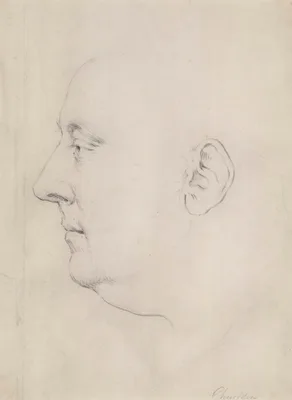
Cheselden was surgeon to St. Thomas’s Hospital and an outstanding figure in British surgery in the first half of the 18th century. The above work describes his method of performing suprapubic lithotomy, a method…
1730 CE
#4283
Parallèle des différentes manières de tirer la pierre hors de la vessie.
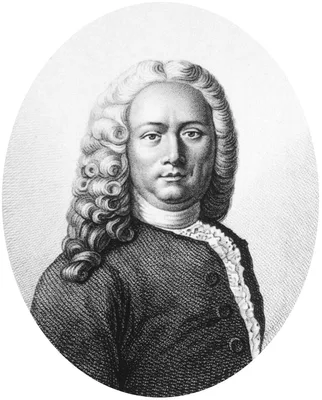
Le Dran, famous French lithotomist, improved the operation of lithotomy. Murphy credits him for originating the lateral lithotomy usually attributed to Cheselden, whose method he discusses. Le Dran was one of Haller&r…
1748 CE
#4284
A remarkable case of a person cut for the stone in the new way, commonly called the lateral, by William Cheselden, Surgeon to Her late Majesty; communicated to Martin Folkes, Pr. R. S
Cheselden’s lateral lithotomy first described in this brief paper by Alexander Reid. Digital facsimile from royalsocietypublishing.org at this link.
1779 CE
#4285
Nouvelle méthode d'extraire la pierre de la vessie urinaire par-dessus le pubis, qu'on nomme vulgairement le haut-appareil dans l'un & l'autre sexe, sans le secours d'aucun fluide retenu ni forcé dans la vessie: suivie de l'analyse des expériences de l'Academie Royale de Chirurgie de Paris, sur l'extraction de la pierre de la vessie urinaire de l'homme, par-dessous le pubis.
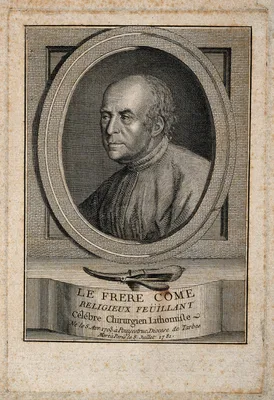
Frère Côme devised several new instruments for use in suprapubic lithotomy. This operation, placed in retirement when Cheselden adopted the lateral approach, was once more brought to the fore by Frè…
1784 CE
#4286
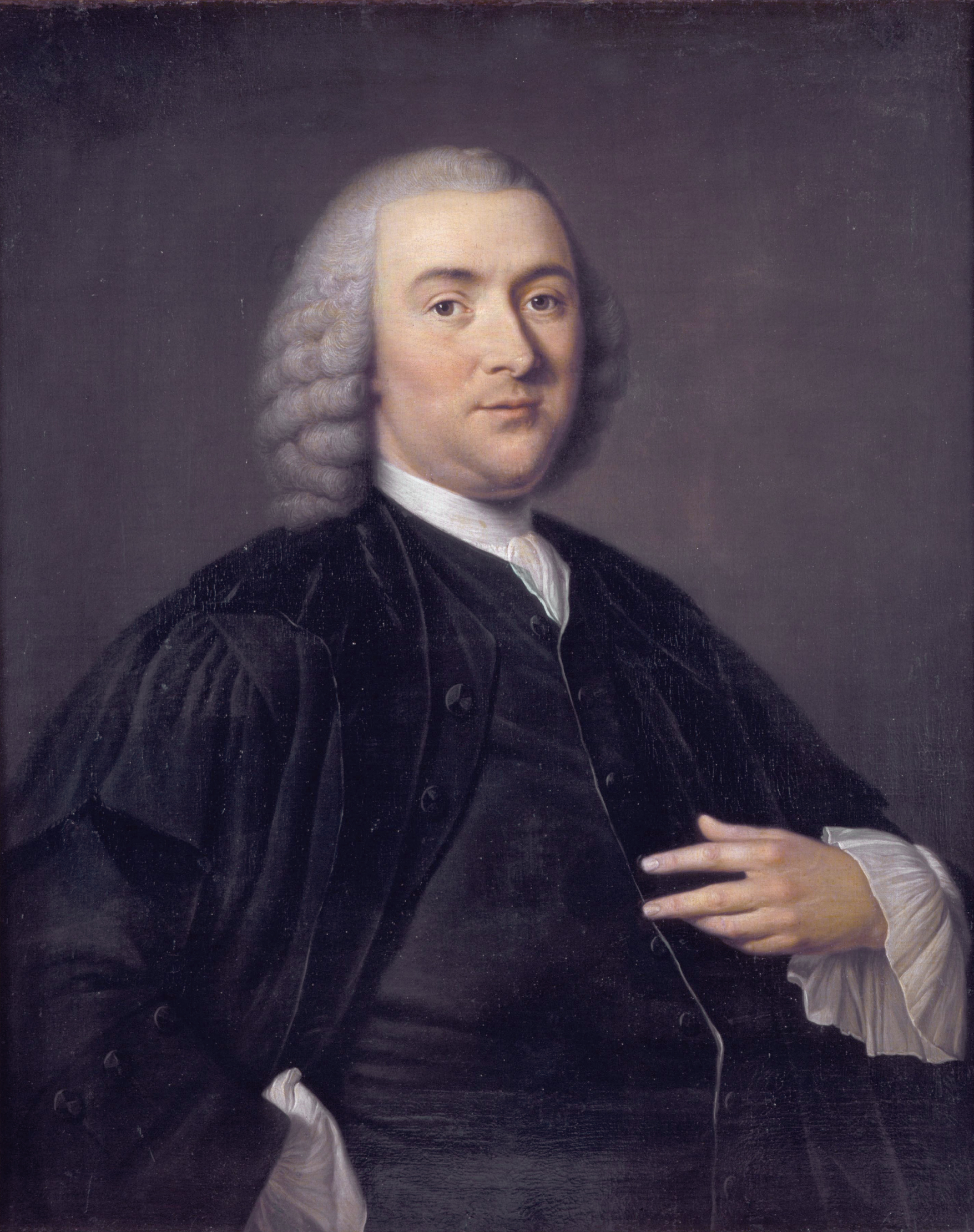
Observationes circa mutationes quas subeunt calculi in vesica.
1797 CE
#4287
On gouty and urinary concretions.
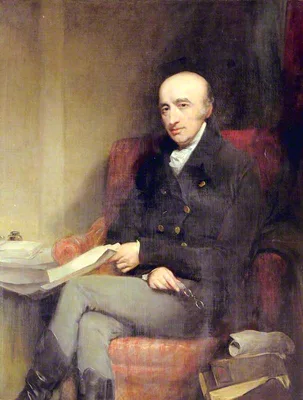
Wollaston showed that, in addition to stones consisting of uric acid, renal calculi might also consist of calcium phosphate, magnesium, ammonium phosphate, and calcium oxalate, or a mixture of these.
1819 CE
#4288
A history of the high operation for the stone, by incision above the pubis; with observations on the advantages attending it; and an account of the various methods of lithotomy, from the earliest periods to the present time.
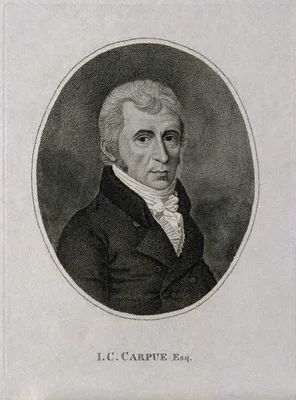
Carpue popularized suprapubic lithotomy, a procedure not often previously carried out.
1826 CE
#4289
Sur la lithotritie ou broiement de la pierre dans la vessie.
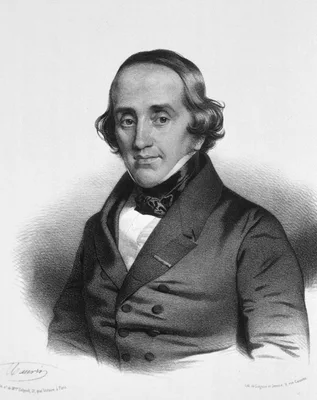
Civiale invented a lithotriteur for crushing stones inside the bladder and was responsible for putting the operation of lithotrity upon a sound basis. His claim to have introduced the operation was opposed by Leroy d&…
1833 CE
#4290
Lithotripsie. Mémoires sur la lithotripsie par percussion.
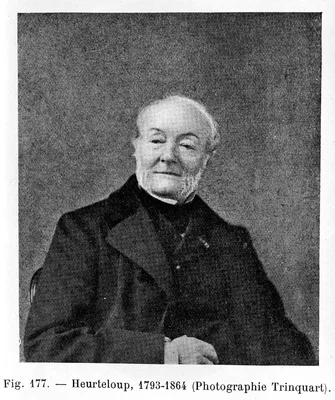
Heurteloup designed the best lithotrite of the time. He was one of several claimants to the distinction of having introduced modern lithotrity. See Lancet, 1831-32, 2, 567-70.
1860 CE
#4291
Die Harnconcretionen.
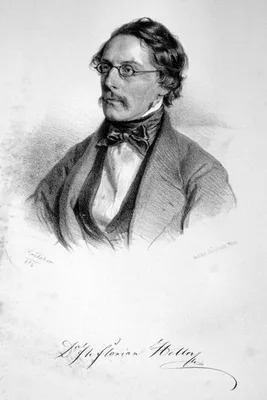
Heller introduced several urine tests and wrote (above) an important work on urinary calculi.
1878 CE
#4292
Lithotrity by a single operation.
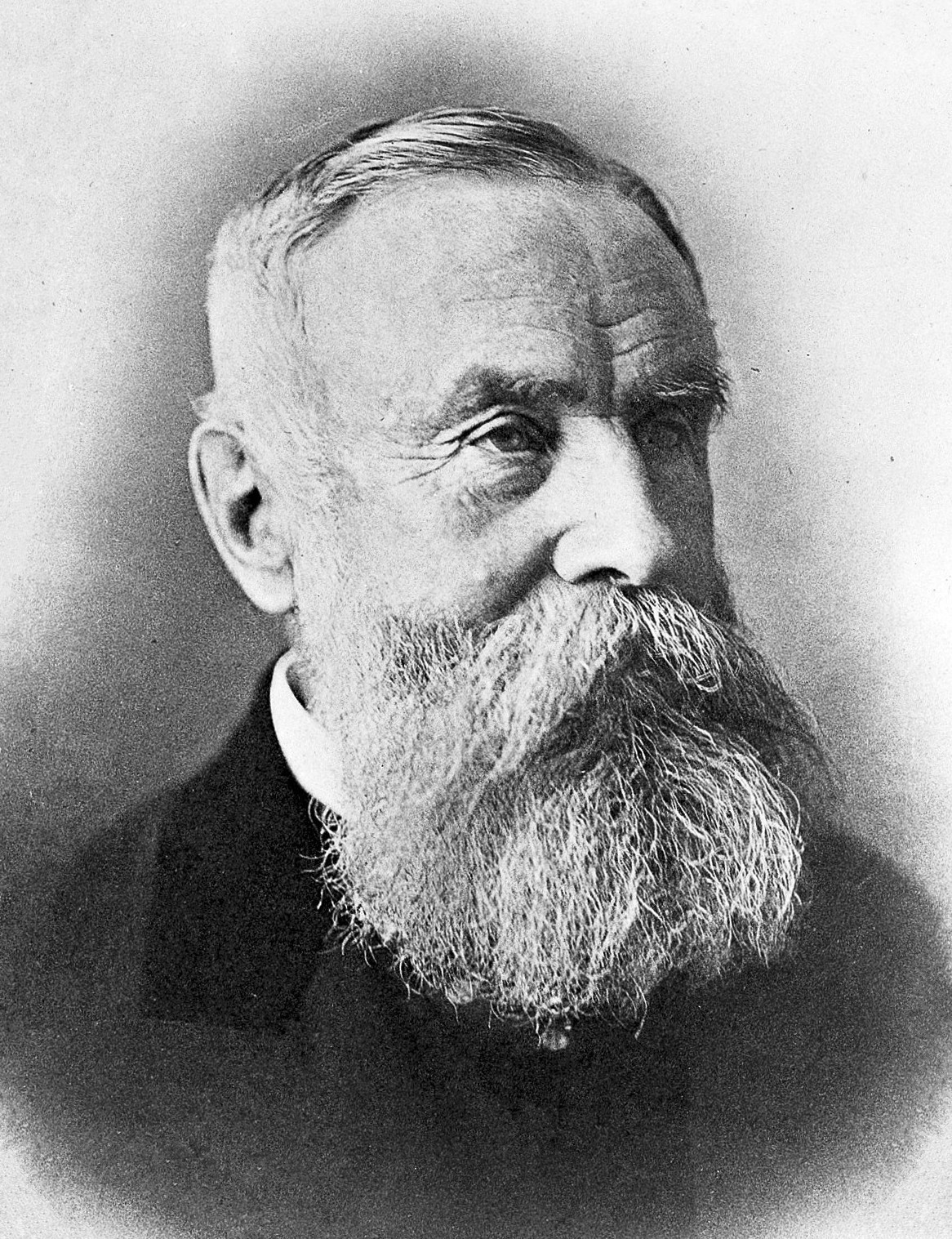
Introduction of litholapaxy at one sitting.
1896 CE
#4293
Roentgen rays. Photography of renal calculus.
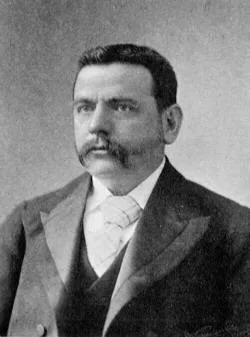
First radiogram of renal calculus.
1901 CE
#4294
Uretercatheterezés és radiographia.
Géza von Illyés showed that ureteral calculi could be accurately demonstrated by x rays with the help of an indwelling opaque catheter. German translation in Dtsch. Z. Chir., 1901, 62, 132-40.
1901 CE
#4295
Scratch-marks on the wax-tipped catheter as a means of determining the presence of stone in the kidney and in the ureter.
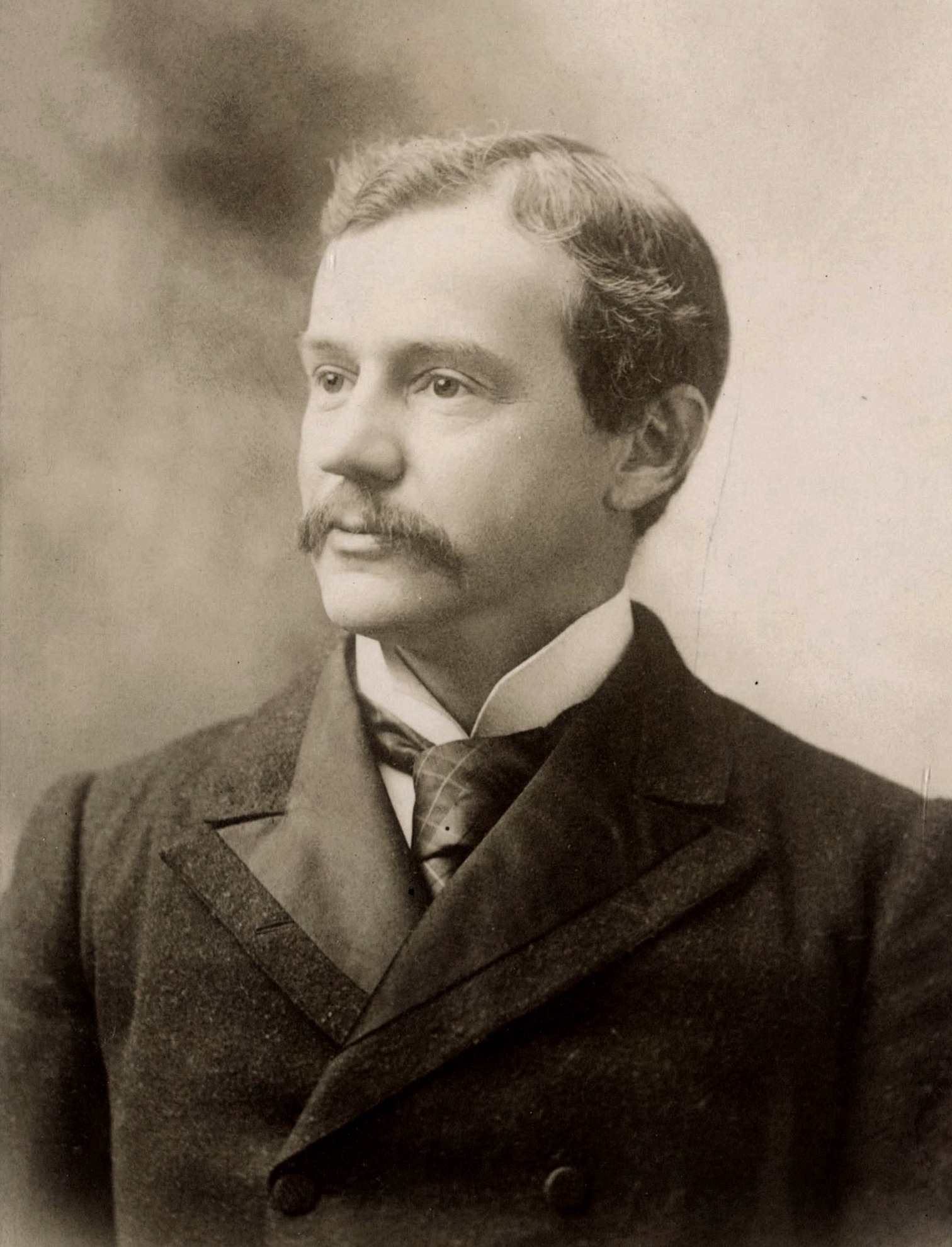
Kelly tipped the catheter with wax, so that it registered clearly any pressure from sharp stones. This became an important means of diagnosing calculi.
1927 CE–1928 CE
#4296
The experimental production of stone-in-the-bladder.
McCarrison’s experiments showed that urinary calculi could follow a diet probably deficient in vitamin A.
1933 CE
#4297
History of urology. Prepared under the auspices of the American Urological Association. Editorial Committee: Edgar G. Ballenger, William A. FRontz, Homer G. Hamer, and Bransford Lewis. 2 vols
Every aspect of the subject is covered exhaustively by the various contributors to this collective work; valuable bibliographies are included.
1693 CE
#4298
Lettre écrite à Monsieur le Chevalier Guillaume de Waidegrave …contenant une dissertation physique sur la continuité de plusieurs os, à l’occasion d’une fabrique surprenante d’un tronc de squelette humain, où les vertebres, les côtes, l’os sacrum, & les os des iles, qui naturellement sont distincts & separés, ne font qu’un seul os continu & inseparable.
First description of ankylosing spondylitis. The British Museum copy of the title page of this work has been mutilated, apparently deliberately, in two places; the author’s surname may originally have appeared a…
1700 CE
#4299
Opera posthuma.
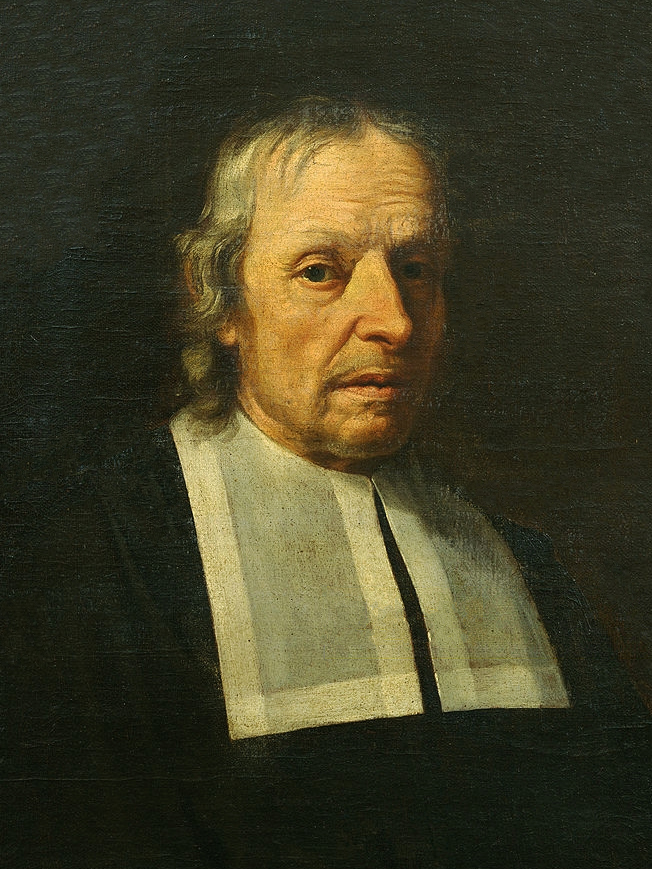
Page 68: first description of leontiasis ossea.