
1610–1619
29 entries with publication dates in this decade.
1610 CE
#5568
Thesaurus chirurgiae.
An anthology of 16th century writers; a good summary of the surgical knowledge of that period.
1611 CE
#6964
Anatomicae institutiones corporis humani.
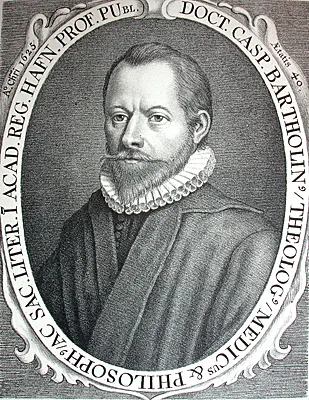
The elder Caspar Bartholin was the first to describe the workings of the olfactory nerve, and introduced the terms nervus olfactorius and nervus vagus. This was a standard textbook for many years, undergoing numerous …
1611 CE
#380
De anatome corporis humani libri vii.
Guidi, professor of philosophy and medicine at Pisa, discovered the Vidian nerve, the Vidian canal, and the Vidian artery. The above was edited by his nephew.
1612 CE
#572.2
Commentaria in artem medicinalem Galeni.
First printed mention of the air thermometer, an instrument that played a vital part in the creation of static medicine. This device was similar to Galileo’s open-air thermoscope, of which Santorio may have know…
1612 CE
#9518
Traité des hermaphrodits parties génitales accouchements des femmes et traitement qui est requis pour les relever en santé, et bien élever leurs enfants. Où sont expliquez la figure des laboureur, et verger du genre humain, signes de pucelage, defloration, conception, et la belle industrie dont use nature en la promotion du concept et plante prolifique.
In 1601 the Rouen physician Duval was summoned by the Rouen parlement to examine Marie Le Marcis, who at the age of 20 had discovered she was a man and had determined to marry, only to be imprisoned for lesbianism and…
1613 CE
#11237
Catoptri micorcosmici absolutam admirandae partium hominis creaturarum divinarum praestantissimi fabricae eximio artificio sculptam structuram revidendam exhibentis. Engraved by Stephan Michelspacher.
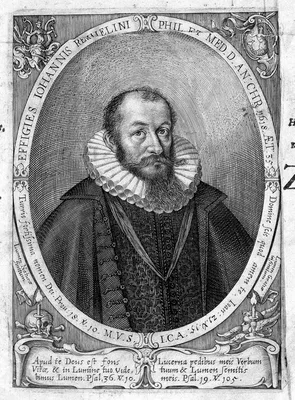
Three large anatomical plates with numerous flaps, in the tradition of fugitive sheets, but larger and more complex. The first edition was issued anonymously without identifying the place of publication or the publish…
1613 CE
#9512
Hortus Eystettensis: Sive, diligens et accurata omnium plantarum, florum, stirpium, ex variis orbis terrae partibus, singulari studio collectarum, quae in celeberrimis viridariis arcem episcopalem ibidem cingentibus, hoc tempore conspiciuntur, delineatio et aduiuum repræsentatio.
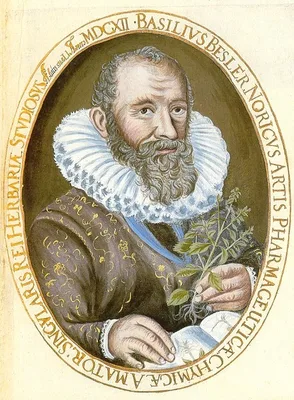
"The Hortus Eystettensis is itself a ‘paper museum’, a pictorial record of the flowers grown in the greatest German garden of its time, that of the Prince Bishop of Eichstätt, Johann Conrad von Gemmin…
1613 CE
#13260
Opticorum libri sex philosophis juxta ac mathematicis utiles.
This work, beautifully printed by the Plantin-Moretus Press, includes an engraved title page and illustrations heading each chapter by Peter Paul Rubens. It contains one of the first studies of binocular vision. Digit…
1614 CE
#573
Ars…de statica medicina aphorismorum sectionibus septem comprehensa.
This collection of aphorisms is the work by which Santorio’s ideas became widely known. Santorio used a beam balance to measure metabolism. See also nos. 572.1 & 572.2. For description of his experiments, see No…
1614 CE
#2119
Consilium Peripneumoniacum: Das ist Ein getrewer Rath in der beschwerlichen Berg und Lungensucht : darinnen verfasset, was die fürnemsten Ursachen seyn beyderley Beschwerungen, beydes der gifftigen, die vom Bergwerck entstehet: so wol der gemeinen, die von Flüssen herrühret: Zuvor aber, wie der Mensch mit der kleinen Welt, und mit dem Bergwerck artlich zu vergleichen, und wie beyde Suchten zu vertreiben seyn.
Martin Pansa, a pupil of Georg Agricola, wrote the most important work on occupational disease before Ramazzini. He described the symptoms of the lung diseases of miners and smelters. Digital facsimile from the Bayeri…
1614 CE
#13381
Discours sur les hermaphrodits. Où il est demonstré contre l'opinion commune, qui'il n'y a point de vrays hermaphrodits.
Digital facsimile from BnF Gallica at this link.
1614 CE
#1759
Medicus-politicus: Sive de officiis medico-politicis tractatus.
One of the first “modern” works on medical ethics. Digital facsimile from Google Books at this link.
1614 CE
#3789
Observationum in hominis affectibus plerisque, corpori & animo, functionum laesione, dolore, aliave molestia & vitio incommodantibus, libri tres.
First known report of a case of death from hypertrophy of the thymus, in an infant, is reported on p. 172; it is reproduced on p. 239 of J. Ruhräh’s Pediatrics of the past, New York, 1925. Platter first des…
1614 CE
#13382
Responce au discours fait par le sieur Riolan docteur en medecine & professeur en chirurgie & pharmacie à Paris, contre l'Histoire de l'hermaphrodit de Rouen.
Digital facsimile from BnF Gallica at this link.
1615 CE
#13123
Microcosmographia [In Greek]. A description of the body of man. Together with the controversies thereto belonging. Collected and translated out of all the best authors of anatomy especially out of Gasper Bauhinus and Andreas Laurentius.
As the title page states, the work was a compilation. There were reissues in 1616 and 1618. The second edition (1631) included an engraved title page with the first illustration of a brain dissection. That edition als…
1615 CE
#2142
New Feldt Arztny Buch von Kranckheiten und Schäden, so in Kriegen den Wundartzten gemeinlich fürfallen.
Fabry’s book includes an early description of a field drug chest for army use. He was one of the most eminent surgeons of his time, although not prepared to adopt all the teachings of Paré. He had conside…
1615 CE
#1820.1
Quatro libros. De la naturaleza, y virtudes de las plantas, y animales que estan receuidos en el vso de medicina en la Nueua España, y la methodo, y correccion, y preparacion, que para administrallas se requiere con lo que el doctor Francisco Hernandez escriuio en lengua latina. : Muy vtil para todo genero de gente q[ue] viue en esta[n]cias y pueblos, de no ay medicos, ni botica.Traduzido, y aumentados muchos simples, y compuestos y otros muchos secretos curatiuos, por Fr. Francisco Ximenes....
Physician to Philip II of Spain, Hernández travelled to Mexico by order of the king, and studied the natural history of the region from 1570-77. His Works, which filled six folio volumes of text and 10 volumes …
1616 CE
#534.52
De monstrorum caussis, natura, & differentiis libri duo.
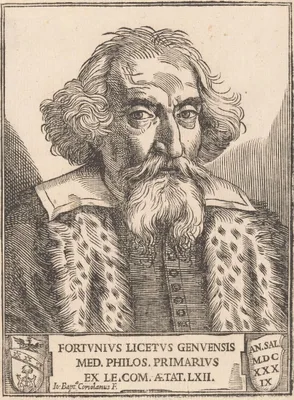
One of the earliest classifications of deformities, Liceti’s work was still under review in works on malformation in the 19th century. Includes both real and imaginary cases. The first of many illustrated editio…
1616 CE
#2092
De novo et populari apud Pictones dolore colico bilioso diatriba.
Citois described Poitou colic, “colica Pictonum”, in great detail, and it was this description which was responsible for the condition being recognized as a definite syndrome. Partial English translation i…
1616 CE
#2143
De rara medicatione vulnerum.
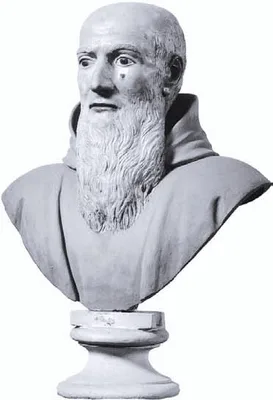
Like Paré, Magati believed that gunshot wounds were not in themselves poisonous. He suggested a bandage moistened with plain water in place of the various salves then in vogue.
1616 CE
#3344
L’arte de’ cenni, con quale, formandosi favella visible, si tratta della muta eloquenza.
Bonifacio’s sign-language for the deaf and dumb employed almost every part of the body for conversational purposes.
1616 CE–1622 CE
#11498
Fasciculus rariorum et aspectu dignorum varii generis quae collegit et suis impensis aeri ad vivum incidi curavit atque evulgavit.
Besler was the first to illustrate a natural history Wunderkammer in Germany. The engraved frontispiece of this work, which Besler published himself, depicts Besler exhibiting the contents to a visitor. The first edit…
1617 CE
#13780
Discursus medico-philosophicus de casu adolescentis [...]: qui [...] mortuus in quodam paternarum aedium loco, adjacente ipsi serpente, à domesticis inventus fuit.
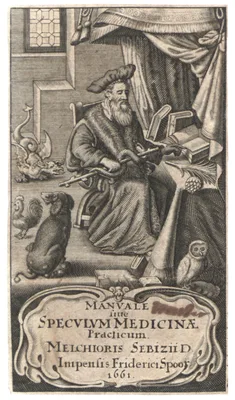
An extensively illustrated work on death from snake bites and species of venomous snakes instigated by the sudden death from snake bite of an otherwise healthy young man. Digital facsimile from the Hathi Trust at this…
1617 CE
#2144
The surgions mate, or, A treatise discouering faithfully and plainely the due contents of the surgions chest: the uses of the instruments, the vertues and operations of the medicines, the cures of the most frequent diseases at sea: namely, wounds, apostumes, vlcers, fistulaes, fractures, dislocations, with the true maner of amputation, the cure of the scuruie, the fluxes of the belly, of the collica and illiaca passio, tenasmus, and exitus ani, the callenture; with a briefe explanation of sal, sulphur, and mercury; with certaine characters, and tearmes of arte.
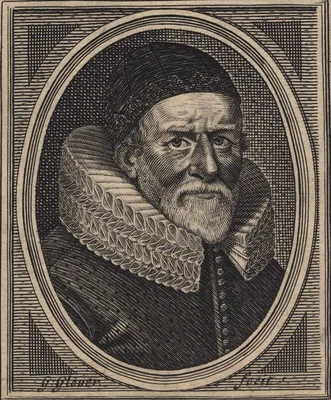
Woodall was the surgeon-general to the East India Company. This was the first textbook for naval surgeons. Woodall, surgeon to Saint Bartholomew's Hospital, was an early advocate of limes and lemons as a preventive me…
1618 CE
#10502
De affectionibus cordis. Libri tres. Qvorum primus agit de naturalibus. Secundus & tertius De preternaturalibus, de paliptatione nempe, & syncope, atque earum curatione.
The first book on heart disease. "The recognition of heart disease as of clinical interest and importance was exceedingly slow. In 1618, one hundred and eleven years after the pioneer publication of Benivieni of the p…
1618 CE
#1821
Pharmacopoeia Londinensis.
The first London pharmacopeia, issued by the (Royal) College of Physicians. The first edition was published on May 7, but contained many typographical errors; a corrected edition appeared on December 7, 1618. In the f…
1618 CE
#9052
Sitio, naturaleza y propriedades de la Ciudad de Mexico: Aguas y vientos a que esta suieta, y tiempos del año. Necessidad de su conocimiento para el exercicio de la medicina, su incertidumbre y difficultad sin el de la astrologia assi para la curacion como para los prognosticos.
The first book printed in Mexico with engraved illustrations.
1619 CE
#1480
Oculus, hoc est: fundamentum opticum.
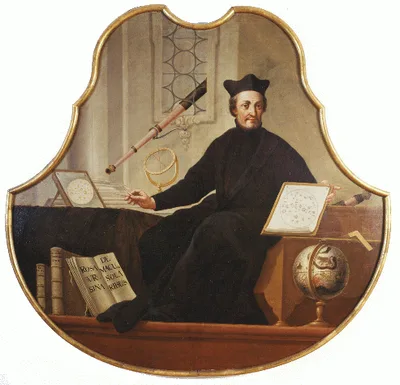
Scheiner, a Jesuit astronomer, was a pioneer in physiological optics. He demonstrated how images fall on the human retina, noting the change in curvature of the lens during accommodation, and devised the pin-hole test…
1619 CE
#13147
Procestria anatomica in quibus propununtur plaeraque ad generalem anatomia & partium contemplationeum attinent; quaedam etiam infimi ventris mebra explicantur; et Andreae Laurenti Historia anatomica multis locis castigatur & corrigitur.
Digital facsimile from Google Books at this link. Peter Lauremberg edited the first edition of this anonymous Byzantine text on anatomy. The first illustrated edition was edited by Johann Stephan Bernard and Daniel Wi…