
1480–1489
27 entries with publication dates in this decade.
1480 CE
#12984
Chirurgia. Edited by Matthaeus Moretus.
Argelata was a pupil of Guy de Chauliac, and professor at Bologna. He is supposed to have done the autopsy on Pope Alexander V, who died suddenly on May 3, 1410. ISTC No. ia00951000. Digital facsimile from U.S. Nation…
1480 CE
#8369
Practica, seu Lilium medicinae.
Includes descriptions of plague, tuberculosis, scabies, epilepsy, anthrax, and leprosy. ISTC No. ib00447000.
1481 CE
#6929
De natura hominis. Add: De victu; De tuenda valetudine; Medicinae lex; Iusiurandum; Demonstratio quod artes sunt; Invectiva in obtrectatores medicinae. Tr: Andreas Brentius.
The writings of Hippocrates began to appear in print in the 1480s, and only a few of the works attributed to Hippocrates were printed in the 15th century. Though the date of this edition is unstated within the book it…
1481 CE
#13888
De regimine sanitatis ad Soldanum Babyloniae.
Maimonides wrote De regimine sanitatis in the 1190s in Arabic as a private manual of health for the Sultan Al-Afdal, son of Saladin. It was translated from Arabic into Hebrew in 1244 by Moses ibn Tibbon, and the Hebre…
1481 CE
#6313
Liber ad Almansorem sive Tractatus medicinae I-X. Add: Liber divisionum; De aegritudinibus juncturarum; De aegritudinibus puerorum; De secretis sive aphorismi; De sectionibus et ventosis; Synonyma. Galenus: De medicinis experimentatis. Mesue (the elder): Aphorismi. Hippocrates: secreta; Capsula eburnea; De humana natura; De aere et aqua et regionibus; De pharmaciis. Tabula de herbis medicis.
![GALEN, [Κλαύδιος Γαληνός; Galen of Pergamon] (129 – 216)](/media/portraits/21)
![HIPPOCRATES, [Ἱπποκράτης; Hippocrates of Kos] (-460 – -370)](/media/portraits/50)
Rhazes was the first to devote an entire treatise to diseases of children. Although he lived so many years before the advent of printing, he was still regarded as an authority in the 15th century and his works were am…
1482 CE
#48
Colliget.
The Kitab-al-Kullyat or Colliget (Book of Universals) was an “attempt to found a system of medicine upon the neo-Platonic modification of Aristotle’s philosophy” (Garrison, p. 132). Averroës was…
1482 CE
#9142
Consilia ad diversas aegritudines. Ed: Laurentius de Gozadinis.
ISTC No. ih00538000.
1482 CE
#8979
Physiologus de naturis duodecim animalium.
The earliest printed edition (circa 1482) of the Physiologus, a Christological natural historical work that originated in Late Antiquity, and remained popular through the Middle Ages. This edition, which was very wide…
1483 CE
#6813
De divisione librorum Galeni IN: Articella seu Opus artis medicinae.
Considering the central importance of Galen's writings in medicine from the time he wrote well through the sixteenth and even the seventeenth century, and the need for physicians to make sense of such a large number o…
1483 CE
#1783
De historia et causis plantarum. Edited, with a table, by Georgius Merula. Translated by Theodorus Gaza.
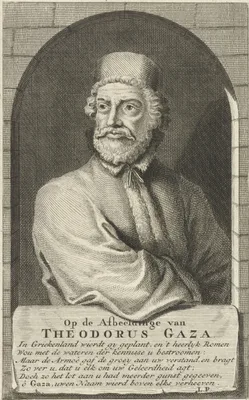
A student of Aristotle, Theophrastus succeeded his teacher as head of the Athens Peripatetic School. This is the earliest work of scientific botany, a subject not addressed in any of the writings of Aristotle. Theophr…
1483 CE
#8341
De urinis by Gilles de Corbeil, with commentary by Gentilis de Fulgineo. Edited by Venantius Mutius.
Gilles de Corbeil's medical poem De urinis was based on writings by Theophilus Protospatharius by way of the Articella. Poems such as this were intended as mnemonic aids for students, and they tended to be widely used…
1483 CE
#1757.9
Jusiurandum IN: Nicholaus Perottus, De generibus metrorum.
One of the two earliest dated printings of the Hippocratic Oath. Digital facsimile from the Dombibliothek Freising at this link. ISTC No. ip00298000. It is possible that an undated edition attributed to 1481 (Entry No…
1483 CE
#9399
Opera. With the commentary of Averroes. Edited by Nicoletus Vernia. 8 parts.
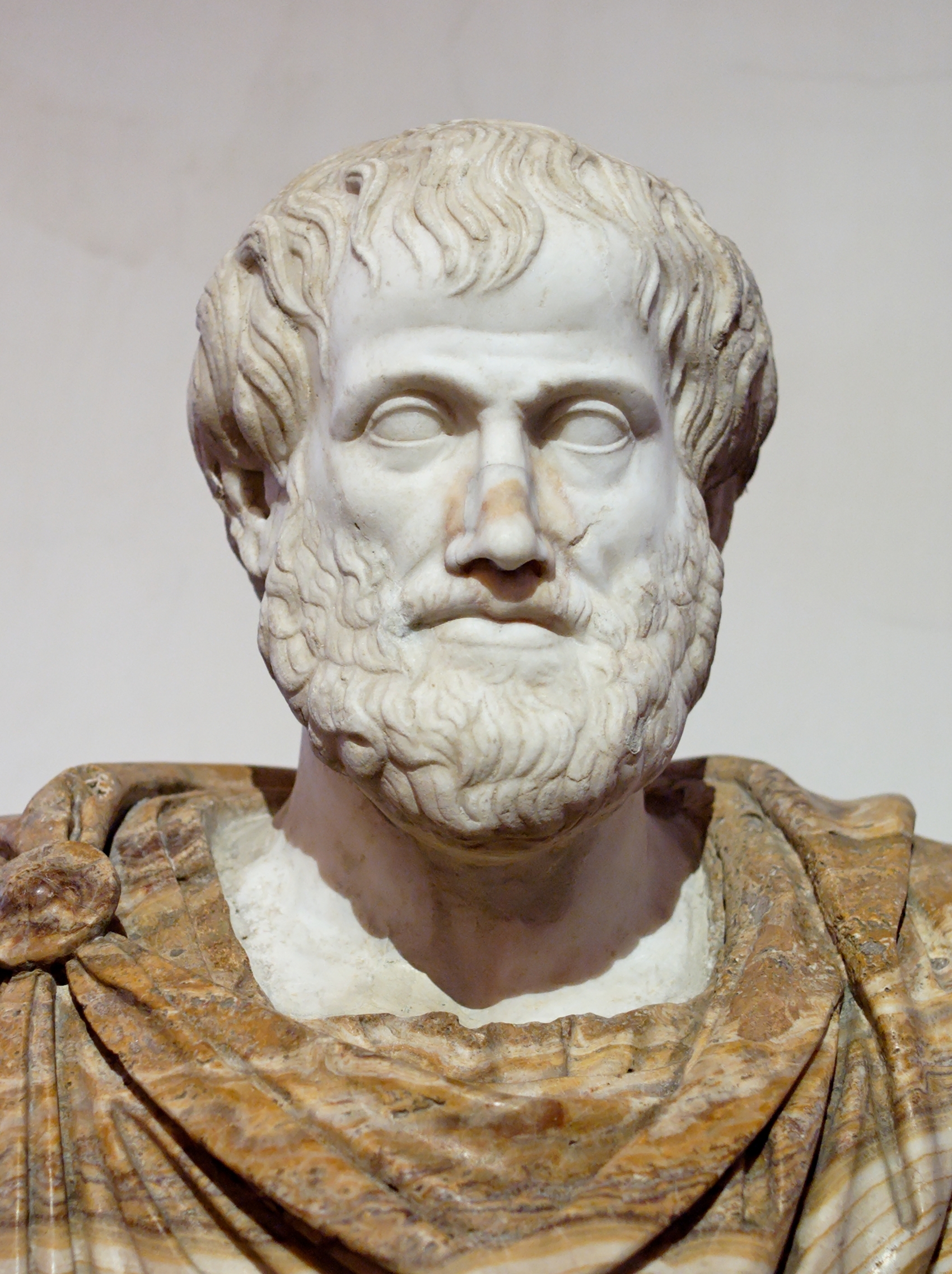
![SCOT, Michael [Michael Scotus] (1175 – 1232)](/media/portraits/12461)
First edition of the collected works of Aristotle with the commentaries of Averroes, by which Aristotle was mainly studied during the Middle Ages. The purpose of Vernia's edition was to provide an accurate edition of …
1483 CE
#6812
Regimen contra pestilentiam [English] Treatise on the Pestilence.
The earliest medical work printed in English. It was published without printer's name or date, but has been attributed to the press of William Machlinia, in London, and estimated to have been published in 1483."Althou…
1484 CE
#1795
Herbarius latinus.
The first herbal printed in Germany, and the prototype for most of the herbals printed during the remainder of the 15th century. It also contains some fanciful pictures of animals. With text in Latin and with German s…
1484 CE
#12651
Practica quae alias Philonium dicitur.
A general treatise on medical practice. ISTC No. iv00005800
1485 CE
#14113
De balneis et thermis naturalibus omnibus Italiae.
The second printed book on balneology. Savonarola took a skeptical approach to the subject, relying on his own observations and rejecting the notion that baths owed their virtues to occult or supernatural properties. …
1485 CE
#1796
Gart der Gesundheit. Ed. Johann von Cube.
The first herbal written and printed in a modern language, sometimes called the "German Herbarius” and Gart der Gesundheit. Like the Herbarius latinus issued the previous year, the text of this work was compiled…
1486 CE
#40
Rhazes: Liber Elhavi sive Ars medicinae. Translated by Feragius Salernitanus. Edited by Joannes Bugatus.
The Al-Hawi, or Continens, a great encyclopedia of medicine. The above first Latin translation by Feragius Salernitanus is the largest and heaviest of the medical incunabula. The original manuscript was in Arabic. IST…
1486 CE–1487 CE
#6316.1
Opusculum aegritudinum puerorum.
A work on disorders of pregnant women as well as on pediatrics. It describes 52 childhood diseases, providing the name, the causes, symptoms, prognosis and treatment of each, drawing on Greek authors, Arabs (especiall…
1487 CE
#1961
De particularibus diaetis.
The first separately printed treatise on diet was written by the Egyptian-Jewish physician and philosopher Isaac Judaeus who lived from about 832 to 932 CE. He was also known as Isaac Israeli ben Solomon and Abu Ya'qu…
1487 CE
#1589
Frontinus: De aquaeductibus. Edited by Pomponius Laetus and Johannes Sulpitius Verulanus.
De aquaeductibus, or De aquis urbis Romae was written about 100 CE by the Roman senator Frontinus. Its title is sometimes translated as The Aquaducts of Rome, and most recently by Rodgers as On the Water-Management of…
1488 CE
#9398
Compendium aromatariorum.
ISTC No. is00020000. Also issued in Bologna: [Henricus de Harlem and Johannes Walbeck, for] Benedictus Hectoris, 12 Mar. 1488. ISTC No. is00019000. Digital facsimile of the Bologna edition from BnF Gallica at this link.
1489 CE
#1589.1
Gerontocomia.
The first printed book on geriatrics – a guide to proper hygiene, physical and mental, and particularly to the diet of the aged. Translated into English by L.R. Lind as Gerontocomia: on the care of the aged and …
1489 CE
#6495.7
Maimonides: Aphorismi secundum doctrinam Galeni. Add: Mesue: Aphorismi. Rhasis: De secretis in medicina. Hippocrates: Capsula eburnea.
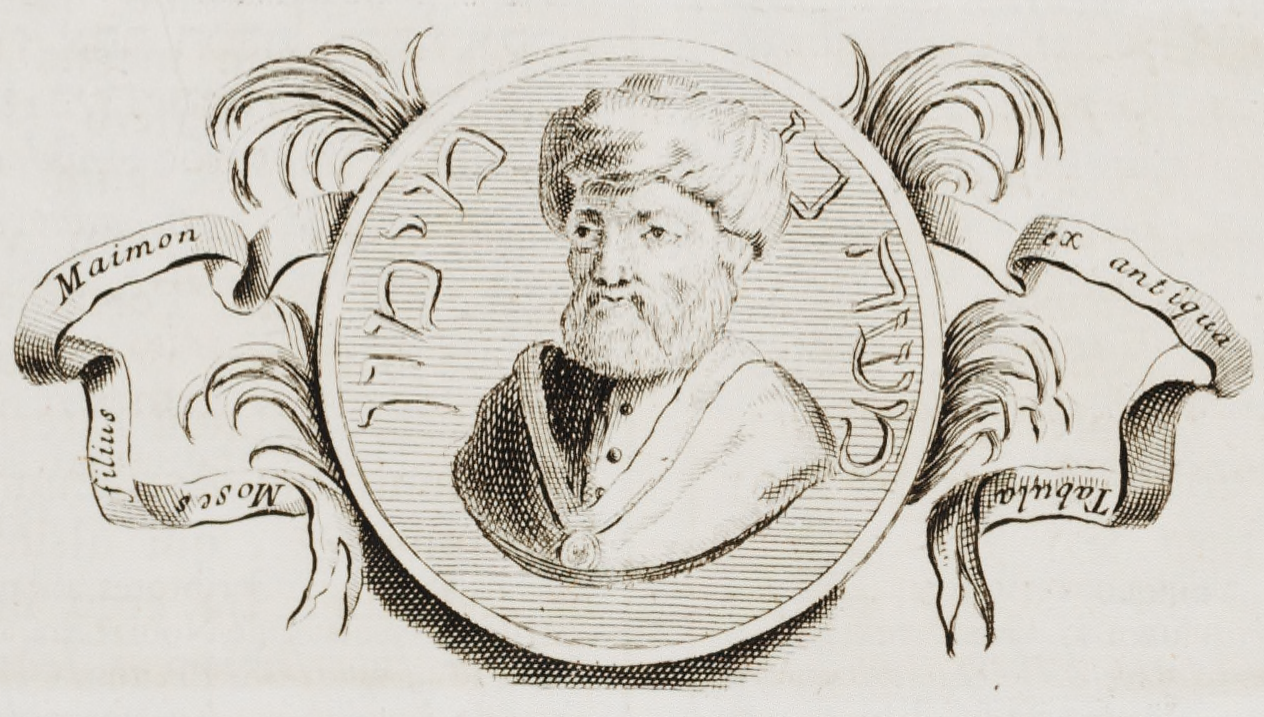
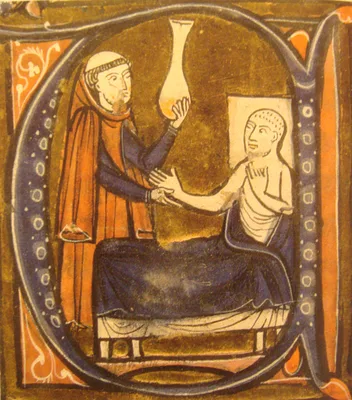
The most popular and influential medical work by Maimonides, the most famous of early Jewish physician/philosophers. This is a collection of about 1500 aphorisms derived from Galen, and divided into 24 treatises. In t…
c. 1481 CE–c. 1482 CE
#6811
Herbarium Apulei.
The first printed herbal with illustrations was an illustrated edition of the Herbarium Apulei by Apuleius Platonicus or Pseudo-Apuleius, originally compiled circa 400 CE or earlier, and issued in Rome by the printer …
c. 1486 CE–1488 CE
#1801
Arbolayre... Le grant herbier en francois.
GRANT HERBIER
The “Grant herbier” or Arbolayre, the only medieval herbal printed in French, was probably derived from Platearius (No. 1790). Its authorship remains unknown. The “Grete Herball” (No. 1802) is …