
1710–1719
41 entries with publication dates in this decade.
1710 CE
#7122
A catalogue of the libraries of the learned Sir Thomas Brown, and Dr. Edward Brown, his son, late President of the College of Physicians. Consisting of many very valuable and uncommon books in most faculties and languages. Chiefly in physic, chirurgery, chemistry.... Which will begin to be sold by auction, at the Black-boy Coffe house....by Thomas Ballard bookseller.
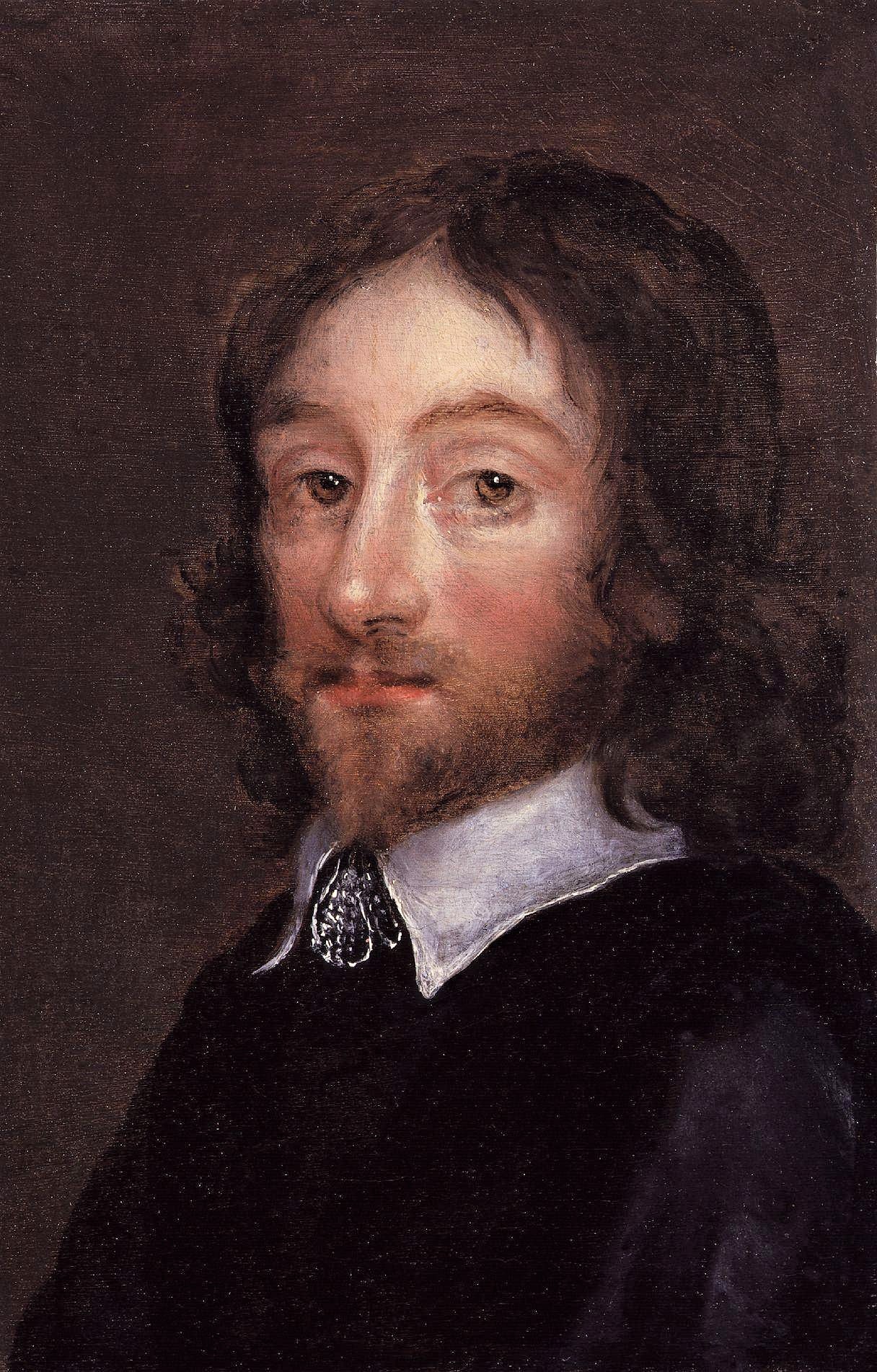
Auction catalogue of the libraries of Sir Thomas Browne and his son Dr. Edward Browne. Digital facsimile of a xerographic copy from the Hathi Trust at this link.
1710 CE
#4280
A compleat treatise of the stone and gravel.
Groenveldt was a famous lithotomist, using the suprapubic technique. He also enjoyed a rather unsavoury reputation as a quack for his determination to promote the use of cantharides. He changed his name to Greenfield …
1710 CE
#12498
An argument for Divine Providence, taken from the constant regularity observed in the births of both sexes.
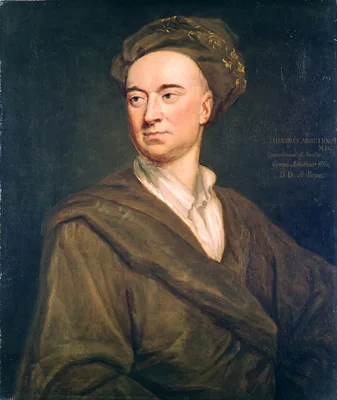
"Arbuthnot examined birth records in London for each of the 82 years from 1629 to 1710 and the human sex ratio at birth: in every year, the number of males born in London exceeded the number of females. If the probabi…
1710 CE
#12048
Considerazioni, e d'esperienze intorno alla generazione de' vermi ordinari del corpo umano fatte da Antonio Vallisnieri, e da lui scritte al Reverendissimo Padre D. Antonio Borromeo.
In this illustrated work on parasitic worms in the human body Vallisnieri proved that these worms were not due to spontaneous generation, but grew from eggs. Digital facsimile from Google Books at this link.
1710 CE
#11628
Index plantarum, quae in Horto Academico Lugduno Batavo reperiuntur.
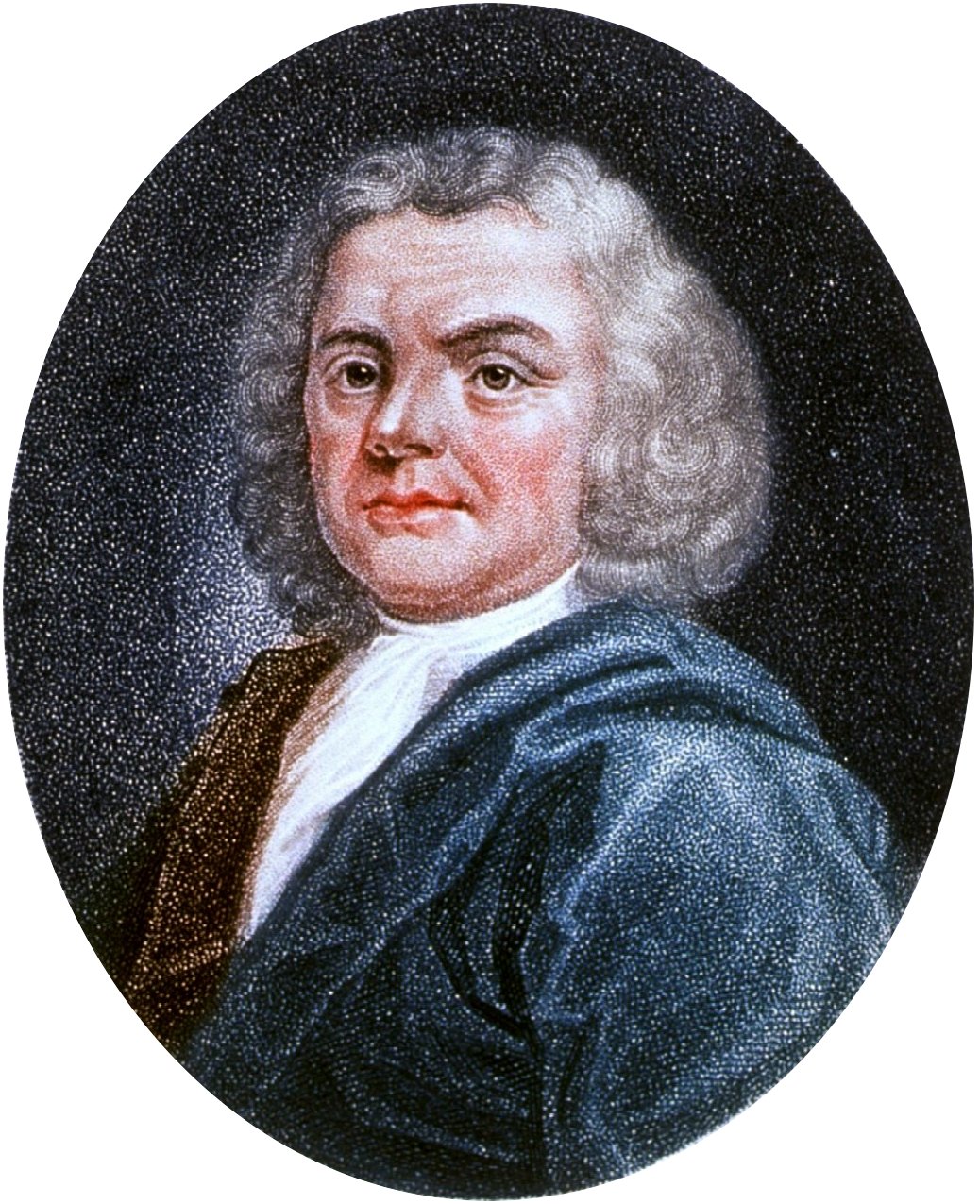
Upon his appointment as professor of medicine and botany at Leiden University in 1709, Boerhaave became head of the botanical garden, a laboratory for materia medica. He published his first catalogue of plants in the …
1710 CE
#1356
Lettres d’un médecin des hôpitaux du Roy… contient un nouveau système du cerveau, etc.
Theory of contralateral innervation.
1710 CE
#7576
Museum curiosum auctum Oder Neu-Verbesserte Beschreibung Derer raren und Ausländischen Sachen...Bey Tit. Herrn Christian Nicolai.
Description of the cabinet of Wittenberg apothecary Christian Nicolai by Christian Warlitz, professor of medicine at Wittenberg. Digital facsimile from Google Books at this link.
1712 CE
#6374.11
Amoentitatum exoticarum politico-physico-medicarum fasciculi V.
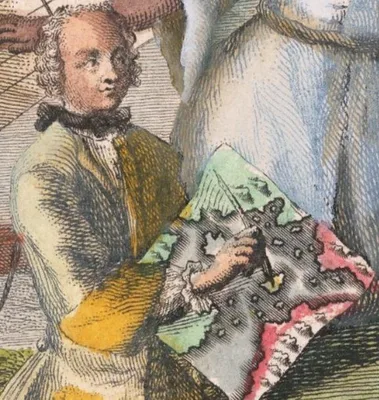
Kaempfer’s illustrated accounts of Japanese acupuncture and moxibustion are among the best of the 17th century. They appeared for the first time in the above work and were translated into English in his The Hist…
1712 CE
#301
Sur les diverses reproductions qui se font dans les écrevisses, les omars, les crabes....
Réaumur showed that crustaceans replace their lost limbs, a fact until then disputed.
1712 CE
#5231
Therapeutice specialis ad febres quasdam pemiciosas, inopinato, ac repente lethales, una vera china china, peculiare methodo ministrata, sanabiles
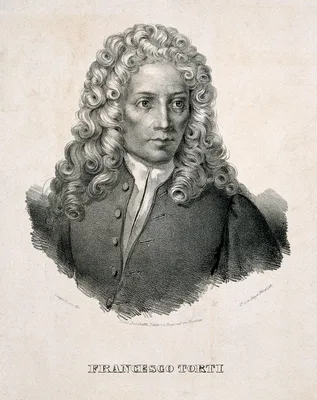
Torti’s work finally established the specific nature of cinchona bark. His demonstration of its effectiveness in periodic over continuous fevers finally overthrew the doctrine of the common origin of all fevers.…
1713 CE
#5826
Observation singulière sur la fistule lacrimale, dans la quelle l’on verrà, que la matière des fistules lacrimales s’evacuë très souvent par les points lacrimaux; en même tems l’on apprendrà la methode de les guérir radicalement, etc.
Lacrimal duct catheterized for the first time. See No. 5823. Digital facsimile from Google Books at this link.
1713 CE
#390
The anatomy of the humane body.
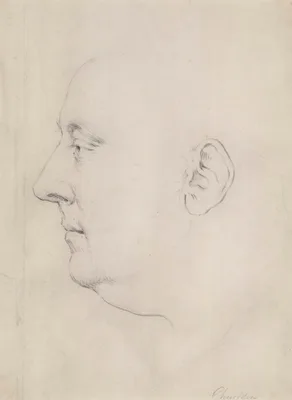
Although Cheselden is best known for his accomplishments in the field of surgery, he wrote two important books on anatomy. The above was for many years a textbook of the English medical schools and ran through 13 edit…
1714 CE
#3981
De morbis cutaneis. A treatise of diseases incident to the skin.
Turner may be regarded as the founder of British dermatology. His book, the first English text on the subject, gives a good idea of contemporary knowledge of skin diseases. Turner began his career as a barber surgeon,…
1714 CE
#2529.2
Nuovo idea del male contagioso de’ buoi.
In this study of an epizootic Cogrossi formulated much of the modern theory of infection. He speculated that infection might occur at the microscopic level, and argued that infected individuals should be isolated and …
1714 CE
#1312
Tabulae anatomicae.
A romantic history attaches to this fine collection of plates, drawn by Eustachius himself and completed in 1552. They remained unprinted and forgotten in the Vatican Library until discovered in the early 18th century…
1714 CE–1716 CE
#5409
An account, or history, of the procuring of the smallpox by incision or inoculation, as it has for some time been practised at Constantinople.
A letter dated December, 1713 from Timoni of Constantinople to John Woodward, and read to the Royal Society in May, 1714, described the practice in that city of inoculation against smallpox. The letter aroused interes…
1714 CE–1716 CE
#5410
Nova & tuta variolas excitandi per transplantationem methodus, nuper inventa & in usum tracta.
This reprint of No. 5409.1 appeared in the same volume as Timoni’s paper. Both were republished in Latin: Tractatus bini de nova variolas per transplantationem excitandi methodo, Leyden, 1721. Digital facsimile …
1714 CE–1725 CE
#13449
Journal des observations physiques, mathematiques et botaniques, faites par l'ordre du roi sur les côtes orientales de l'Amerique meridionale, & dans les Indes occidentales, depuis l'année 1707, jusques en 1712. 3 vols.
Includes in vols. 2 and 3: Histoire des plantes medecinales qui sont le plus en usage aux royaumes de l'Amerique meridionale, du Perou & du Chily, : composée sur les lieux par ordre du Roy, dans les anné…
1715 CE
#7303
A letter to the publisher, written by the ingenious Mr. John Bagford, in which are many curious remarks relating to the city of London, and some things about Leland. In: John Leland, Joannis Lelandi antiquarii de rebus britannicis collectanea, ed. Thomas Hearne, I, pp. lviii-lxxxvi.
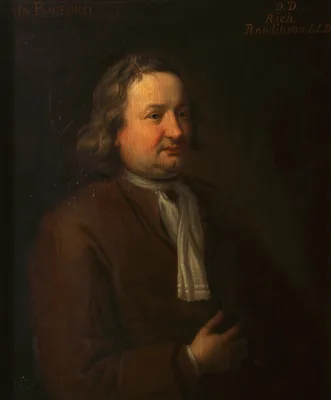
Includes an account of the discovery by Bagford’s friend and fellow antiquarian John Conyers of a flint handaxe in London, unearthed circa 1680 near the bones of what was then thought to be an elephant, as neith…
1715 CE
#6745
Bibliographiae anatomicae specimen, sive catalogus omnium penè auctorum qui ab Hippocrate ad Harveum re anatomicam ex professo, vel obiter, scriptis illustrarunt.
The first attempt at a systematic medical bibliography. Revised edition with annotations by revisions by Bernhard Siegfried Albinus (Leiden, 1734). Douglas's original autograph manuscript for the book is preserved in …
1715 CE
#9170
Elephantographia curiosa, seu elephanti descriptio.
The first monograph on the elephant, including 28 plates. Digital facsimile from Google Books at this link.
1715 CE
#302
Istoria del camaleonte Affricano e di varj animali d’Italia.
Digital facsimile from Google Books at this link.
1715 CE
#5409.1
Nova et tuta variolas excitandi per transplantationem methodus; nuper inventa & in usum tracta: Qua rite peracta, immunia in posterum praeservantur ab huiusmodi contagio corpora.
Inoculation was practiced in ancient times. In 1701 Pilarino inoculated three children at Constantinople with smallpox virus. He is credited with the “medical” discovery of variolation, and is thus the fir…
1715 CE
#7247
Traité nouveau de la structure et des causes du mouvement naturel du coeur. IN: Oeuvres françoises de M. Vieussens dédiées a nosseigneurs des états de la province de Languedoc.
The first work on cardiac anatomy and pathology. Vieussens was the first to describe the course of the coronary arteries and the coronary sinus. He also described collateral vessels connecting the left anterior descen…
1716 CE
#8860
Rariora Musei Besleriani quae olim Basilius et Michael Rupertus Besleri collegerunt, aenesique tabulis ad vivum incisa evulgarunt: nunc commentariolo illustrata a Johanne Henrico Lochnero…
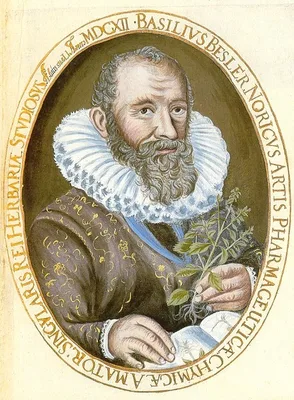
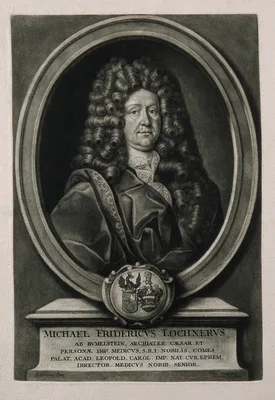
The most complete description of the natural history museum of Basilius Besler and his nephew Michael Rupert. It contains the first descriptive commentary of the collection, with 40 engraved plates. The Besler collect…
1717 CE
#3419
An account of the dissection of a child.
First description of congenital hypertrophic pyloric stenosis. Reprinted in Mark M. Ravitch, "The story of pyloric stenosis," Surgery, 48 (1960) 1117-1143.
1717 CE
#5232
De noxiis paludum effluviis, eorumque remediis.
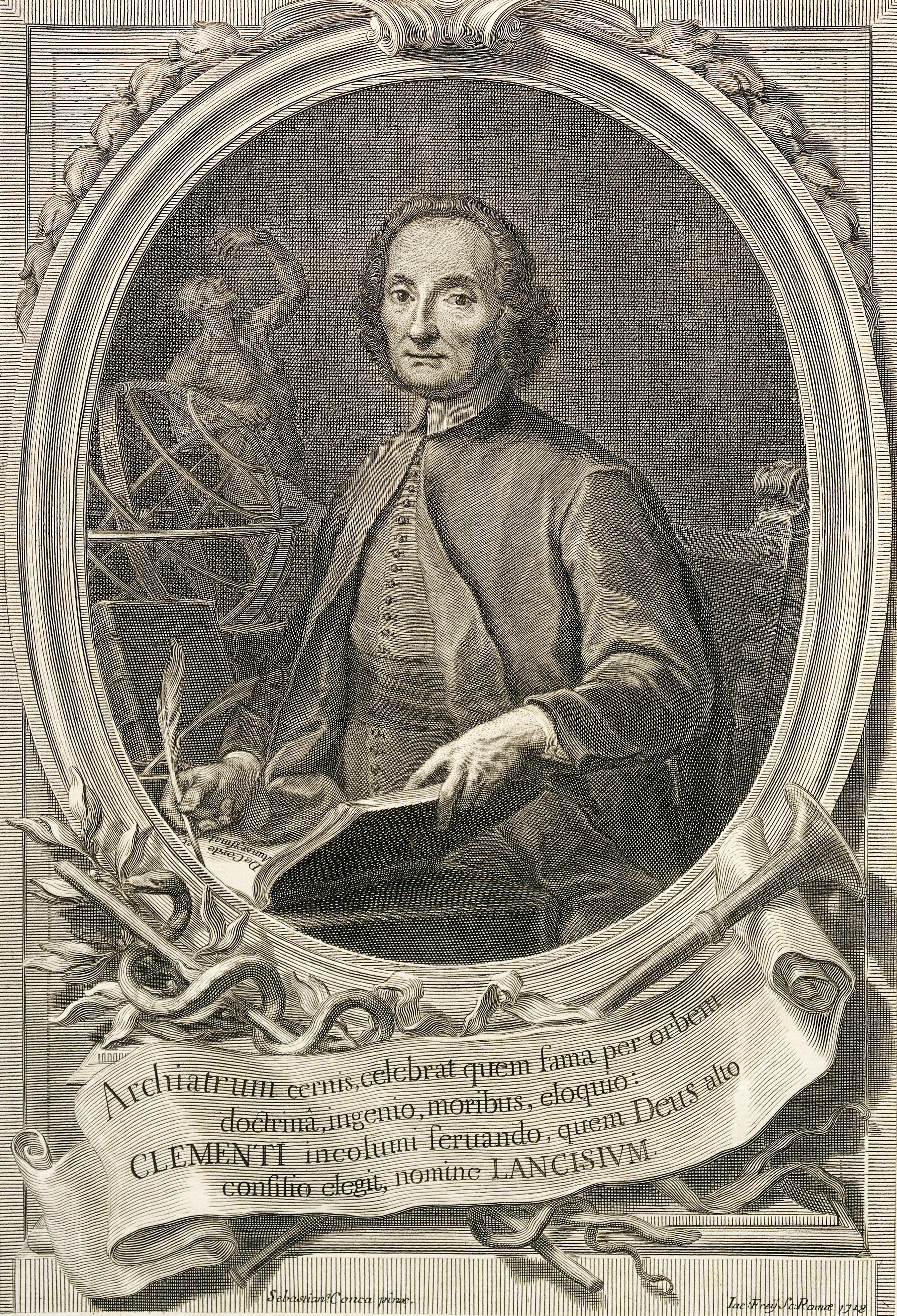
Lancisi suggested that since malaria disappears after drainage it was due to some sort of poison emanating from marshes and possibly transmitted by mosquitoes. He planned a drainage scheme for marshy regions. His work…
1717 CE
#11515
Metallotheca opus posthumum, auctoritate, & munificentia Clementis undecimi pontificis maximi e tenebris in lucem eductum; opera autem, & studio Ioannis Mariae Lancisii archiatri pontificii illustratum.
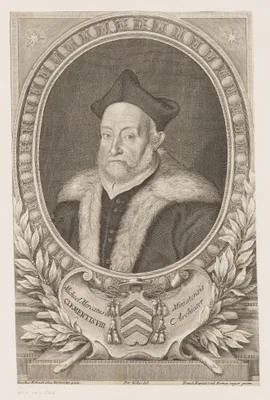
In 1717 papal physician Giovanni Maria Lancisi published the catalogue of the Vatican "armaria" series housing the natural history museum collected by one of his predecessors at the Vatican, the 16th century papal phy…
1717 CE
#11473
Musaeum Zeylanicum, sive catalogus plantarum, in Zeylan sponte nascentium, observatarum & descriptarum a viaro celeberrimo Paulo Hermanno.
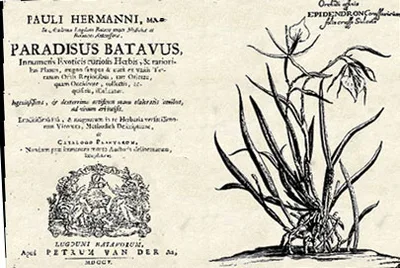
Paul Hermann's study of the plants of Sri Lanka collected during his experience as a Ship's Medical Oficer in the Dutch East India Company after Hermann completed his medical studies at Padua. This work was edited for…
1717 CE
#12271
Relation d'un voyage du Levant fait par ordre du Roy: Contenant l'histoire ancienne et moderne de plusieurs isles de l'Archipel, de Constantinople, des côtes de la mer Noire, de l'Arménie, de la Géorgie, des frontières de Perse et de l'Asie mineure. Avec les plans des villes & des lieux considérables; La genie, les moeurs, le commerce & la religion des différens peuples qui les habitent; et l'explication des médailles & ses monuments antiques. Enrichie de descriptions & de figures d'un grand nombre de plantes rares, divers animaux; et de plusieurs observations touchant l'histoire naturelle.
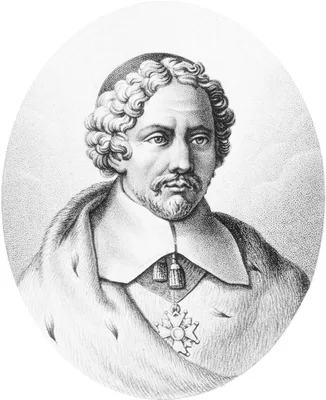
Digital facsimile of the 1717 edition from BnF Gallica at this link. Translated into English, London, 1718 as: A Voyage into the Levant: Perform'd by Command of the Late French King. Containing The Antient and Modern …
1717 CE
#10530
Syphilis: A practical dissertation on the venereal disease. In which, after a short account of its nature and original; the diagnostick and prognostick signs, with the best ways of curing the several degrees of that distemper, together with some historical observations relating to the same, are candidly and without reserve, communicated. In two parts.
The first work published in English to include the word syphilis, and also the first English work to include the word condom. Digital facsimile from the Internet Archive at this link.
1718 CE
#8575
Catalogus zahlreicher, nützlicher, und sonderbahrer von Natur- und Kunst gebildeter Seltenheiten, in Regno Animali, Vegetabili, und Minerali, welche ehemals mit grosser Mühe, langer Zeit und schweren Kosten gesammelt, und zusammen gebracht hat.
1718 CE
#583
Fundamenta physiologiae.
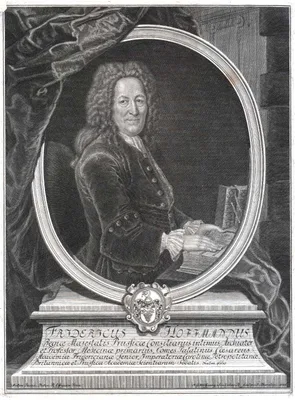
Hoffmann was the first to perceive pathology as an aspect of physiology. His Fundamenta is an outstanding treatise on physiology. English translation with introduction by Lester S. King, London, 1971.
1718 CE
#71
Jo. Mariae Lancisii archiatri pontificii. Opera quae hactenus prodierunt omnia; dissertationibus nonnullis adhuc dum ineditis locupletata, & ab ipso auctore, recognita atque emendata. Collegit, ac in ordinem digessit Petrus Assaltus. 2 vols.
Lancisi's collected works edited by Pietro Assalti. Lancisi was the first to describe cardiac syphilis; he was also notable as an epidemiologist, with a clear insight into the theory of contagion. He was physician to …
1718 CE
#9494
Send-Brieven, zoo aan de Hoog-edele Heeren van de Koninklyke Societeit te Londen, als aan andere Aansienelyke en Geleerde Lieden....
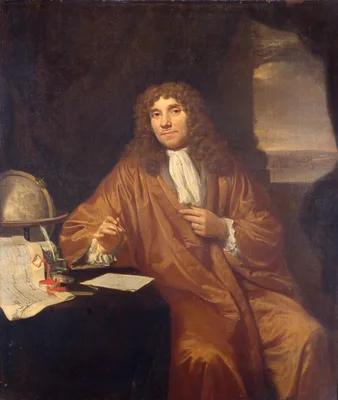
In his letter of 2 March 1717 (letter XXXII) addressed to Abraham van Bleyswyk and first published in this edition, Leewenhoek provided the first morphologic description of nerve fibers accompanied by illustrations. &…
1719 CE
#13538
Caput Bonae Spei hodiernum, das ist: vollständige Beschreibung des africanischen Vorgebürges der Guten Hofnung. Worinnen in dreyen Theilen abgehandelt wird, wie es heut zu Tage, nach seiner Situation und Eigenschaft aussiehet; ingleichen was ein Natgur-Forscher in den dreyen Reichen der Natur....
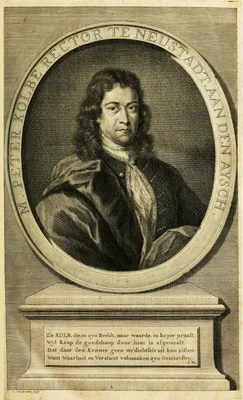
Includes the first study of the natural history of the Cape region of South Africa. Translated into English by "Mr. Medley" as The present state of the Cape of Good-Hope. 2 vols., London, 1738-31. Digital facsimile of…
1719 CE
#1380.1
Cerebri examen chemicum, ex eodemqve phosphorum singularem omnia inflammabilia accendentem dissertatione academica.
First account of the chemical composition of the brain. Hensing discovered the presence of phosphorus. Annotated English translation with biography and historical analysis, by D.B. Tower. New York, Raven Press, [1983].
1719 CE
#5576
Chirurgie in welcher Alles was zur Wund-Artzney gehöret, nach der neuesten und besten Art gründlich abgehandelt....
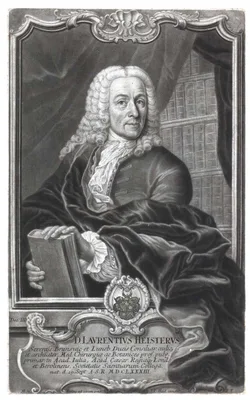
Heister was the founder of scientific surgery in Germany. His book contains many interesting illustrations and includes an account of tourniquets used in his time; Heister introduced a spinal brace. This was the most …
1719 CE
#1215
Description de l’urèthre de l’homme.
“Littre’s glands” described.
1719 CE
#13450
Mariæ Sibillæ Merian Dissertatio de generatione et metamorphosibus insectorum Surinamensium: In quâ, præter vermes et erucas Surinamenses, earumque admirandam metamorphosin, plantæ, flores & fructus, quibus vescuntur, & quibus fuerunt inventæ, exhibentur. His adjunguntur bufones, lacerti, serpentes, araneæ, aliaque admiranda istius regionis animalcula
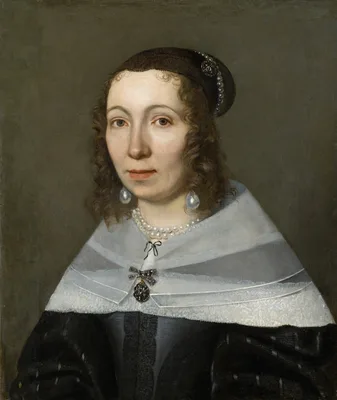
Originally as Metamorphosis insectorum Surinamensium. Amsterdam, 1705. The 1719 contains 12 additional plates and corresponding text, 10 provided by the author's daughters from material left at her death, and 2 suppli…
1719 CE
#3575
Observation sur une nouvelle espèce de hernie.
“Littre’s hernia” – so named from his description of diverticulum hernia. Later Richter (No. 3578) described this condition more fully.