
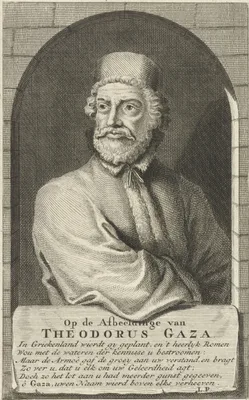
De historia et causis plantarum. Edited, with a table, by Georgius Merula. Translated by Theodorus Gaza.
Publication Details
Treviso: Bartholomaeus Confalonerius, 1483 CE.
A student of Aristotle, Theophrastus succeeded his teacher as head of the Athens Peripatetic School. This is the earliest work of scientific botany, a subject not addressed in any of the writings of Aristotle. Theophrastus collated and systematized the existing botanical knowledge and described about 500 plants. His system of botanical classification was analogous to the zoological system in Aristotle’s Historia animalium. Part of the book is devoted to plant-lore and the gathering of drugs for medicinal purposes. Theophrastus noted the principle of drug tolerance, observing that the power of a drug taken over a long period diminishes in people who become accustomed to taking it. He was also aware of individual differences in assimilation.
First edition in Greek in Aristotle, [Opera omnia], Venice, Aldus Manutius, 1495-98. ISTC No. it00155000. Digital facsimile of the 1483 edition from the Bayerische StaatsBibliothek at this link.
Thematic Classifications
| Catalog Metadata | Reference Information |
|---|---|
| Entry Number | #1783 |
| Permanent Link | https://staging.historyofmedicine.com/entry/8782 |
| Author Bio Link | Wikipedia ↗ |
| External URL | de-historia-et-causis-plantarum |
Geographic Context
Publication place: Treviso
Mentioned in annotation: Venice