
1900–1909
957 entries with publication dates in this decade.
1908 CE–1909 CE
#6455
Vergleichende Volksmedizin. Eine Darstellung volksmedizinischer Sitten und Gebräuche, Anschauungen und Heilfaktoren, des Aberglaubens und der Zaubermedizin. 2 vols.
Digital facsimile from the Internet Archive at this link.
1908 CE–1911 CE
#4880.2
Chirurgie des Gehirns und Rückenmarks nach eigenen Erfahrungen. 2 vols.
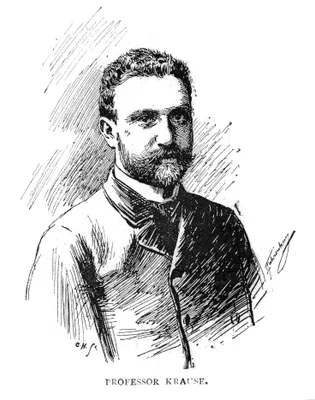
With Macewen and Cushing, Krause pioneered the development of neurosurgery as a specialty. This is his most comprehensive work. English translation by H.A. Haubold and M. Thorek, 3 vols., New York, Rebman, [1909-12],
1908 CE–1912 CE
#1681
Abhandlungen aus der Seuchengeschichte und Seuchenlehre. Pt. 1: Die Pest. Pt. 2: Die Cholera. 2 vols. in 3.
1908 CE–1952 CE
#18
The works of Aristotle translated into English. Edited by J.A. Smith and W.D. Ross. 12 vols.
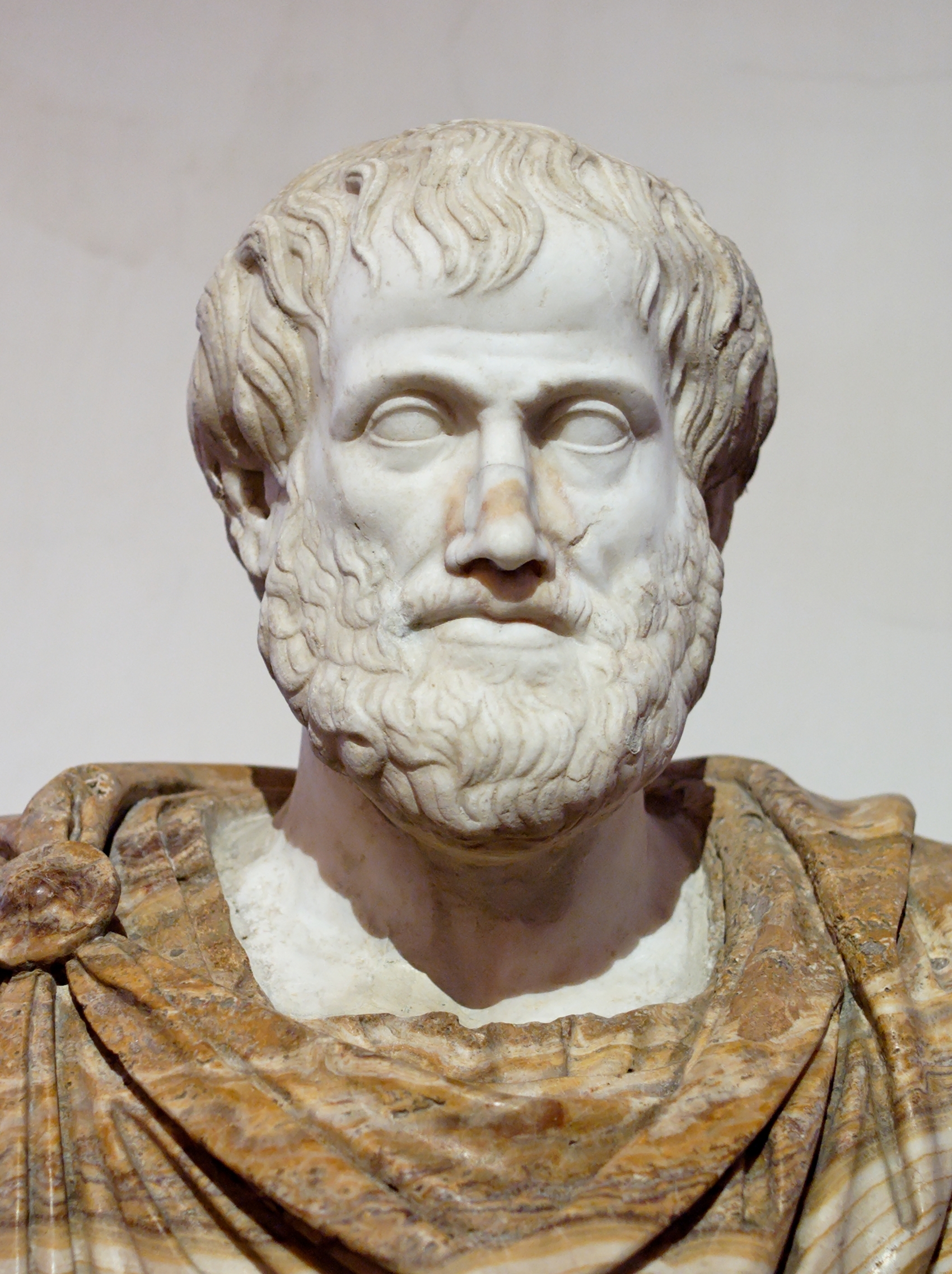
De motu animalium. De incessu animalium. In his Works, edited by J.A. Smith and W.D. Ross, 5, 698a-714b., Oxford, 1912. De Anima. In his Works… translated into English. Edited by J. A. Smith and W. D. Ross. 3, …
1909 CE
#3695
A history of dentistry from the most ancient times until the end of the eighteenth century.
1909 CE
#5756.3
A method of splinting skin grafts.
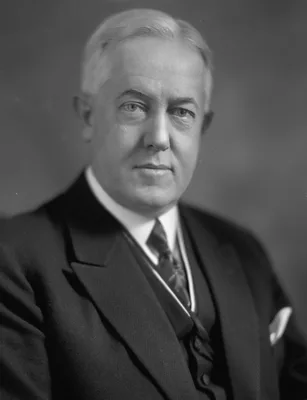
The Davis graft was devised by Halsted but Davis popularized its use.
1909 CE
#5379
A micro-organism which apparently has a specific relationship to Rocky Mountain spotted fever. A preliminary report.
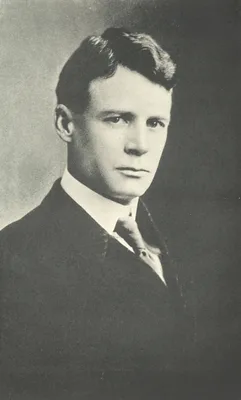
Description of the causal organism, in blood smears.
1909 CE
#4195.1
A new direct irrigating observation and double catheterizing cystoscope.
Brown–Buerger cystoscope.
1909 CE
#5955
A preliminary note on a new operative procedure for the establishment of a filtering cicatrix in the treatment of glaucoma.
Elliot, working in 1909 at the Government Ophthalmic Hospital in Madras, began to use a trephine to make a very anterior sclerectomy under a conjunctival flap, coupled with a peripheral iridectomy. See also his Sclero…
1909 CE
#3317
A simple operation for the complete removal of tonsils, with notes on 900 cases.
Waugh introduced blunt dissection tonsillectomy.
1909 CE
#1204
Action de la sécrétion interne du pancréas sur différent organes et en particulier sur la sécrétion rénale.
De Meyer was apparently the first to suggest the name “insuline” for the substance then believed to be secreted by the pancreas.
1909 CE
#6478
Aerztliches aus griechischen Papyrus-Urkunden.
Digital facsimile from the Internet Archive at this link.
1909 CE
#12455
An experimental study of sleep. (From the Physiological Laboratory of the Harvard Medical School and from Sidis' Laboratory).
Sidis emphasized his physiological approach in the wording of the title of this book. Digital facsimile from Google Books at this link.
1909 CE
#3743
An inquiry concerning the etiology of beri-beri.
Studies from the Institute for Medical Research, F. M. S., No. 10. Careful and long-continued experiments on the aetiology of beriberi were carried out by Fraser and Stanton in Malaya.
1909 CE
#2830
Auricular fibrillation; a common clinical condition.
First description of auricular fibrillation as a cause of clinical perpetual arrhythmia. See also the paper in Heart, London, 1909-10, 1,306-72.
1909 CE
#3860
Auto- and isotransplantation, in dogs, of the parathyroid glandules.
1909 CE
#2828
Beitrag zur Aetiologie und pathologischen Anatomie der Myokarditis rheumatica.
“Bracht–Wächter bodies” in the myocardium in bacterial endocarditis.
1909 CE
#2565
Beiträge zur experimentellen Pathologie und Chemotherapie.
1909 CE
#5289.2
Bibliography of trypanosomiasis.
Subject index…with additional references and corrections, 1910.
1909 CE
#10368
Catalogue of the specimens in the Anatomical Museum of the University of Edinburgh. Vol. 1.- Pathology. Edited by Sir William Turner.
Digital facsimile from the Internet Archive at this link.
1909 CE
#5694
Continuous respiration without respiratory movements.
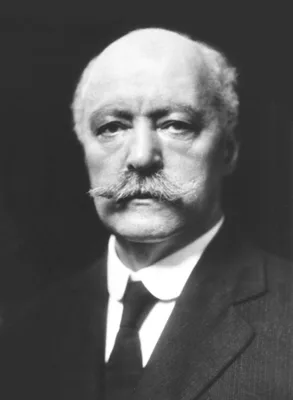
Meltzer and Auer experimented further with the intratracheal insufflation method introduced by Kuhn (No. 5693).
1909 CE
#3963
Das Koma diabeticum und seine Behandlung.
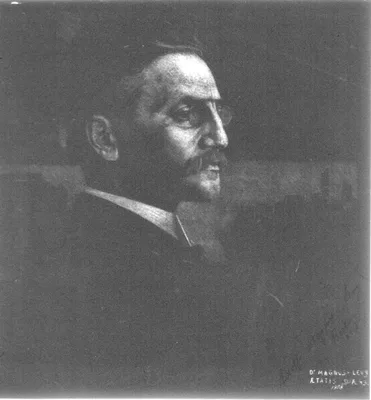
Magnus-Levy is remembered for his work on the treatment of diabetic coma.
1909 CE
#5479
Das Pappatacifieber.
An Austrian military commission consisting of R. Doerr, K. Franz, and S. Taussig proved that the causal organism of pappataci fever was a virus and that Phlebotomus papatasii was the vector.
1909 CE
#655
Définition expérimentale de l’excitabilité.
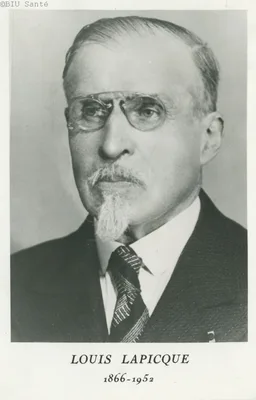
Lapicque first defined “chronaxia”, the duration of excitation of tissue. Partial translation in J. F. Fulton’s Selected readings in the history of physiology, 2nd ed., 1966, pp. 233-34.
1909 CE
#6249
Der extraperitoneale Kaiserschnitt. Seine Geschichte, seine Technik und seine Indikationen.
Latzko’s extraperitoneal lower-segment Caesarean operation. Preliminary report in the same journal, 1908, 21, 737.
1909 CE
#4
Der grosse medizinische Papyrus des Berliner Museums (Pap. Berl. 3038) in Facsimile und Umschrift mit Uebersetzung, Kommentar und Glossar. Herausg. von Walter Wreszinski.
BRUGSCH PAPYRUS
The Greater German Papyrus (Brugsch Papyrus) dates from about 1300 BCE. The above facsimile reproduction and translation forms vol. 1 of the Medizin der alten Aegypter series. Digital facsimile from the U.S. National …
1909 CE
#12426
Der Lymphozyt als gemeinsame Stammzelle der verschiedenen Blutelemente in der embryonalen Entwicklung und im postfetalen Leben der Säugetiere.
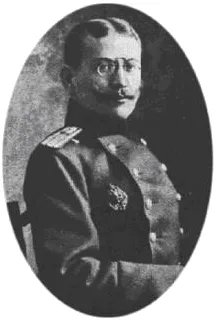
Maximow developed and introduced a unitarian theory of hematopoiesis, a theory upon which the modern concept of blood cells' origin and differentiation is based. He introduced the term "stem cell." Translated into Eng…
1909 CE
#1375
Der rote Kern, die Haube und die Regio hypothalamica bei einigen Säugetieren und beim Menschen.
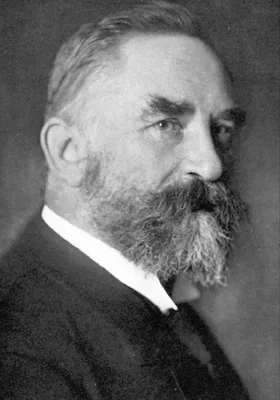
“Monakow’s bundle”, the rubrospinal tract.
1909 CE
#5533
Descripción de elementos endo-globulares hallados en las enfermos de fiebre verrucosa.
The causal organism of Oroya fever and verruga peruana, endemic in Peru, was named Bartonella bacilliformis after Barton, who was one of the first to observe it.
1909 CE
#525
Die chemische Entwicklungserregung des tierischen Eies; künstiiche Parthenogenese.
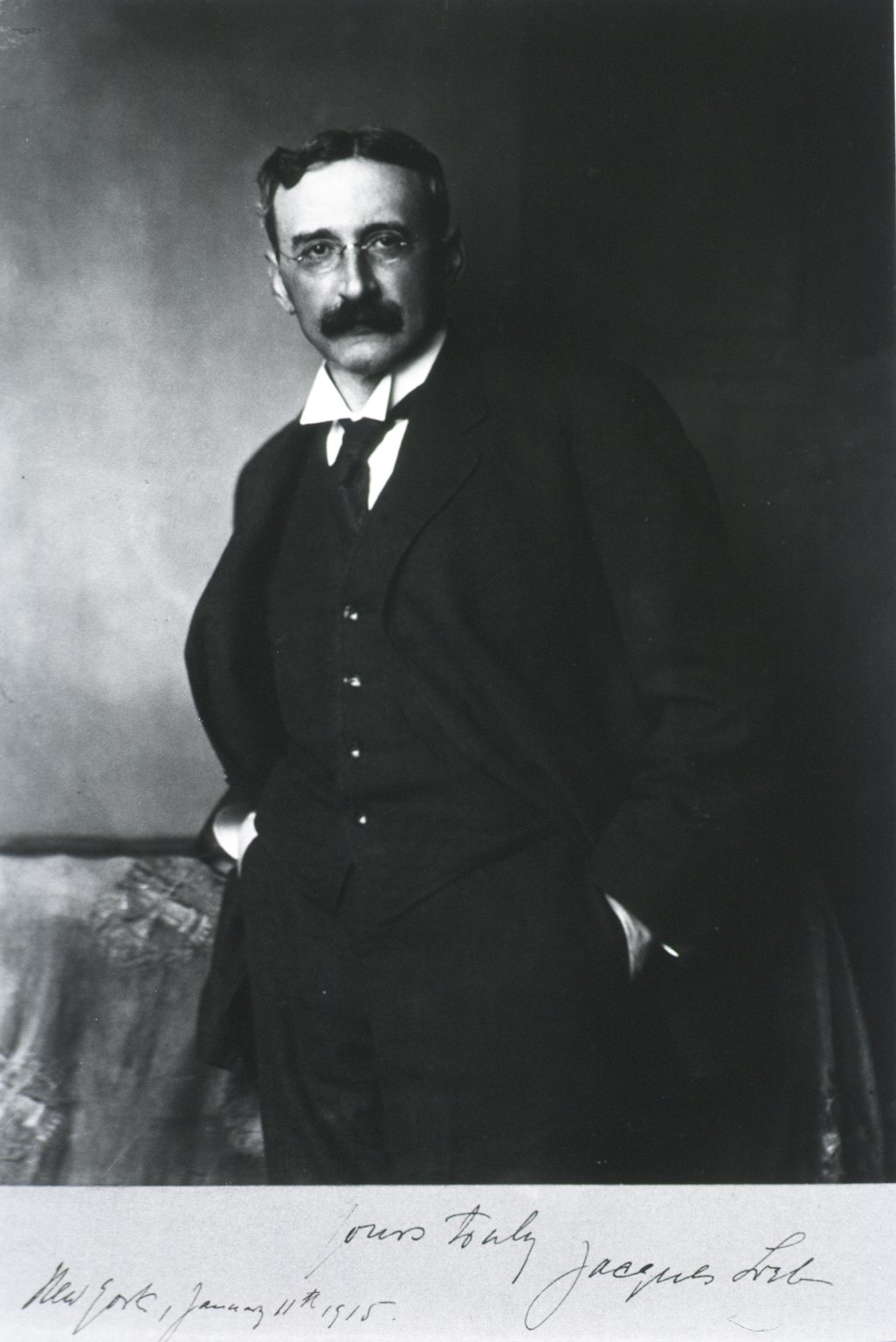
Artificial parthenogenesis. For Loeb’s first paper on this subject see No. 515.1. Translated and revised in Loeb’s Artificial parthenogenesis and fertilization, 1913.
1909 CE
#3645
Die Cholelithiasis.
1909 CE
#7397
Die Sehstörungen bei Schussverletzungen der kortikalen Sehsphäre, nach Beobachtungen an Verwundeten der letzten japanischen Kriege.
During and after Japan’s war with Russia (1904-1905 ) Inouye tested the visual fields in wounded soldiers for insurance purposes, and set out his observations in this work. English translation: Glickstein, M. & …
1909 CE
#2690
Die Technik der Roentgenkinematographie.
Groedel invented the first machine for taking serial x-rays.
1909 CE
#4835
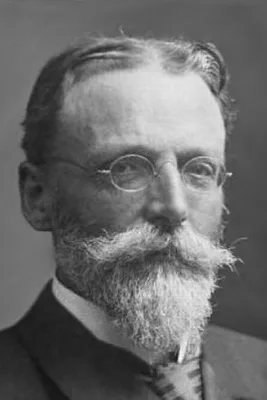
Die Tetanie der Kinder.
1909 CE
#3895
Eine neue Methode der endonasalen operation von Hypophysentumoren.
Hirsch first demonstrated the transnasal transseptal exposure of the sphenoid sinus and pituitary gland in a cadaveric specimen in front of the medical society of Vienna.
1909 CE
#11680
Elektrokardiogramme.
This 37-page pamphlet was the earliest collection of information regarding electrocardiography. It contained "only single lead electrocardiograms, limited to mitral stenosis and hypertrophy of the right and left venti…
1909 CE
#6844
Elemente der exacten Erblichkeitslehre.
In this work Johannsen coined the term “gene” as the “underlying structure in the organism, that which was transmitted during hybridzation.” He also coined the term "phenotype" to express what …
1909 CE
#13826
Epoch-making contributions to medicine, surgery and the allied sciences. Being reprints of those communications which first conveyed epoch-making observations to the scientific world together with biographical sketches of the observers. Collected by C. N. B. Camac.
1909 CE
#10406
Eradicating plague in San Francisco. Report of the Citizen's Health Committee and an account of its work. With brief descriptions of the measures taken, copies of ordinances in aid of sanitation, articles by sanitarians on the nature of plague and the best means of getting rid of it, facsimiles of circulars issued by the committee and a list of subscribers to the health fund. March 31, 1909. Prepared by Frank Morton Todd, historian for the Committee.
Digital facsimile from the Internet Archive at this link.
1909 CE
#3530
Essais de traitement de quelques cas d’épithélioma de l’oesophage par les applications locales directes de radium.
Radium therapy by means of the esophagoscope.
1909 CE
#1436
Gehirn und Sympathicus.
First experimental studies on hypothalmic function
1909 CE
#738
Grundriss der Kolloidchemie.
1909 CE
#5628
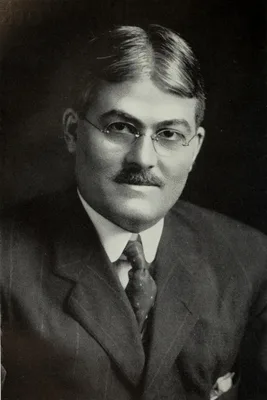
Hemorrhage and transfusion.
1909 CE
#244.1
Inborn errors of metabolism.
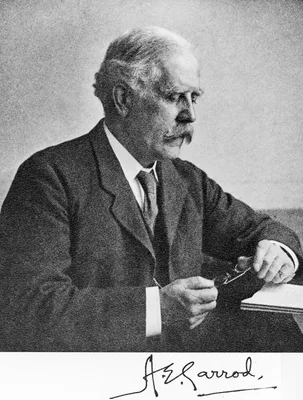
Garrod established chemical individuality as a paradigm of Mendelian variation. His study, which he began around the turn of the 20th century, coincided with the rediscovery of Mendel's laws of inheritance in 1900. He…
1909 CE
#2829
Infective endocarditis, with an analysis of 150 cases.
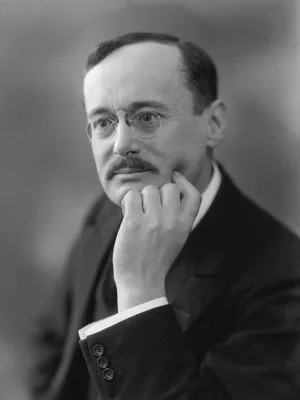
Classic description of subacute bacterial endocarditis.
1909 CE
#737
Kapillarchemie.
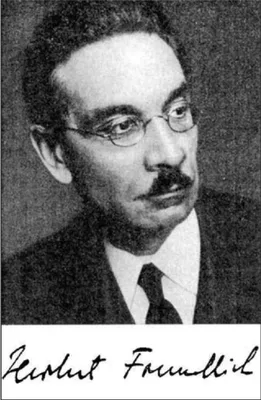
1909 CE
#245
Kreuzungsuntersuchungen an Hafer und Weizen.
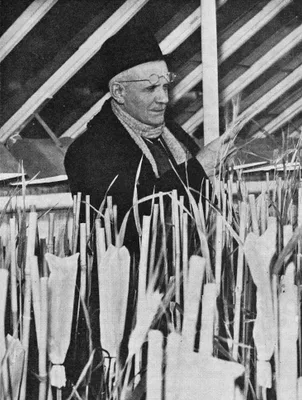
The “multiple factor” theory advanced by Nilsson-Ehle brought under the Mendelian law cases which, by their extreme variability of inheritance, might be considered exceptions to it.
1909 CE
#5299.1
L’ulcère de Bauru ou le bouton d’orientau Brésil.
Muco-cutaneous leishmaniasis of South America. English translation in Kean (No. 2268.1).
1909 CE
#7343
La Myéloarchitecture du Thalamus du Cercopithèque.
"Ted Jones, in his encyclopedic The Thalamus (1985, p. 27), wrote that this is one of the best descriptive accounts of the thalamus, illustrated with photographic plates as elegant as any being produced today, with su…
1909 CE
#5300
Le kala azar infantile.
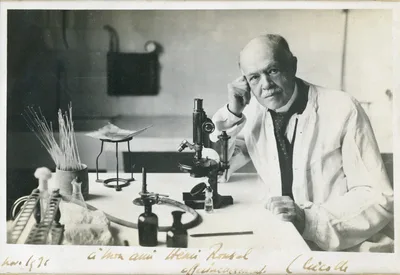
Nicolle considered infantile kala-azar to be caused by a distinct species of Leishmania; to this he gave the name L. infantum.