
1660–1669
77 entries with publication dates in this decade.
1667 CE
#2014
An account of the experiment of transfusion, practised upon a man in London.
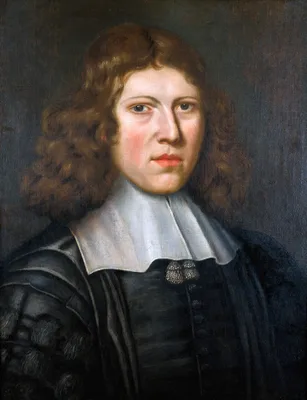
First transfusion of blood performed on a human in England, Nov. 23, 1667.
1667 CE
#13236
Aphabeti verè naturalis Hebraici brevissima delineatio.
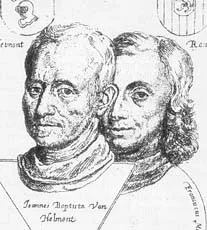
A work on the teaching of lip-reading and speaking to deaf-mutes based on the notion that letter-forms of the Hebrew alphabet resembled in profile the positions of the tongue required to produce their corresponding so…
1667 CE
#1963
Chirurgia infusoria.
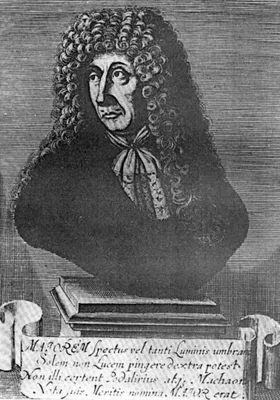
Major, the first Professor of Medicine at Kiel, was the first to make successful intravenous injections of drugs into the human body, in 1662. Sir Christopher Wren in 1656 had injected wine and ale into the veins of a…
1667 CE
#1723
De gemellis et partu numerosiore.
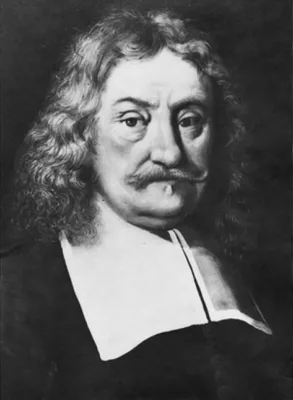
Medico-legal aspects of multiple births. Digital facsimile from Google Books at this link.
1667 CE
#9644
De vi percussionis liber.
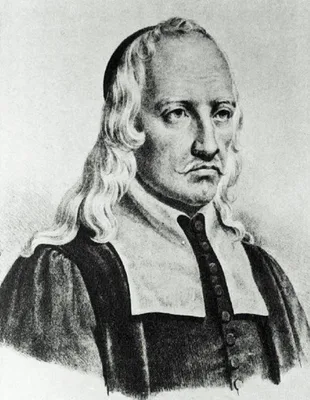
Building on the theory of mechanics as formulated by Aristotle and Galileo, and countering objections expressed by Stephani degli Angeli among others, Borelli presented a completely mechanical account of the action of…
1667 CE
#467.2
Disquisitio anatomica de formatu foetu.
Founding work of developmental chemical embryology, the first book to report chemical experiments on the developing mammalian embryo, and the first to give practical instructions on dissection of embryos. Needham was …
1667 CE
#577
Elementorum myologiae specimen.
In this work Stensen, in collaboration with the mathematician Vincenzio Viviani (1622-1703), a pupil of Galileo, developed a geometrical description of muscular contraction, and attempted to show theoretically that mu…
1667 CE
#6823
Gods terrible voice in the city of London wherein you have the narration of the two late dreadful judgements of plague and fire, inflicted by the Lord upon that city; the former in the year 1665. The latter in the year 1666
This edition of a plague tract by English puritan minister Thomas Vincent was the first medical or biological publication in North America. It was issued by printer Samuel Green, using a press in Cambridge, Massachuse…
1667 CE
#10711
Hieronimi Barbati ... Dissertatio elegantissima De sanguine et eius sero, in qua praeter varia lectu dignissima, Conringj. Lindeni & Barthol. circa sanguificationem opiniones, Stenoniana sanguinisdealbatio, VVillisii succi neruorum vis, Regij transitus chyli ad liene, liceti nutitio embryonis, VVarthoni & Charletonis lactis expositio, Haruei masculini seminis retentio rejecta, Moebij spirituum animalium materia, & alia clarissimorum neotericorum prolata, doctè & politè exponuntur.
Barbato discovered the blood serum. Another version of these texts was published in Paris by Robert de Ninville in 1667. Priority of these editions is unknown. Digital facsimile of the Frankfurt version from Google Bo…
1667 CE
#5450
Histoire générale des Antilles habités par les Français. Tom. 1.
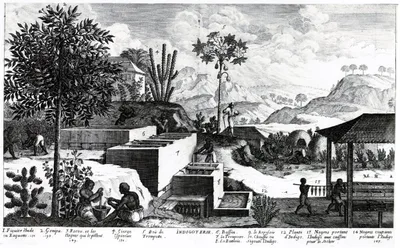
Du Tertre, a priest, described (pp. 81, 99, 423) the outbreaks of yellow fever at Guadeloupe in 1635, 1640, and 1648.
1667 CE
#2013
Lettre … touchant deux expériences de la transfusion faites sur des hommes.
The first transfusion of blood into a human was performed by Denis on June 15, 1667; he transfused lamb’s blood into a youth. For a partial translation, see Geoffrey Keynes’s Blood transfusion (Bristol, 19…
1667 CE
#1724
Tractatus physico-anatomico-medicus de respiratione usuque pulmonum.
Swammerdam’s earliest published work. In it he recorded his discovery that the lungs of newborn infants will float on water if respiration has taken place, an important medico-legal point.
1667 CE
#2972
Vesalius: Una cum D. Bartholomaei Velseri literis, Tuas, doctissime et mihi amicissime D. Achilles, accepi.... IN: Welsch, G. H., Sylloge curationum et observationum medicinalum centurias vi complectens (J. U. Rumler, Observationes medicae e bibliotheca Georgi Hieronymi Velschii, cum eius dem notis LXXXXI, p. 47).
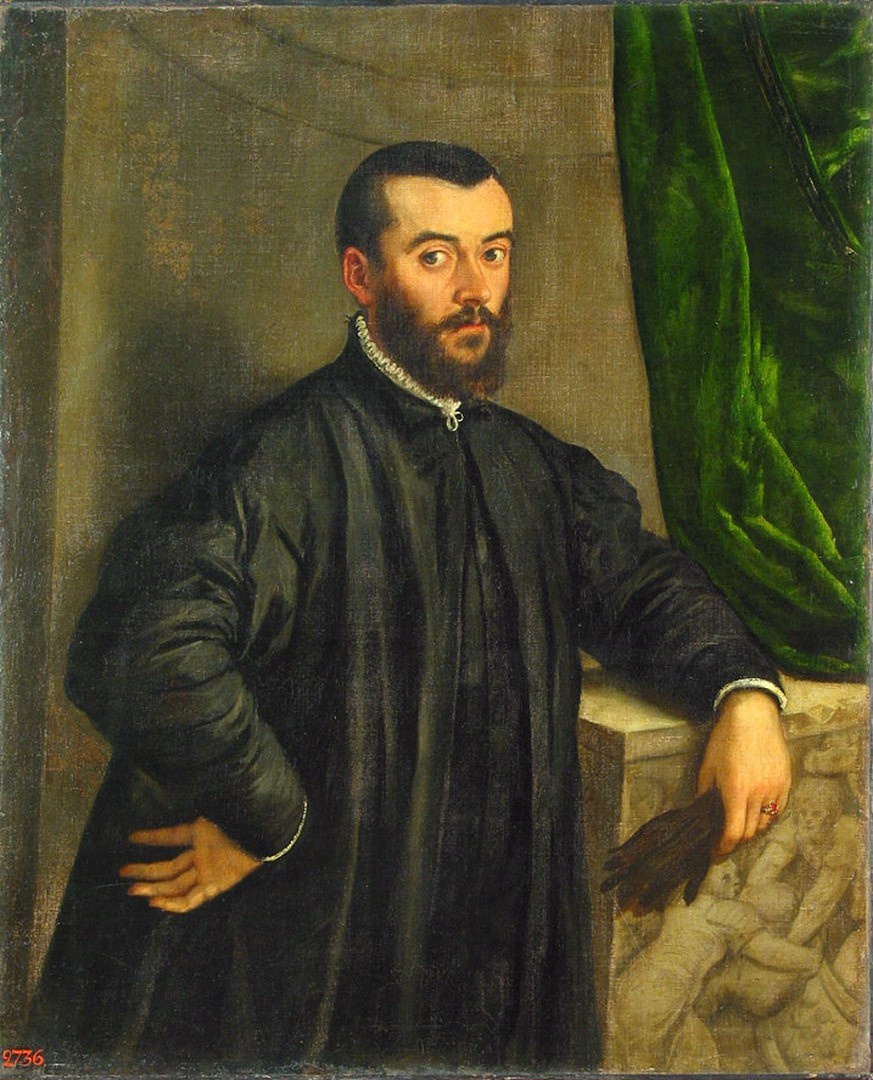
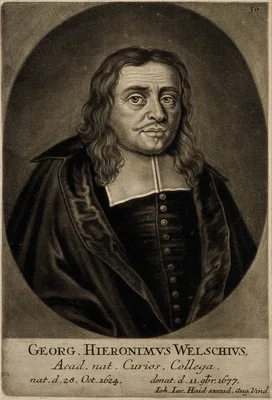
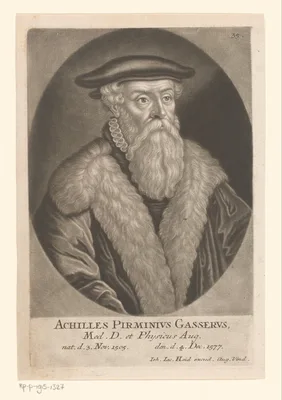
In 1555 Vesalius was the first to diagnose an aneurysm of the thoracic and abdominal aorta in a living person. Vesalius wrote this consilium to Achilles Pirmin Gasser on July 18, 1557; it was not published until more …
1667 CE–1673 CE
#292.1
Observationes anatomicae selectiores. [Part II: Observationum anatomicarum… pars altera]. 2 vols.
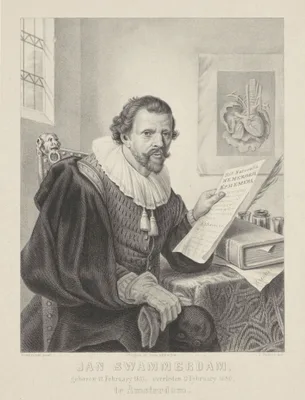
The only publications of one of the earliest scientific societies, active from 1664 to 1672. Founded by Gerard Blaes, and numbering Jan Swammerdam among its members, the college devoted itself to comparative anatomica…
1668 CE
#1210
De virorum organis generationi inservientibus, de clysteribus et de usu siphonis in anatomia.
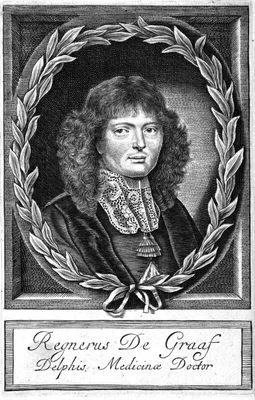
Exact and detailed account of the male reproductive system. This work and No. 1209 were translated into English and published as Suppl. 17 to J. Reprod. Fertil, 1972. Facsimile of originals, Nieuwkoop, De Graaf, 1965.
1668 CE
#6147
Des maladies des femmes grosses et accouchées.
The outstanding textbook of the time. Mauriceau, leading obstetrician of his day, introduced the practice of delivering his patients in bed instead of in the obstetrical chair. It was to Mauriceau that Hugh Chamberlen…
1668 CE
#97
Esperienze intorno alla generazione degl’insetti.

In the first scientific study of spontanteous generation Redi’s experiments dealt the first real blow to the ancient doctrine. In these experiments Redi made use of what we now term “controls”. Engli…
1668 CE
#5735
Heel- en geneeskonstige aanmerkingen.
Van Meekeren was first to record a bone graft. He states (Chap. 1) that he read a report of it in a letter received by the Rev. Engebert Sloot of Slooterdijk from John Kraanwinkel, a missionary in Russia, where the op…
1668 CE
#1481.1
Nouvelle découverte touchant la veüe.
Discovery of the blind spot in the retina, the existence of which Mariotte deduced from his experiments investigating the fate of light rays striking the base of the optic nerve. Facsimile reprint in J. Brons, The bli…
1668 CE
#292
Onomasticon zoicon, plerorumque animalium differentias & nomina propria pluribus linguis exponens. Cui accedunt mantissa anatomica, et quaedam de variis fossilium generibus.
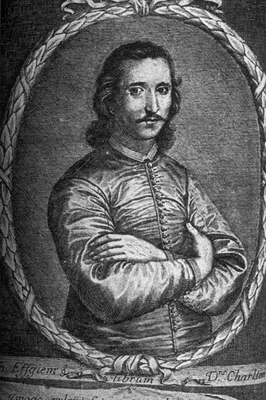
Gives a list of the English, Latin, and Greek names of all the then known animals. Digital facsimile from the Internet Archive at this link.
1669 CE
#13548
Il tabacco opera ... Nella quale si tratta dell'origine, historia, coltura, preparatione, qualità natura, virtà & uso in fumo, in polvere, in foglia, in lambitivo, et in medicina della pianta volgarmente detta tabacco, si discorre degl'vtili ch'arreca moderatamente preso, de i danni ch'apporta smoderatamente usato, e qual sia il vero e legitimo modo di prenderlo: trattato naturale, medico, morale & curioso.
Discusses the origin, history, cultivation, preparation, nature and virtues of tobacco, whether used for smoking, snuffing, chewing, etc. or for medicinal purposes (Waring). "The custom of smoking, its role in divinat…
1669 CE
#6613
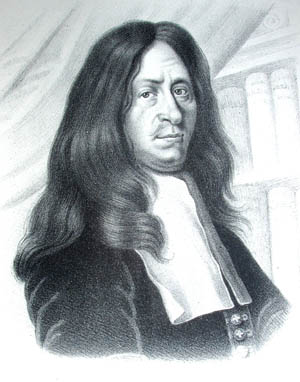
De medicis poetis dissertatio.
1669 CE
#1378.1
Discours sur l’anatomie du cerveau.
In this remarkably prescient argument for, and critique of, anatomical research into brain function Stensen opposed Descartes (No. 574) arguing that it was idle to speculate about cerebral function when so little was …
1669 CE
#293
Dissertatio epistolica de bombyce.
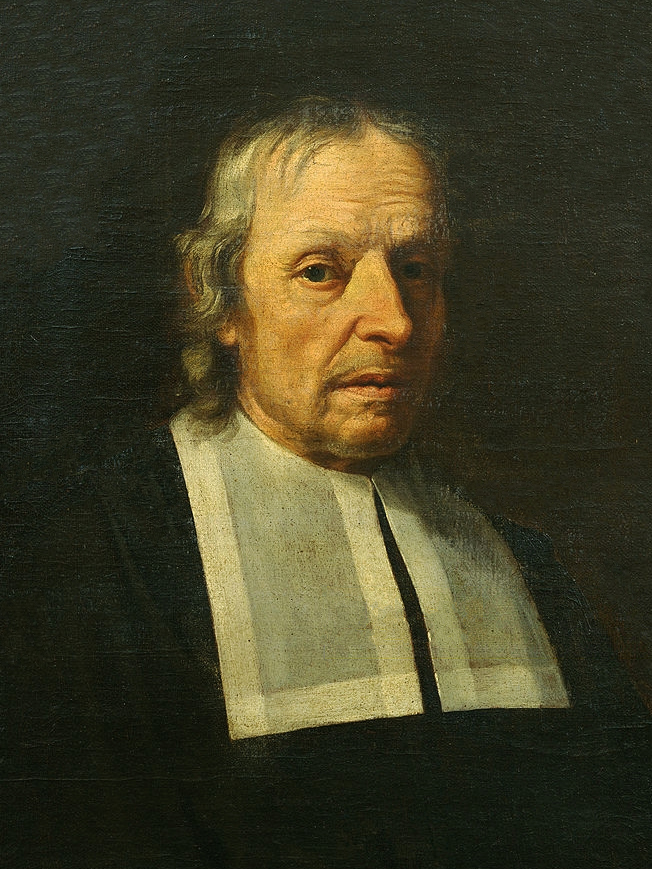
Malpighi’s work on the silkworm represents the first monograph on an invertebrate and records one of the most striking pieces of research work on his part. He dissected the silkworm under the microscope with gre…
1669 CE
#3349
Elements of speech, an essay of inquiry into the natural production of letters; with an appendix concerning persons deaf and dumb.
Includes a section on the education of deaf-mutes. Paracusis is described in the Appendix, p. 166.
1669 CE
#294
Historia insectorum generalis. 2 pts.
Swammerdam, one of the greatest of the early microscopists, spent much time on the study of insects, and mapped out a natural classification of them.
1669 CE
#761
Tractatus de corde.
Lower was the first to demonstrate the scroll-like structure of the cardiac muscle. He was one of the first to transfuse blood. Chapter III of the above work records how Lower injected dark venous blood into the insuf…