
Italy
338 entries published in Italy. 11 publication places.
1608 CE
#8002
Il vero modo et ordine per dissegnar tutte le parti et membra del corpo humano.
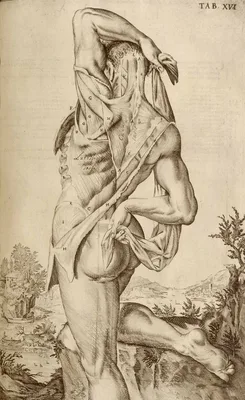
An entirely etched book of 40 leaves, drawn and etched by Fialetti, this was probably the first printed manual on drawing the human body, as distinct from earlier manuals on anatomy for artists. For further informatio…
1611 CE
#380
De anatome corporis humani libri vii.
Guidi, professor of philosophy and medicine at Pisa, discovered the Vidian nerve, the Vidian canal, and the Vidian artery. The above was edited by his nephew.
1612 CE
#572.2
Commentaria in artem medicinalem Galeni.
First printed mention of the air thermometer, an instrument that played a vital part in the creation of static medicine. This device was similar to Galileo’s open-air thermoscope, of which Santorio may have know…
1614 CE
#573
Ars…de statica medicina aphorismorum sectionibus septem comprehensa.
This collection of aphorisms is the work by which Santorio’s ideas became widely known. Santorio used a beam balance to measure metabolism. See also nos. 572.1 & 572.2. For description of his experiments, see No…
1616 CE
#534.52
De monstrorum caussis, natura, & differentiis libri duo.
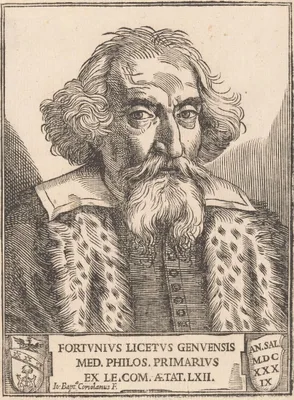
One of the earliest classifications of deformities, Liceti’s work was still under review in works on malformation in the 19th century. Includes both real and imaginary cases. The first of many illustrated editio…
1616 CE
#2143
De rara medicatione vulnerum.
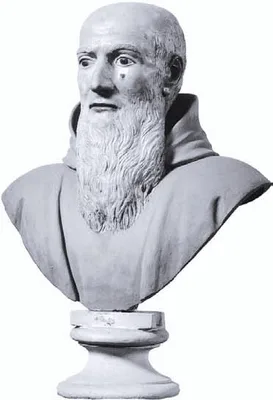
Like Paré, Magati believed that gunshot wounds were not in themselves poisonous. He suggested a bandage moistened with plain water in place of the various salves then in vogue.
1618 CE
#10502
De affectionibus cordis. Libri tres. Qvorum primus agit de naturalibus. Secundus & tertius De preternaturalibus, de paliptatione nempe, & syncope, atque earum curatione.
The first book on heart disease. "The recognition of heart disease as of clinical interest and importance was exceedingly slow. In 1618, one hundred and eleven years after the pioneer publication of Benivieni of the p…
1621 CE
#466
De formatione ovi et pulli.
1621 CE–1661 CE
#1720
Quaestiones medico-legales. 9 vols.
Zacchias, a Papal physician, was one of the founders of medical jurisprudence. His treatise includes information concerning injuries of the eye, etc., and contains section on the medico-legal aspects of insanity. The …
1625 CE
#2668
Commentaria in primam fen primi libri canonis Avicennae.
The chief value of this work is in its cautious revelation of the principles of construction of various instruments that Santorio had invented, including a hygrometer, a pendulum for measuring pulse rate, a syringe fo…
1627 CE
#1094
De lactibus sive lacteis venis.
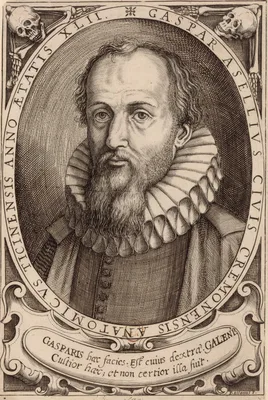
Records the discovery of the lacteal vessels. While performing vivisection on a dog that had recently fed, Aselli noticed a network of vessels in the mesentery and along the peritoneal surface of the intestine. The ve…
1627 CE
#381
Tabulae anatomicae lxxiix.
First publication of the very beautiful copperplates engraved by Francesco Valesio after Odoardo Fialetti, a pupil of Titian. Casseri commissioned these plates covering the whole field of human anatomy for his unfinis…
1628 CE
#2011
Methodus facile parandi iucunda tuta et nova medicamenta & eius applicatio aduersus chimicos.
Page 170 includes the first definite description of a blood transfusion, notably published in the same year as Harvey's discovery of the circulation of the blood in De motu cordis. Digital facsimile from Google Books …
1628 CE
#1821.1
Rerum medicarum Novae Hispaniae thesaurus, seu, Plantarum animalium mineralium Mexicanorum historia.
This summary of Hemández’s very extensive manuscript account of the natural history of Mexico (see No. 1820.1) was edited by N.A. de Recchi, and published at the expense of Prince Federico Cesi (1585-1630…
1630 CE
#259
Persio tradotto.
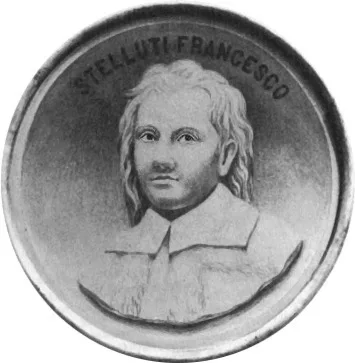
The first book to contain illustrations of natural objects as seen through the microscope— specifically an engraving of the exterior surface of bees. The work includes the Latin text of the Satyrae VI of Aulus P…
1632 CE
#6795
Quaestio iatrophilologica.
Learned bibliophile Gabriel Naudé eventually became Mazarin’s librarian and built up for his master a famous collection of books. He wrote an important medical dictionary. Four further parts of the above,…
1641 CE
#5074
De febribus libri IV.
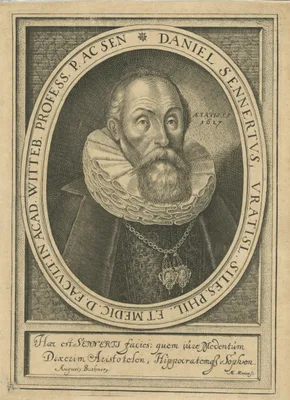
Sennert gave the first scientific description of scarlet fever. He was the first to mention the scarlatinal desquamation, the early arthritis, and post-scarlatinal edema, but made no mention of sore throat.
1641 CE
#9417
Syntagma anatomicum, publicis dissectionibus, in auditorum usum, diligenter aptatum.
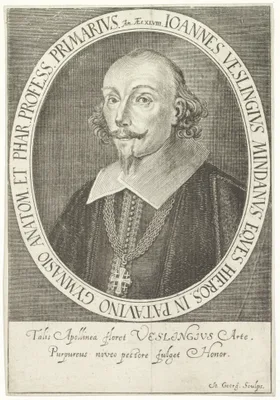
Vesling provided an early discussion of the human lymphatic system. He was one of the first physicians to describe the brain's circle of Willis. Digital facsimile from the Internet Archive at this link.
1642 CE
#7879
Figura ductus cuiusdam cum multiplicibus suis ramulis noviter in pancreate in diversis corporibus humanis observati.
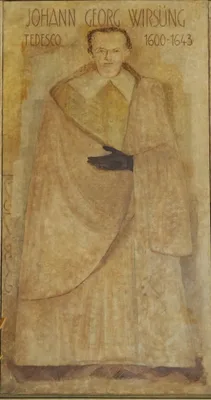
Wirsung, assistant to the celebrated German anatomist Johann Vesling, discovered the excretory duct of the pancreas named for him in 1642. To announce his discovery, Wirsung chose the extremely unusual method of publi…
1642 CE
#7179
Geneanthropeiae sive de hominis generatione decateuchon. Ubi ex ordine quaecunique ad humanae generationis liturgiam, ejusdemque principia, organa, tempus, usum, modum, occasionem voluptatem, aliasque omnes affectiones, quae in aphrodisiis accidere quoquomodo solent, ac possunt dedita opera plene methodice, & iucunde pertractantur.
An encyclopedic work on sexuality and physical love in all its aspects, practical and credulous, including the widest variety of possible positions, the anatomy and physiology of the sexual organs and varous aspects o…
1642 CE
#534.53
Monstrorum historia cum Paralipomenis historiae omnium animalium Bartholomaeus Ambrosinus… volumen composuit.
Aldrovandi assembled a large collection of specimens and notes on monsters which were published posthumously by Ambrosini, who added a number of personally observed cases. Those included the first detailed description…
1644 CE
#259.1
l’Occhio della mosca In his: Opusculi…
![ODIERNA, Giovanni Battista [Hodierna] (1597 – 1660)](/media/portraits/9538)
The first microscopical section in biology is discussed and illustrated in Odierna’s study of the fly’s eye, which is also the first description of the faceted eye of an arthropod.
1644 CE
#11858
Theatro d’Arcani del medico Lodovico Locatelli da Bergamo; nel quale si tratta dell’arte chimica, et suoi arcani, con gli afforismi d’Ippocrate commentati da Paracelso, et l’espositione d’alcune cifre, et caratteri oscuri de filosofi.
‘It is apparent that by the 1640’s Paracelsian medicine had gained momentum in Italy and that iatrochemical theories were being adopted by a number of Italian physicians. […] In 1644 there appeared …
1645 CE
#1542
Nova auris internae delineatio.
An article which announces the discovery of the long process of the malleus. Folius “accurately discussed the general configuration of the middle ear, described the round and oval windows, delineated the three o…
1648 CE
#7557
Musaeum metallicum in libros IIII distributum Bartholomaeus Ambrosinus ... labore, et studio composuit cum indice copiosissimo.
Digital facsimile from the University of Bologna at this link.
1652 CE
#3050
Iatrologismorum seu medicinalium observationum pentecostae quinque utilibus praeceptis.
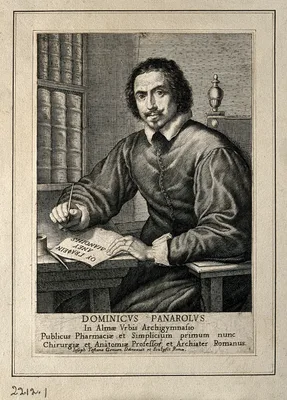
Panaroli described hemolytic jaundice of the newborn.
1654 CE
#151
Anthropometria.
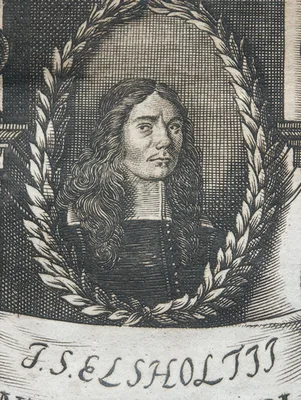
Elsholtz was the first physician to study anthropometry and human proportion.
1656 CE
#8861
Note overo memorie del museo di Lodovico Moscardo....Nel primo si disorre delle cose antiche, le quali in detto museo si trouano. Nel secondo delle petre, minerali, e terre. Nel terzo de corali, conchiglie, animali, frutti, & altre cose in quello contenute.
Moscardo's museum contained natural history specimens, archeological remains, and ethnographic objects. Around 1642 Moscardo acquired a portion of the collection of Francesco Calceolari and added it to his museum. Dig…
1657 CE
#8855
Bibliotheca botanica, seu herbarijstarum scriptorum promota synodia...Ia. Antonio Bumaldo [i.e. O. Montalbani], Collectore.
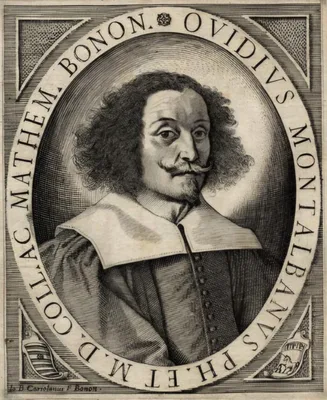
The first general bibliography of botany books, including herbals. The author, a prolific writer, often wrote under the pseudonym of Antonio Bumaldo.
1658 CE
#2528.1
Scrutinium physico-medicum contagiosae luis, quae pestis dicitur.
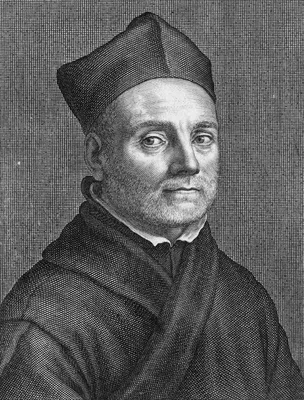
Kircher, a Jesuit scholar and polymath, not specifically trained in medicine, was probably the first to employ the microscope in investigating the cause of disease. He mentioned that the blood of plague patients was f…
1661 CE
#760
De pulmonibus observations anatomicae.
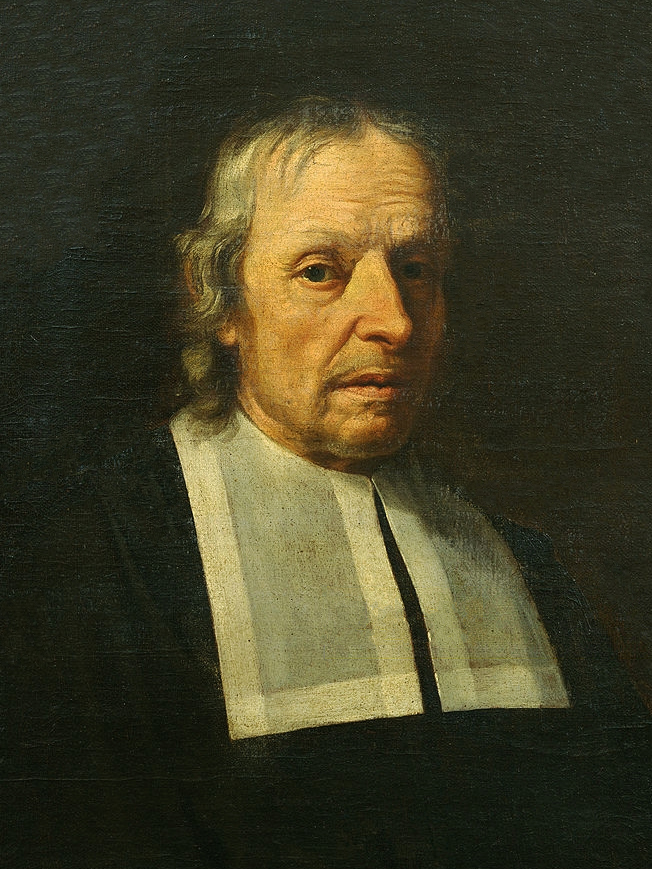
Discovery of the capillary circulation. Malpighi demonstrated that the pulmonary tissues are vesicular in nature and showed that the trachea ends in bronchial filaments. His De pulmonibus includes his demonstration of…
1662 CE
#1229
Exercitatio anatomica de structura et usu renum.
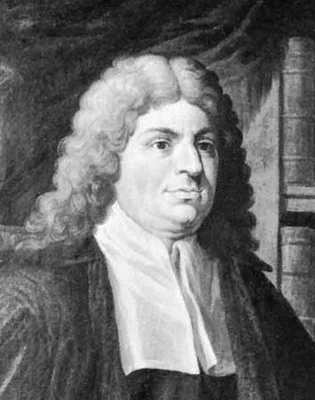
Classic description of the gross anatomy of the kidney. Bellini discovered the renal excretory ducts (“Bellini’s ducts”) and advanced a physical theory of the secretion of the urine. A translation of…
1664 CE
#5572
Observationum medico-chirurgicarum rariorum sylloge.
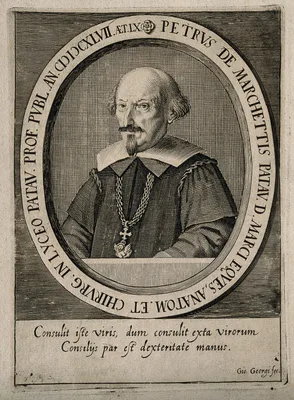
Pietro de Marchetti was Professor of Surgery at Padua. His book contains many valuable observations in surgery.\\
1664 CE
#2102
Osservazioni intorno alle vipere.

The first methodical work on snake-poison. Redi demonstrated for the first time that, for the poison to produce its effect, it must be injected under the skin.
1666 CE
#1230
De viscerum structura exercitatio anatomica.
Includes (pp. 71-100) his essay, De renibus, in which he described the uriniferous tubules and the “Malpighian bodies”. The great detail and clarity of Malpighi’s description was unsurpassed until Bo…
1667 CE
#9644
De vi percussionis liber.
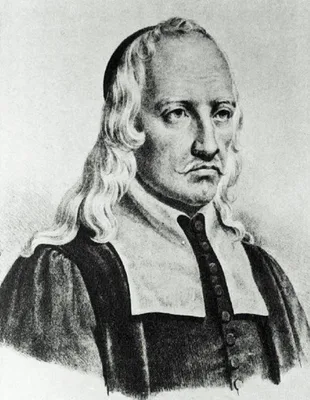
Building on the theory of mechanics as formulated by Aristotle and Galileo, and countering objections expressed by Stephani degli Angeli among others, Borelli presented a completely mechanical account of the action of…
1667 CE
#577
Elementorum myologiae specimen.
In this work Stensen, in collaboration with the mathematician Vincenzio Viviani (1622-1703), a pupil of Galileo, developed a geometrical description of muscular contraction, and attempted to show theoretically that mu…
1668 CE
#97
Esperienze intorno alla generazione degl’insetti.
In the first scientific study of spontanteous generation Redi’s experiments dealt the first real blow to the ancient doctrine. In these experiments Redi made use of what we now term “controls”. Engli…
1669 CE
#13548
Il tabacco opera ... Nella quale si tratta dell'origine, historia, coltura, preparatione, qualità natura, virtà & uso in fumo, in polvere, in foglia, in lambitivo, et in medicina della pianta volgarmente detta tabacco, si discorre degl'vtili ch'arreca moderatamente preso, de i danni ch'apporta smoderatamente usato, e qual sia il vero e legitimo modo di prenderlo: trattato naturale, medico, morale & curioso.
Discusses the origin, history, cultivation, preparation, nature and virtues of tobacco, whether used for smoking, snuffing, chewing, etc. or for medicinal purposes (Waring). "The custom of smoking, its role in divinat…
1671 CE
#294.1
Esperienze intorno a diverse cose naturali…
Includes the first scientific study of an electric fish. While the torpedo’s peculiar properties had provoked scientific speculation since at least the time of Aristotle, Redi was the first to perform an actual …
1672 CE
#384
Anatomia chirurgica.
First book devoted entirely to surgical anatomy.
1677 CE
#5122
De postrema Melitensi lue praxis historica.
This work, recording the epidemic of plague in Malta in 1675-76, was the first medical work published by a Maltese.
1677 CE
#7572
Museo Cospiano: annesso a quello del famoso Vlisse Aldrovandi e donato alla sua patria dall' illustrissimo signor Ferdinando Cospi ..., fra' gli Accademici Gelati il Fedele, e principe al presente de' medesimi.
As the title indicates, the Cospi collection incorporated the earlier museum of Ulisse Aldrovandi, and Legati's catalogue is sometimes regarded as forming a 14th or supplementary volume to Aldrovandi's encyclopedic Op…
1680 CE
#3761
Esperienze del Dottor Giuseppe Zambeccari intorno a diverse viscere tagliate a diversi animali viventi.
Proof that the spleen is not essential to life. For a translation and notes on the book, see Bull. Hist. Med., 1941, 9, 144-76, 311-31 (S. Jarcho).
1680 CE–1681 CE
#3669.3
De motu animalium. 2 pts.
Borelli originated the neurogenic theory of the heart’s action and first suggested that the circulation resembled a simple hydraulic system. He was the first to insist that the heart beat was a simple muscular c…
1681 CE
#13752
Recreatione dell'occhio e della mente nell'osservation ' delle chiocciole, proposta a curiosi delle opere dell natura.
The first treatise devoted entirely to molluscs, and the first practical guide for shell collectors. "Bonanni's work is significant for his careful attempts to precisely describe shell morphology. Unfortunately, due t…
1683 CE
#4162
De urinis et pulsibus de missione sanguinis de febribus de morbis capitis, et pectoris.
Bellini began to develop his hydraulic iatromechanics in this work, in which he considered the blood as a physical fluid with simple mechanical and mathematicizable properties. He realized the value of the urine as an…
1684 CE
#2448.1
Osservazioni … intomo agli animali viventi che si trovano negli animali viventi.
Redi was among the first of the parasitologists. He demonstrated the reproductive organs of Ascaris lumbricoides and also ascaris eggs. The results of his experiments appear in the above work, which also records his s…
1687 CE
#2529.1
Osservazioni intorno a’ pellicelli del corpo umano.
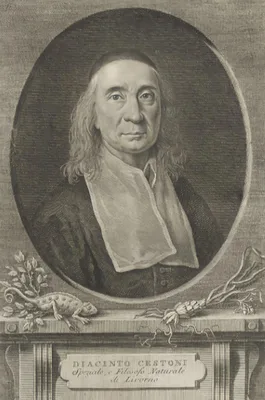
First clinical and experimental proof of infection by a microparasite. Bonomo observed Sarcoptes scabiei, the scabies mite. This gave researchers grounds to think in terms of objective, exogenous pathogenic agents as …
1689 CE
#12782
Anatome ossium novis inventis illustrata.
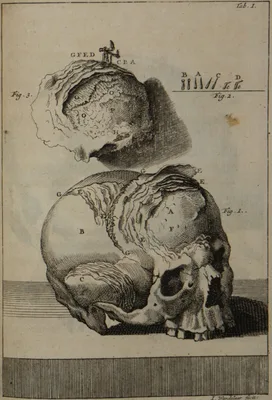
Gagliardi, a papal physician, fiirst described the lamellar structure of the bones. He also carried out some tests and comparative research between human and calf bones, and probably first described a case of bone tub…