
Basel
82 entries published in this place.
1526 CE
#9079
Hippocratis Coi medicorum omnium longe principis, opera: quibus maxima ex parte annorum circiter duo millia Latina caruit lingua: Graeci vero & Arabes, & prisci nostri Medici, plurimis tamen utilibus prætermissis, scripta sua illustrarunt: nunc tandem per M. Fabiu Rhauennatem, Gulielmum Copum Basiliensem, Nicolaum Leonicenu & Andream Brentium, viros doctissimos Latinate donata, ac iamprimu in lucem aedita: quo revera humano generi nihil fieri potuit salubrius.
![HIPPOCRATES, [Ἱπποκράτης; Hippocrates of Kos] (-460 – -370)](/media/portraits/50)
![ALTHAMER, Andreas [Andreas Brentius; Altheimer] (1500 – 1539)](/media/portraits/12158)
Digital facsimile from Google Books at this link.
1528 CE
#8427
Vegetii Renati Artis veterinariae, sive mulomedicinae libri quatuor, iam primum typis in lucem aediti.
The earliest surviving work on veterinary medicine, by a writer from Late Antiquity, presumably in the Western Roman Empire. Digital facsimile from BayerischeStaatsbibliothek at this link.
1529 CE
#1959.1
Caelii Aureliani Siccensis Tardarum passionum libri V. D. Oribasii Sardi Iuliani Caesaris archiatri Euporiston lib: III. Medicinae comperi: lib: 1. Curationum lib: 1. Trochiscoru confect: lib: 1.
From a clinical point of view, the two works of Caelius Aurelianus, which were translated into Latin from Greek originals by Soranus of Ephesus that were later lost, represent the high-point of Graeco-Roman medical ac…
1530 CE
#11083
De compositione medicamentorum... lib VII per Ioannem Guinterium Andernacum imprimum latinitate donati. Eiusdem De ponderibus & mensuris liber, D. Andrea Alciato interprete.
![GALEN, [Κλαύδιος Γαληνός; Galen of Pergamon] (129 – 216)](/media/portraits/21)
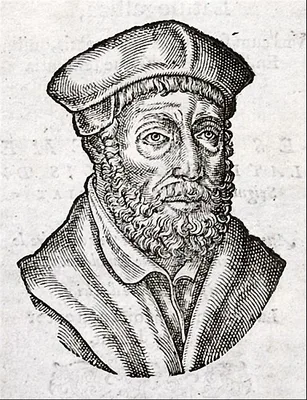
First separate edition in Latin of Galen's De compositione medicamentorum, On the Composition of medicines, translated by Johann Winter of Andernach, to which was added Galen's treatise on weights and measures transla…
1531 CE
#5521
De peste Brittanica commentariolus vere aureus.
Schyller’s book on sweating sickness deals with the German epidemic of 1528-30.
1531 CE
#8967
Garioponti Vetusti admodum medici ad totius corporis aegritudines remediorum praxeōn libri V. Eiusdem de febribus, atque earum symptomatis libri ii. Recens typis commissi, & multis in locis suae integritati restituti.
Digital facsimile from Bayerische StaatsBibliothek at this link.
1532 CE
#11176
Nicolai Leoniceni ....Opuscula: quorum catalogum versa pagina indicabit. Per. D. Andream Leennium medicum, à multis quibus scatebant vitiis, repurgata atque annotatiunculis illustrata.
First edition of Leoniceno's collected works edited by Andreas Leennius, about whom little is known. Digital facsimile from Google Books at this link.
1533 CE
#12591
De pulsuum scientia libellus utilis & necessarius. Theophili ... de exacta retrimentorum vesicae cognitione, commentariolus, Albano Torino interprete.
First separate, and perhaps the first complete printed edition of the Byzantine physician's De pulsibus, edited by Alban Thorer. This text, in the Galenic tradition "largely mediated through the pseudo-Galenic tract "…
1533 CE–1534 CE
#6974
Aetii Amideni quem alii Antiochenum vocant medici clarissimi libri XVI. tomos divisi : quorum primus & ultimus Ioan. Baptista Montano Veronensi medico, secundus Iano Cornario Zuiccauiensi, & ipso medicinae professore, interpretibus latinitate donati sunt. In quo opere cuncta quae ad curandi artem pertinent congesta sunt, ex omnibus qui usq[ue] ad eius tempora scripserant, diligentissime excerpta. Additus est index in omneis tomos copiosissimus. 3 vols.
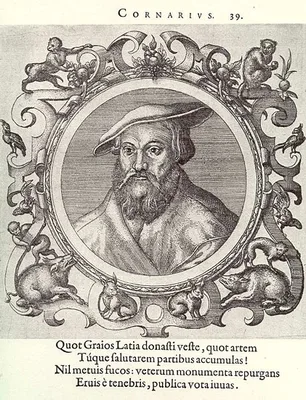
J. B. Montanus and Janus Cornarius prepared the first edition of Aetius's collected works in Latin translation. That edition was the first to include Aetius's writings on obstetrics, which epitomized all previous know…
1536 CE
#10961
De medicamentis empiricis physicis ac rationalibus liber.... Edited by Janus Cornarius. Item Claudii Galeni libri novem nunc primum Latini facti.... Jani Cornarii.
The Gallo-Roman physician Marcellus was born in Bordeaux. He may have served as magister officiorum under Theodosius I, or may have been royal physician. Sarton (Introduction to the history of science I, 391) consider…
1536 CE
#46
Omnia opera Ysaac in hoc volumini contenta: cum quibusdam alijs opusculis: Liber de definitionibus. Liber de elementis. Liber dietaru[m] vniversalium: cum co[m]me[n]to Petri Hispani. Liber dietarum particularium ... Liber de vrinis cum commento eiusdem. Liber de febribus. Pantechni decem libri theorices: et decem practices: cum tractatu de gradibus medicinarum Constantini. Viaticum Ysaac quod constantinus sibi attribuit. Liber de oculis Constantini. Liber des stomacho Constantini. Liber virtutum de simplici medicina Constantini. Compendium megatechni Galeni a Constantino compositum ; Cum tabula [et] repertorio omnium operum et questionum in co[m]mentis contentarum. Edited by Andreas Turinus.
Constantine was a Muslim from North Africa who converted to Christianity. His writings were first published with those of Isaac Judaeus in the above edition which includes many separate texts. Many of the writings of …
1538 CE
#4963.2
De anima et vita libri tres.
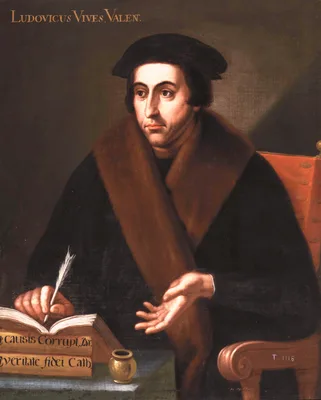
Vives anticipated Bacon and Descartes in developing an empirical psychology in which the mind was to be studied both through introspection and observation of others. From his exhaustive analysis of memory he developed…
1538 CE
#6969
Simeonis Sethi, magistri Antiochiae, Syntagma per literarum ordinem de cibariorum facultate, Lilio Gregorio Gyraldo,... interprete.
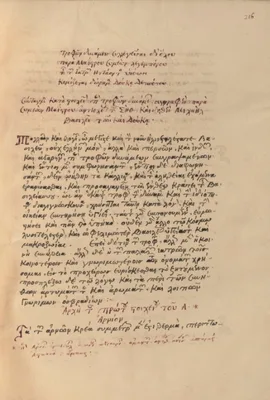
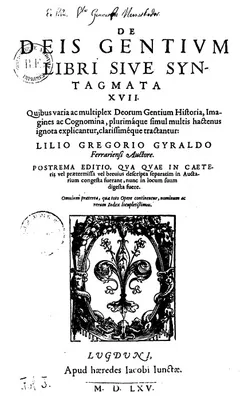
First printed edition of Seth's Byzantine encyclopedia of foods, nutrition, and diatetics from plants and animals, with Greek text and Latin translation by scholar and poet Giglio Gregorio Giraldi. Simeon Seth was an …
1539 CE
#10165
Epistola docens venam axillarem dextri cubiti in dolore laterali secandam: & melancholium succum ex venae portae ramis ad sedem pertinentibus, purgari.
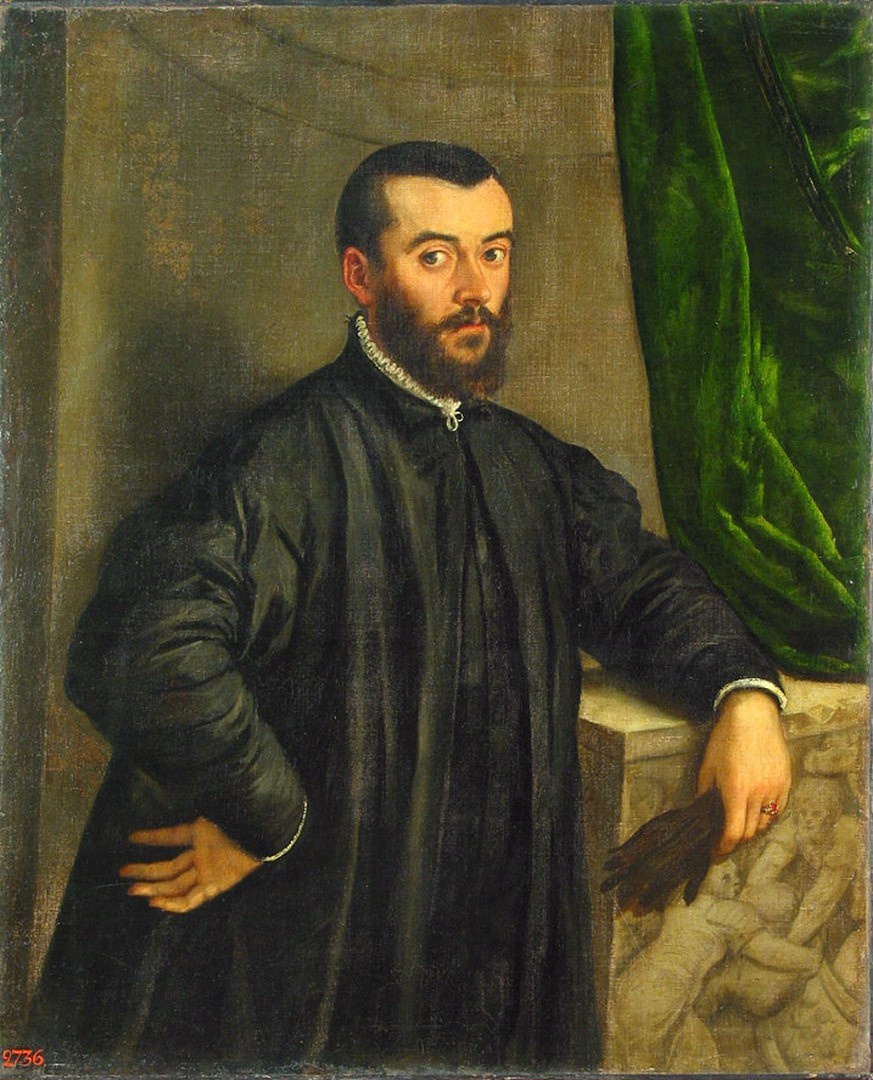
In this early study, written in the form of a letter to his friend and mentor Imperial Physician, Nicolaus Florenas, who had encouraged him to study medicine, Vesalius reported his study of the venous system of the hu…
1542 CE
#1808
De historia stirpium commentarii.
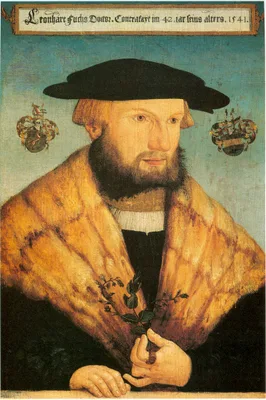
Illustrated with full-page woodcut illustrations drawn by Albrecht Meyer, copied onto the blocks by Heinrich Füllmaurer and cut by Veit Rudolf Speckle; the artists' self-portraits appear on the final leaf. Descri…
1543 CE
#375
De humani corporis fabrica libri septem.
Published when the author was only 29 years old, the Fabrica revolutionized not only the science of anatomy but how it was taught. Throughout this encylopedic work on the structure and workings of the human body, Vesa…
1543 CE
#1809
Enumeratio medicamentorum purgantium.
An index of purgatives.
1543 CE
#376
Suorum de humani corporis fabrica librorum epitome.
Shortly after publishing his encyclopedic De humani corporis fabrica libri septem, Vesalius issued De humani corporis fabrica epitome, also from the press of Johannes Oporinus of Basel. This thin set of 14 unnumbered …
1546 CE
#1810.1
Epistola, rationem modumque propinandi radicis Chynae decocti…
In this work on the discovery and therapeutic use of the china root (Smilax china) in the treatment of syphilis, Vesalius described the first attempt to formulate methods of identification of an exotic drug. He also o…
1549 CE
#4511.02
De cerebri morbis…
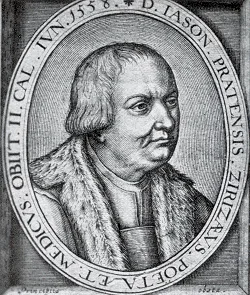
The first book devoted entirely to brain disorders, including tremor, tetanus, vertigo, epilepsy and hemicrania.
1549 CE
#1793
Medicamentorum opus in sectiones quadragintaocto digestum, hactenus in Germania non uisum, omnibus tum medicis, tum seplasiarns mirum in modum utile, a Leonharto Fuchsio...
The “Antidotarium magnum” by the Byzantine physician Nicolaus Myrepsus. It was the largest strictly pharmaceutical work that had appeared up to the time of its writing (about 1270-1280); it contained more …
1554 CE
#3109
Medicinalium epistolarum miscellanea.
Epistle xxi, pp. 74-77, contains the first definite description of chlorosis. “De morbo virgineo”. English translation in No. 2241.
1555 CE
#377
De humani corporis fabrica libri septem.
Containing Vesalius’s final published revisions of the text, this edition is also superior for its enlarged format, improved typography and printing, better paper, larger woodcut initials, and changes to the let…
1555 CE
#10601
Sphygmicae artis iam mille ducentos annos perditae et desideratae libri V.

Considered the most significant work on the pulse between Galen and Harvey. The work includes what is probably the earliest graphic representation of the pulse. Struthius provided a useful mnemonic of the five simple …
1556 CE
#3049
Curationum medicinalium centuriae quatuor.
Contains (Cent. iii, curat. 70, p. 286) first recorded case of purpura as a separate entity, not associated with fever. English translation of this section in Major, Classic descriptions of disease, 3rd. ed., 1945, p.…
1556 CE
#13252
De re metallica.
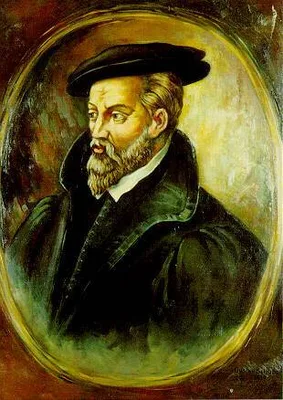
Agricola, a physician, wrote several pioneering works on physical geology, systematic minerology, and mining technology. The twelve books of his masterwork, De re metallica (On Metals), illustrated with over 270 woodc…
1557 CE
#534.5
Prodigiorum ac ostentorum chronicon.
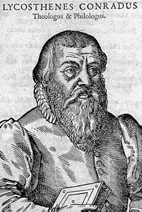
This encyclopedic chronology of portentious events in human history includes many monstrous births, both human and animal. Actual cases are uncritically mingled with mythical creatures. German translation, 1557. Engli…
1559 CE
#7240
Michaelis Ephesii scholia, idest, brevis sed erudita atque utilis interpretatio in IIII. libros Aristotelis De Partibus Animalium. Dominico Monthesauro Veronensi interprete. Nunc primmùm [sic.] in lucem edita.
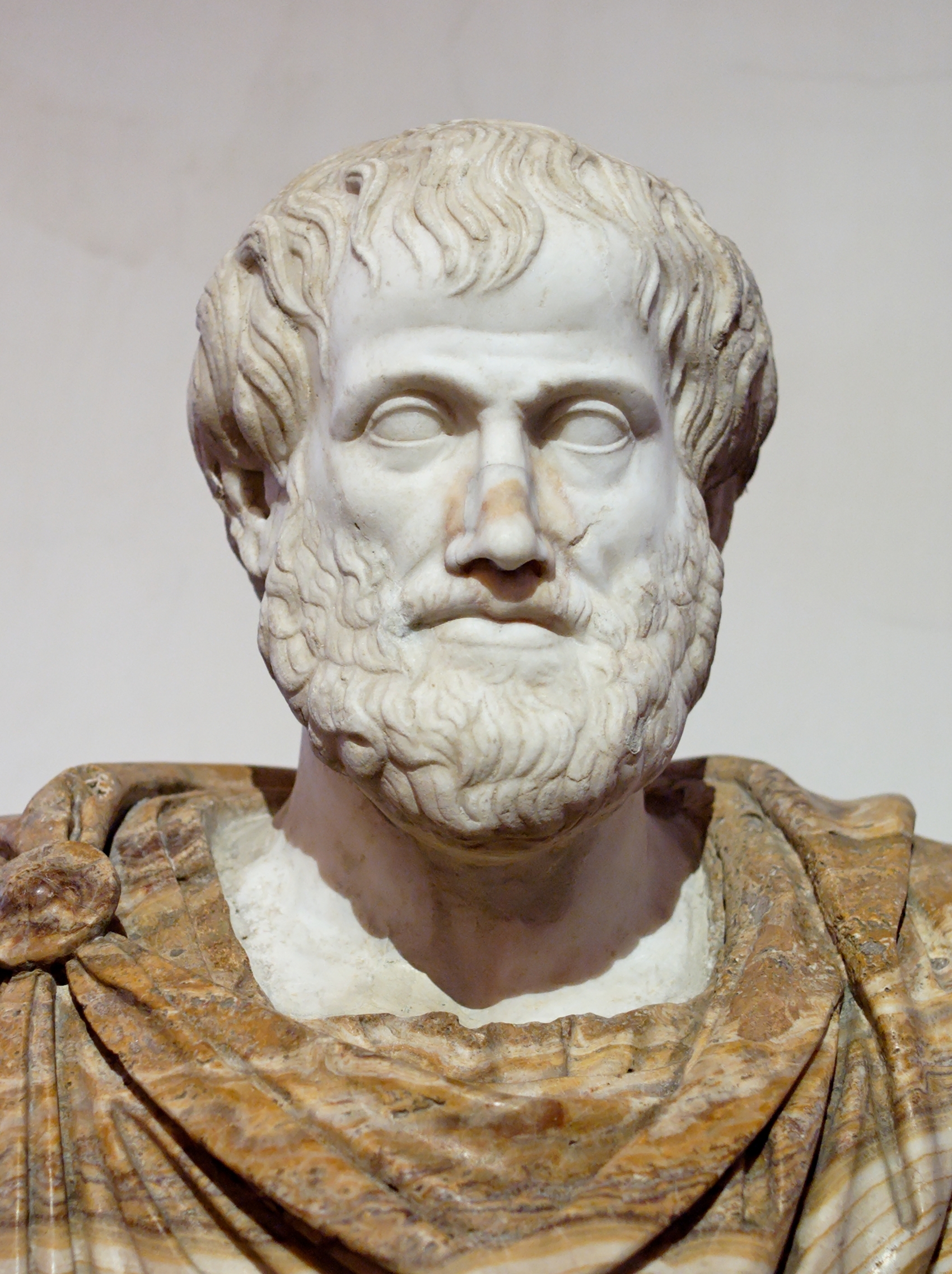
Michael of Ephesus, who completed his commentaries in or after 1138, was one of the principal Aristotelian scholars in a group organized in Constantinople by the Empress Anna Komnena. His commentary was translated int…
1561 CE
#10271
Pharmacopoeia, medicamentorum omnium quae hodie ad publica medentium munia officinis extant, tractationem & usum ex antiquorum medicorum praescripto continens, pharmacopoeis omnibus, atque etiam iis qui opus factitant medicum, valde utilis & necessaria.
Foes is credited with coining the word pharmacopeia in the title of this work. Digital facsimile from the Internet Archive at this link.
1562 CE
#6814
Prologomena in Galenum, in tres partes divisa IN: volume one of Cl [audius]Galen Pergameni [Opera] Omnia quae extant, in Latinum sermonem convers.
Prologomena in Galenum, in tres partes divisa written by physician, naturalist, and bibliographer, Conrad Gessner (Gesner), and issued in volume one of Cl [audius] Galeni Pergameni [Opera] Omnia, quae extant, in Latin…
1563 CE
#4916
De praestigiis daemonum.
Weyer was the first European physician to take an empirical, scientific approach to the study of mental illness. At the height of the witchcraft delusion he argued that witches were mentally ill women who deserved hum…
1563 CE
#5563
Practica der Wundartzney.
Würtz was a friend of Gessner and an admirer of Paracelsus; his book went through many editions and was translated into English, French, and Dutch. It describes the treatment of gunshot wounds, fractures, and dis…
1566 CE
#6011
Gynaeciorum, hoc est, de mulierum turn aliis, tum gravidarum, parientium et puerperarum affectibus et morbis, libri veterum ac recentiorum aliquot, partim nunc primum editi, partim multo quam antea castigatiores.
The first encyclopedia of gynecology and obstetrics, originally conceived by Conrad Gesner, who collected material for the purpose. Wolff, Gesner’s literary executor, added material and published the collection …
1566 CE
#6136
Moschionos Peri gynaikeion pathon, id est…De morbis muliebribus liber unus; cum CONARDI GESNERI… scholiis & emendationibus nun primum editus opera ac studio CASPARI WOLPHII.
The earliest text specifically for midwives, based on the teachings of Soranus, the greatest obstetrical writer of antiquity. Muscio was a pupil of Soranus. His book, the earliest copy of which is a manuscript dating …
1567 CE
#4916.1
Von den Kranckheyten so die vernunfft berauben als da sein S. Veyts Thantz…
In this work on the “diseases that deprive man of his reason” Paracelsus anticipated the descriptive method in psychiatry, giving a purely medical account of the clinical manifestations of epilepsy, mania,…
1572 CE
#10937
Opticae thesaurus: Alhazeni Arabis libri septem, nunc primum editi; Eiusdem liber De Crepusculis et nubium ascensionibus. Edited by Friedrich Risner.
The Arab mathematician, astronomer, and physicist of the Islamic Golden Age Alhazen made significant contributions to the principles of optics and the theory of visual perception in his Opticae thesaurus. Risner's edi…
1581 CE
#56
Medici antique Graeci: Aretaeus, Palladius, Ruffus, Theophilus: Physici & chirurgi. Partim nunquam, partim antea, sed nunc auctiores editi. Omnes a Junio Paulo Crasso Patavino Latio donati. Quibus accesserunt Stephanus Athen & ipsius Crassi Quaestiones medicae & naturales.
An anthology of ancient Greek and more recent medical texts edited by Crassi. Digital facsimile from the Internet Archive at this link.
1584 CE
#12946
Observationes medicae de capite humano: Hoc est, exempla capitis morborum , causarum signorum, evetuum, curationum, ut singularia, sic abdita & monstrosa, ex clariss. medicorum, veterum simul & recentiorum scriptis.
This work Schenck described his personal observations of language disorders, along with the observations of other physicians. He has been called a pioneer of neurolinguistics. Digital facsimile from Google Books at th…
1586 CE–1588 CE
#6012
Gynaeciorum sive de mulierum affectibus commentarii Graecorum, Latinorum, barbarorum, iam olim & nunc recens editorum: in tres tomos digesti, et necessariis passim imaginibus illustrati. 4 vols.
A hugely enlarged version of No. 6011, with texts in Greek as well as Latin. Digital facsimile of vol. 1 from Google Books at this link.
1589 CE–1591 CE
#8466
Der Bücher und Schriften des Edlen, Hochgelehrten und Bewehrten Philosophi und Medici, Philipi Thephrasti Bombast von Hohen hem, Paracelsi genannt. Edited by Johannes Huser. 10 vols.
First edition of Paracelsus's collected works. Though all the autographs of Paracelsus's writings were later lost, Huber, who was born shortly after Paracelsus's death, was able to collect a great number of autographs…
1590 CE
#6743.1
Bibliotheca medica. Sive catalogus illorum, qui ex professo artem medicam in hunc usque annum scriptis illustrarunt.
The first systematic medical bibliography. Includes an annotated list of 1,224 authors writing in Latin, lists of French, German, and Italian writers, and other material. Digital facsimile from Google Books at this link.
1592 CE
#379
Theatrum anatomicum infinitis locis auctum, ad morbos accommodatum....
Includes historical data. Bauhin was professor of anatomy at Basle.
1602 CE–1603 CE
#2195
Praxeos seu de cognoscendis, praedicendis, praecavendis, curandisque affectibus homini incommodantibus. 2 vols.
The first attempt at a classification of diseases according to symptoms. Over a period of 50 years Platter dissected more than 300 bodies and made many observations of value to pathological anatomy.
1606 CE–1641 CE
#5570
Observationum et curationum chirurgicarum centuriae. 6 vols.
Fabricius’s most important work; it was the best collection of case-records available for many years. Among other things, Fabricius used a magnet to extract an iron splinter from the eye – an idea suggeste…
1607 CE
#2245
De combustionibus.
First book devoted entirely to burns. Fabry was the first to classify burns. Translated into English by John Steer as: Gulielm, Fabricius Hildamus, his experiments in chyrurgerie concerning combustions or burnings mad…
1614 CE
#3789
Observationum in hominis affectibus plerisque, corpori & animo, functionum laesione, dolore, aliave molestia & vitio incommodantibus, libri tres.
First known report of a case of death from hypertrophy of the thymus, in an infant, is reported on p. 172; it is reproduced on p. 239 of J. Ruhräh’s Pediatrics of the past, New York, 1925. Platter first des…
1615 CE
#2142
New Feldt Arztny Buch von Kranckheiten und Schäden, so in Kriegen den Wundartzten gemeinlich fürfallen.
Fabry’s book includes an early description of a field drug chest for army use. He was one of the most eminent surgeons of his time, although not prepared to adopt all the teachings of Paré. He had conside…
1623 CE
#9868
Pinax theatri botanici.
The Pinax theatri botanici (English, Illustrated exposition of plants) described and classified about 6,000 species. "The classification system was not particularly innovative, using traditional groups such as "trees"…
1665 CE
#2246
De siriasi.
A treatise on sunstroke.
1679 CE
#974.1
Cicutae aquaticae historia et noxae.
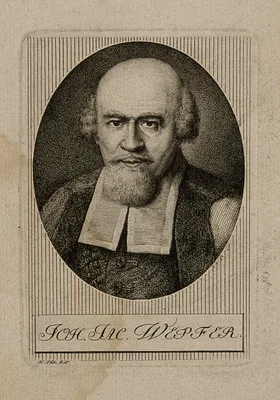
This is primarily a work on the poisonous water hemlock, its dangerous effects, its medicinal uses, and antidotes to counter the poison. However, it also contains the first description of the tiny glands in the mucosa…