
Germany
1,103 entries published in Germany. 28 publication places.
1496 CE–1497 CE
#2362
Tractatus de pestilentiali scorra sive mala de Franzos: originem remediaqu[ue] eiusdem continens.
Grünpeck was first to record mixed primary lesions, multiple primary lesions, and to note the second incubation period of syphilis. A translation of the above is in Arch. Derm. Syph. (Chicago), 1930, 22, 430. Dig…
1499 CE
#363.2
Philosophie naturalis compendium.
The last section of this commentary on Aristotle is an illustrated summary of anatomy, the text of which was derived, with some modifications, from medieval manuscripts. The series of eleven woodcuts has been called &…
1501 CE
#363.3
Antropologium de ho[min]is dignitate, natura, et p[ro]prietatibus.
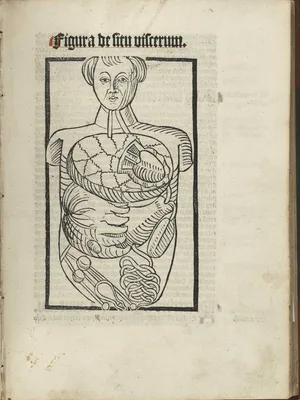
Includes the first illustrations of the viscera in a printed book. The four woodcuts are derived with modifications from Peyligk (No. 363.2). This work also contains the first mention ever of the word anthropology (in…
1528 CE
#149
Vier Bücher von menschlicher Proportion.
Written, designed, and illustrated by Dürer, this work is notable for its extraordinary series of anthropometrical woodcuts. The first two books deal with the proper proportions of the human form; the third chang…
1530 CE
#3667
Artzney Buchlein, wider allerlei Kranckeyten und Gebrachen der Tzeen: Getzogen auss dem Galeno, Auicenna, Mesue, Cornelio Celso vnd andern mehr der Artzney Doctorn seher nützlich zu lesen.
The first book on dentistry, probably intended for the general public. The unidentified writer confined himself to extracts from the works of ancient and recent writers on the subject. The woodcut on the title page wa…
1546 CE
#1810
Pharmacorum omnium, quae quidem in usu sunt, conficiendorum ratio: Vulgo vocant dispensatorium pharmacopolarum, ex omni genere bonorum authorum, cum veterum tum recentium collectum, & scholiis utilissimis illustratum, in quibus obiter, plurium simplicium, hactenus non cognitorum, vera noticia traditur. Authore Valerio Cordo. Item De collectione, repositione, & duratione simplicium. De adulterationibus quorundam simplicium. Simplici aliquo absolute scripto, quid sit accipiendum. Antiballomena, id est, succedanea, sive quid pro quo. Qualem virum pharmacopolam esse conveniat. Cum Indice copioso.
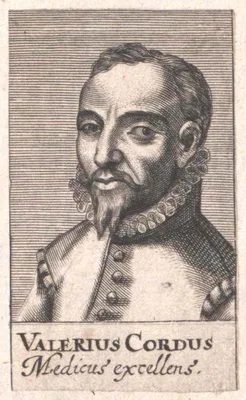
The first "real" pharmacopeia to be published. It was recognized as the official pharmacopeia of Nuremberg. Facsimile edition, 1934. Digital facsimile of the 1546 edition from Goethe Universität, Frankfurt am Mai…
1553 CE
#2369
Von der frantzösischen kranckheit drey Bücher.
Paracelsus suggested the hereditary transmission of syphilis and advocated mercury internally, as an antisyphilitic. He called the disease “French gonorrhoea” and thus started the confusion which lasted un…
1562 CE
#1818
De gradibus, de compositionibus, et dosibus receptorum ac naturalium libri septem.
Paracelsus has been called by some “the pioneer of modern chemists” and by others “uncouth, boorish, vain, ignorant and pretentious”. His De gradibus contains most of his innovations in Chemica…
1572 CE–1573 CE
#1539
Externarum et internarum principalium humani corporis partium tabulae.
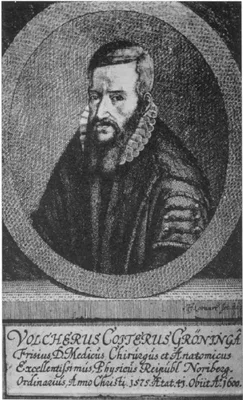
Coiter made several important contributions to the study of human anatomy, and was the first to elevate comparative anatomy to the rank of an independent branch of biology. His Externarum et internarum principalium hu…
1573 CE
#6143
Reformation oder Ordnung für die Hebammen.
Legislation governing the practice of midwifery was introduced in the city of Frankfurt in 1573, Digital facsimile from the Bayerische Staatsbibliothek at this link.
1575 CE
#284
Lectiones Gabrielis Falloppi de partibus similaribus humani corporis, ex diversis exemplari eus a Volchero Coiter summa cum diligentia collecta. His accessere diversorum animalium sceletorum explicationes iconibus artificiosis, et genuinis illustratae.
Coiter, a pupil of Fallopius and Eustachius, became town physician of Nuremberg. His book on comparative osteology, contained in his edition of the lectures of Fallopius, extended his studies begun in his work of 1572…
1582 CE
#7327
Aigentlich Beschreibung der Raiss, so er vor diser Zeit gegen Auffgang inn die Morgenländer, fürnemlich Syriam, Iudaeam, Arabiam, Mesopotamiam, Babyloniam, Assyriam, Armeniam etc....
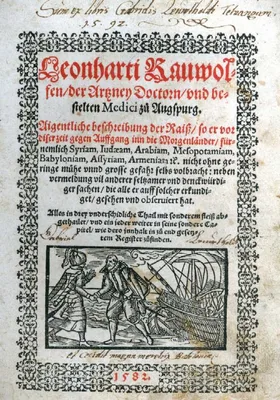
Rauwolf provided the first modern descriptions of the flora of the area east of the Levantine coast. He was also the first to describe the riparian flora of the Euphrates, and the first European to publish an account …
1587 CE
#5733.52
De decoratione liber…Additi nunc primum duo tractatus, alter, de varicibus, alter de reficiendo naso.
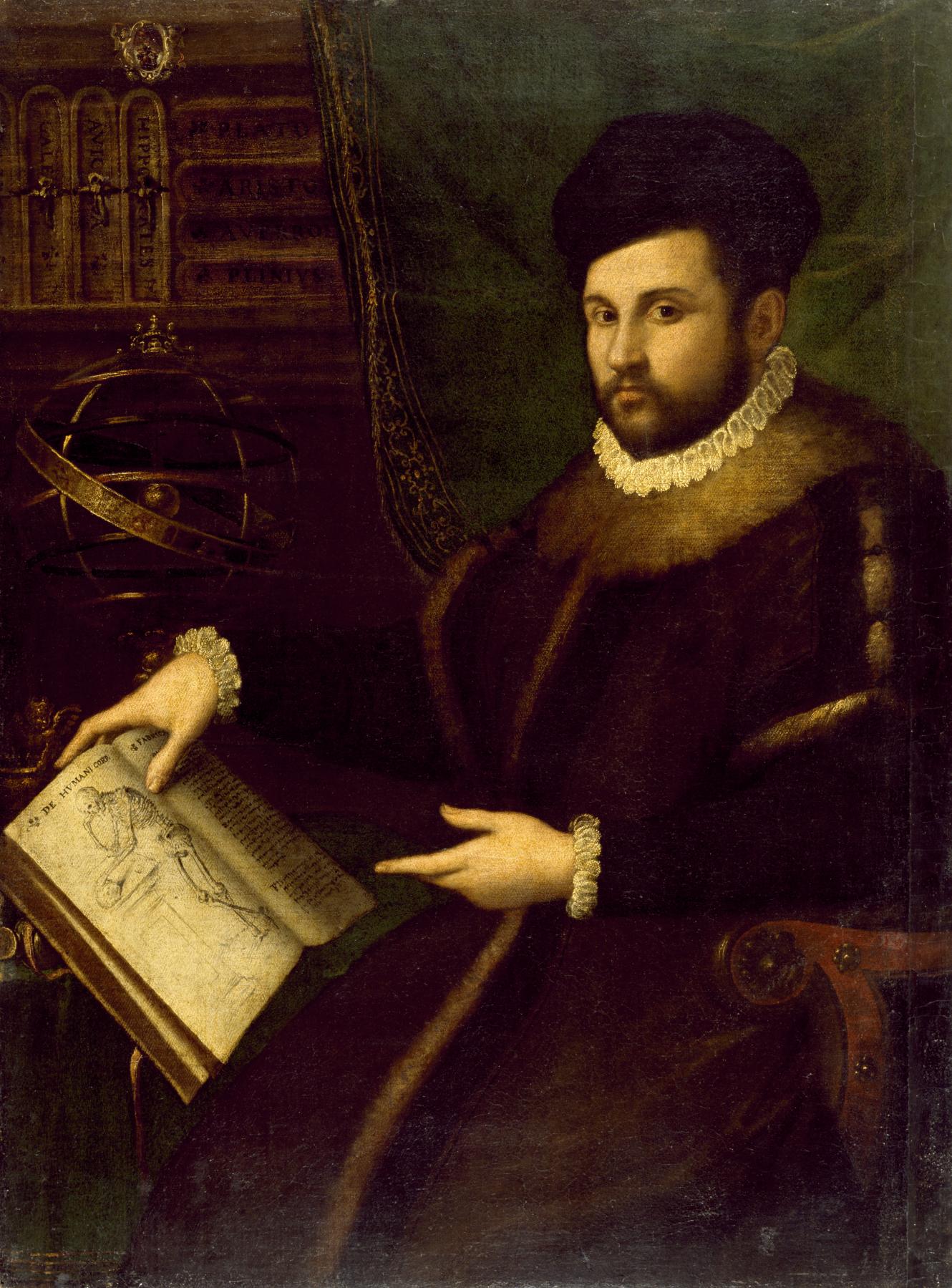
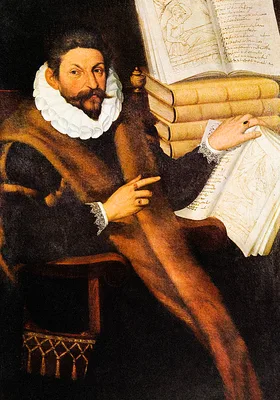
This work on cosmetics contains Tagliacozzi’s first publication on rhinoplasty – De reficiendo naso – a letter written to Mercuriale in response to inaccurate statements about Tagliacozzi's methods m…
1587 CE
#11101
Medicina universa, ex lectiones eius caeterisque opusculis, tum impressis, tum scriptis collecta, & in tres tomos nunc primum decenti ordine digesta, studio & opera Martini Weindrichii.
Montanus became a professor of practical medicine at Ferrara and at the University of Padua in 1539. His greatest innovation was to introduce clinical medicine into the curriculum as a way to integrate medical theory …
1588 CE
#6793
Oeconomia Hippocratis, aphabeti serie distincta. In qua dictionum apud Hippocratem omnium, praesertim obscuriorum, usus explicatur, etc.
A Greek alphabetical dictionary of the vocabulary of the Hippocratic writings, based on an exhaustive investigation of all ancient medical texts.
1591 CE
#6743.2
Nomenclator scriptorum medicorum. Hoc est: elenchus eorum qui artem medicam suis scriptis illustrarunt, secundum locos communes ipsius medicinae.
The first medical subject bibliography, arranged under very broad subject headings with indexes of authors and subjects. Digital facsimile from the Internet Archive at this link.
1595 CE
#6930
Magni Hippocratis medicorum omnium facile principis, opera omnia quae extant in viii sectiones....
![HIPPOCRATES, [Ἱπποκράτης; Hippocrates of Kos] (-460 – -370)](/media/portraits/50)
The French humanist physician Foës produced the first Greek & Latin edition of the complete extant works of Hippocrates. His edition was the most significant before that of Littré.
1597 CE
#1718
De vitiis vocis libri duo. In quibus non solum vocis definitio traditur, et explicatur, sed illius differentiae, instrumenta, et causae aperiuntur. Vltimo de vocis conseruatione, praeseruatione, ac vitiorum eius curatione tractatur. Opus ad vtilitatem concionatorum praecipuè editum. Cui accedit consilium de raucedine ac methodus testificandi in quibusuis casibus medicis oblatis, postquam formulae quaedam testationum proponantur.
Codronchi's Methodus testificandi, inquibusvis casibus medicis oblatis first published in the above (pp. 148-232), is considered the earliest significant work on forensic medicine. Digital facsimile from Google Books …
1597 CE
#3244
De vitiis vocis, libri duo.
First treatise devoted solely to diseases of the larynx. (See also No. 1718.)
1600 CE
#2272
Observationum medicarum, rararum, novarum, etc. 2 vols.
Schenck was the greatest compiler of his day. His Observationes form the easiest source-book for the pathological observations of Sylvius, Vesalius, and Columbus, and represent a lifetime of medical reading and experi…
1603 CE
#3343.1
Opera omnia quinque sectionibus comprehensa.
Demonstration (Cap. I, p. 587-91) that some people who cannot hear by air conduction can do so by bone conduction.
1606 CE–1641 CE
#5570
Observationum et curationum chirurgicarum centuriae. 6 vols.
Fabricius’s most important work; it was the best collection of case-records available for many years. Among other things, Fabricius used a magnet to extract an iron splinter from the eye – an idea suggeste…
1609 CE
#7819
Monstrorum historia memorabilis, monstrosa humanorum partuum miracula, stupendis conformationum formulis ab utero materno enata, viuis exemplis, observationibus, & picturis, referens. Accessit analogicum argumentum de monstris brutis, supplementi loco ad observationes medicas Schenckianas edita.
Schenck described nearly 100 human and animal examples, illustrated with engravings by Theodor de Bry (1528-98). Most of the examples are from the 16th century. Not all the cases are teratological in the strictest sen…
1610 CE
#5568
Thesaurus chirurgiae.
An anthology of 16th century writers; a good summary of the surgical knowledge of that period.
1613 CE
#9512
Hortus Eystettensis: Sive, diligens et accurata omnium plantarum, florum, stirpium, ex variis orbis terrae partibus, singulari studio collectarum, quae in celeberrimis viridariis arcem episcopalem ibidem cingentibus, hoc tempore conspiciuntur, delineatio et aduiuum repræsentatio.
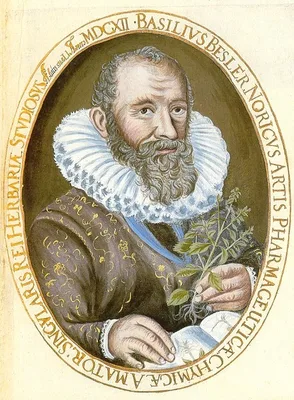
"The Hortus Eystettensis is itself a ‘paper museum’, a pictorial record of the flowers grown in the greatest German garden of its time, that of the Prince Bishop of Eichstätt, Johann Conrad von Gemmin…
1614 CE
#2119
Consilium Peripneumoniacum: Das ist Ein getrewer Rath in der beschwerlichen Berg und Lungensucht : darinnen verfasset, was die fürnemsten Ursachen seyn beyderley Beschwerungen, beydes der gifftigen, die vom Bergwerck entstehet: so wol der gemeinen, die von Flüssen herrühret: Zuvor aber, wie der Mensch mit der kleinen Welt, und mit dem Bergwerck artlich zu vergleichen, und wie beyde Suchten zu vertreiben seyn.
Martin Pansa, a pupil of Georg Agricola, wrote the most important work on occupational disease before Ramazzini. He described the symptoms of the lung diseases of miners and smelters. Digital facsimile from the Bayeri…
1616 CE–1622 CE
#11498
Fasciculus rariorum et aspectu dignorum varii generis quae collegit et suis impensis aeri ad vivum incidi curavit atque evulgavit.
Besler was the first to illustrate a natural history Wunderkammer in Germany. The engraved frontispiece of this work, which Besler published himself, depicts Besler exhibiting the contents to a visitor. The first edit…
1622 CE
#7574
Continuatio rariorum et aspectu dignorum varii generis quae collegit et suis impensis aeri ad vivum indici curavit atque evulgavit....
This was the second edition, with 7 additional plates, of the privately printed catalogue of the natural history collection or museum of the Nuremberg botanist Basilius Besler, author of Hortus Eystettensis (1613). Th…
1624 CE
#5229
De semitertiana libri quatuor.
First extensive account of malaria.
1628 CE
#759
Exercitatio anatomica de motu cordis et sanguinis in animalibus.
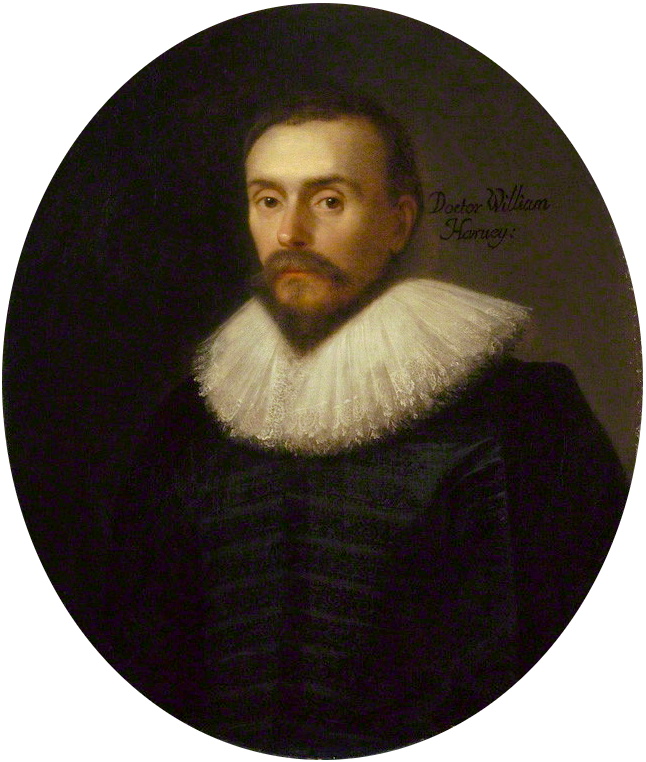
Discovery and experimental proof of the circulation of the blood. Together with Vesalius’s Fabrica (1543), Harvey’s De motu cordus shares the honor as the greatest book in the history of medicine. Since an…
1629 CE–1631 CE
#11597
Integrum morborum mysterium, sive medicinæ catholicæ tomi primi tractatus secundus. [Pulsus seu nova et arcana pulsuum historia ... Hoc est, portionis tertiae pars tertia, de pulsuum scientia ... medicorum ... sive tomi primi tractatus secundi, sectio secunda, de morborum signis ... hoc est, divinatio per urinam.] In sectiones distributus duas : quorum ...
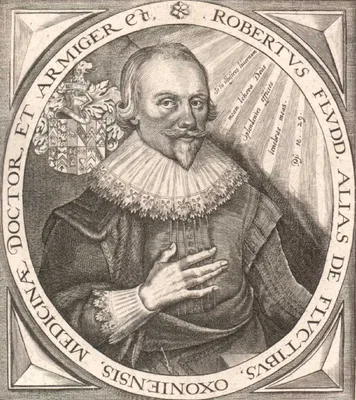
Fludd's Pulsus seu nova et arcana pulsuum historia contain's Fludd's chief medical writings. Dated 1629, but issued in this form, Fludd's Pulsus was the first published endorsement of Harvey's theory of the circulatio…
1638 CE
#1760
Politia medica.
1645 CE
#289
Zootomia Democritaea: Id est, anatome generalis totius animantium opificii....
One of the most important of the early works on comparative anatomy. It includes the Anatomia porci, attributed to Copho of Salerno. Severinus dissected many animals and was convinced that the microscope would throw l…
1646 CE
#60.1
Opera quae extant omnia, partim ante hac excusa, partim nunc recens in lucem edita; omnia abo authore recognita...aucta.
The collected works of the “father of German surgery”. Digital facsimile from the Bayerische StaatsBiliothek at this link. German translation: Wund-Artzney, gantzes Werck und aller Bücher, so viel der…
1650 CE–1653 CE
#11704
Historia naturalis. 6 vols: Historiae naturalis de quadrupedibus; Historiae naturalis de avibus; Historiae naturalis de piscibus et cetis; Historiae naturalis de exanguibus aquaticis; Historiae naturalis de insectis, de serpentibus et draconbius; Historiae naturalis de serpentibus.
The first 5 volumes were published in 1650; the last volume was published in 1653. This work, published in small folio format, includes 249 engraved plates and six elegant engraved title pages (4 resembling frontispie…
1656 CE
#5821.1
Dissertationes anatomicae methodo synthetica exaratae…
Rolfinck was the first to demonstrate the location of cataract in the lens.
1656 CE
#2120
Libellus de lithargyrii fumo noxio morbifico eiusque metallico frequentiori morbo vulgo dicto: Die Hütten Katze Oder Hütten Rauch: Cum Appendice de montano ffaectu asthmatico metallicidis familiari, quem Germanica lingua appellamus Die Bergsuche oder Berg Kranckheit.
Stockhausen had considerable experience in treating the diseases of miners. His book on industrial diseases did much to clarify contemporary knowledge regarding the relative toxicity of lead, mercury, arsenic, cobalt,…
1660 CE
#1722
Rationale vulnerum lethalium judicium, in quo de vulnerum lethalium natura et causis, legitima item eorundem inspectione, ac aliis circa hanc materiam scitu dignis juxta, quam necessariis, agitur.
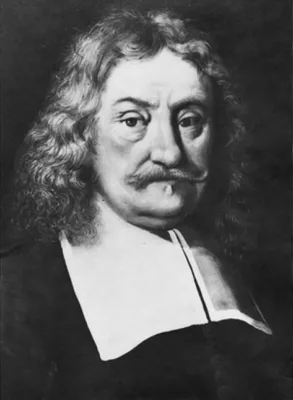
Welsch stressed the need for autopsy in medico-legal cases. Digital facsimile from Google Books at this link.
1665 CE
#1962
Clysmatica nova; oder newe Clystier-Kunst.
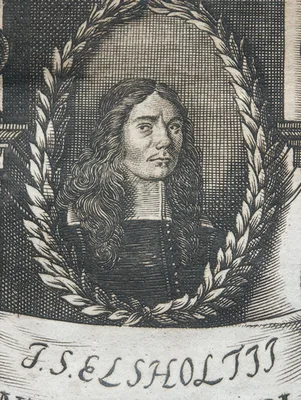
Elsholtz’s book on the venous infusion of medicaments was one of the first works to deal with blood transfusion. Latin edition in 1667; English translation in 1677. Reprint of Latin 1667 edition, Hildesheim, G. …
1667 CE
#1723
De gemellis et partu numerosiore.
Medico-legal aspects of multiple births. Digital facsimile from Google Books at this link.
1667 CE
#10711
Hieronimi Barbati ... Dissertatio elegantissima De sanguine et eius sero, in qua praeter varia lectu dignissima, Conringj. Lindeni & Barthol. circa sanguificationem opiniones, Stenoniana sanguinisdealbatio, VVillisii succi neruorum vis, Regij transitus chyli ad liene, liceti nutitio embryonis, VVarthoni & Charletonis lactis expositio, Haruei masculini seminis retentio rejecta, Moebij spirituum animalium materia, & alia clarissimorum neotericorum prolata, doctè & politè exponuntur.
Barbato discovered the blood serum. Another version of these texts was published in Paris by Robert de Ninville in 1667. Priority of these editions is unknown. Digital facsimile of the Frankfurt version from Google Bo…
1672 CE
#6496
De morbis biblicis miscellanea medica.
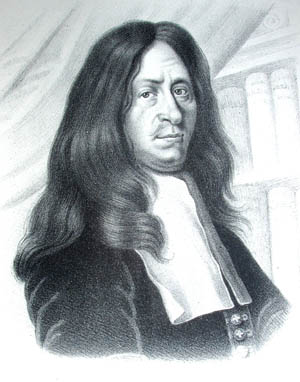
A study of the diseases mentioned in the Bible.
1674 CE
#2727
Opera medica universa.
Riverius was the first to note aortic stenosis (p. 638 of the above).
1678 CE
#10158
Georgii Simonis Winteri Hippiater Expertus, Seu Medicina Equorum Absolutissima : Tribus Libris comprehensa: Quorum I. Agit de Equorum Temperamentis; Aetate cognoscenda; Morbis omnibus internis Capitis; Oculorum; Aurium; Narium; Linguae; Dentium; Oris; aliisque his similibus; II. De Affectibus internis Thoracis & Abdominis ... ; III. De omnis generis Unguentis; Oleis; Balsamis & Emplastris in genere; item de quibuscunque Morbis ac Symptomatibus externis; ut: Tumoribus, Ulceribus & Vulneribus cujuscunque generis ...
Digital facsimile from Bayerische StaatsBibliothek at this link.
1679 CE
#6744.1
Bibliotheca realis medica, omnium materiarum, rerum, et titulorum, in universa medicina occurrentium.
The first large, well-printed bibliography of medicine, including twice as many authors as van der Linden (No. 6744). It represented an elaborate subject anaylsis, with entries arranged alphabetically by subjects, wit…
1679 CE
#10604
Tractatio med. curiosa, de ortu & occasasu transfusionis sanguins, qua haec, quae fit e bruto in brutum, a for medico penitus eliminatur; ila, quae e bruto in hominem peragitur....
The first detailed history of efforts at blood transfusion. Mercklin was one of the earliest writers to discuss the history, value, dangers, and methods of blood transfusion. He recognized and understood what we now c…
1681 CE
#5161
Epistola… qua simul de anthrace, carbunculo, bubone et altauna, philologice disseritur.
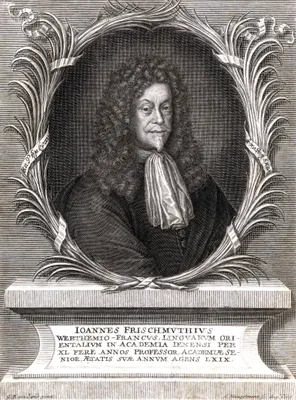
1682 CE
#6492
Specimen medicinae Sinicae.
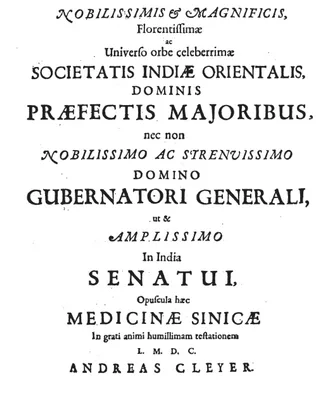
One of the earliest studies of Chinese medicine published in the West. (See also Nos. 6472.10 et seq.). Cleyer edited these translations of Chinese medical texts, reproducing a series of 30 plates dealing with Chinese…
1684 CE
#1762
Medicus peccans, sive tractatus de peccatis medicorum.
Digital facsimile from Google Books at this link.
1686 CE
#6492.1
Clavis medica ad Chinarum doctrinam de pulsibus. Autore R.P. Michaele Boymo, e Soc. Jesu, & in China missionario. Huius operis ultra viginti annos iam sepulti fragmenta, hinc inde dispersa, collegit & in gratiam medicae facultatis in lucem Europaeam produxit Cl. Dn. Andreas Cleyerus, M.D. & Societatis Batavo-Orientalis Proto-Medicus. A quo nunc demum mittitur totius operis exemplar, e China recens allatum, & a mendis purgatum, Procuratore R.P. Philippo Copletio, Belga, e Soc. Jesu, Chinensis missionis Romam misso.
Translations of Chinese treatises on pulse medicine with illustrations of hands and wrists to illustrate pulse-taking. The texts published here are different from those published by Cleyer in No. 6492. Previously publ…