
Facets
Browse across eight MeSH (opens in new tab) facets — era, geography, science, specialty, technology, history, culture, and reference. Select one tag per group; counts update across the others.
Clear filtersFacet filters
Geography
Specialties & Disease
- Anatomy & Pathology 765
- Cardiology & Blood 914
- Neurology & Psychiatry 1,256
- Obstetrics & Reproductive 550
- Infectious Disease (General) 147
- Surgery & Anesthesia 1,551
- Public Health 1,129
- Immunology & Dermatology 1,404
- General Clinical Medicine 480
- Military Medicine 436
- Psychology 202
- Alternative & Fringe Medicine 383
- Pediatrics 247
- Ophthalmology & Vision 412
- ENT & Hearing 293
- Urology & Nephrology 309
- Gastroenterology & Hepatology 316
- Pulmonary & Respiratory 233
- Rheumatology, Rehab & Pain 188
- Internal, Emergency & Geriatric 123
- Veterinary Medicine 165
- Epidemiology & Demography 397
- Physiology & Embryology 923
- Dentistry 259
- Plagues & Epidemics 1,279
- Microbiology & Virology 1,080
Social & Historical Studies
Institutions & Culture
Reference & Scholarly Works
1,080 entries match Microbiology & Virology [C01.748]
1909 CE
#85
The collected papers of Joseph, Baron Lister. 2 vols.
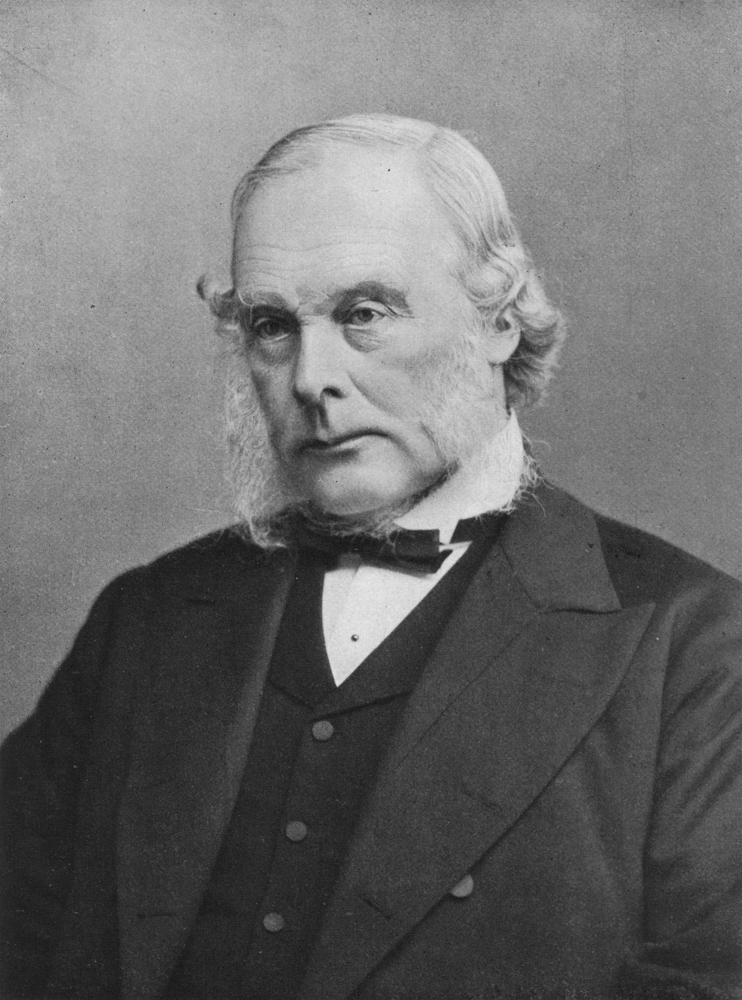

Lister, a pupil of Sharpey, became Professor of Surgery successively at Glasgow, Edinburgh and King’s College, London. He was the first medical man in Britain to be raised to the peerage. The founder of the anti…
1932 CE
#3204
The common cold, with special reference to the part played by streptococci, pneumococci, and other organisms.
Annals of the Pickett-Thomson Research Lab., Vol. 8.
1962 CE
#12034
The concept of a bacterium.
Order of authorship in the original publication: Stanier, Niel. For much of the 20th centurty prokaryotes were regarded as a single group of organisms, classified on the basis of their biochemistry, morphology and met…
1910 CE
#5042
The control of typhoid in the Army by vaccination.
Russell carried out important and long-continued investigations on anti-typhoid vaccination in the U.S. Army, demonstrating beyond question its value in selected groups. The war of 1914-18 confirmed the value of the w…
1934 CE
#5542
The cultivation and cultural characteristics of Darling’s Histoplasma capsulatum.
Demonstration of the fungal nature of the pathogen.
1925 CE
#5194
The cultivation of Endamoeba histolytica.
Pure cultivation of Entamoeba histolytica was first accomplished by D. W. Cutler (J. Path. Bact., 1918, 22, 22), but Boeck and Drbohlav evolved the first media upon which amoebae could be cultivated for indefinite per…
1912 CE
#5255.1
The cultivation of malaria plasmodia (Plasmodium vivax and Plasmodium falciparum) in vitro.
Cultivation of the malaria parasite.
1904 CE
#2438
The cultivation of the Bacillus leprae.
Rost cultivated the leprosy bacillus, and he prepared leprolin, formerly used in treating leprosy.
1598 CE
#2262
The cures of the diseased, in remote regions. Preventing mortalitie, incident in forraine attempts, of the English nation.
This book is the earliest work in English devoted to tropical medicine. It discusses sunstroke, tabardilla (possibly typhus or yellow fever), prickly heat, dysentery, erysipelas and scurvy. Facsimile reproduction, wit…
1944 CE
#5259.2
The development of Plasmodium gallinaceum from sporozoite to erythrocytic trophozoite.
First detailed account of the full cycle of development of the avian malaria parasite P. gallinaceum.
1943 CE
#567
The discovery of the uses of colouring agents in biological microtechnique.
1990 CE
#7966
The emergence of bacterial genetics.
2018 CE
#10946
The emergence of Zika virus and its new clinical syndromes.

Order of authorship in the original publication: Pierson, Diamond. Analyzes, and documents with 147 references, the variety of new clinical syndromes, including fetal / in utero effects, caused by the Zika virus. Also…
1922 CE
#5393
The etiology and pathology of typhus. Being the main report of the Typhus Research Commission of the League of Red Cross Societies to Poland.
The carefully controlled experiments of Wolbach, Todd, and Palfrey eliminated all doubt that R. prowazeki was the causal agent in typhus. Digital facsimile from the U.S. National Library of Medicine at this link.
1900 CE
#4505
The etiology of rheumatic fever.
After extensive bacteriological researches, Poynton and Paine considered that a diplococcus was the cause of rheumatic fever.
1924 CE
#5082.1
The etiology of scarlet fever.
Proof that streptococcus is the cause of scarlet fever.
1910 CE
#5380.1
The etiology of the typhus fever (tabardillo) of Mexico City. A further preliminary report.
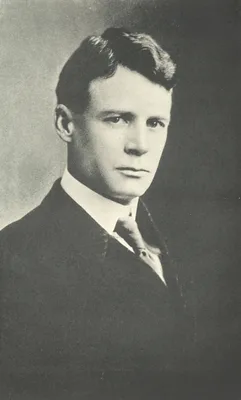
Demonstration of the causal organism of typhus.
1901 CE
#9372
The etiology of yellow fever: An additional note.
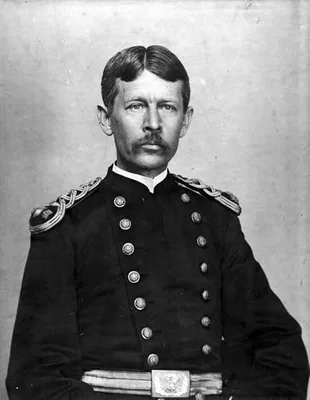
"The article describes a series of experiments conducted to explore how yellow fever is propagated from individual to individual and how the contagium is spread within households. The study was conducted in an experim…
1916 CE
#5334
The etiology, mode of infection, and specific therapy of Weil’s disease (Spirochaetosis icterohaemorrhagica)
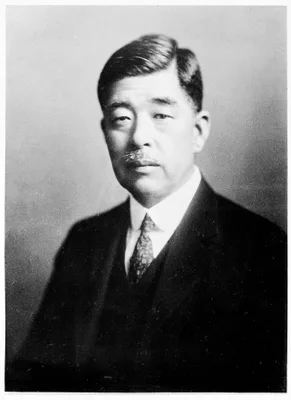
Inada, Y. Ido, R. Hoki, R. Kaneko, and H. Ito proved that Sp. (Leptospira) icterohaemorrhagiae is the causal organism in Weil’s disease (Leptospirosis). Preliminary report (in Japanese) in Tokyo Ijishinshi, 1915…
2009 CE
#12118
The evolution and emergence of RNA viruses.

"This impressive monograph by Edward Holmes opens with a quotation from La Peste, by Albert Camus: “Everyone knows that pestilences have a way of recurring in the world; yet somehow we find it hard to believe in…
1936 CE
#2524.6
The Feulgen reaction of the bacteriophage substance.
Schlesinger showed that the fundamental constituents of bacteriophages consist mainly of approximately equal amounts of protein and DNA.
1883 CE
#2455
The Filaria sanguinis hominis and certain new form of parasitic disease in India, China and warm countries.
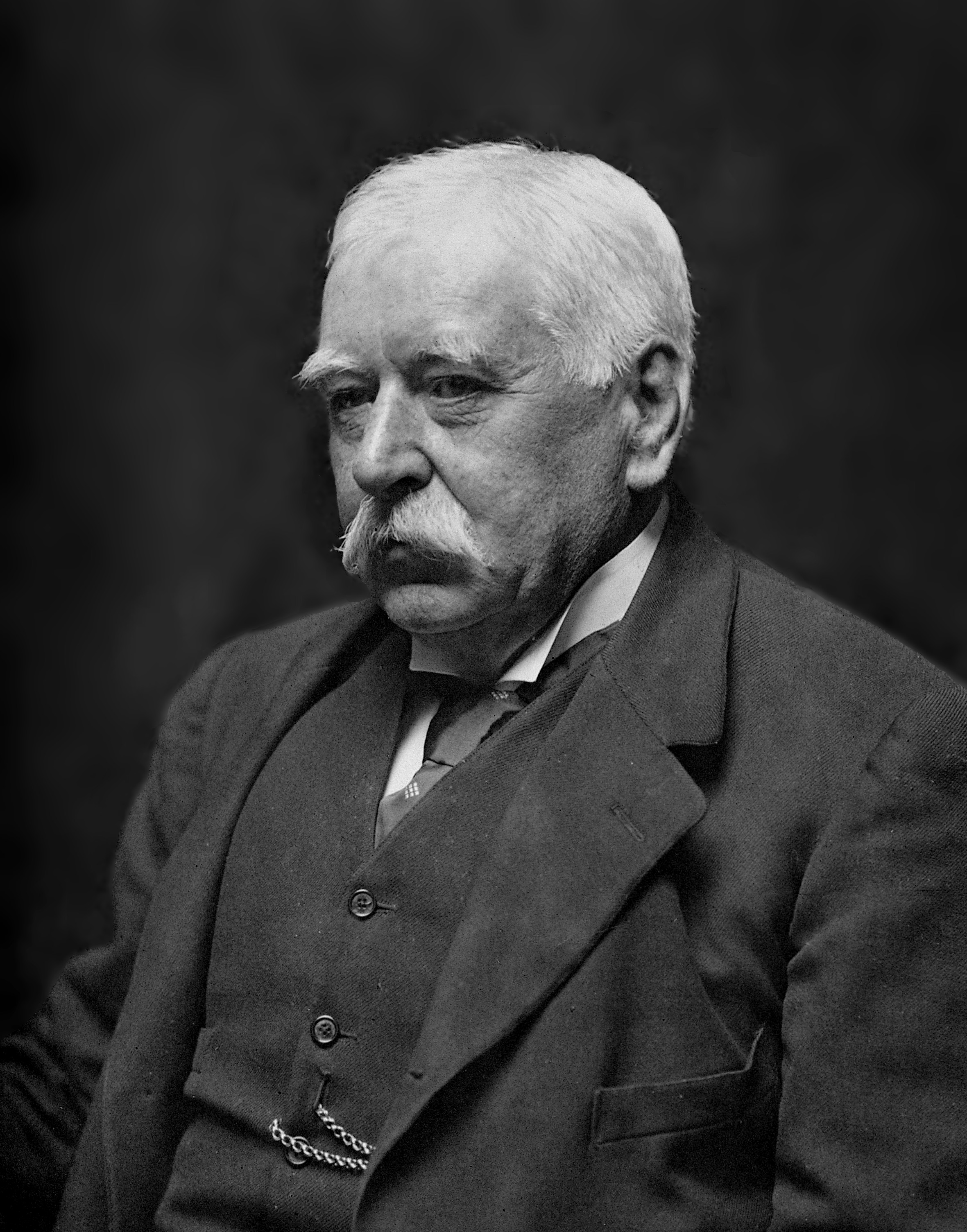
A collection of several papers written by Manson.
1940 CE
#5259.1
The form of Plasmodium, gallinaceum present in the incubation period of the infection.
Independently of Mudrow, H. E. Shortt, K. P. Menon, and P. V. Seetharama Iyer found pre-erythrocytic forms of P. gallinaceum in the tissues.
2005 CE
#11339
The genome of the African trypanosome Trypanosoma brucei.

Genome of the parasite that causes Sleeping Sickness. (Thanks to Juan Weiss for this reference and its interpretation.)
2002 CE
#11337
The genome sequence of the malaria mosquito Anopheles gambiae.
Order of authorship in the original publication: Holt, Subramanian, Halpern.... Sequence of the genome of Anopheles gambiae, the mosquito that carries the malaria parasite, Plasmodium falciparum. (Thanks to Juan Weiss…
2003 CE
#10863
The genome sequence of the SARS-associated coronavirus.

Dated May 30, 2003 and published immediately after No. 10862 in the same issue of Science, this reported the work of Marco Marra and his team in Canada. Order of authorship in the published paper was Marra, Jones, Ast…
1980 CE
#5434.2
The global eradication of smallpox. Final report of the Global Commission for the Certification of Smallpox Eradication.
On 8 May 1980, the World Health Organization officially announced that “smallpox eradication has been achieved throughout the world”. The upper cover of this report reproduces an electron micrograph of a s…
2004 CE
#9974
The great influenza: The epic story of the greatest plague in history.

1905 CE–1906 CE
#5440
The histology of the skin lesions in varicella.
Tyzzer was first to recognize inclusion bodies in varicella.
1938 CE
#2580
The history of bacteriology.
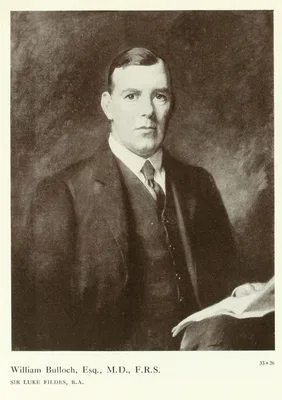
This pioneering and classic history includes brief biographical notes of the more important workers (arranged in a separate section), and an extensive bibliography.
1842 CE
#10064
The history, diagnosis, and treatment of typhoid and of typhus fever: With an essay on the diagnosis of bilious remittent and of yellow fever.
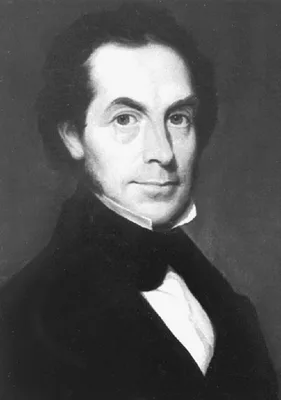
Bartlett's book contains the first complete description of typhoid fever in English. In 1908 Osler wrote, "The chief interest of the work today lies in the remarkably accurate picture which is given of typhoid fever--…
1942 CE
#14004
The identification and characterization of bacteriophages with the electron microscope.
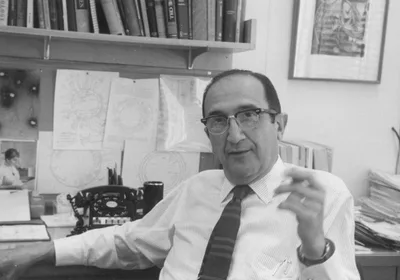
First identification, observation under the electron microscope, and reproduction of photomicrographs of bacteriophages taken through the electron microscope. Digital facsimile, but with poor reproductions of the two …
1957 CE
#2660.10
The induction of neoplasms with a substance released from mouse tumors by tissue culture.
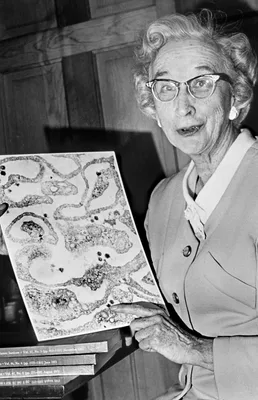
Isolation of polymavirus (papovavirus). With B. E. Eddy, A. M. Gochenour, N. G. Borgese, and G E. Grubbs.
1927 CE
#5350.8
The insect transmission of Onchocerca volvulus (Leuckart, 1893), the cause of worm nodules in man in Africa.
The fly Simulium damnosum shown to be the vector of onchocerciasis.
1968 CE
#13947
The integrated state of viral DNA in SV40-transformed cells.
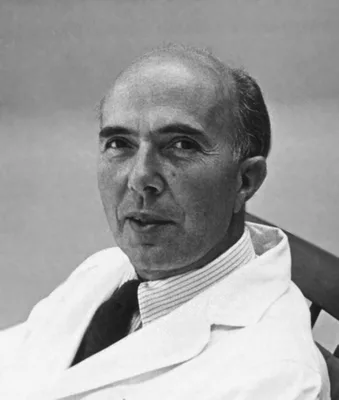
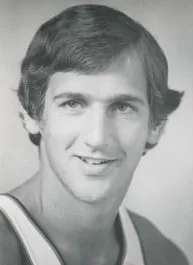
Dulbecco and his group demonstrated that the infection of normal cells with certain types of viruses (oncoviruses) led to the incorporation of virus-derived genes into the host-cell genome, and that this event lead to…
2019 CE
#11477
The integrative human microbiome project.
Results from this large research consortium show the influence of the microbiome on preterm birth, inflammatory bowel disease, including Crohn's and ulcerative colitis, and prediabetes leading to type II diabetes. (Th…
2003 CE
#11347
The invisible enemy: A natural history of viruses.
1934 CE
#12387
The isolation and properties of the purified protein derivative of tuberculin
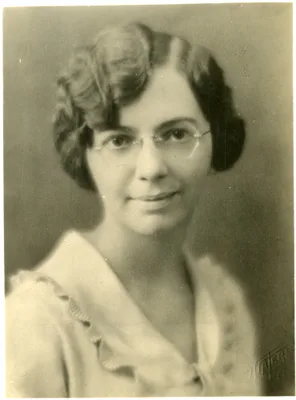
Purification of tuberculin (PPD). By the 1940s Seibert's PPD was the international standard for tuberculin tests.
1911 CE
#6646
The king’s evil.
A classic account of the history of touching for the “king’s evil” or scrofula— a practice of kings from ancient times until the 18th century.
2001 CE
#9337
The life of a virus: Tobacco mosaic virus as an experimental model, 1930-1965.

Tobacco mosaic virus was the first virus isolated and crystallized.
1886 CE
#5427
The life-history of the micro-organisms associated with variola and vaccinia. An abstract of results obtained from a study of smallpox and vaccination in the surgical laboratory of the University of Edinburgh.
The “Paschen elementary bodies” (No. 5430) were first recognized and demonstrated by Buist. Republished as an appendix to his Vaccinia and variola, London, 1887.
1870 CE–1888 CE
#2171
The medical and surgical history of the War of the Rebellion, 1861-65. 6 vols.
UNITED STATES. War Dept. Surgeon General
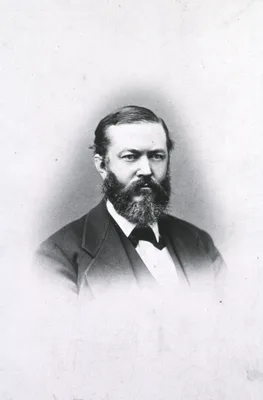
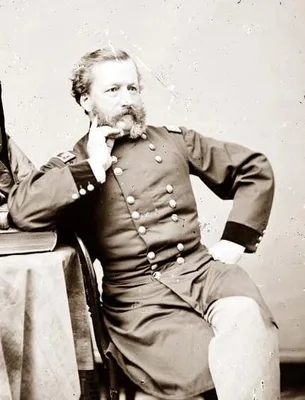
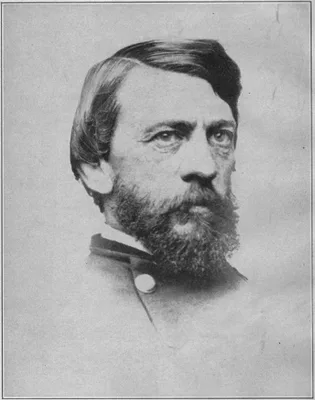
Written by Woodward, Smart, Otis, and Huntington under the direction of Joseph K. Barnes, Surgeon General of the Army. This massive, graphically illustrated set has been called the “first comprehensive American …
1884 CE
#5346.3
The metamorphosis of Filaria sanguinis hominis in the mosquito.
Manson reported that the changes he had observed in ingested filariae took place in the mosquito thorax, not in the stomach as previously thought.
1890 CE
#3687
The micro-organisms of the human mouth.
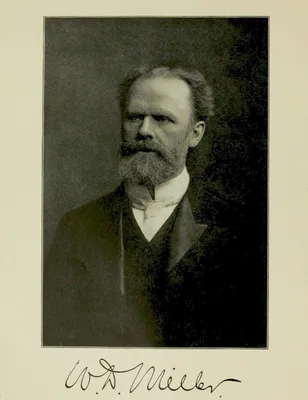
In 1884 Miller became professor of dentistry at the University of Berlin, the first foreigner ever to receive a professorial appointment at a German University. Inspired by study of bacteriology under Robert Koch, Mil…
1846 CE–1849 CE
#544
The microscopic anatomy of the human body, in health and disease.
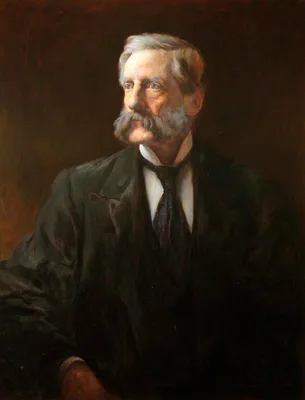
First English textbook on microscopical anatomy. His description of the concentric corpuscles of the thymus (p. 9) led to the term “Hassall’s corpuscles”.
1878 CE
#5270.1
The microscopic organisms found in the blood of man and animals, and their relation to disease.
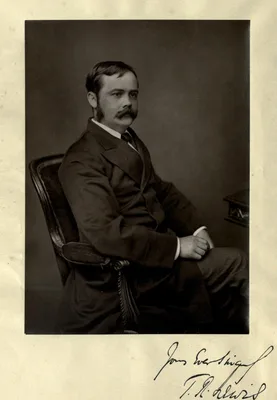
First description of a trypanosome (T. lewisi) in a mammal. Seoarate edition in book form with the same title: Calcutta: Office of the Superintendent of Government Printing, 1879.
1925 CE
#2648
The microscopical examination of filterable viruses associated with malignant new growths.
Barnard supported, with photomicrographs, Gye’s theory concerning the origin of cancer.
2022 CE
#14169
The molecular epidemiology of multiple zoonotic origins of SARS-Co-V-2.
Abstract: "We analyzed the genomic diversity of severe acute respiratory syndrome coronavirus 2 (SARS-CoV-2) early in the coronavirus disease 2019 (COVID-19) pandemic. We show that SARS-CoV-2 genomic diversity before …
1935 CE
#2524.4
The natural occurrence of pleuropneumonia-like organisms in apparent symbiosis with Streptobacillus moniliformis and other bacteria.
Klieneberger isolated typical strains of pleuropneumonia-like organisms from Strep, moniliformis.
1965 CE
#14035
The nature of the Negri Body.
The first visual proof, by publication of electron micrographs at 25,000 magnification, that Negri bodies contain enormous numbers of rabies virus particles. Digital facsimile from rupress.org at this link. (Thanks to…