
Vienna
133 entries published in this place.
1511 CE
#9183
Libellus de lapidibus preciosis nuper editus.
The earliest medieval lapidary, and also the one which was quoted most widely. By the fourteenth century it was translated into French, Provençal, Italian, Irish, and Danish, and it was the first of Marbodius's…
1656 CE
#8591
Flora sinensis, fructus floresque humillime porrigens serenissimo et potentissimo Leopoldo Ignatio, Hungariae regi florentissimo, &c. Fructus saecul promittenti Augustissimos.
The first description published in Europe of an ecosystem of the Far East, including animals as well as plants, with particular attention to Chinese fruit bearing plants, and medicinal properties of Chinese plants. Di…
1758 CE–1763 CE
#3878
De cranii ustione in pertinacioribus capitis vitiis. In his: Ratio medendi in nosocomio practico, 6, 239-287. 8 vols.
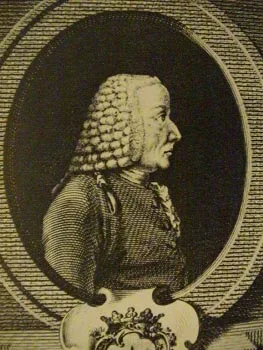
Haen provided the first description of amenorrhea in connection with a pituitary tumor. He recorded the case history of a young woman suffering from amenorrhea as well as many neurological symptoms assumed to result f…
1761 CE
#2672
Inventum novum ex percussione thoracis humani ut signo abstrusos interni pectoris morbos detegendi.
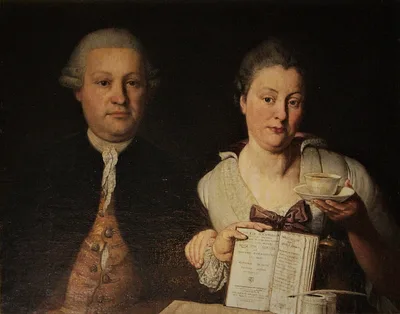
The greatness of Auenbrugger’s discovery of the value of immediate percussion of the chest as a diagnostic measure was not recognized until many years after he first published. His little book met with a cold re…
1762 CE
#5078
Opera medico-physica in quatuor tractatus digesta.
Plenciz was the first to grasp the significance of Leeuwenhoek’s animalculae for the etiology of contagious disease. Part III of the above is concerned with scarlatina.
1763 CE
#8288
Nicolai Josephi Jacquin Selectarum stirpium Americanarum historia, in qua ad Linneanum systema determinatae descriptaeque sistuntur plantse illae, quas in insulis Martinica, Jamaica, Domingo, aliisque, et in vicinae continentis parte, observavit rariores; : adjectis iconibus in solo natali delineatis. 2 vols.
Digital facsimile from the Internet Archive at this link.
1765 CE
#1251
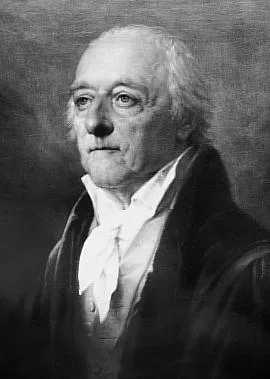
Pars quinti nervorum encephali disquisitio anatomica.
The “Gasserian ganglion”, already described by Santorini and others, was named after Johann Ludwig Gasser (fl. 1757-65), Professor of Anatomy at Vienna, by his pupil Hirsch. Also published in Ludwig, C. F.…
1768 CE
#9517
Specimen medicum: Exhibens synopsin reptilium emendatam cum experimentis circa venena et antidota reptilium austriacorum.
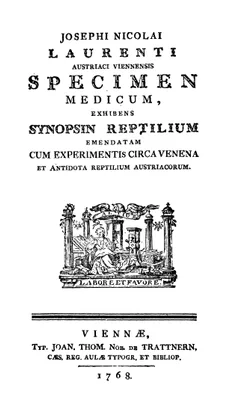
"Laurenti is considered the auctor of the class Reptilia (reptiles) through his authorship of Specimen Medicum, Exhibens Synopsin Reptilium Emendatam cum Experimentis circa Venena (1768) on the poisonous function of r…
1776 CE
#3982
Doctrina de morbis cutaneis.
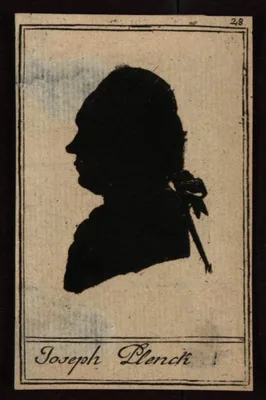
A classification of skin diseases upon the basis of their clinical appearance. Until the time of Willan, von Plenck’s book was the greatest authority on dermatology. He mentioned 115 different skin diseases, all…
1776 CE
#13549
Medicinisch-praktischer Unterricht für die Feld- und Landwundärzte der österreichischen Staaten. 2 vols. [& Supplement:] Die in dem medicinisch-praktischen Unterrichte für die Feld-und Landwundärzte vorkommende Arzneymittel.
This work on "Practical medical lessons for field and land surgeons of the Austrian states," includes a 91-page appendix containing 319 recommended pharmaceuticals for the treatments described in the text. The formula…
1777 CE–1790 CE
#1964
Rationis medendi in nosocomio practico Vindobonensi. 7 pts.
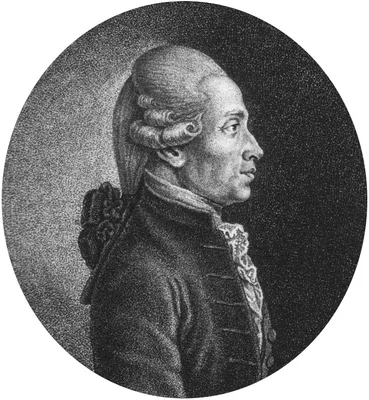
A detailed record of Stoll’s practice year by year, between 1777 and 1790, giving numerous case histories and providing descriptions of diseases.
1780 CE
#11798
Testacea musei Caesarei Vindobonensis, que jussu Mariae Theresiae Ausgustae.
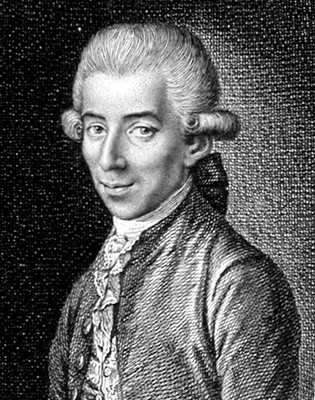
Born was commissioned in 1776, by Maria-Therese, Empress of the Holy Roman Empire, to inventory and arrange the imperal collection that formed the foundation of the imperial museum, now the Naturhistorische Museum in …
1781 CE
#5000
Bibliotheca chirurgica. 2 vols.
Fulton (No. 6785) points out that this work contains the “most complete bibliographical study of the literature of head injury that had been brought together up to that time”. Digital facsimile from Google…
1781 CE
#10715
Instrumentarium chirurgicum Viennense oder, Wiennerische chirurgische Instrumenten-Sammlung.
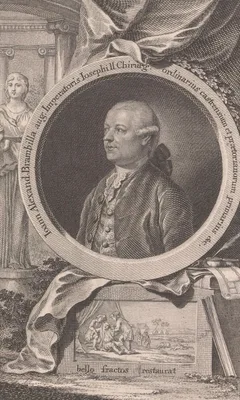
Brambilla was a personal physician to Holy Roman Emperor Joseph II and the first director of the Vienna hospital and the Josefinum school for military surgeons (now a medical museum). Brambilla provided a history of s…
1785 CE
#7639
Toxicologia seu doctrina de venenis et antidotis.
Plenck provided the first classification of poisons based on origin: 1. Animal poisons. 2. Vegetable poisons. 3. Mineral poisons. 4. Poisonous vapors, gases, and dust. Plenck also issued this work in German from the s…
1786 CE
#11711
Aphorismi de cognoscendis et curandis febribus.
Stoll was one of the few physicians of the Viennese school who supported Auenbrugger's views on percussion. In this treatise on fevers Stoll referred favorably to the practice, and it is thought that Corvisart became …
1791 CE
#13254
Mechanismus der menschlichen Sprache nebst Beschreibung seiner sprechenden Maschine.
Kempelen built the first successful speech synthesizer that produced not only some speech sounds, but also whole words and short sentences. His final version of the machine, which differs slightly from the version sho…
1791 CE
#5833.2
Praktische Beobachtungen über verschiedene, vorzüglich aber über jene Augenkrankheiten, welche aus allgemeinen Krankheiten des Körpers entspringen.
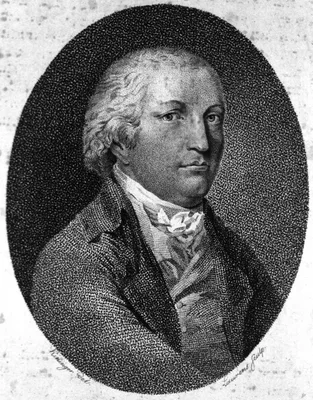
“This is the first monograph ever published dealing with ocular signs of systemic disease. It deals with lacrimal fistulas, trichiasis, adhesions of the lids, lid ulcers, ephiphora, and ocular inflammations. He …
1791 CE–1806 CE
#6160
Abhandlungen und Versuche geburtshilflichen Inhalts. 2 vols.
Böer, a pioneer of “natural childbirth”, was the founder of the Viennese school of obstetrics.
1803 CE
#5838
Ueber die Krankheiten des Thränenorgans.
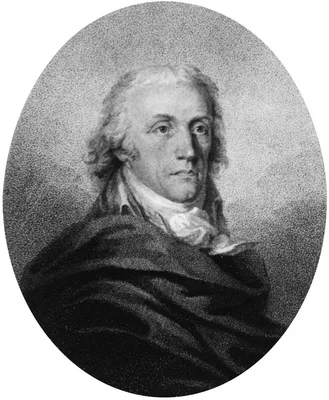
Schmidt was Professor of Ophthalmology at Vienna. Digital facsimile from Google Books at this link.
1810 CE
#5375
Ueber den ansteckenden Typhus.
Hildenbrand gave a classic description of typhus. The French literature sometimes refers to the condition as “Hildenbrand’s disease”. English translation by S. D. Gross, 1829.
1813 CE–1817 CE
#5842
Lehre von den Augenkrankheiten. 2 vols.
Beer is remembered for his textbook; the doctrines in it dominated practice for many years. He described the symptoms of glaucoma and noted the luminosity of the fundus in aniridia. He also presented for the first tim…
1815 CE–1818 CE
#6329
Praktische Abhandlungen über die vorzüglichen Krankheiten des Kindesalters. Vol. 1: Von der hitzigen Gehirnhöhlen-Wassersucht; Vol. 2: Vom inneren chronischen Wasserkopfe....
"In 1818, Leopold Anton Gölis (1765-1827, Austrian physician and pathologist), a paediatrician and dissector in the Institute for the Sick Children of the Poor in Vienna, described the clinical and autopsy findin…
1830 CE–1833 CE
#1788
Liber fundamentorum pharmacologiae. Auctore Abu Mansur Mowafik ben Ali al Herui. Epitome codicis manuscripti persici Bibl. caes. reg. Vienn. inediti. Primus Latio donavit Romeo Seligmann. 2 vols.
The most important early Persian pharmacological work, first published in print in Latin translation. Muvaffak flourished in Herat (current Afghanistan), under the Samanid prince Mansur I ibn Nuh, who ruled from 961 t…
1835 CE
#439
Antiquitates anatomicae rariores, quibus origo, incrementa et status anatomes, apud antiquissimae memoriae gentes, historica fide illustrantur.
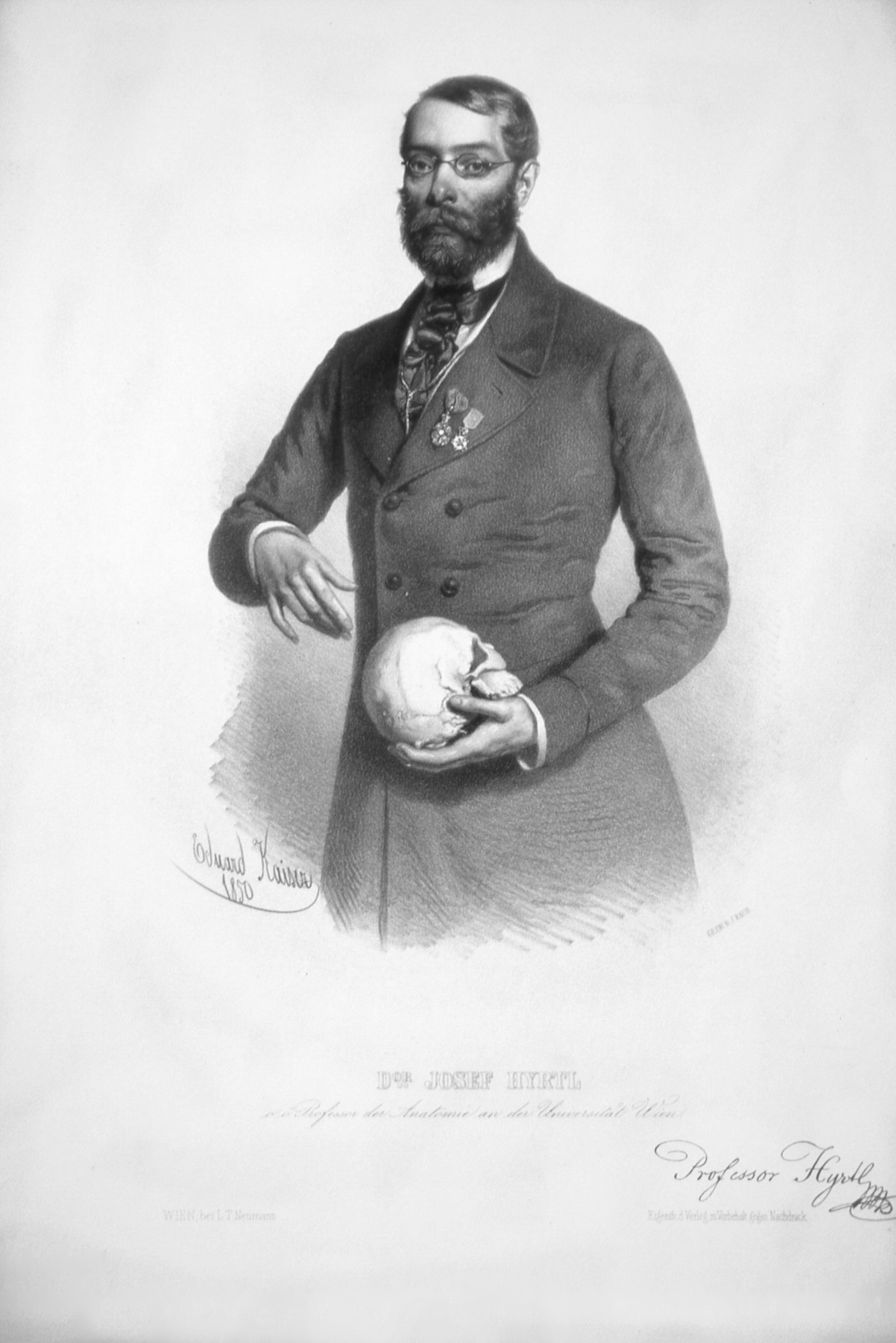
Anatomical terms used in antiquity, representing to a certain, extent a survey of the literature of ancient medicine available to Hyrtl. Digital facsimile from The Medical Heritage Library, Internet Archive, at this l…
1839 CE
#2676
Abhandlung über Perkussion und Auskultation.
Skoda classified the various sounds obtained on percussion according to their musical pitch and tone. “Skoda’s resonance” is an important diagnostic sign in pneumonia and pericardial effusion. Follow…
1842 CE–1844 CE
#3682
Systematisches Handbuch der Zahnheilkunde. Bd. 2: Anatomie des Mundes.
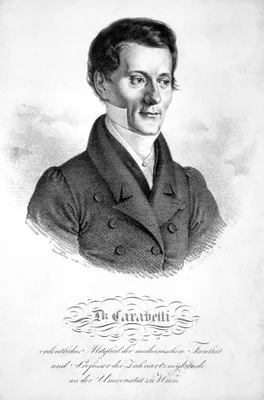
Original description (p. 107) of “Carabelli’s cusp”, tuberculus anomalus, sometimes found on the lingual surface of the upper permanent molars. It was first illustrated on Tab. XI, Fig. 4e, and Tab. …
1842 CE–1846 CE
#2293
Handbuch der pathologischen Anatomie. 3 vols.
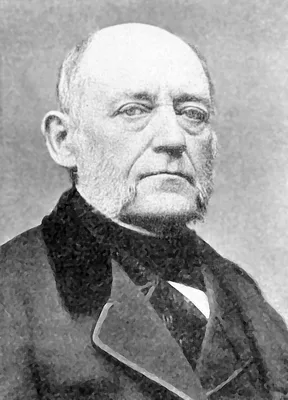
Rokitansky ranks with Morgagni as among the greatest of all writers on gross pathology. He is said to have performed over 30,000 autopsies himself. His Handbuch was for many years pre-eminent among its contemporaries.…
1844 CE
#10749
Die Krankheit des Gehirn’s und Rückenmark’s bei Kindern, durch Krankheitsfälle aus dem ersten Kinderspitale erläutert.
The first book on child neurology. Unusual for a medical book of this type, it includes a lithographed frontispiece, a lithographed title page, and four hand-colored plates.
1845 CE
#4929.1
Lehrbuch der ärztlichen Seelenkunde.
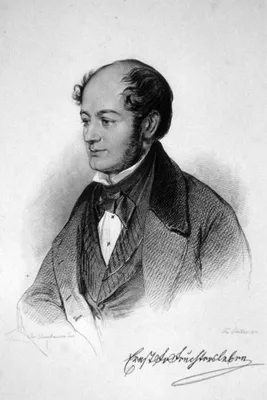
Feuchtersleben introduced the terms psychosis, psychiatrics, and psychopathology. The book includes a short history of psychiatry. English translation, Sydenham Society, 1847.
1845 CE
#9546
Necrose der Kieferknochen, in Folge der Einwikrung von Phosphor-Dämpfen. Ein Beitrag zur Ätiologie der Knochen-Krankheiten.
The production of matches with white phosphorus in German-speaking countries started in 1833. Between 1839 and 1845 Lorinser saw nine cases of what he called "phosphorimus chronicus" in workers with white phosphorus, …
1847 CE
#414
Handbuch der topographischen Anatomie. 2 vols.
Hyrtl, professor of anatomy at Vienna, published the first text on topographical anatomy in German. He was for 30 years the most popular lecturer on the subject in Europe, and ranks as one of the greatest of medical s…
1847 CE–1848 CE
#6275
Höchst wichtige Erfahrungen über die Aetiologie der in Gebäranstalten epidemischen Puerperalfieber.
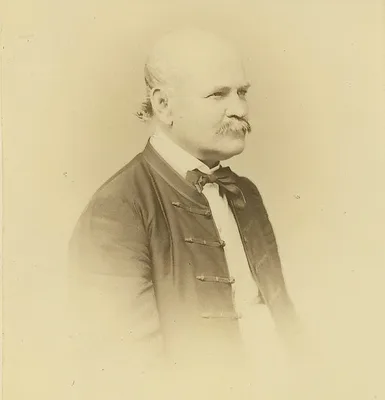
Semmelweis, pioneer of antisepsis in obstetrics, was the first to recognize that puerperal fever is a septicemia. He concluded that the doctors and students of Vienna’s First Obstetrical Clinic carried the infec…
1850 CE–1853 CE
#6335
Die Krankheiten der Neugebomen und Säuglinge. 4 vols.
Bednaŕ was a famous Viennese pediatrician. His description of aphthae of the palate in the newborn (“Bednaŕ’s aphthae”) is in vol. 1, p. 104 of his book.
1851 CE
#10748
Entwicklungsgeschichte der Seele der Kindes.
Digital facsimile from Bayerische StaatsBibliothek at this link.
1851 CE
#9515
Früchte aus dem Morgenlande oder Reise-Erlebnisse. Nebst naturhistorisch-medicinischen Erfahrungen, einigen hundert erprobten Arzneimitteln und einer neuen Heilart dem Medial-Systeme. Mit vierzig lithographirten Tafeln: Porträte, Pflanzenabbildungen, sonstige Natur- und Kunstprodukte, Facsimile, Landkarte und Ansicht der Citadelle von Lahor; endlich als Anhang ein medizinisches Wörterbuch in mehreren europäischen und orientalischen Sprachen.
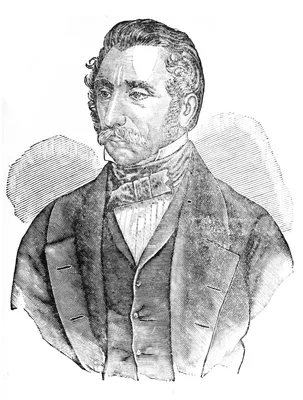
Digital facsimile from the Biodiversity Heritage Library at this link. Translated into English (1852) as Thirty-five years in the East. Adventures, discoveries, experiments, and historical sketches, relating to the Pu…
1856 CE
#1461
Grundzüge der Physiologie und Systematik der Sprachlaute für Linguisten und Taubstummenlehrer.
1856 CE–1876 CE
#3992
Atlas der Hautkrankheiten. 10 parts.
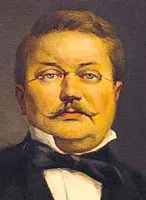
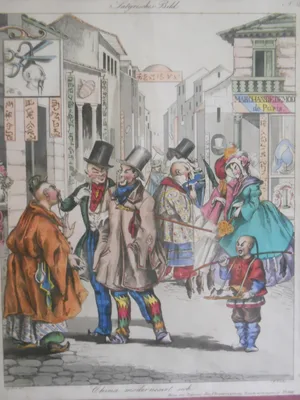
Hebra's work includes 104 spectacular folio-sized chromolithographed plates reproducing paintings by Anton Elfinger and Carl Heitzmann.
1858 CE
#14181
Compendium der Biochemie. 2 vols.
Kletzinsky coined the term "Biochemie" (biochemistry). Digital facsimile from the Hathi Trust at this link.
1860 CE
#4291
Die Harnconcretionen.
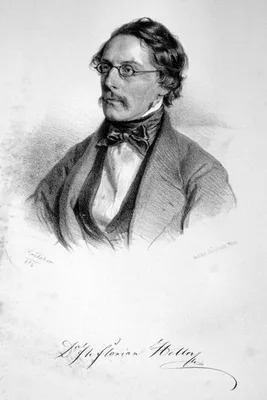
Heller introduced several urine tests and wrote (above) an important work on urinary calculi.
1860 CE
#3333
Praktische Anleitung zur Laryngoscopie.
1860 CE
#5887
Schriftskalen. 3te. Aufl.
Jaeger first introduced his test types in 1854; Emil Fuchs improved them in 1895.
1862 CE
#6525
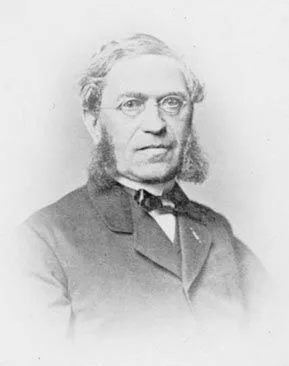
Compendium der Geschichte der Medicin von den Urzeiten bis auf die Gegenwart, mit besonderer Berücksichtigung der Neuzeit und der Wiener Schule. 2te Aufl.
1865 CE
#13848
Das vergleichend-anatomische Museum an der Wiener medicinischen Facultät im Jubiläumsjahre 1865. Nebst einem Anhang: Catalog der, in der Privatsammlung des herausgebers befindlichen Skelete, Gehörorgane, und mikroskopischen Injections-Präparate.
Digital facsimile from Google Books at this link.
1865 CE
#3378
Die Beleuchtungsbilder des Trommelfells im gesunden und kranken Zustande.
Politzer was the first to obtain pictures of the membrana tympani by means of illumination. English translation, New York, 1869.
1866 CE
#3273
Klinik der Krankheiten des Kehlkopfes und der Luftröhre. 1 vol. and atlas.
On p. 295 is a classic description of laryngitis sicca – “Türck’s trachoma”.
1867 CE
#3275
Die Anwendung der Galvanokaustik im Innern des Kehlkopfes und Schlundkopfes.
Voltolini was the first to use the galvanocautery in laryngeal surgery.
1867 CE
#11705
Sketches of the inhabitants, animal life and vegetation in the lowlands and high mountains of Ceylon: As well as of the submarine scenery near the coast taken from a diving bell.
This work was illustrated with 26 tinted lithographs of natives and scenery in Sri Lanka after drawings from nature by the author, of which four were colored reproductions of underwater scenes made by the author using…
1869 CE
#5904
Opthalmoskopischer Hand-Atlas.
A fine atlas which was for many years unsurpassed. The illustrations were reproduced from Jaeger’s own paintings, each of which required from 20 to 50 sittings of from two to three hours each. English translatio…
1870 CE
#423