
Facets
Browse across eight MeSH (opens in new tab) facets — era, geography, science, specialty, technology, history, culture, and reference. Select one tag per group; counts update across the others.
Clear filtersFacet filters
Geography
Specialties & Disease
- Anatomy & Pathology 765
- Cardiology & Blood 914
- Neurology & Psychiatry 1,256
- Obstetrics & Reproductive 550
- Infectious Disease (General) 147
- Surgery & Anesthesia 1,551
- Public Health 1,129
- Immunology & Dermatology 1,404
- General Clinical Medicine 480
- Military Medicine 436
- Psychology 202
- Alternative & Fringe Medicine 383
- Pediatrics 247
- Ophthalmology & Vision 412
- ENT & Hearing 293
- Urology & Nephrology 309
- Gastroenterology & Hepatology 316
- Pulmonary & Respiratory 233
- Rheumatology, Rehab & Pain 188
- Internal, Emergency & Geriatric 123
- Veterinary Medicine 165
- Epidemiology & Demography 397
- Physiology & Embryology 923
- Dentistry 259
- Plagues & Epidemics 1,279
- Microbiology & Virology 1,080
Social & Historical Studies
Institutions & Culture
Reference & Scholarly Works
293 entries match ENT & Hearing [C09]
1884 CE
#13063
Memoir upon the formation of a deaf variety of the human race.
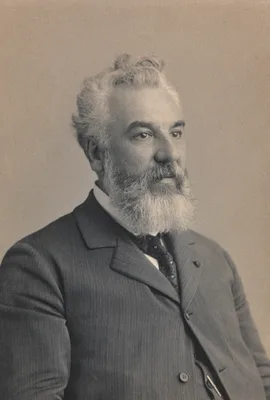
Bell determined that deafness was an inheritable trait and that deaf individuals had a tendency to marry other deaf individuals. As a eugenicist Bell considered this a problem because he thought it risked the developm…
1861 CE
#3372
Mémoire sur des lésions de l’oreille interne donnant lieu à des symptomes de congestion cérébrale apoplectiforme.
First description of aural vertigo (“Menière’s syndrome”). First appeared in summary form in Bull. Acad. imp. Méd., 1860-61, 26, 241, and in Gaz. méd. Paris, 1861, 16, 29, with t…
1849 CE
#3368.2
Mémoire sur l’emploi de la fourchette tonique ou du diapason, pour distinguer une dureté d’ouïe nerveuse de celle que est causée par une obstruction.
Schwabach’s hearing test (see No. 3389) was earlier employed by Schmalz.
1928 CE
#3406
Menière’s disease; its diagnosis and a method of treatment.
Dandy’s operation for relief of Menière’s syndrome.
1851 CE
#12285
Methode für den Unterricht der Taub-Stummen in der Laut-Sprache im Rechnen und in der Religion. Verfasst von …. Gezeichnet von Ant. Jarisch.
An illustrated manual of sign language for the deaf and dumb specifically for education in mathematics and religion. The book has a particularly distinctive title page. Digital facsimile from Google Books at this link.
1953 CE
#3412.5
Mobilization of the stapes to restore hearing in otosclerosis.
Transmeatal exposure of the middle ear.
1981 CE
#3342.1
Naissance et développement de l’oto-rhino-laryngologie dans l’histoire de la médecine. 3 vols.
1937 CE
#3408
New technique in the surgical treatment of severe and progressive deafness from otosclerosis.
First successful attempt to restore hearing in otosclerosis by fenestration.
1935 CE
#7476
Noise: A comprehensive survey from every point of view.
Chapter 1: General considerations: behaviour of the ear. Chapter 10: Physiological and psychological effects of noise.
1896 CE
#1569.1
Note sur la variation éléctrique (courant d’action) déterminée dans le nerf acoustique par le son.
Beauregard and Dupuy recorded the action potential in the auditory nerve of the frog.
1645 CE
#1542
Nova auris internae delineatio.
An article which announces the discovery of the long process of the malleus. Folius “accurately discussed the general configuration of the middle ear, described the round and oval windows, delineated the three o…
1791 CE
#3250
Observation sur un fongus du sinus maxillaire.
First successful operation on a tumor of the maxillary sinus, 1789.
1789 CE
#1552
Observationes anatomicae de aure interna comparata.
1662 CE
#1543
Observationes anatomicae, quibus varia oris, oculorum & narium vas describuntur novique salivae, lacrymarum & muci fontes deteguntur.
Includes the first account of the excretory duct of the parotid gland (“Stensen’s duct”), discovered by Stensen. He first reported his discovery in a letter to his teacher, Thomas Bartholin, dated Ap…
1561 CE
#1208
Observationes anatomicae.
Observationes anatomicae, a work of 232 leaves printed in the comparatively small octavo format, with no illustrations, was the only work Fallopio published before his death from tuberculosis at age thirty-nine, and i…
1854 CE–1855 CE
#3329
Observations on the human voice.
Garcia, a teacher of singing, invented the modern laryngoscope.
1938 CE
#3409
Observations on the pathology of Menière’s syndrome.
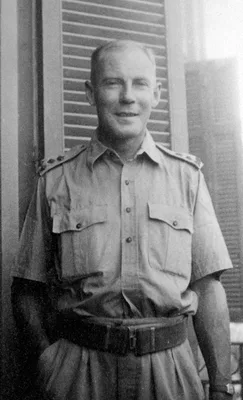
Hallpike and Cairns were first to describe the characteristic histological changes in Menière’s disease. Also published in J Laryng. Otol., 1938, 53, 625-55.
1826 CE
#3254
Observations on the surgical pathology of the larynx and trachea.
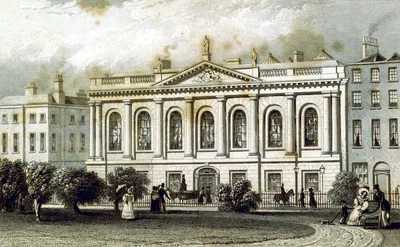
Porter was Professor of Surgery at the Royal College of Surgeons in Ireland. The above includes a description of “Porter’s sign”, tracheal tugging in aortic aneurysm.
1868 CE
#3276
Om adenoide Vegetationer i Naesesvaelgrummet.
First clinical description of adenoid growths. For an English translation of the paper see Med. -chir. Trans., 1870, 53, 191-215
1895 CE
#3395
On a peculiar affection of the labyrinthine capsule as a frequent cause of deafness.
First report of otosclerosis as a separate clinical entity.
1884 CE
#3291
On a perfected method of photographing the larynx.
By means of a special camera of his own invention French improved the method of photographing the larynx.
1911 CE
#3319.1
On certain clinically obscure malignant tumours of the naso-pharyngeal wall.
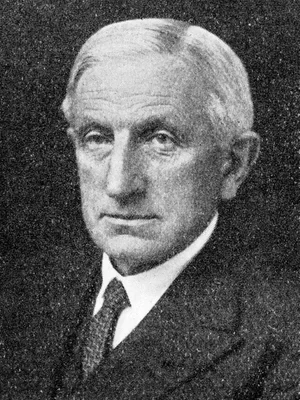
“Trotter’s syndrome”; deafness, palatal paralysis, and facial neuralgia, usually due to a nasopharyngeal carcinoma.
1936 CE
#9893
On certain septicemias due to anaerobic organisms.
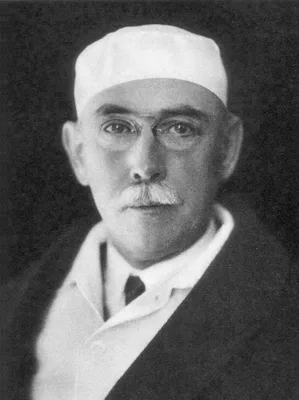
"Lemierre's syndrome (or Lemierre's disease, also known as postanginal shock including sepsis and human necrobacillosis) refers to infectious thrombophlebitis of the internal jugular vein. It most often develops as a …
1907 CE
#12253
On herpetic inflammations of the geniculate ganglion: A new syndrome and its complications.
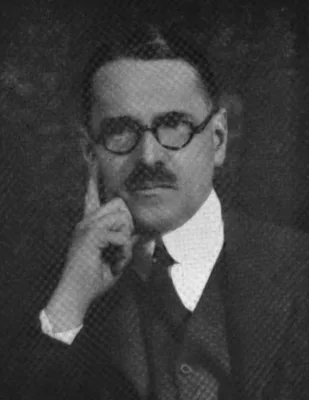
Herpes zoster oticus, also known as Ramsay Hunt syndrome type 2.
1882 CE
#3290
On photographing the larynx.
French was the first to obtain good photographs of the larynx.
1923 CE
#3323
On the aetiology of the laryngeal papilloma.
In this classic paper Ullmann reported the transmission of the virus to animals.
1880 CE
#4501.1
On the association of affections of the throat with acute rheumatism.
Fowler drew attention to the association of throat infections with acute rheumatism.
1832 CE
#1558
On the form and structure of the membrana tympani.
Description of the pars flaccida (“Shrapnell’s membrane”) of the tympanic membrane.
1853 CE
#3263
On the surgical treatment of morbid growths within the larynx, illustrated by an original case and statistical observations, elucidating their nature and forms.
Thyrotomy for removal of cancer of the larynx. The operation took place in May 1851, and the patient died in 1852.
1603 CE
#3343.1
Opera omnia quinque sectionibus comprehensa.
Demonstration (Cap. I, p. 587-91) that some people who cannot hear by air conduction can do so by bone conduction.
1740 CE
#803
Opera.
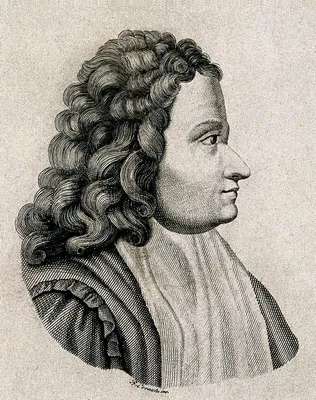
Valsalva described the aortic “sinus of Valsalva”.
1921 CE
#3322
Operations on the frontal sinus.
Conservative treatment of sinusitis.
1949 CE
#3412.4
Operative treatment of chronic suppurative otitis media.
Tympanoplasty.
1563 CE–1564 CE
#1093
Opuscula anatomica.
Eustachius is credited with several anatomical discoveries, among them the tensor tympani muscle and the Eustachian tube, published in his chapter entitled De auditus organis. In the last respect, however, he was anti…
1768 CE
#4851
Opuscules de chirurgie. Pt. 1.
Records, p. 161, a successful operation for temporo-sphenoidal abscess, 1752. The patient, a monk, had otorrhoea followed by a mastoid abscess, which Morand opened.
1821 CE
#3253
Osphrésiologie, ou traité des odeurs, du sens et des organes de l’olfaction. 2me. éd.
An exhaustive work which discusses olfaction, diseases of the nose, membranous occlusion of the nostrils, deviations of the septum, rhinoplasty, coryza, vasomotor rhinitis, rhinorrhoea, etc. The first edition was enti…
1990 CE
#12077
Otolaryngology: An illustrated history.
Second edition by Weir and Albert Mudrey, Otorhinolarygngology: An illustrated history, Ashford, UK: Headley Brothers, 2013.
1930 CE
#3407
Otologische Röntgendiagnostik.
Includes a brief history of the subject.
1913 CE
#3403
Otosclerosis: certain clinical features and experimental operative procedures.
Jenkins suggested the modern fenestration operation of otosclerosis.
1899 CE
#3311
Pathologie und Therapie der entzündlichen Erkrankungen der Nebenhöhlen der Nase.
Hajek, Professor of Laryngology in Vienna, particularly distinguished himself by his classic work on the acccessory nasal sinuses. Digital facsimile from the Internet Archive at this link. English translation of the f…
1648 CE
#7230
Philocophus: or the deafe and dumbe mans friend.
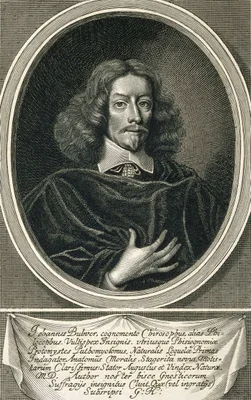
"Bulmer promoted what we would call today 'central nervous system plasticity,' in describing how one sense could take over the duties of another. This is well illustrated in the frontispiece of this work, which is the…
1897 CE
#3309.1
Photographs of a case of rapid destruction of the nose and face.
Malignant granuloma of the nose first described.
1858 CE
#3331
Physiologie Untersuchungen mit Garcia’s Kehlkopfspiegel.
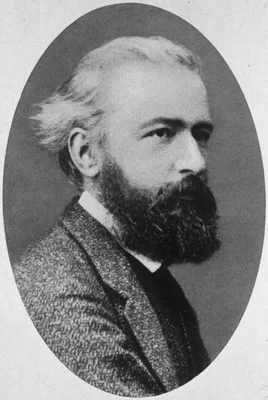
Czermak was the first to demonstrate the utility of the laryngoscope invented by Garcia. He substituted artificial light for sunlight and made other improvements.
1853 CE
#3369
Practical observations on aural surgery and the nature and treatment of diseases of the ear.
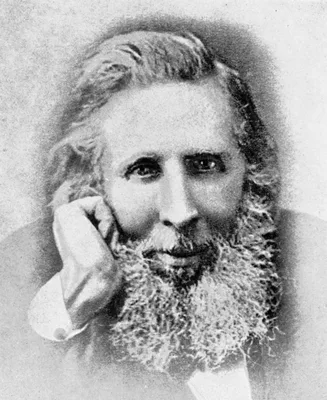
This work did more to place British otology on a scientific basis than anything previously published. In his own words, Wilde “laboured to rescue the treatment of ear diseases from empiricism and found it upon t…
1837 CE
#3328
Practical surgery.
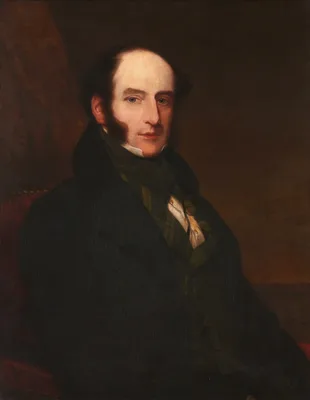
In his day Liston was the most dexterous and resourceful surgeon in the British Isles. He was the first in the country to remove the scapula and the first – on 21 Dec. 1846 – to perform a major operation w…
1860 CE
#3333
Praktische Anleitung zur Laryngoscopie.
1620 CE
#3244.1
Question chirurgicale par laquelle il est demonstré que le chirurgien doit assurément practiquer l’opération de la bronchotomie, vulgairement dicte Laryngotomie ou perforation de la fluste tuyau du polmon.
Four successful cases. Scott Stevenson and Guthrie (see No. 3342) state that Brasavola performed laryngotomy (in 1546) and that Sanctorius also did so.
1874 CE
#3283
Rareficirender, trockner Katarrh der Nasenrachenhöhle und des Rachens (Atrophie). In: H. von Ziemssen’s Handbuch der speciellen Pathologie, 7, 1, 313-16.
First description of “Tornwaldt’s bursitis”, an inflammatory condition of the pharyngeal tonsil, so named from the latter’s description of it in 1885 (see No. 3295).
1851 CE
#1559
Recherches sur l’organe de l’ouïe des mammifères.
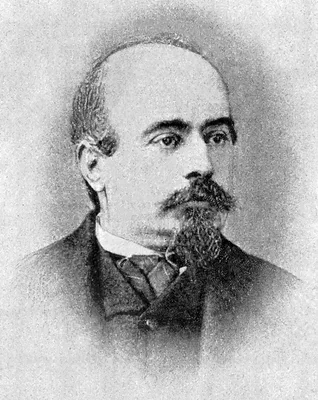
Corti made important investigations on the finer anatomy of the mammalian cochlea. The “organ of Corti” in the cochlea is named after him.
1899 CE
#3312
Recherches sur la bactériologie de l’ozène.
Perez isolated an organism from the nose of patients suffering from ozena. He named it Coccobacillus foetidus ozaenae and considered it to be causally related to the disease.