
Facets
Browse across eight MeSH (opens in new tab) facets — era, geography, science, specialty, technology, history, culture, and reference. Select one tag per group; counts update across the others.
Clear filtersFacet filters
Geography
Specialties & Disease
- Anatomy & Pathology 765
- Cardiology & Blood 914
- Neurology & Psychiatry 1,256
- Obstetrics & Reproductive 550
- Infectious Disease (General) 147
- Surgery & Anesthesia 1,551
- Public Health 1,129
- Immunology & Dermatology 1,404
- General Clinical Medicine 480
- Military Medicine 436
- Psychology 202
- Alternative & Fringe Medicine 383
- Pediatrics 247
- Ophthalmology & Vision 412
- ENT & Hearing 293
- Urology & Nephrology 309
- Gastroenterology & Hepatology 316
- Pulmonary & Respiratory 233
- Rheumatology, Rehab & Pain 188
- Internal, Emergency & Geriatric 123
- Veterinary Medicine 165
- Epidemiology & Demography 397
- Physiology & Embryology 923
- Dentistry 259
- Plagues & Epidemics 1,279
- Microbiology & Virology 1,080
Social & Historical Studies
Institutions & Culture
Reference & Scholarly Works
1,279 entries match Plagues & Epidemics [C01.252]
1995 CE
#10902
Ixodes dammini as a potential vector of human granulocytic Ehrlichiosis.
Order of authorship in the original paper was Pancholi,Kolbert, Mitchell. The authors provided convincing evidence that the tick Ixodes dammini is a common vector for the transmission of HGE (Ehrlichia ewingii). (Than…
1889 CE
#12348
Jenner and vaccination: A strange chapter of medical history.
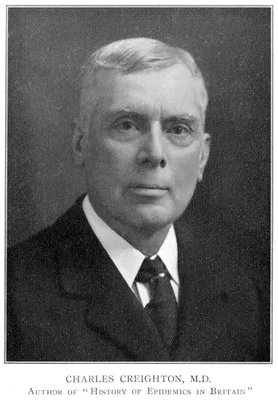
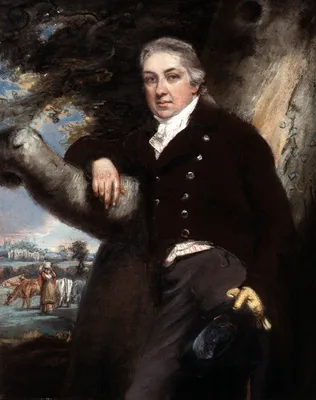
Creighton, one of the founders of epidemiology, disputed the germ theory of infectious disease, and became "one of the anti-vaccination movement's 'most ardent and distinguished spokesmen.' Creighton argued that vacci…
2007 CE
#9688
Justinian's flea: The first great plague and the end of the Roman Empire.
1891 CE
#5242
K voprosu o parazitologii i terapii bolotnoi likhoradki. [Parasitology and treatment of malarial fever.]
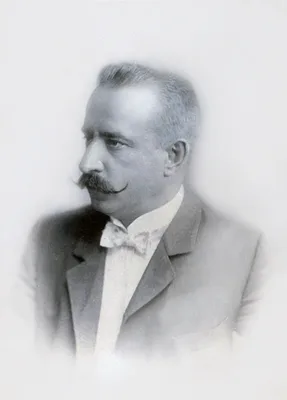
Romanovsky made important studies of the malaria parasite and introduced a special stain for its demonstration. German version in St. Petersburger med. Wschr., 1891, 8, 297-302, 306-15. English translation in Kean (No…
1870 CE
#5292
Kala azar.
Kala azar is mentioned briefly in the Proceedings in 1869 (No. 34, p. 19) but the above is the first full description, given by Briscoe in a report dated 1 Dec 1869.
1981 CE
#6995
Kaposi's sarcoma and pneumocystis pneumonia among homosexual men--New York City and California.
The second published report on what later became the AIDS epidemic. The report described 26 homosexual men in New York and California with Kaposi's sarcoma, and 10 more Pneumocystis carinii pneumonia (PCP) cases in ho…
1886 CE–1890 CE
#7744
Klinicheskii sbornik po dermatologii i sifilologii. 4 vols.
Mansurov was the first dermatologist in Russia, and one of the first physicians to use photography systematically in medical illustration. This was a periodical, illustrated with original photographs, of which Manusro…
1940 CE
#5259
Klinische und parasitologische Befunde und chemotherapeutische Ergebnisse bei der Hühnermalaria.
Discovery of the developmental forms of P. gallinaceum in the incubation period.
1780 CE
#5469
Korte aantekening wegens eene algemeene ziekte, doorgaans genaamd knokkel-koorts.
Bylon described an epidemic of dengue which appeared in the Dutch East Indies in 1779, the first definite description of the disease. O. H. P. Pepper published a photographic reproduction of the article in Ann. med. H…
1954 CE
#4158.1
Kurze Geschichte der Dermatologie und Venereologie und ihre kulturgeschichtliche Spiegelung.
1908 CE
#5065
Kutanreaktion beil Impfung mit Diphtherietoxin.
The Schick test for the determination of susceptibility to diphtheria.
2008 CE
#10014
L'Histoire des vaccinations.
Translated and significantly revised and enlarged as Vaccination: A history from Lady Montagu to genetic engineering (Montrouge: John Libbey Eurotext: 2011).
1928 CE
#5070
L’anatoxine diphtérique. Ses propriétés–ses applications.
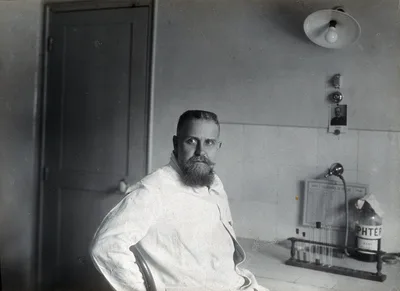
In 1923 Ramon so modified the diphtheria toxin with formaldehyde that it lost its toxic properties while retaining its antigenic virtues. This modified “anatoxin” (toxoid) superseded toxin–antitoxin …
2004 CE
#14086
L’origine de la syphilis en Europe: Avant ou après 1493? / The origin of syphilis in Europe: Before or after 1493? Proceedings of an international colloquium, Toulon, France, 25–28 November 1993. Edited by Olivier Dutour, György Pálfi, Jacques Berato, and Jean-Pierre Brun.
The occasion of this meeting was the discovery in 1989 near Hyères (Var, France) of a human skeleton of the third or fourth century CE presenting lesions similar to those of syphilis. The volume contains fifty …
1909 CE
#5299.1
L’ulcère de Bauru ou le bouton d’orientau Brésil.
Muco-cutaneous leishmaniasis of South America. English translation in Kean (No. 2268.1).
1895 CE
#5530
La erupción en la enfermedad de Carrión (verruga peruana).
“Carrion’s disease” (Oroya fever) was named by the Peruvian physician Ernesto Odriozola, after Daniel Alcides Carrión Garcia (1859-85), a student. In order to prove or disprove the connection …
1903 CE
#5459
La fièvre jaune.
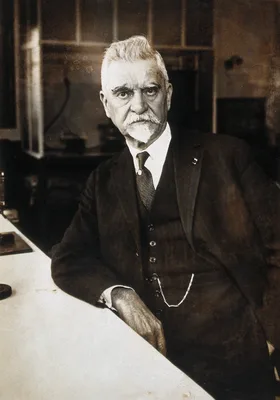
Yellow fever convalescent serum employed. With A. T. Salimbeni and P. L. Simond.
1914 CE
#2443
La lèpre à travers les siècles et les contrées.
1934 CE
#11131
La lèpre.
A handsome folio volume of some seven hundred pages, well printed on fine paper and beautifully illustrated, the book is a tribute to the printer's art as well as to the scientist's efforts. Of special interest is the…
1988 CE
#11542
La médecine coloniale: Mythe et réalités.
1552 CE
#2368
La méthode curatoire de la maladie venerienne.
De Héry made a fortune from treating syphilitic patients. He recommended mercurial inunctions and guaiac internally.
1894 CE
#5125
La peste bubonique à Hong-Kong.
Yersin discovered the plague bacillus Pasteurella (Yersinia) pestis, isolating it from excised buboes. He published the first account of this organism. Preliminary note in C. R. Acad. Sci. (Paris), 1894, 119, 356.
1895 CE
#5127
La peste bubonique. By Alexandre Yersin with L.C.A. Calmette and A. Borrel.
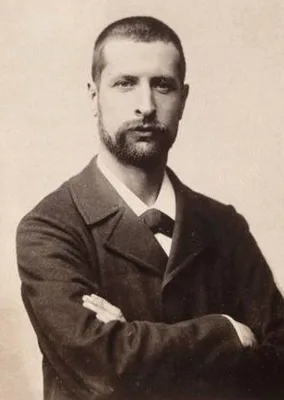
Successful inoculation of animals with anti-plague vaccine.
1911 CE
#5137
La peste de 1720 à Marseille et en France d’après des documents inédits.
1910 CE
#4670.3
La poliomyélite experimental.
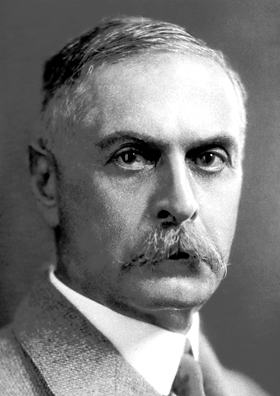
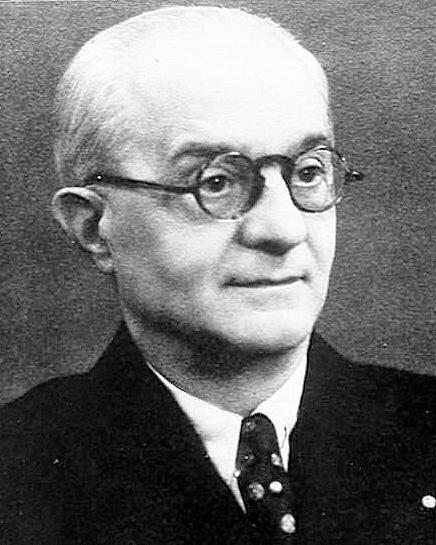
Serum from a monkey that had recovered from experimental poliomyelitis was mixed with an emulsion containing active polio virus; it failed to produce paralytic disease when injected into fresh monkeys.
1911 CE
#5171
La precipitina nella diagnosi del carbonchio ematico.
Ascoli’s thermoprecipitin reaction for the diagnosis of anthrax. German translation in Zbl. Bakt., 1911, 1 Abt., 58, Orig., 63-70. Preliminary note in Patbologica, 1910, 3, 101.
1898 CE
#5128.1
La propagation de la peste.

Simond provided substantial evidence to support Ogata that fleas transmitted plague from rat to man.
1886 CE
#2393
La syphilis héréditaire tardive.
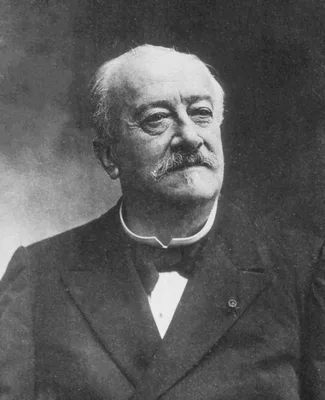
Fournier, one of the greatest syphilologists, did more than any other person to develop the knowledge regarding congenital syphilis. Through his writings, the importance of syphilis as a cause of degenerative diseases…
1937 CE
#5213.1
La toxi-infection gonococcique expérimentale et son traitement chimiothérapique.

Levaditi and Vaisman showed that sulfanilamide protected mice against gonococcal infection.
1927 CE
#11994
La vaccination préventive contre la tuberculose par le "BGG". Par Albert Calmette avec la collaboration de C. Guérin, A. Boquet et L. Nègre.
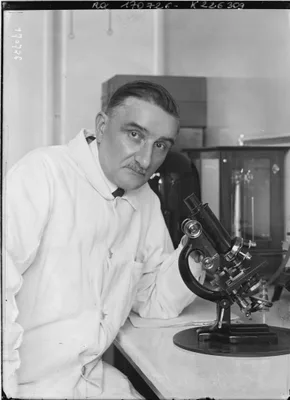
A 250-page monograph, with bibliographical references, on the development of the BCG vaccine from M. bovis, from 1909 to 1927 by the scientists involved. (Thanks to Ron Cox for this reference.)
1885 CE
#13805
La viruela en la América del Sud y principalmente en la República Argentina: Historia, estadística, clínica, y profilaxia.
Digital facsimile from wellcomecollection.org at this link.
2009 CE
#12384
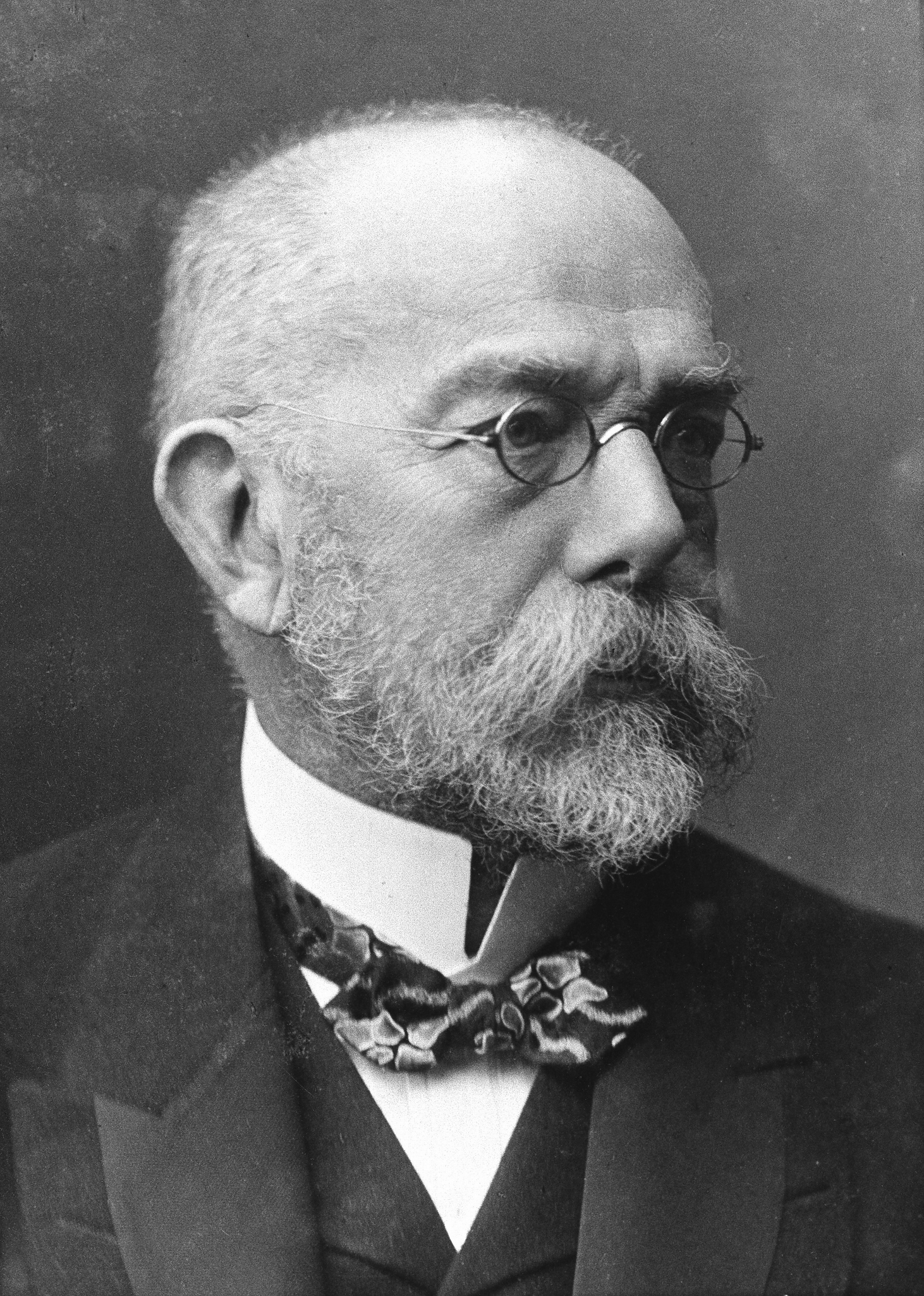
Laboratory disease: Robert Koch's medical bacteriology.
1970 CE
#5546.4
Lassa fever, a new virus disease of man from West Africa. I. Clinical description and pathological findings.
An arenovirus infection first noted in Lassa, N. E. Nigeria, in 1969. With J. M. Baldwin, D. J. Gocke, and J. M. Troup.
1970 CE
#5546.5
Lassa fever, a new virus disease of man from West Africa. III. Isolation and characterization of the virus.
Preliminary note in Nature (Lond.), 1970, 227, 174. Lassa Hemorrhagic Fever is endemic to the West African countries of Nigeria, Guinea, Liberia and Sierra Leone.
1892 CE
#5109
Le choléra asiatique chez le cobaye.
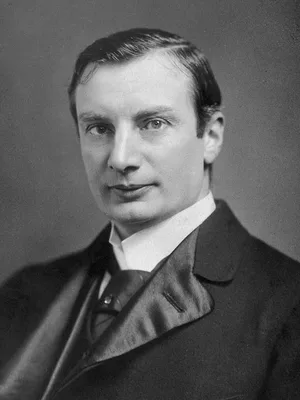
Haffkine’s vaccine against cholera was the first to meet with any success.
1909 CE
#5300
Le kala azar infantile.
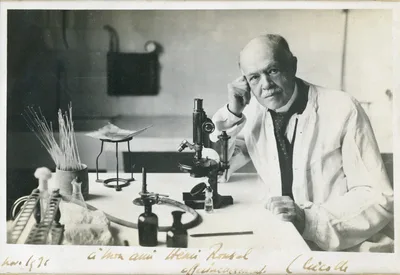
Nicolle considered infantile kala-azar to be caused by a distinct species of Leishmania; to this he gave the name L. infantum.
1986 CE
#8743
Le mal de Naples. Histoire de la syphilis.
Translated into English by Judith Braddock and Brian Pike as The history of syphilis (Baltimore: Johns Hopkins University Press, 1992).
1909 CE
#5284
Le mécanisme d’action des dérivés arsenicaux dans les trypanosomiases.
A study of the action of atoxyl and arsacétine.
1864 CE
#8109
Le Mexique et l'Amérique tropicale: climats, hygiène et maladies.
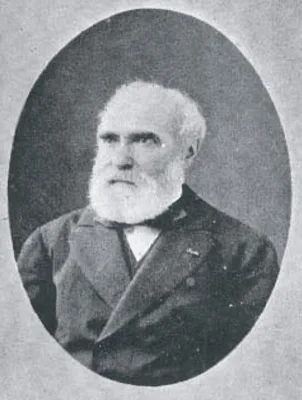
Digital facsimile from the Internet Archive at this link.
1906 CE
#5087
Le microbe de la coqueluche.
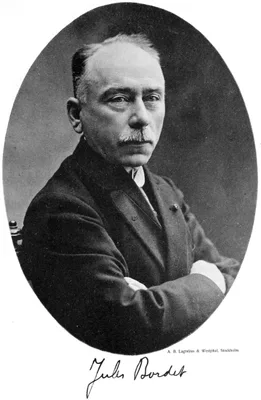
The cocco-bacillus Haemophilus pertussis, commonly regarded as the causal organism of whooping cough, was at first named “Bordet–Gengou bacillus” after its discoverers. It has later renamed Bordetell…
1932 CE
#12051
Le pèlerinage de la Mecque au point de vue religieux, social et sanitaire par le docteur Duguet. Avec un préface de Justin Godart.
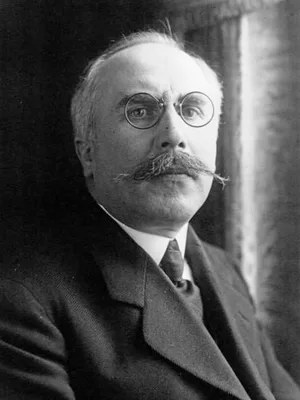
"Duguet also served as inspector general of health services of Lebanon and Syria under the French Mandate and was responsible for the medical supervision of the pilgrimage to Mecca. The first part of the book gives so…
1912 CE
#5285.3
Le trypanosoma cruzi évolue chez Conorhinus megistus, Cimex lectularius, Cimex Boueti et Ornithodorus moubata. Cycle évolutif de ce parasite.
Life cycle of T. cruzi described. English translation in Kean (No. 2268.1).
1988 CE
#11255
Legionnaires disease: Historical perspective.
Digital facsimile from cmr.asm.org at this link.
1977 CE
#3215.7
Legionnaires’ disease. Description of an epidemic of pneumonia.

First major scientific account. With 11 co-authors. Legionnaire's disease acquired its name after an outbreak of a then-unknown "mystery disease" sickened 221 persons, causing 34 deaths. The people affected were atten…
1977 CE
#3215.8
Legionnaires’ disease. Isolation of a bacterium and demonstration of its role in other respiratory disease.
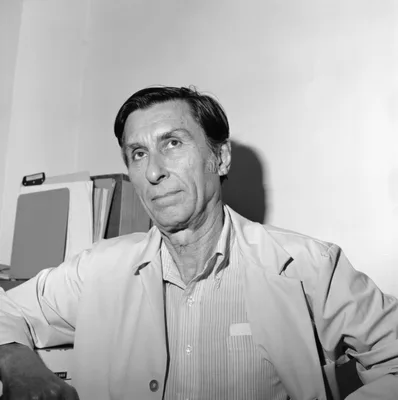

Order of authorship in the original publication: McDade, Shepard, Fraser.... See also p. 1218.
1887 CE
#5503
Lektsii ob ostrikh infektsionnîkh bolieznyakh u dietei. [Lectures on acute infectious diseases of children.] Vol. 2
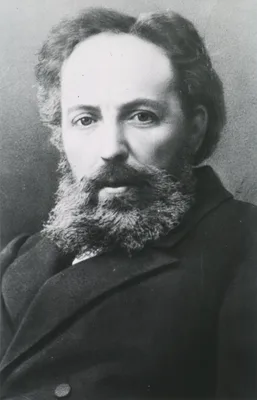
On p. 113 is Filatov’s account of a form of rubella with a scarlatiniform rash. To this he gave the name “rubeola scarlatinosa”. (See also No. 5505.)
1915 CE
#2444
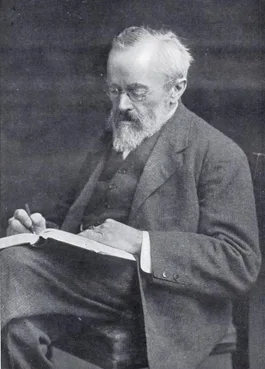
Leper houses and mediaeval hospitals.
2006 CE
#8905
Leprosy and empire: A medical and cultural history.
"An interdisciplinary study of why a disease that is so difficult to catch has caused such alarm. It examines how the fear of leprosy was part of nineteenth-century imperial expansion, as colonial officials and missio…
1881 CE
#13045
Leprosy in British Guiana. An account of West Indian Leprosy. Illustrated with twenty lithographic plates, coloured and plain, from original drawings and photographs of patients at the asylum, and several engravings from camera-lucida drawings, by E. Noble Smith, of pathological specimens, mounted and prepared, with explanatory remarks by P. S. Abraham....
The author was medical superintendent of the General Leper Asylum, British Guiana, West Indies. Digital facsimile from the Internet Archive at this link.
1886 CE
#10521