
Facets
Browse across eight MeSH (opens in new tab) facets — era, geography, science, specialty, technology, history, culture, and reference. Select one tag per group; counts update across the others.
Clear filtersFacet filters
Geography
Specialties & Disease
- Anatomy & Pathology 765
- Cardiology & Blood 914
- Neurology & Psychiatry 1,256
- Obstetrics & Reproductive 550
- Infectious Disease (General) 147
- Surgery & Anesthesia 1,551
- Public Health 1,129
- Immunology & Dermatology 1,404
- General Clinical Medicine 480
- Military Medicine 436
- Psychology 202
- Alternative & Fringe Medicine 383
- Pediatrics 247
- Ophthalmology & Vision 412
- ENT & Hearing 293
- Urology & Nephrology 309
- Gastroenterology & Hepatology 316
- Pulmonary & Respiratory 233
- Rheumatology, Rehab & Pain 188
- Internal, Emergency & Geriatric 123
- Veterinary Medicine 165
- Epidemiology & Demography 397
- Physiology & Embryology 923
- Dentistry 259
- Plagues & Epidemics 1,279
- Microbiology & Virology 1,080
Social & Historical Studies
Institutions & Culture
Reference & Scholarly Works
1,279 entries match Plagues & Epidemics [C01.252]
1934 CE
#12387
The isolation and properties of the purified protein derivative of tuberculin
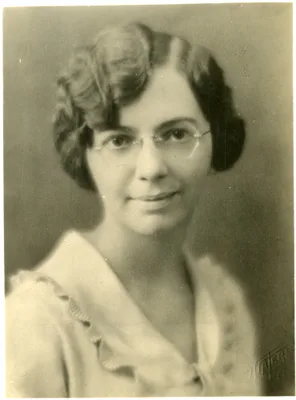
Purification of tuberculin (PPD). By the 1940s Seibert's PPD was the international standard for tuberculin tests.
1911 CE
#6646
The king’s evil.
A classic account of the history of touching for the “king’s evil” or scrofula— a practice of kings from ancient times until the 18th century.
1949 CE
#5225
The laboratory diagnosis of lymphogranuloma venereum.
Skin-test antigen. With C. F. Barwell, E. J. King, and L. W. J. Bishop.
2010 CE
#11393
The last plague in the Baltic Region 1709-1713.
This work "offers a thorough description and analysis of the terrible plague epidemic that ravaged the Baltic region in the years between 1709 and 1713? at the same time when the region was razed by the Great Northern…
2004 CE
#11244
The life and death of smallpox.
1886 CE
#5427
The life-history of the micro-organisms associated with variola and vaccinia. An abstract of results obtained from a study of smallpox and vaccination in the surgical laboratory of the University of Edinburgh.
The “Paschen elementary bodies” (No. 5430) were first recognized and demonstrated by Buist. Republished as an appendix to his Vaccinia and variola, London, 1887.
1896 CE
#5205.1
The lupoid form of the so-called “groin ulceration” of this colony.
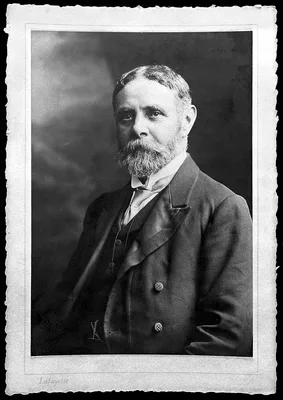
Granuloma inguinale distinguished from other similar lesions in the genital region.
1995 CE
#8036
The making of a social disease: Tuberculosis in nineteenth-century France.
2007 CE
#13290
The making of a tropical disease: A short history of malaria.
2014 CE
#12799
The malaria project: The U.S. government's secret mission to find a miracle cure.
"....the story of America's secret mission to combat malaria during World War II—a campaign modeled after a German project which tested experimental drugs on men gone mad from syphilis. "American war planners, f…
1985 CE
#13727
The management of smallpox eradication in India.
1878 CE
#5270.1
The microscopic organisms found in the blood of man and animals, and their relation to disease.
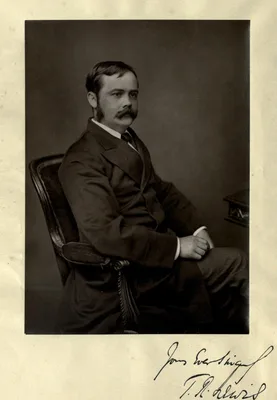
First description of a trypanosome (T. lewisi) in a mammal. Seoarate edition in book form with the same title: Calcutta: Office of the Superintendent of Government Printing, 1879.
2022 CE
#14169
The molecular epidemiology of multiple zoonotic origins of SARS-Co-V-2.
Abstract: "We analyzed the genomic diversity of severe acute respiratory syndrome coronavirus 2 (SARS-CoV-2) early in the coronavirus disease 2019 (COVID-19) pandemic. We show that SARS-CoV-2 genomic diversity before …
1951 CE
#2352.1
The multiple-puncture tuberculin test.
The Heaf multiple-puncture tuberculin test.
1905 CE
#5318
The nature of tick fever in the eastern part of the Congo Free State.
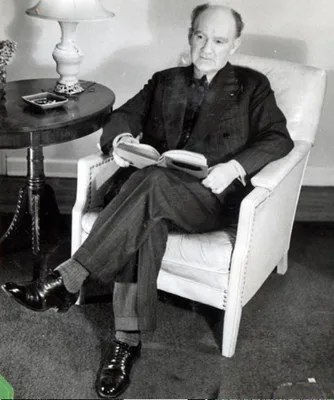
Independently of Ross and Milne, Dutton and Todd demonstrated relapsing fever in monkeys conveyed by infected ticks, Omithodorus moubata. The organism was named Sp. (now Borrelia) duttoni. Both Dutton and Todd contrac…
1734 CE
#2148
The navy-surgeon, or a practical system of surgery.
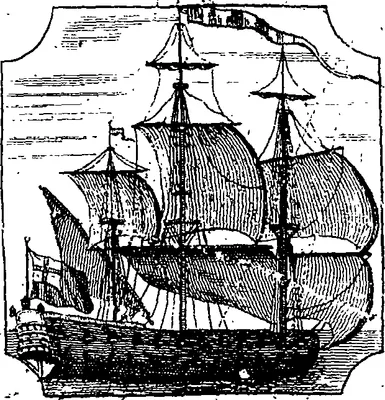
Atkins was an English naval surgeon. His book includes some useful case reports and contains the first English description of African trypanosomiasis.
1781 CE
#5422
The new method in inoculating for the small pox.
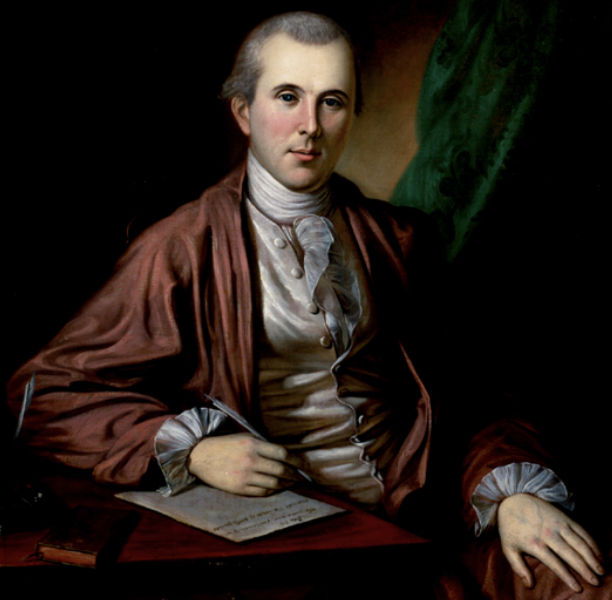
1906 CE
#4194
The operative treatment of acute gonorrheal epididymitis.
Hagner devised the open operation for the relief of acute epididymitis.
2011 CE
#12080
The origin and antiquity of syphilis revisited: An Appraisal of Old World pre‐Columbian evidence for treponemal infection.


Order of authorship in the original publication: Harper, Zuckerman, Harper, Kingston, Armelagos. Abstract: "For nearly 500 years, scholars have argued about the origin and antiquity of syphilis. Did Columbus bring the…
1907 CE
#5321
The part played by Pediculus corporis in the transmission of relapsing fever.
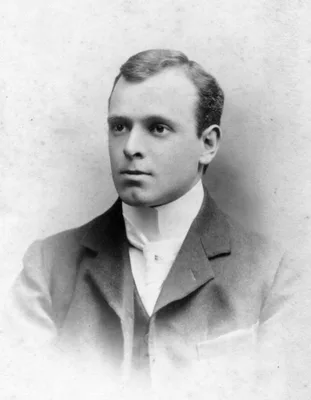
Proof that relapsing fever is conveyed by the body louse, Pediculus corporis.
1944 CE
#2349.1
The pathogenesis of tuberculosis.
Classic work on the pathogenesis of tuberculosis and its immunology and hypersensitivity.
1931 CE
#5087.1
The phases of Haemophilus pertussis.
Leslie and Gardner classified H. pertussis cultures into four types and established an experimental basis for the development of an effective vaccine.
2009 CE
#10573
The plague files: Crisis management in sixteenth-century Seville.
1927 CE
#5142
The plague in Shakespeare’s London.
1894 CE
#5126
The plague in the East.
Rennie appears to be the first seriously to support the theory of transmission of the plague bacillus by rats and to present evidence in support of that theory.
1736 CE
#5076
The practical history of a new epidemical eruptive miliary fever, with an angina ulcusculosa, which prevailed in Boston New England in the years 1735 and 1736.
Douglass left the first adequate clinical description of scarlet fever, which he called angina ulcusculosa, in his account of New England’s first scarlet fever epidemic. He was one of the first American physicia…
1948 CE
#5262.1
The pre-erythrocytic stage of human malaria Plasmodium vivax.
With P. C. C. Garnham, G. Covell, and P. G. Shute.
1948 CE
#5262
The pre-erythrocytic stage of mammalian malaria.
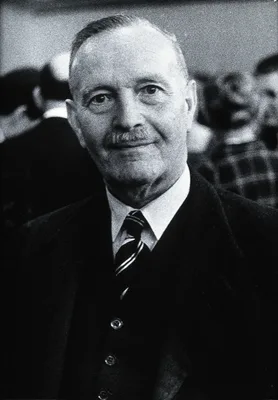
Demonstration of the pre-erythrocytic stage of P. cynomolgi in the monkey. With P. C. C. Garnham and B. Malamos. Preliminary communication in Nature (Lond.), 1948, 161, 126.
1949 CE
#5262.2
The pre-erythrocytic stage of Plasmodium falciparum. A preliminary note.
With N. H. Fairley, G. Covell, P. G. Shute, and P. C. C. Garnham. See also Trans. roy. Soc. trop. Med. Hyg., 1951, 44, 405-19.
1767 CE
#5420
The present method of inoculating for the small-pox.
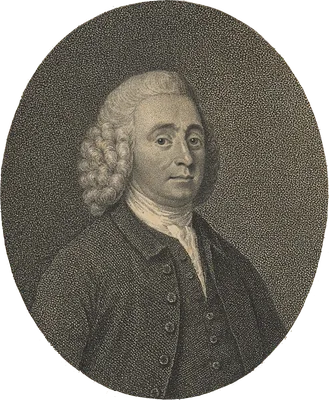
Dimsdale is notable as having inoculated Catherine of Russia and her son. For this he received a fee of £10,000 and a life pension. His reputation and the exalted rank of his patient helped in popularizing the m…
1943 CE
#2441
The promin treatment of leprosy. A progress report.
Promin (sodium glucosulphone) introduced in the treatment of leprosy. With R. C. Pogge, F. A. Johansen, J. F. Dinan, B. M. Prejean, and C. G. Eccles.
1928 CE
#5434
The reaction of the skin of the normal rabbit following intradermal injection of material from smallpox lesions: the specificity of this reaction and its application as a diagnostic test.
McKinnon’s diagnostic test.
1910 CE
#5380
The relation of typhus fever (tabardillo) to Rocky Mountain spotted fever.
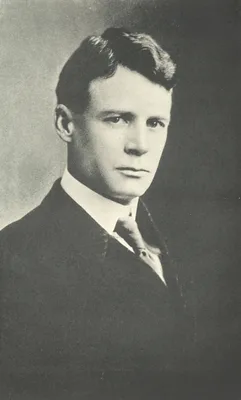
Ricketts and Wilder differentiated Rocky Mountain spotted fever and typhus.
1976 CE
#11888
The resistance factor to Plasmodium vivax in blacks.
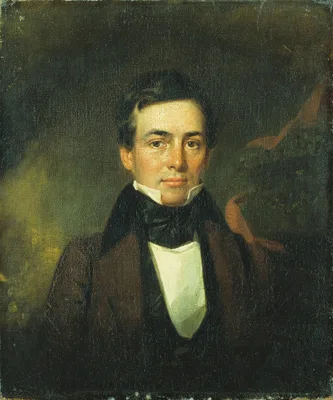

The authors showed that the Plasmodium vivax parasite requires the Fya/Fyb Duffy antigen/chemokine receptor on the surface of red blood cells for penetration of human red blood cells. Because most African and American…
1898 CE
#5251
The rôle of the mosquito in the evolution of the malarial parasite.
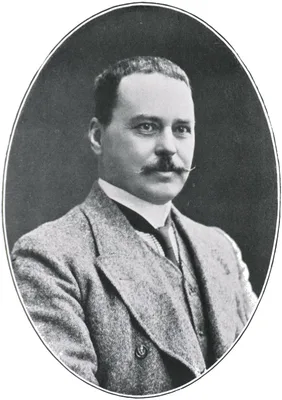
Ross provided the last link in the chain demonstrating the complete life-cycle of the parasite of bird malaria. He found that mosquitoes which had fed on malaria-infected birds, and which had allowed the parasites to …
1971 CE
#10678
The role of the trypanosomiases in African ecology: A study of the Tsetse fly problem.
2012 CE
#12154
The scars of Venus: A history of venereology.

1924 CE
#5084
The significance of Streptococcus hemolyticus in scarlet fever and the preparation of a specific anti-scarlatinal serum by immunization of the horse to Streptococcus hemolyticus-scarlatinae.
Dochez and Sherman immunized a horse by repeated injections of scarlet fever toxin. A serum obtained from the horse blanched a scarlet fever rash and, when injected subcutaneously, caused marked amelioration of the ea…
1967 CE
#10679
The sleeping sickness epidemic of Uganda 1900-1920: A study in historical geography.
2010 CE
#13789
The smallpox eradication saga: An insider's view.
1996 CE
#9235
The structure of plagues and pestilences in early modern Europe. Central Europe, 1560-1640.
"The most in-depth study ever undertaken of how plague and other infectious diseases affected populations in Central Europe between 1560 and 1640. Based on quantitative data gleaned from over 800 parish registers, the…
1832 CE
#10462
The substance of the official medical reports upon the epidemic, called cholera: Which prevailed among the poor at Dantzick, between the end of May and the first part of September, 1831, as transmitted to their lordships; being an analysis of the said epidemic disease in that city--founded upon actual observation and accurate inquiry: With important and well-authenticated facts relative to the same disease, as it prevailed among the poor in other parts of the North of Europe.
Hamett privately published this report after it was rejected for publication by the British government. He included hospital admission tables in his book and produced perhaps the first map based on hospital reports of…
1918 CE
#5350.6
The successful use of antimony in bilharziosis.
Introduction of tartar emetic (antimony) in the treatment of schistosomiasis.
1986 CE
#11042
The T4 glycoprotein is a cell-surface receptor for the AIDS virus.


Order of authorship in the original paper: McDougal, Maddon, Dalgleish. The authors discovered that the T4 lymphocyte cell has an outer glycoprotein on its surface that specifically acts as the receptor for HIV. Witho…
1844 CE
#10446
The theory and treatment of fevers. Revised and corrected by Ferdinando Stith.
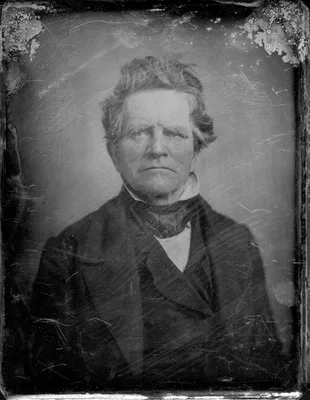
The first medical treatise published in Missouri and the first medical treatise published west of the Mississippi River. "John Sappington provided medical services, was a financial lender, and imported and exported go…
1944 CE
#5398.3
The therapeutic effect of para-aminobenzic acid in louse-borne typhus fever.
With J. C. Snyder, E. S. Murray, C. J. D. Zarafonetis, and R. S. Ecke.
1941 CE
#5301.2
The transmission of Leishmania tropica by the bite of Phlebotomus papatasii.
Proof of the transmission of L. tropica by P. papatasii.
1906 CE
#5378
The transmission of Rocky Mountain spotted fever by the bite of the wood-tick (Dermacentor occidentalis).
Ricketts (who himself died of typhus) demonstrated that the wood tick Dermacentor andersoni is a vector of Rocky Mountain spotted fever.
1937 CE
#4689
The treatment of meningococcic meningitis with sulfanilamide.
With S. Gelman and P. H. Long.
1939 CE
#5172.1
The use of anthrax vaccines prepared from avirulent (uncapsulatec) variants of Bacillus anthracis.
Nonencapsulated spore vaccine.