
Italy
338 entries published in Italy. 11 publication places.
1497 CE
#1790
Breviarium medicinae. Tr: Gerardus Cremonensis. Add: Serapion the Younger: In medicinis simplicibus. Tr: Simon a Cordo Januensis and Abraham Judaeus Tortuosiensis. Galenus: De virtute centaureae; Johannes Platearius: Practica brevis; Matthaeus Platearius: De simplici medicina "Circa instans".
![GALEN, [Κλαύδιος Γαληνός; Galen of Pergamon] (129 – 216)](/media/portraits/21)
Serapion the Elder and Serapion the Younger were Syrian Christians who wrote in Arabic. Breviarum medicinae was an abridgement of the opinions of the Greek and Arabic physicians concerning diseases and their treatment…
1497 CE
#2363
Libellus de Epidemia, quam uulgo morbum Gallicum uocant,
One of the earliest treatises on syphilis, and one of the few medical books printed by Aldus Manutius in the 15th century. Leoniceno included a good description of syphilitic hemiplegia. He believed that syphilis was …
1497 CE
#39.1
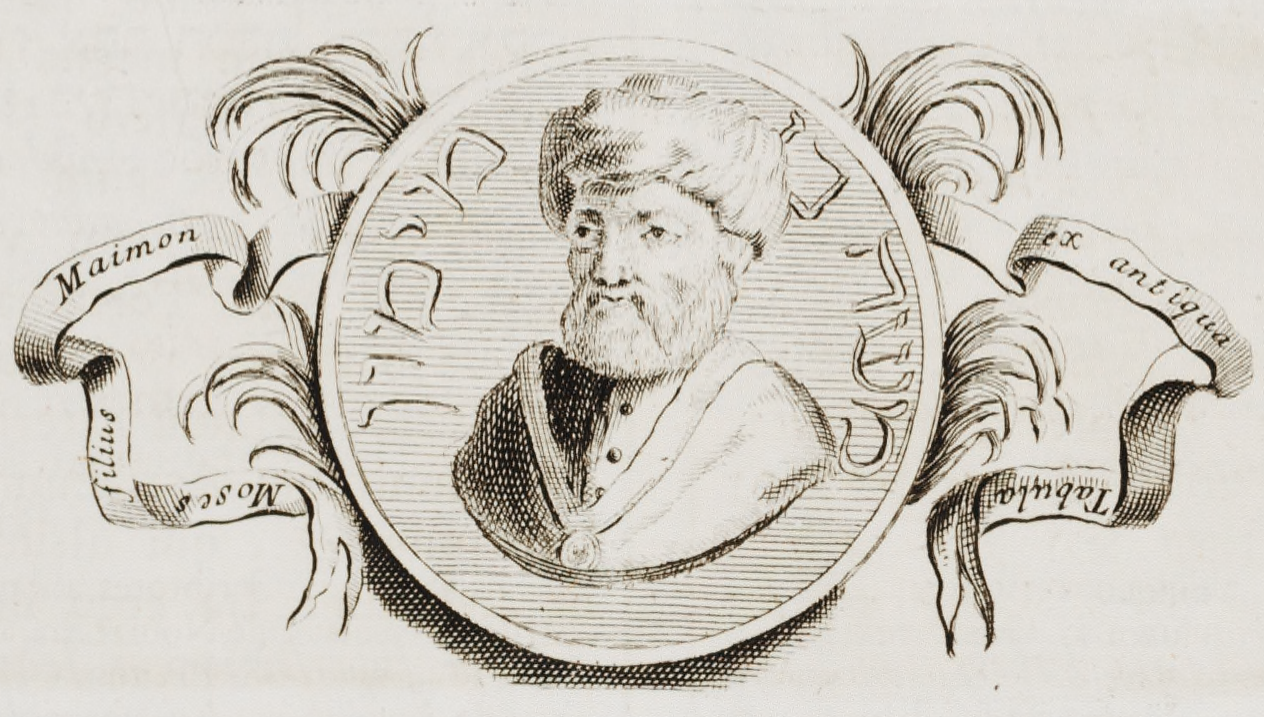
Rhazes: Liber ad Almansorem sive Tractatus medicinae I-X. Liber divisionum. De aegritudinibus juncturarum. De aegritudinibus puerorum. De secretis sive aphorismi. Antidotarium. De praeservatione ab aegritudine lapidis; Introductorium medicinae. De sectionibus et ventosis. Synonyma. De animalibus. Add:Tabula de herbis medicis; Maimonides: Aphorismi; Mesue (the elder): Aphorismi; Hippocrates: Secreta; Prognosticatio secundum lunam; Capsula eburnea; De humana natura; De aere et aqua et regionibus; De pharmaciis; De insomniis; Avenzohar: De cura lapidis.
![HIPPOCRATES, [Ἱπποκράτης; Hippocrates of Kos] (-460 – -370)](/media/portraits/50)
The best edition of the Opuscula of Rhazes, containing the second printing of the celebrated Liber ad Almansorem, not to be confused with Liber nonus ad Almansorem, as well as De aegritudine puerorum (No. 6313), and o…
1498 CE
#12925
Chirurgia. Add: Brunus Longoburgensis: Chirurgia magna et minor; Bonaventura de Castello: Recepta aquae balnei de Porrecta; Theodoricus Cerviensis: Chirurgia; Rolandus: Libellus de chirurgia; Lanfrancus Mediolanensis: Chirurgia; Rogerius: Practica; Leonardus Bertapalia: Recollectae super quarto libro Avicennae.
This late 15th century edition of the surgery of Guy de Chauliac also contained the first printed editions of various lesser-known medieval surgeries such as those by Bruno da Longoburgo and Leonardo Bertapaglia. It a…
1498 CE
#11631
Nuovo ricettario composto dal Collegio dei Dottori di Firenze. Ed: Hieronymus dal Pozzo Toscanelli.
The pharmacopeia of Florence was probably the second pharmacopeia published in print. It included a list of approved drugs and described various methods of preparing them for use, together with proper weights and meas…
1499 CE
#2069
Dioscorides, De materia medica [Greek]. Add: Pseudo- Dioscorides, De venenis, De venenatis animalibus [Greek]; Add: Nicander, Theriaca; Add: Alexipharmaca; Scholia [Greek].
![DIOSCORIDES, Pedanius [Πεδάνιος Διοσκουρίδης] (40 – 90)](/media/portraits/2028)
Nicander was a Greek poet and physician. His Theriaca, in 958 hexameters, dealt with the symptoms and treatment of poisoning by the bites of poisonous animals; the Alexipharmaca considered intoxications through animal…
1500 CE
#53
Aphorismi secundum doctrinam Galeni. Add: Johannes Damascenus [Mesue?]: Aphorismi. Hippocrates: Secreta; Prognosticatio secundum lunam; Capsula eburnea; De humana natura; De aere et aqua et regionibus; De pharmaciis; De insomniis. Avenzohar: De curatione lapidis.
An edition of the Latin translation of Maimonides’ Aphorismi (first published, Venice, 1489), together with a compilation of the works of Mesue, Avenzoar, Galen, etc. Page for page reprint, Venice, 1508. See No.…
1500 CE
#11081
Methodus medendi [and Ad Glauconem.]
Klebs 433.1. These were the first genuine texts of Galen published in print in the original Greek.
1500 CE–1501 CE
#3666.82
Chirurgia cum formis instrumentorum (Tr: Gerardus Cremonensis). IN: Guy de Chauliac: Chirurgia parva. Add: Albulcasis: Chirurgia cum formis instrumentorum. Jesus filius Hali: De oculis (Tr: Dominicus Marrochinus). Canamusali de Baldach: De oculis.
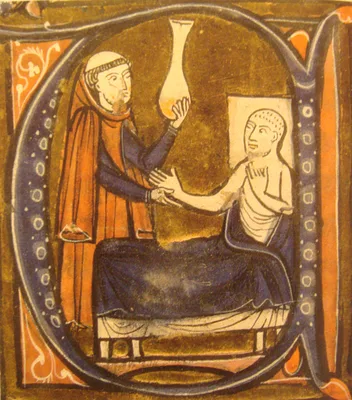
The surgical section of Albucasis’s Altasrif, the first rational, complete and illustrated treatise on surgery and surgical instruments. The author was an Arab Muslim physician and surgeon who lived in Al-Andalu…
1502 CE
#12771
Historia corporis humani sive anatomiae.
"... a descriptive anatomy in the style of Mundinus. It concludes with a final chapter on the praise of dissection. He expresses the need for a clinical examination rather than uncritical trust in the authorities &ldq…
1502 CE
#363.4
Liber anathomie corporis humani & singulorum membrorum illius.
“The first systematic and sufficiently detailed examination of the human body since Mundinus, far outstripping the latter in scientific accuracy” (Lind, Pre-Vesalian anatomy, 10, also 141-56). See also Nos…
1507 CE
#2270
De abditis nonnulus ac mirandis morborum et sanationum causis. Edited by Girolamo Benivieni.
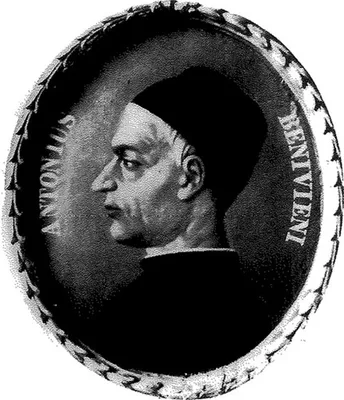
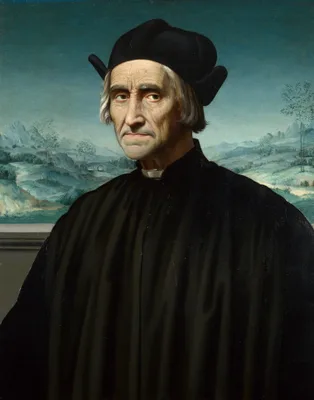
Antonio Benivieni's The hidden causes of diseases was the first book on pathological anatomy, presenting the first reports of autopsies made specifically to determine the cause of death. The work records twenty post-m…
1509 CE
#8445
Medicinae Pliniae libri quinque finiunt foeliciter.
The Medicina Plinii was an anonymous compilation of remedies dating to the early 4th century CE ."The excerptor, saying that he speaks from experience, offers the work as a compact resource for travelers in dealing wi…
1510 CE
#11034
La cyrogia di Miastro Bruno: Expertissimo in quella. Tradutta in vulgare.
Bruno da Longoburgo studied surgery in Bologna or possibly Padua, and practiced in the latter city, where he helped found the University of Padua. His Chirurgia magna, completed in 1252, antedates those of Lanfranch, …
1514 CE
#5559.1
Practica in arte chirurgica copiosa… continens novem libros.
The first complete system of surgery after that of Guy de Chauliac. In 1503 Vigo became the personal surgeon to Pope Julius II. His Practica in arte chirurgia copiosa was completed in 1514 and first published in Latin…
1517 CE
#7111
Oppianou Alieuticon biblia pente. Tou autou Kynegetikon biblia tessara. Oppiani De piscibus libri V. Eiusdem De venatione libri IV. Oppiani De piscibus Laurentio Lippio interprete libri V.
First edition in print of Oppian of Apamea's Cynegetica (Κυνηγετικά/KynÄ“getiká, 'On Hunting' ), a didactic poem in 2144 hexameters and 4 books, dedicated to t…
1518 CE
#4850.2
Tractatus de fractura calve sive cranei.
The first separate treatise on head wounds and their surgical treatment. Berengario described several types of skull fractures and grouped the resulting lesions according to their symptoms, citing the relation between…
1519 CE
#2666
HOC.IN.VOLVMINE.ACTVARI.GRÆCI auctoris medici praestantissimi digesti sunt de urinis libri septem de græco sermone in latinum conversi: in quibus omnia: que de urinis dici possunt: sive practicam sive Theoricam: sive cognitionem: sive prognostica quæsiveris: doctissime tractata continentur, Unde lector optime: si diligenter his libris infadaveris glumam paucă ex aliorsi lectionet: ex hac ipsa grans multum te colle gisse cognoveris.
The most complete medieval treatise on urinoscopy, translated from the Greek by Ambrogio Leone (1458/9- 1525) professor of medicine in Naples). Johannes Actuarius, the last of the great Byzantine physicians, was first…
1520 CE–1522 CE
#8344
[Vol. 1:] Primus Avi. Canon. Avicenna, medicorum principis, Canonum liber (translatus a Gerardo Cremonensi), una cum lucidissima Gentilis Fulgi. expositione, qui merito is Speculator appellatus, additis annotationibus omnium auctoritatum and priscorum and recentiorum auctorum (edente Barthomomeo Tantuccio) .... - [Vol. 2:] Secundus Canon Avic., Cum exquisitissima Gentilis Fulg. expositione. Demum Plinii auctoritates, secundum annotata capita in de Simplicibus nuperrime addite. - [Vol.3:] Tertius Can. Avic., Cum amplissima Gentilis Fulgi. expositione. Demum commentaria nuper addita, videlicet Jacobi de Partibus super "Fen" VI and XIIII. Item Jo. Matthei de Gradi super "Fen" XXII, quia Gentilis in eis defecit. - [Vol. 4:]: Secunda pars Gentilis super tertio Avic. Cum supplementis Jacobi de Partibus, Parisiensis, ac Joannis Matthei de Gradi, Mediolanensis, ubi Gentilis vel breviter vel tacite pertransivit. - [Vol.5:] Quartus Canon Avicenna, cum preclara Gentilis Fulginatis exhibits. Thadei item Florentini expositio super secunda "Fen" ejusdem. Gentilis Florentini iterum super duos primos tractatus quinte "Fen". Quintus etiam Canon, cum ejusdem Gentilis Fulginatis lucidissima exhibits. Canticorum liber, cum commento Averroys, translatus ex arabico a magistro Armegando Blasii, Libellus de Viribus cordis translatus ab Arnaldo de Villanova). Omnia accuratissime revisa atque castigata ....
![AVICENNA, [Abū ʿAlī al-Ḥusayn ibn ʿAbd Allāh ibn Al-Hasan ibn Ali ibn Sīnā] (980 – 1037)](/media/portraits/9572)
The commentary by Gentile da Foligno upon Avicenna's Canon was among the most influential medical texts of the Later Middle Ages. See Roger K. French, Canonical medicine: Gentile da Foligno and scholasticism (Leiden: …
1521 CE
#367
Commentaria cum amplissimis additionibus super anatomia Mundini una cum textu ejusdem in pristinum et verum nitorem redacto.
Giacomo Berengario da Carpi (Jacobus Berengarius Carpensis, Jacopo Barigazzi, Giacomo Berengario da Carpi or simply Carpus) introduced iconography and independent anatomical observation into the teaching of anatomy. H…
1522 CE
#368
Isagoge breves perlucide ac uberime in anatomiam humani corporis a communi medicorum academia usitatam.
One year after publishing his Commentary on Mondino, Giacomo Berengario da Carpi issued an abbreviated version or Isagoge, with most of the same woodcuts. This was the book by which Berengario's contributions to anato…
1525 CE
#6820
Hippocratis Coi medicorum omnium longe principis, octoginta volumnia quibus maxima ex parte, annorum circiter duo millia Latina caruit lingua. . . .translated by Marco Fabio Calvo
The first collected edition of the Hippocratic collection in the Latin translation of Marco Fabio Calvo of Ravenna, dedicated to Pope Clement VII. "This volume, which preceded the first, Aldine, edition of the Greek t…
1525 CE
#27
Librorum pars prima [-quinta] … 5 vols.
Greek editio princeps of Galen's complete works in Greek, edited by the Paduan professor G. B. Oppizzoni [Opizo] with the help of John Clement , Edward Wotton, William Rose (ca. 1490-1525), and Thomas Lupset, all Engi…
1525 CE
#12773
Opuscula nuper in lucem aedita quorum nomina proxima habentur pagella.
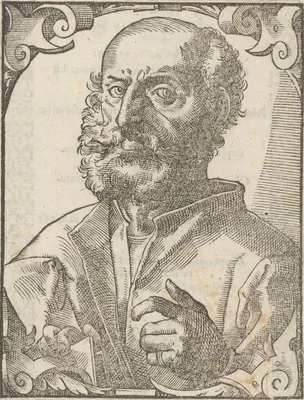
Thomaeus's commentary on Aristotle's Mechanica includes an explanation of the action of a dental forceps illustrated with two small woodcut illustrations on page XXXXI. This was the first printed dental illustration. …
1525 CE
#6815
Peri ton idion biblion [Latin: De Libris propriis liber, On his own writings] and Peri tes taxeos ton idion biblion [Latin: De ordine librorum suorum liber, On the arrangement of his own writings]. IN: Galeni librorum pars prima-quinta, Part IV.
The extent of Claudius Galen's written work was so great that Galen himself felt the need to provide a bibliography organizing and explaining his own writings. He also felt the need to distinguish between works that h…
1526 CE
#6931
Opera omnia.
First edition of the Greek text of the works of Hippocrates, issued by Aldus Manutius of Venice one year after the first complete edition in Latin was issued in Rome. The Aldine text was edited by Aldus's brother-in-l…
1527 CE
#7202
Avicenne liber canonis medicinae. Cum castigationibus Andree Bellunensis.
Revised and improved text of the Canon and other works of Avicenna by Andrea Alpago of Belluno, who had acquired a deep understanding of both the language and the subject during his thirty years of service as physicia…
1527 CE
#2365
Liber de morbo gallico.
Includes a description of the neurological manifestations of syphilis. Though this work bears the date 1507, Peter Krivatsy, provided evidence that this edition was printed in 1527. See Krivatsy, "Nicola Massa's Liber…
1528 CE
#36
In principio singulorum librorum omnia indicantur, quae in eo libro continentur. [Title in Greek and Latin].
Paul of Aegiina was the most famous physician and surgeon in the Byzantine Empire during the seventh century, and probably thereafter. According to Eugene F. Rice, "Paulus Aegineta", Catalogus translationum et comment…
1529 CE
#9349
Galeni Pergameni libri anatomici, quorum indicem versa patina indicabit. Edited by Giacomo Berengario da Carpi.
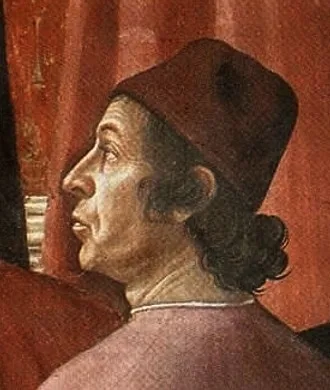
First printed edition in Latin of Galen's De anatomicis administrationis, as translated from the Greek by Demetrios Chalkokondyles under the title De anatomicis aggressionibus. Other works in this collection edited by…
1533 CE
#2366
Morbi gallici novum ac utilissimum opusculum quo vera et omnimoda ejus cura percipi potest.
Mattioli considered mercury a specific in the treatment of syphilis. He was probably the first to work extensively on syphilis of the newborn. He is better known for his commentary on Dioscorides.
1533 CE
#7793
Tou sophōtatou Philē, Stichoi iambikoi peri zōōn idiotētos.
The Greek text edited by Aristoboulos Apostolis (1465-1536), who became Arsenios, Archbishop of Monemvasia in 1514. Philes' Greek text was reedited by Joachim Camerarius with Latin translation by G. Bermann and first …
1534 CE
#33
Bιβλίων ὶαтριкω̂ν тομος ά. Librorum medicinalium tomus primus, primi scilicet libri octo nunc primum in lucem editi.
First printed edition in the original Greek of the first half of the Tetrabiblion, issued in Venice by the heirs of Aldus Manutius. In the Tetrabiblion Aetius collected together works of other men which might have bee…
1535 CE
#4278
De lapide renum curiosum opusculum nuperrime in lucem aeditum. Eiusdem De lapide vesicae per incisionem extrahendo sequitur aureus libellus.
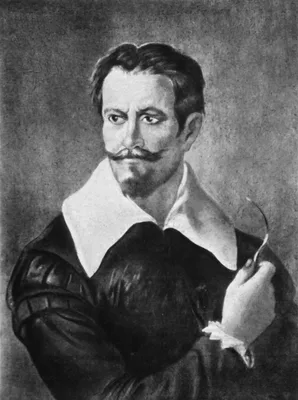
Marianus Sanctus Barolitanus popularized the operation of lithotomy introduced by the father of Giovanni Vigo of Rapallo. This method passed on to Giovanni di Romani and from him to Marianus. It became known as the &l…
1536 CE
#5370
De malo recentiorum medicorum medendi usu libellus.
![CARDANO, Girolamo [Gerolamo; Hieronymus Cardanus] (1501 – 1576)](/media/portraits/7679)
Includes (cap. XXXVI) an early account of typhus, morbus pulicaris. English translation in Major, Classic descriptions of disease, 3rd ed., Springfield: Charles C Thomas, 1945, p. 163.
1536 CE
#11748
De palpitationes, tremore, rigore, convulsione. Intreprete Nicolao Lauachio, medico Florentino.
First separately published printed edition of Galen's writings on neuropathology. Digital facsimile from Google Books at this link.
1536 CE
#1804
Examen omnium simplicium medicamentorum, quorum in officinis usus est.
Brasavola introduced some new drugs into the formulary. The book is written in the form of a dialogue. Digital facsimile from the Internet Archive at this link.
1536 CE
#1536
Liber introductorius anatomiae sive dissectionis corporis humani; in quo quam plurima membra, operationes, & utilitates tam ab antiquis, quam a modernis praetermissa manifestantur.
A practical manual for dissection, showing how to carry out an anatomy from the first incision onwards. Massa based his work on his experience gained from numerous dissections that he had undertaken in the hospital of…
1537 CE
#7145
De corporis humani fabrica libri quinque a Junio Paulo Crasso Patavino in latinam orationem conversi. [Cum] Hippocratis praeterea Coi de purgatoriis medicamentis libellus perutilis, ac desideratus ab eodem Jun. Paulo Cras. Latinitate donatus.
A Byzantine anatomical and physiological treatise almost entirely abridged from Galen's "De usu partium corporis humani," from which Theophilus now and then differed, and which he sometimes appears to have misundersto…
1538 CE
#9091
Guenter von Andernach: Institutionum anatomicarum secundum Galeni sententiam ad candidatos medicinae libri quatuor per Joannem Guinterium Andernacum medicum ab Andrea Vesalio Bruxellensi auctiores & emendatiores redditi.
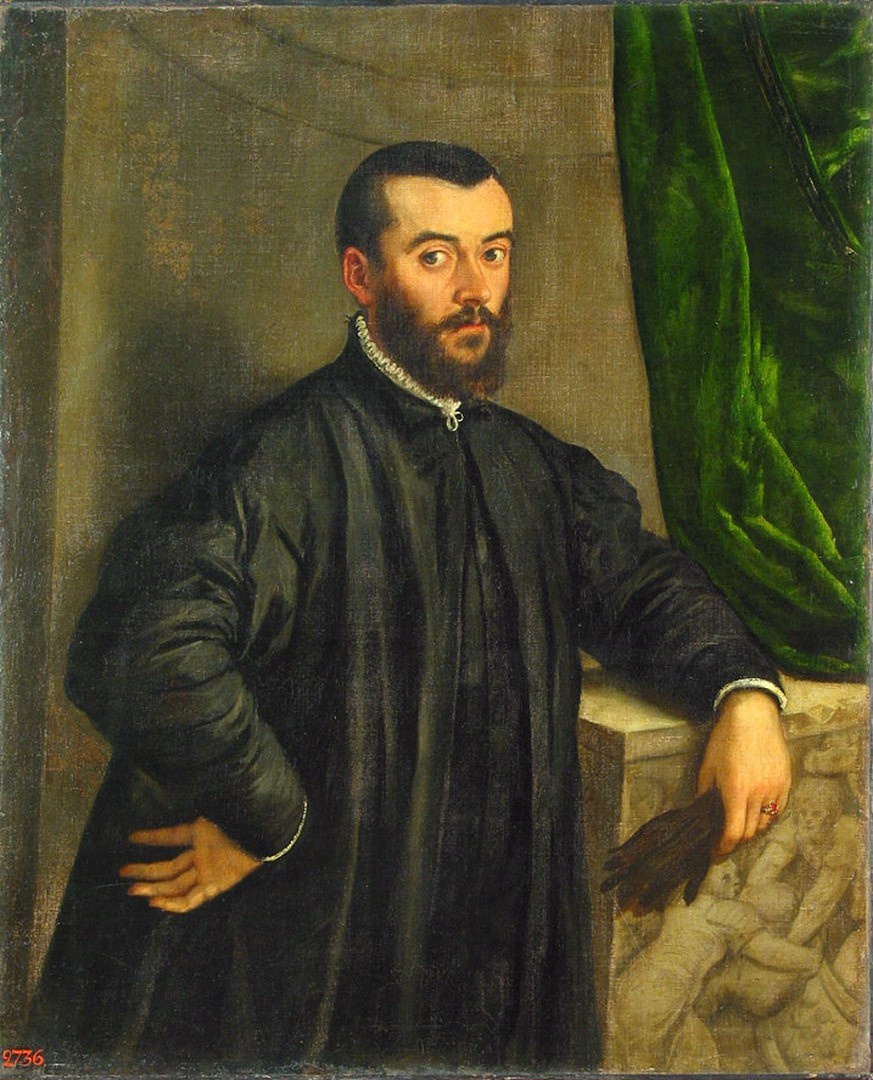
Shortly after the publication of Tabulae anatomicae sex, Vesalius completed this revision of Institutiones anatomicae, a Galenic anatomical text by his teacher Johann Guinter first published in 1536. Vesalius justifie…
1538 CE
#372
Tabulae anatomicae sex.
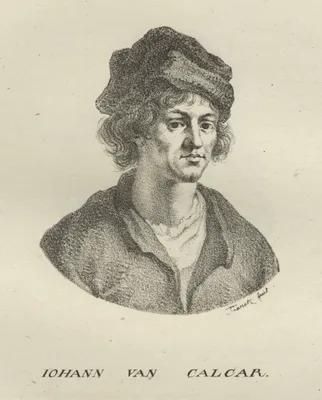
Vesalius’ first anatomical publication, consisting of six oversized anatomical charts, resembling fugitive sheets. The three skeletal woodcuts are signed by the artist, Jan Stephan van Calcar, who also acted as …
1544 CE
#7820
Di Pedacio Dioscoride Anazarbeo Libri cinque della historia, et materia medicinale tradotti in lingua volgare italiana da M. Pietro Andrea Matthiolo Sanese Medico, con amplissimi discorsi, et comenti, et dottissime annotationi, et censure del medesimo interprete.
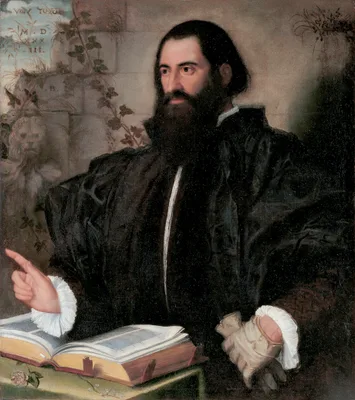
Mattioli's translation and commentary on Dioscorides provided much new botanical information. As Mattioli continued to expand the commentary, adding new botanical and pharmacological information, through editions in L…
1546 CE
#2528
De sympathia et antipathia rerum liber unus. De contagione et contagiosis morbis et curatione.
Though Fracastoro wrote this book more than a century before Leewenhoek invented the microscope, and could only express the theory of contagion in very general terms, this book represents a landmark in the development…
1547 CE
#54
Medici antiqui omnes, qui latinis literis diversorum morborum genera et remedia persecuti sunt.
MEDICI ANTIQUI OMNES
Contains selections from the writings of Celsus, Plinius Secundus, Soranus, Apuleius, Barbarus, Musa, Priscianus, Trotula, Macer, Caelius Aurelianus, Marcellus Empiricus, Scribonius Largus, Serenus Samonicus, Strabus …
1551 CE
#12945
Curationum medicinalium centuria prima, multiplici variaque rerum cognitione referta. Praexfixa est eiusdem auctoris commentatio, in qua docetur, quomodo se medicus habere debeat in introitu ad aegrotantem, simulque de crisi, & diebus decretoriis, in qui artem medicam exercent, & quotidie pro salute aegrotorum in collegium descendunt longe utilissima.
Lusitano has been credited with early recognition of the circulation of the blood. How much he might have understood the circulation remains in doubt; however, through dissections of the Azygos vein, he was the first …
1552 CE
#2139.1
De vulnerum sclopetorum et bombardarum curatione tractatus.
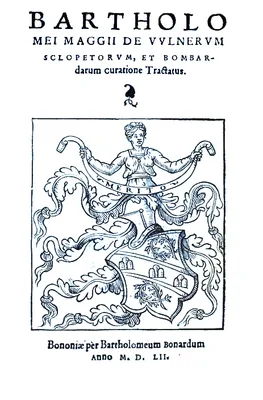
In this very early work on gunshot wounds Maggi, Professor of Surgery at Bologna, showed that not all gunshot wounds suppurated and he discarded cauterization, treating such wounds with white of egg and salt water.
1552 CE
#6976
Libri septem, nunc primum e tenebris eruti a Junio Paulo Crasso Patavino accuratissime in Latinum sermonem versi. Ruffi Ephesii medici clarissimi, De corporis humani partium appelationibus libri tres.
Aretaeus, a Greek physician who lived during the reign of Nero or Vespasian, wrote a general treatise on diseases which displays great accuracy in the detail of symptoms, and is of great value in the diagnosis of dise…
1552 CE
#7807
Meletius, De natura structuraque hominis opus. Polemonis Atheniensis, Naturae signorum interpretationis. Hippocratis, De hominis structura. Diocles, De tuenda valetudine epistola. Melampus, De nevis corporis tractatus. Omnia haec non prius edita. Nicolao Petreio Corcyraeo interprete.
This collection of Late Antique and Byzantine medicine edited by Nicolas Petreius begins with a Byzantine treatise on anatomy, probably written in the eighth century by Meletius, a Christian monk and physician from Ph…
1553 CE
#1986
De balneis omnia quae extant apud Graecos, Latinos, et Arabas.
DE BALNEIS
This is a collective work, incorporating the writings of more than 70 authorities, among whom may be mentioned Avicenna, Averroës, Avenzohar, Guainerio, Gesner, Savonarola, Petrus de Abano, and Maimonides. It giv…
1554 CE
#13119
Aquatilium animalium historiae. Liber primus cum eorumdem formis aere excusis.
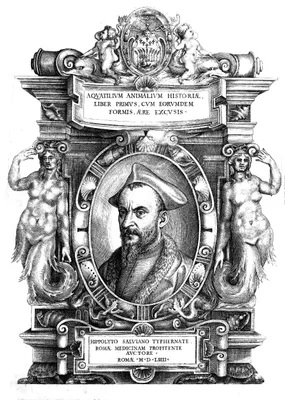
Salviani taught at the University of Rome until 1568, after which he was chief physician to the House of Farnese and three successive popes, Pope Julius III, Pope Marcellus II and Pope Paul IV. "Salviani’s work …