
Facets
Browse across eight MeSH (opens in new tab) facets — era, geography, science, specialty, technology, history, culture, and reference. Select one tag per group; counts update across the others.
Clear filtersFacet filters
Geography
Specialties & Disease
- Anatomy & Pathology 765
- Cardiology & Blood 914
- Neurology & Psychiatry 1,256
- Obstetrics & Reproductive 550
- Infectious Disease (General) 147
- Surgery & Anesthesia 1,551
- Public Health 1,129
- Immunology & Dermatology 1,404
- General Clinical Medicine 480
- Military Medicine 436
- Psychology 202
- Alternative & Fringe Medicine 383
- Pediatrics 247
- Ophthalmology & Vision 412
- ENT & Hearing 293
- Urology & Nephrology 309
- Gastroenterology & Hepatology 316
- Pulmonary & Respiratory 233
- Rheumatology, Rehab & Pain 188
- Internal, Emergency & Geriatric 123
- Veterinary Medicine 165
- Epidemiology & Demography 397
- Physiology & Embryology 923
- Dentistry 259
- Plagues & Epidemics 1,279
- Microbiology & Virology 1,080
Social & Historical Studies
Institutions & Culture
Reference & Scholarly Works
293 entries match ENT & Hearing [C09]
1670 CE
#3246
Dissertatio de origine catarrhi in qua ostenditur illum non provenire a cerebro. IN: Tractatus de corde, pp. 221-39.

With Schneider, Lower overthrew the idea that nasal mucus originated in the brain. This discovery localized nasal catarrh in the air passages and put an end to the use of many recipes for “purging the brain&rdqu…
1655 CE
#1452
Dissertatio de osse cribriformi, et sensu ac organo odoratus et morbis ad utrumque spectantibus, de coryza, hemorrhagia narium, polypo, sternutatione, amissione odoratus.
“Schneider’s membrane”, the pituitary membrane of the nasal chamber and sinuses.
1742 CE
#1548
Dissertatio medica de auditu in genere et de illo que fit per os in specie.
Pyl was the first (page 20) to record the labyrinthine fluid and to discuss its rôle in the transmission of sound.
1804 CE
#3251
Dissertation sur les maladies des fosses nasales et de leurs sinus.
First important work on diseases of the nose and nasal sinuses.
1778 CE
#1551
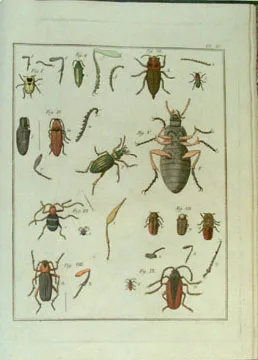
Dissertations sur l’organe de l’ouie. 1. De l’homme. 2. Des reptiles. 3. Des poissons.
1888 CE
#3390
Education of deaf-mutes. A manual for teachers.
Includes a history of the subject. Digital facsimile from the Internet Archive at this link.
1861 CE
#3375
Ein Fall von Anbohrung des Warzenfortsatzes bei Otitis interna mit Bemerkungen über diese Operation.
The first modern mastoid operation was devised by von Tröltsch.
1966 CE
#7234
Electrical Stimulation of the Auditory Nerve in Man.
This detailed psychophysical and electrophysiological analysis of one patient proved that a cochlear implant provided sufficient information to the central nervous system for the understanding of speech.
1669 CE
#3349
Elements of speech, an essay of inquiry into the natural production of letters; with an appendix concerning persons deaf and dumb.
Includes a section on the education of deaf-mutes. Paracusis is described in the Appendix, p. 166.
1833 CE
#3366
Erfahrungen über die Erkenntniss und Heilung der langwierigen Schwerhörigkeit.
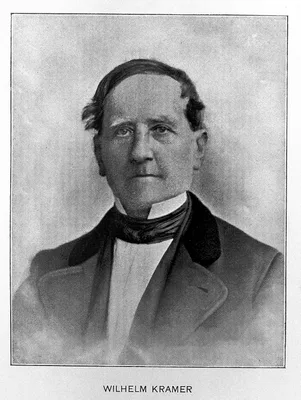
Kramer’s first and best work. English translation, 1837.
1846 CE
#3368.1
Erfahrungen über die Krankheiten des Gehöres und ihre Heilung.
Schmalz demonstrated the clinical significance of Weber’s hearing test (see No. 3368). He was a student of Weber.
1877 CE
#3386
Erkrankungen des Warzentheiles.
First clear description of mastoiditis.
1887 CE
#3296
Erste Heilung eines Larynx-Cancroids vermittelst Ausrottung per vias naturales.
First successful intralaryngeal extirpation of a malignant growth.
1795 CE
#13237
Escuela española de sordo mudos, ó arte par enseñaries á escribir y hablar el idoma española. 2 vols.
Digital facsimile from the Hathi Trust at this link.
1827 CE
#3365
Essai sur les maladies de l’oreille interne.
Saissy described a Eustachian bougie; he was probably the first to use this instrument. Besides dealing with the labyrinth, his book discusses diseases of the tympanum and Eustachian tube. English translation, Baltimo…
1871 CE
#3278
Essay on growths in the larynx.
An analysis of 100 of Mackenzie’s own cases.
1919 CE
#3403.1
Essays on the surgery of the temporal bone. 2 vols.
Finely illustrated, and beautifully produced, with several historical chapters. Includes a history of the development of temporal bone surgery.
1828 CE
#1557
Expériences sur les canaux semi-circulaires de l’oreille chez les oiseaux.
Flourens showed that lesion of the semicircular canals produces motor incoordination and loss of equilibrium. Menière based his work (No. 3372) on Flourens’s crucial experiments.
1827 CE
#1556.1
Experiments on audition.
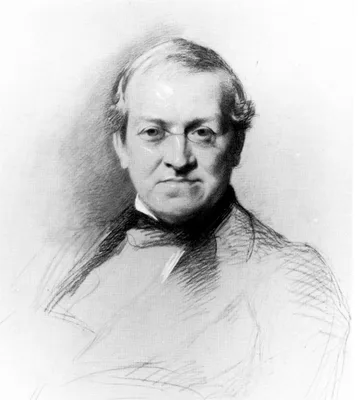
Occlusion effect on sound perception.
1572 CE–1573 CE
#1539
Externarum et internarum principalium humani corporis partium tabulae.
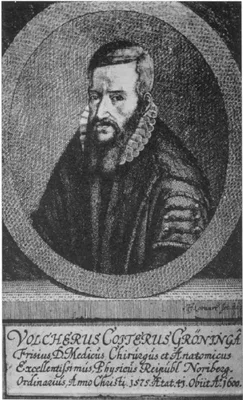
Coiter made several important contributions to the study of human anatomy, and was the first to elevate comparative anatomy to the rank of an independent branch of biology. His Externarum et internarum principalium hu…
1873 CE
#3281
Fall von gutartiger Mycosis des Pharynx.
Mycosis pharyngitis first reported.
1801 CE
#3361
Farther observations on the effects which take place from the destruction of the membrana tympani of the ear; with an account of an operation for the removal of a particular species of deafness.
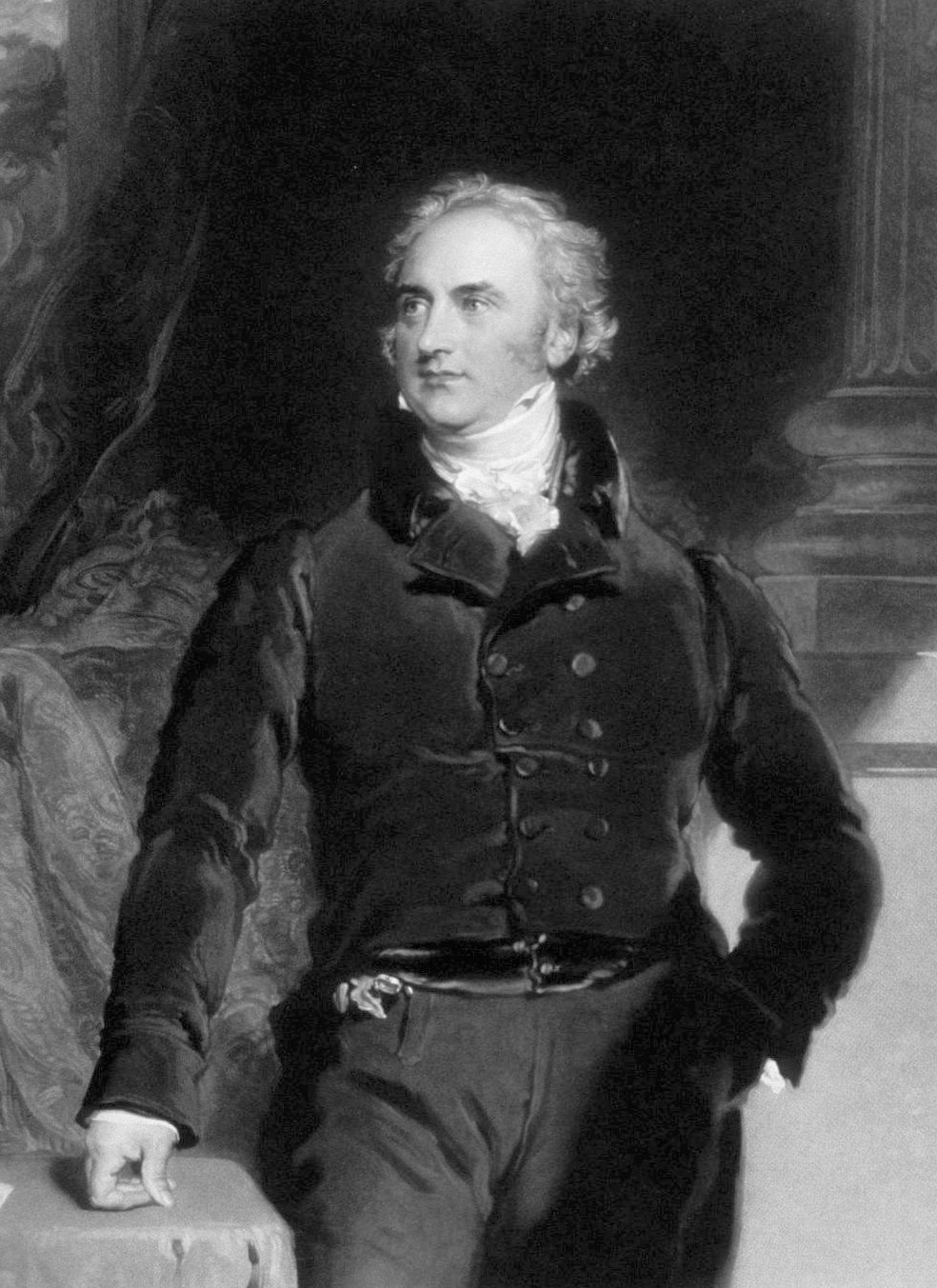
Sir Astley Cooper reported three cases of Eustachian obstruction deafness relieved by perforation of the membrana tympani (myringotomy), an operation first performed by Eli, a quack, in 1760. Cooper’s earlier pa…
1958 CE
#3412.7
Fenestration of the oval window.
Stapedectomy.
1914 CE
#3340
Geschichte der Nasenheilkunde von ihren Anfängen bis zum 18. Jahrhundert. Vol. 1.

Continued through 18th and part of 19th century in articles in Z. Laryngol., vols. 7, 8, 9, 11, 1914-23. Reprinted, 2 vols., Hildesheim, G. Olms, 1967, with title Geschichte der Nasenheilkunde … bis zum 19 Jahr…
1907 CE–1913 CE
#3413
Geschichte der Ohrenheilkunde. 2 vols.
It is fitting that Politzer should have been the greatest historian of otology. He was Professor of Otology in Vienna and his teaching had great influence upon the advancement of the subject. The Geschichte is a maste…
1653 CE
#3348
Grammatica linguae anglicae. Cui praefigitur, de loquela sive sonorum formatione tractatus grammatico-physicus.
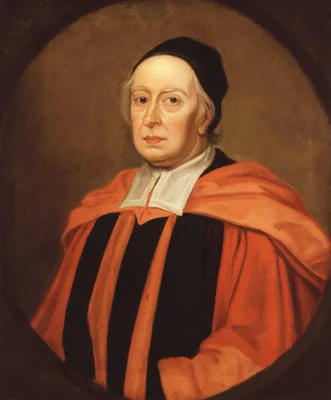
Wallis, a prominent teacher of deaf-mutes, classified the various sounds of the human voice. He taught by writing and gesture. He was Savilian Professor of Mathematics at Oxford.
2002 CE
#7231
Hear, Hear! Six Centuries of Otology, from the Collection of Robert J. Ruben.
Very well annotated descriptions of over 100 classics in the history of otology.
2020 CE
#13517
Hearing happiness: Deafness cures in history.
1980 CE
#3415.22
Histoire des maladies de l’oreille, du nez et de la gorge. Les grandes étapes de l’oto-rhino-laryngologie.
1901 CE–1906 CE
#3339
Histoire des maladies du pharynx. 5 vols.
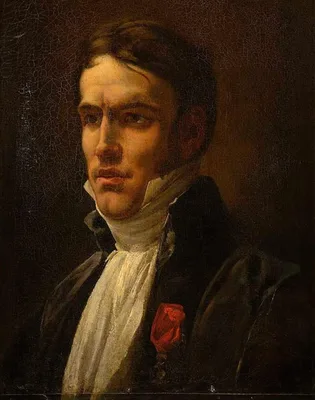
1941 CE
#3411
History and present status of operations on the labyrinthine capsule for otosclerosis.
Kopetzky improved the technique of the fenestration operation. The above has a useful history of the development of this operation. See also his earlier papers in Ann. Otol. (St. Louis), 1930, 39, 996; 1931, 40, 157.
1938 CE
#3410
Improvement of hearing in cases of otosclerosis: a new, one-stage surgical technic.
Lempert’s fenestration operation.
1603 CE
#1541
In Galeni librum de ossibus.
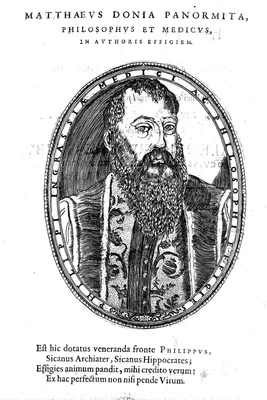
Ingrassia is by some accredited with the discovery of the stapes; he also observed the sound-conducting capacity of the teeth.
1890 CE
#3393
Indicationen, betreffend die Excision von Hammer und Amboss.
Stacke introduced the operation of excision of the ossicles.
1776 CE
#3358
Institution des sourds et muets, par la voie des signes méthodiques.
Includes a reprint of the author’s Institution des sourds et muets; ou, recueil des exercices. Paris, 1774.
1724 CE
#3354
Instrument pour seringuer la trompe d’Eustache par la bouche.
Guyot, postmaster at Versailles, also physician, cartographer, inventor, etc., was the first to attempt catheterization of the Eustachian tube. This he did by way of the mouth.
1744 CE
#3355
Instruments proposed to remedy some kinds of deafness proceeding from obstructions in the external and internal auditory passages.
Cleland, an army surgeon, devised the method of catheterization of the Eustachian tube by way of the nose; he designed the instruments necessary for the operation.
1899 CE
#3310
Kehlkopfchirurgie und Laryngoplastik.
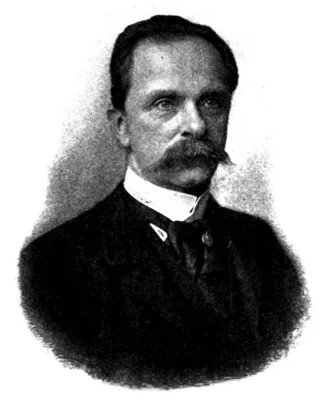
Gluck improved the technique of laryngectomy.
1866 CE
#3273
Klinik der Krankheiten des Kehlkopfes und der Luftröhre. 1 vol. and atlas.
On p. 295 is a classic description of laryngitis sicca – “Türck’s trachoma”.
1891 CE
#3303
Klinische Beiträge zur halbseitigen Kehlkopflähmungen.
“Avellis’s syndrome”, recurrent paralysis of the soft palate.
1924 CE
#661
Körperstellung.
A classic work on muscle tone and posture, a subject upon which Magnus spent many years of study. He demonstrated among other things that the labyrinth is the one sense organ entirely concerned with posture and equili…
1888 CE
#3391
Krankenvorstellung: Geheilter Hirnabscess.
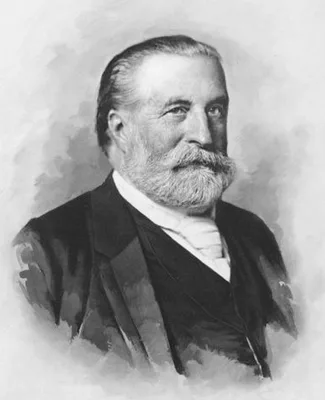
Radical mastoidectomy. (See No. 3392.)
1616 CE
#3344
L’arte de’ cenni, con quale, formandosi favella visible, si tratta della muta eloquenza.
Bonifacio’s sign-language for the deaf and dumb employed almost every part of the body for conversational purposes.
1784 CE
#3359
La véritable manière d’instruire les sourds et muets.
The Abbé de L’Épée met two deaf girls, decided to educate them, and soon had a class of 60 devoted pupils, whom he supported and amongst whom he lived. He based his methods on those of Bonet…
2018 CE
#12390
Landmark papers in otolaryngology. Edited by John S. Phillips and Sally Erskine.
1894 CE
#3307
Le microbe de l’ozène.
Loewenberg found a bacillus of the Friedländer group in ozena.
1878 CE–1882 CE
#3387
Lehrbuch der Ohrenheilkunde. 2 pts.
Politzer was one of the greatest of all otologists. He was the first Professor of Otology in Vienna and his textbook was for many years the standard authority on the subject. English translation, 1883.
1881 CE
#3387.3
Les lésions nerveuses dans la surdité.
Gellédescribed a test for determination of ossicular fixation.
1536 CE
#1536
Liber introductorius anatomiae sive dissectionis corporis humani; in quo quam plurima membra, operationes, & utilitates tam ab antiquis, quam a modernis praetermissa manifestantur.
A practical manual for dissection, showing how to carry out an anatomy from the first incision onwards. Massa based his work on his experience gained from numerous dissections that he had undertaken in the hospital of…
1660 CE–1662 CE
#3245
Liber primus [-liber quintus et ultimus] de catarrhis. 6 vols.
Schneider put an end to the idea that nasal mucus originated in the pituitary. He demonstrated anatomically and clinically that the mucous membrane lining the nose (“Schneider’s membrane”) is the sou…