
Facets
Browse across eight MeSH (opens in new tab) facets — era, geography, science, specialty, technology, history, culture, and reference. Select one tag per group; counts update across the others.
Clear filtersFacet filters
Geography
Specialties & Disease
- Anatomy & Pathology 37
- Cardiology & Blood 5
- Neurology & Psychiatry 5
- Obstetrics & Reproductive 0
- Infectious Disease (General) 4
- Surgery & Anesthesia 2
- Public Health 64
- Immunology & Dermatology 15
- General Clinical Medicine 12
- Military Medicine 22
- Psychology 5
- Alternative & Fringe Medicine 5
- Pediatrics 1
- Ophthalmology & Vision 0
- ENT & Hearing 1
- Urology & Nephrology 2
- Gastroenterology & Hepatology 1
- Pulmonary & Respiratory 2
- Rheumatology, Rehab & Pain 2
- Internal, Emergency & Geriatric 0
- Veterinary Medicine 2
- Epidemiology & Demography 17
- Physiology & Embryology 10
- Dentistry 3
- Plagues & Epidemics 17
- Microbiology & Virology 48
Social & Historical Studies
Institutions & Culture
Reference & Scholarly Works
767 entries match Natural History & Evolution [K01.900.500]
1784 CE
#2734.4
A treatise on the diseases of children.
Underwood laid the foundation of modern pediatrics. His work was superior to anything that had previously appeared and remained the most important book on the subject for sixty years, passing through many editions. Th…
1735 CE
#8483
A voyage to Guinea, Brasil and the West Indies; in His Majesty's ships, the Swallow and Weymouth: Describing the several islands and Settlements, viz, Madeira, the Canaries, Cape de Verd, Sierraleon, Sesthos, Cape Apollonia, Cabo Corso, and others on the Guinea coast; Barbadoes, Jamaica, &c. in the West-Indies; the colour, diet, languages, habits, manners, customs, and religions of the respective natives, and inhabitants. With remarks on the gold, ivory, and slave-trade; and on the winds, tides and currents of the several coasts.
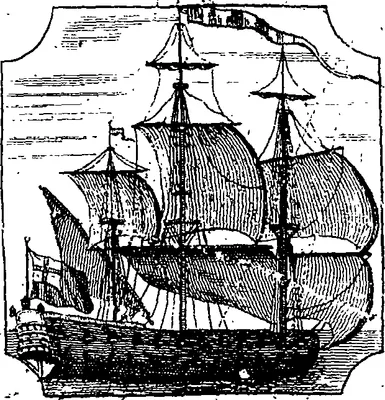
Atkins, surgeon on the voyage, included information about the slave trade and the natural history of the Gold Coast. "Atkins describes the manatee accurately, and tells much about fetish worship. He shows that there w…
1707 CE–1725 CE
#9914
A voyage to the islands Madera, Barbados, Nieves, S. Christophers and Jamaica: With the natural history of the herbs and trees, four-footed beasts, fishes, birds, insects, reptiles, &c. of the last of those islands; to which is prefix'd, an introduction, wherein is an account of the inhabitants, air, waters, diseases, trade, &c. of that place, with some relations concerning the neighbouring continent, and islands of America. Illustrated with figures of the things described, which have not been heretofore engraved. In large copper-plates as big as the life. 2 vols.
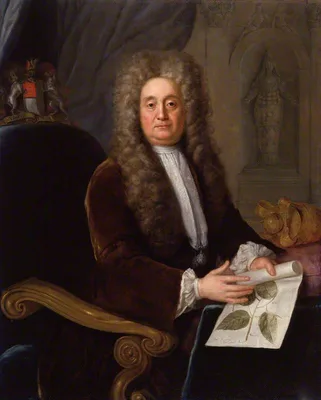
As a youth Sloane collected objects of natural history and other curiosities. This led him to the study of medicine, which he went to London, where he studied botany, materia medica, surgery and pharmacy. His collecti…
2011 CE
#7100
A world of beasts: A thirteenth-century illustrated Arabic book on animals (the Kitāb Na't al-Hayawān) in the Ibn Bakhtīshū' Tradition.
Bakhtshooa Gondishapoori (also spelled Bukhtishu and Bukht-Yishu in literature) were Persian or Assyrian Nestorian Christian physicians from the 7th, 8th, and 9th centuries, spanning 6 generations and 250 years. The K…
1800 CE
#7291
Account of flint weapons discovered at Hoxne in Suffolk.
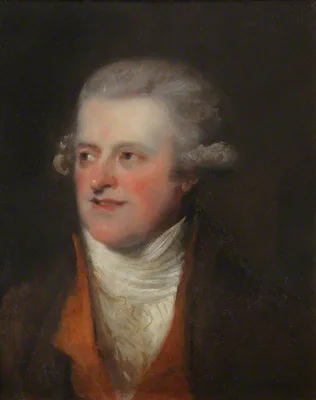
Frere described the discovery of several flint artifacts, which he believed to be “weapons of war,” associated with “some extraordinary bones, particularly a jaw-bone of enormous size of some unknown…
1966 CE
#8992
Adaptation and natural selection: A Critique of some current evolutionary thought.
1940 CE
#7719
Adaptive coloration in animals. With an introduction by Julian S. Huxley.
Published during WWII, Cott's book was the first major work on camouflage in zoology, appreciated by zoologists for its scientific information and carried by many allied soldiers during the war for survival purposes. …
1832 CE
#8951
Aeliani de natura animalium libri septemdecim. Verba ad fidem librorum manuscriptorum constituit et annotationibus illustravit Fridericus Jacobs.
![AELIANUS, Claudius [Κλαύδιος Αἰλιανός] (175 – 235)](/media/portraits/10094)
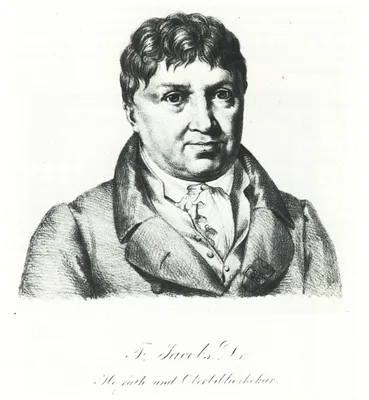
The first modern critical edition of the text, which collated medieval manuscripts against the previous printed editions. Digital facsimile of the 1832 edition from the Internet Archive at this link
1949 CE
#6596
Aesculapius comes to the Colonies. The story of the early days of medicine in the thirteen original colonies.
1949 CE
#7297
Age determinations by radiocarbon content: checks with samples of known age.
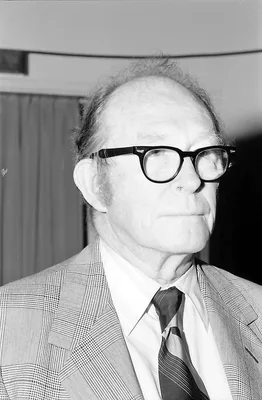
Introduction of radiocarbon dating for dating organic materials, including fossils (maximum 50,000 to 60,000 years old). With J. R. Arnold.
1961 CE
#214.2
Age of Bed I, Olduvai Gorge, Tanganyika.
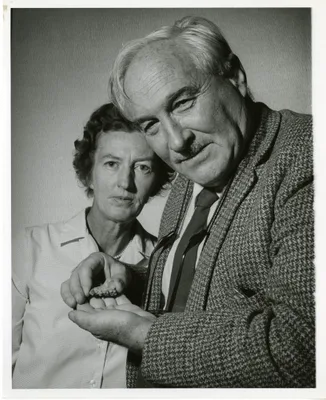
Introduction of the potassium-argon dating method to paleoanthropology, showing that lava at the base of the site of Olduvai Gorge was about 1.8 million years old, and proving that fossils, Australopithecus (Zinjanthr…
1867 CE
#1792
Alberti Magni ex ordine praedicatorum de vegetabilibus libri VII: Historiae naturalis pars XVIII. Editionem criticam ab Ernesto Meyero coeptam: Absolvit Carolus Jessen.
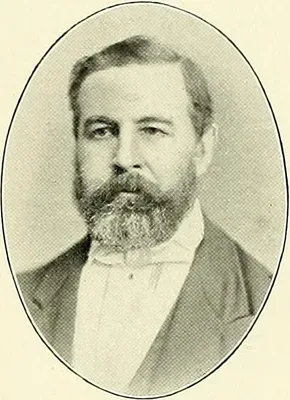
One of the best works on natural history produced during the Middle Ages, and, like most of Albertus's works, influential throughout the medieval period, though it does not appear to have been published in print until…
1999 CE
#8563
Albertus Magnus, On animals: A medieval summa zoologica. Translated and annotated by Kenneth F. Kitchell, Jr. and Irven Michael Resnick. 2 vols.
1771 CE
#13011
Aldrovandus Lotharingiae, ou catalogue des animaux, quardupedes, reptiles, oseaux, poissons, insectes, vermisseaux et coquillages qui habitent la Lorraine et les Trois-Évechés.
A catalogue of "over 1100 quadrupeds, birds, reptiles, amphibians, fish, insects, worms and mollusks native to Lorraine. Buc’hoz follows the classification schemes of Argenville, Brisson, Buffon, Daubenton and G…
1897 CE
#719.1
Alkoholische Gärung ohne Hefezellen.
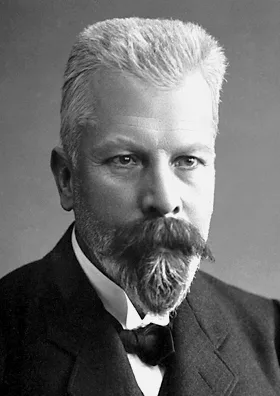
Discovery of cell-free fermentation, the turning point in the study of enzymes. In 1907 Buchner was awarded the Nobel Prize in Chemistry "for his biochemical researches and his discovery of cell-free fermentation."
2006 CE
#10366
All creatures: Naturalists, collectors, and biodiversity, 1850-1950.
1830 CE–1836 CE
#9485
American conchology, or descriptions of the shells of North America illustrated from coloured figures from original drawings executed from nature. 7 parts. Parts 1–6: New Harmony, 1830–1834; Part 7: Philadelphia, 1836.
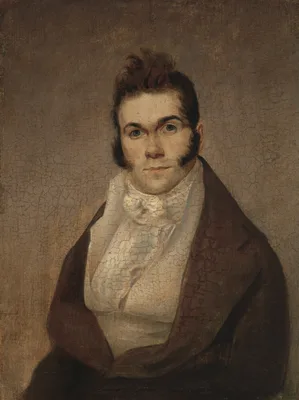
The printer or publisher of part 7 is not identified. Digital facsimile from the Biodiversity Heritage Library at this link.
1824 CE–1828 CE
#9484
American entomology, or descriptions of the insects of North America. Illustrated by coloured figures from original drawings executed from nature. 3 vols.
Plates by Titian Ramsay Peale, H. Bridport, C. A. Lesueur, W. W. Wood, and C. Tiebout; engraved by Tiebout, G. Lang, and Longacre. Digital facsimile from the Internet Archive at this link.
1828 CE
#6710
American medical biography. 2 vols.
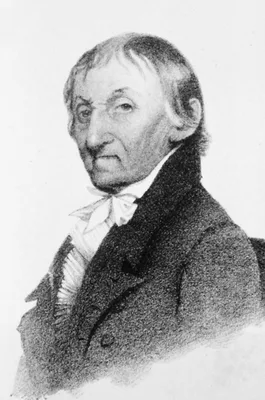
Thacher was the first American medical historian. The above biography is a valuable source of information on the early medical history of the United States. Reprinted, New York, Da Capo Press, 1967.
1878 CE–1880 CE
#11788
American ornithological bibliography. 4 parts. (Also called "Ornithological bibliography").
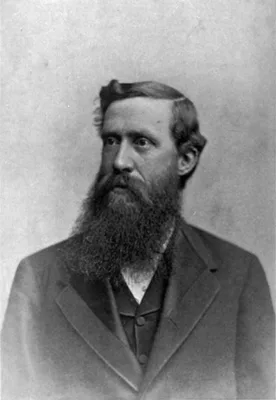
This is an exhaustive work up to time of publications, including scientific references to American birds in publications, the titles of which do not indicate any ornithological material. [Pt. 1.] Geological and Geogra…
1808 CE–1814 CE
#9498
American ornithology; or, the natural history of the birds of the United States: Illustrated with plates engraved and colored from original drawings taken from nature. 9 vols.
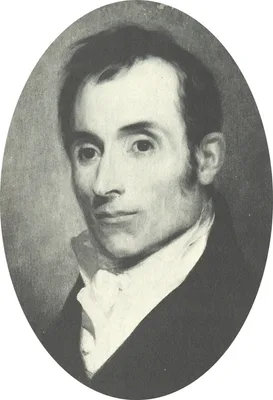
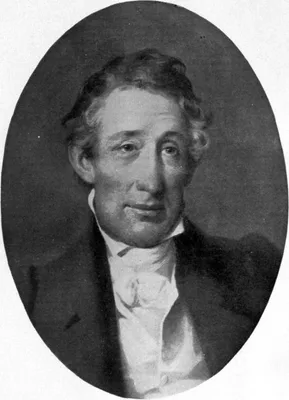
Considered the "father of American ornithology," Wilson was the greatest American ornithologist before Audubon. Wilson died with the 7th volume in press, and the 8th and 9th volumes were completed by Wilson's friend G…
1891 CE
#234
Amphimixis, oder die Vermischung der Individuen.
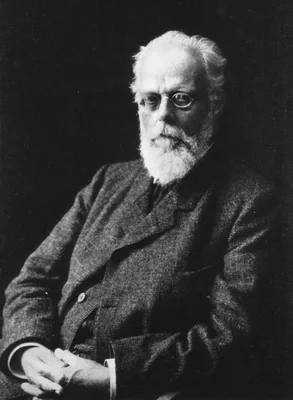
By “amphimixis” Weismann meant the union of the two parent germs, which he considered the principal source of heritable variation in evolution by natural selection. English translation in Weismann’s …
1776 CE
#1773
An account of the weather and diseases of South-Carolina. 2 vols.
Originally published in the Gentleman’s Magazine, 1751-54.
1674 CE
#13261
An account of two voyages to New-England. Wherein you have the setting out of a ship, with the charges; The prices of all necessaries for furnishing a planter and his family at his first coming: a description of the countrey [sic], natives, and creatures; with their merchantil [sic] and physical use; the government of the countrey as it is now possessed by the English, &c. A large chronological table of the most remarkable passages, from the first discovering of the continent of America, to the year 1673.
Josselyn first visited America in 1638-39 and returned from 1663 to 1671. His second and more extensive book includes an herbal, with numerous botanical as well as medical and surgical descriptions, and is considered …
2013 CE
#7618
An environmental history of the Middle Ages: The crucible of nature.
1798 CE
#9082
An epitome of the natural history of the insects of China: Comprising figures and descriptions of upwards of one hundred new, singular, and beautiful species: together with some that are of importance in medicine, domestic economy, &c. The figures are accurately, drawn, engraved, and coloured, from speciemsn of the insects; the descriptions are arranged accordig to the system of Linnaeus, with references to the writings of Fabricius, and other systematic authors.
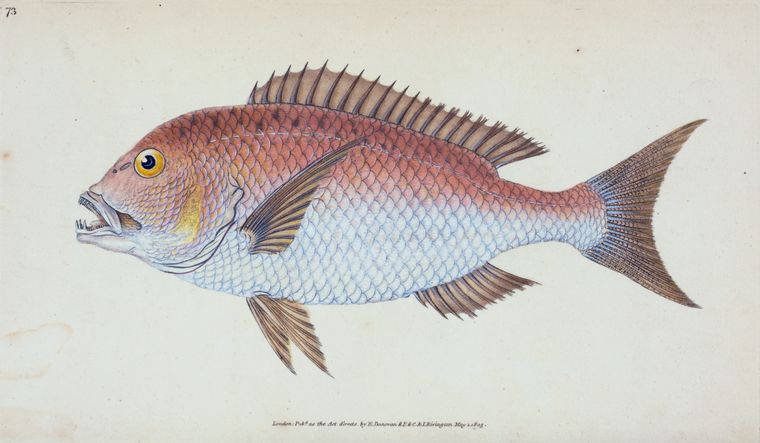
The first work in a Western language on the insects of China, including pharmaceutical aspects. For this work Donovan obtained specimens and information from George Macartney a British envoy to China. Includes 50 colo…
1800 CE
#9084
An epitome of the natural history of the insects of India, and the islands in the Indian seas: Comprising upwards of two hundred and fifty figures and descriptions of the most singular and beautiful species, selected chiefly from those recently discovered, and which have not appeared in the works of any preceding author. The figures are accurately drawn, engraved, and coloured, from specimens of the insects; the descriptions are arranged according to the system of Linnaeus; with references to the writings of Fabricius, and other systematic authors.
"For Insects of India Donovan described and figured specimens in his own cabinet, that were originally collected by the late Duchess of Portland, Marmaduke Tunstall, a Governor Holford (many years resident in India), …
1733 CE
#12499
An essay concerning the effects of air on human bodies.
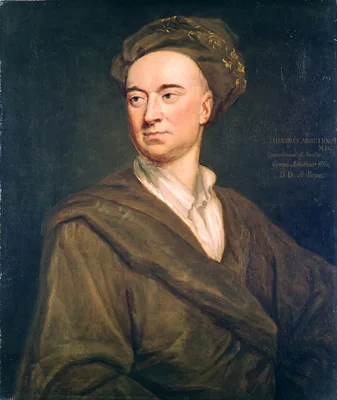
Arbuthnot believed that air had significant effects on personality, and he believed that the air of locations resulted in the characteristics of the people, as well as particular diseaes. He recommended ventilation of…
1789 CE
#10387
An essay on the preservation of the health of persons employed in agriculture, and on the cure of the diseases incident to that way of life.
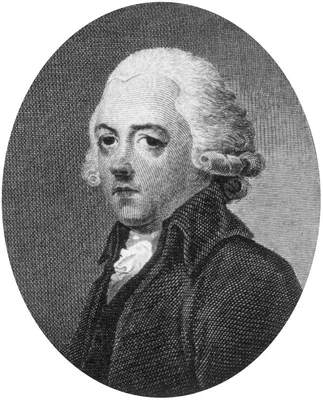
Digital facsimile from Google Books at this link.
1798 CE
#1693
An essay on the principle of population, as it affects the future improvement of society.
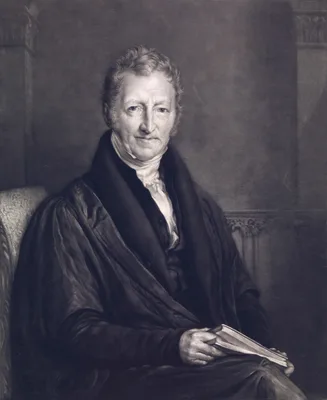
Malthus laid down the principle that populations increase in geometrical ratio, but that subsistence increases only in arithmetical ratio. He argued that a stage is reached where increase of populations must be limite…
1792 CE
#1775
An historical account of the climates and diseases of the United States of America, and of the remedies and methods of treatment, which have been found most useful and efficacious, particularly in those diseases which depend upon climate and situation: collected pricipally from personal observation, and the communications of physicians of talents and experience, residing in the several states.
Digital facsimile from the Medical Heritage Library, Internet Archive, at this link.
1850 CE
#10295
An historical sketch of the state of medicine in the American Colonies, from their first settlement to the period of the Revolution.
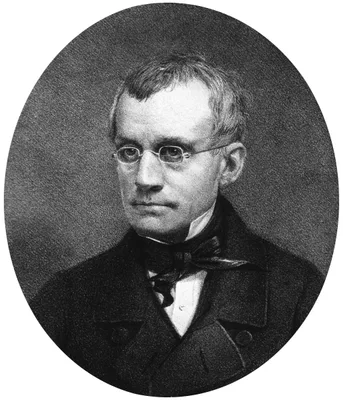
A pioneering historical interpretation of the development of medicine in the 13 colonies up to the American Revolution. Digital facsimile from the Internet Archive at this link. This is the second, significantly expan…
2002 CE
#14288
An introduction to human evolutionary anatomy.

1931 CE
#354
An introduction to the literature of vertebrate zoology. Based chiefly on the titles in the Blacker Library of Zoology, the Emma Shearer Wood Library of Ornithology, the Bibliotheca Osleriana and other libraries of McGill University, Montreal.
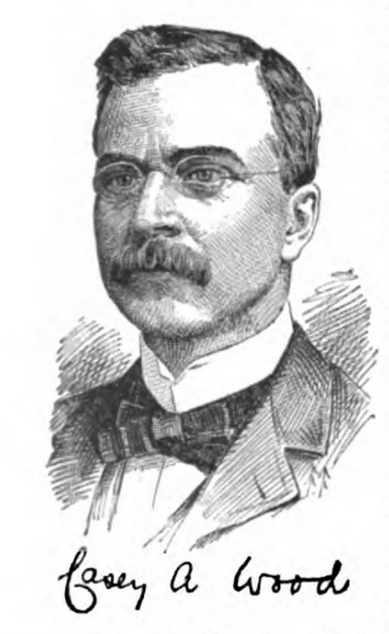
A comprehensive summary and bibliography of the literature on vertebrate zoology. The first 170 pages are a narrative divided into 19 chapters, plus an index. The remainder is a "partially annotated catalogue" arrange…
1998 CE
#7269
Ancestral images: The iconography of human origins.
1994 CE
#9608
Ancient natural history: Histories of nature.
1963 CE
#13033
Animal species and evolution.
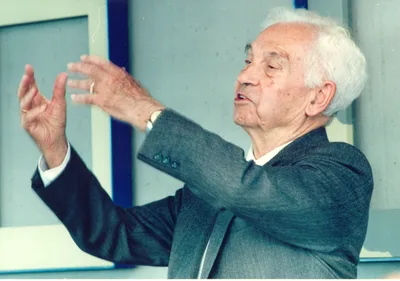
Condensed and extensively revised as Populations, species and evolution. Cambridge: Belknap Press of Harvard University Press, 1970.
1861 CE
#2475.1
Animalcules infusoires vivant sans gaz oxygène libre et déterminant des fermentations.
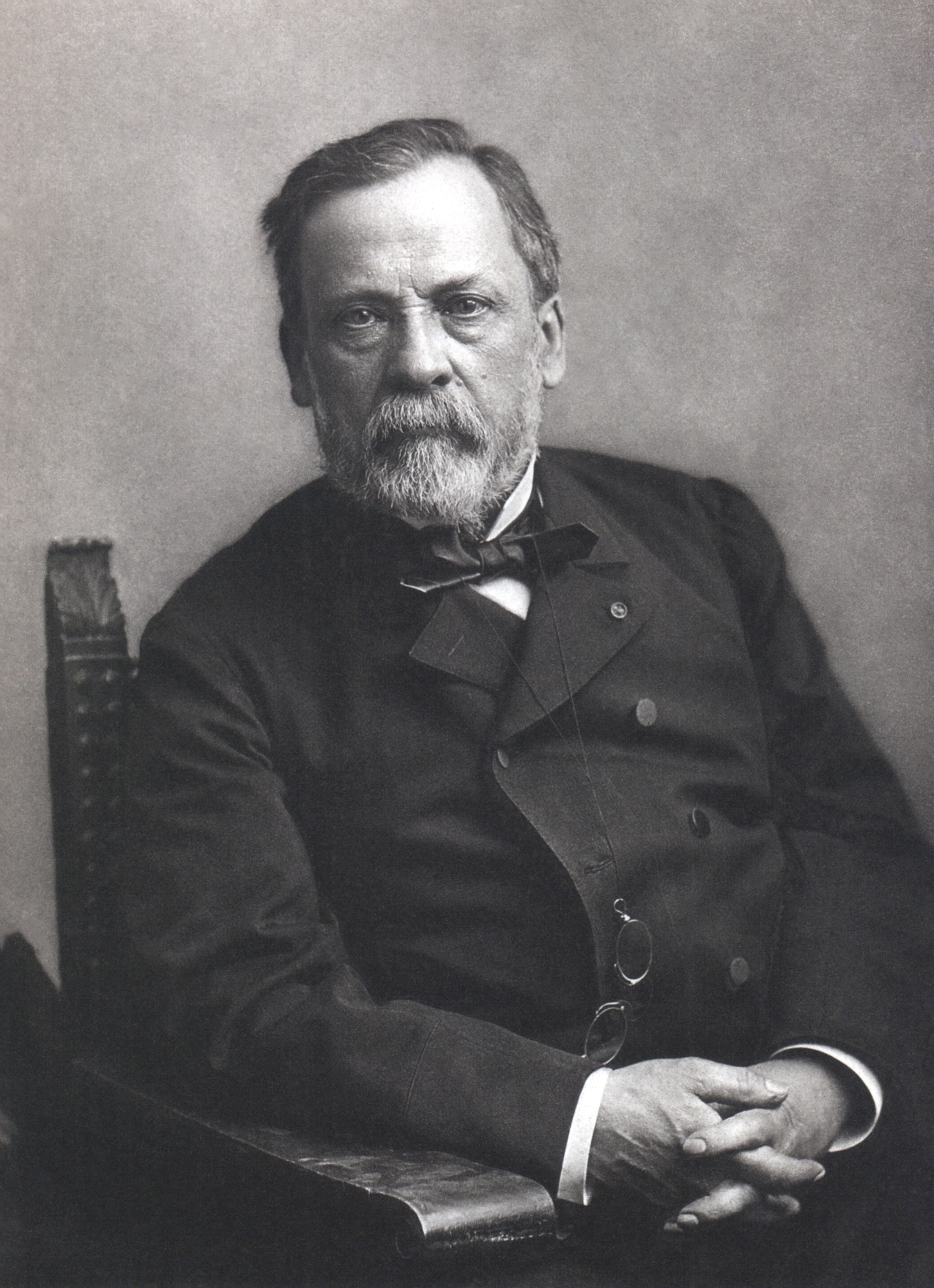
The discovery of strict anaerobiosis, important for general biology since it shows that oxygen gas is not a requisite for life.
2004 CE
#13446
Animals & authors in the eighteenth-century Americas: A hemispheric look at the writing of natural history. By Anita Cavagnaro Been with cataloguing records for selected titles prepared by Burton Van Name Edwards.
1874 CE
#493
Anthropogenie oder Entwicklungsgeschichte des Menschen.
1847 CE–1864 CE
#203.9
Antiquités celtiques et antédiluviennes. Mémoire sur l'industrie primitive et les arts à leur origine. 3 vols.
Customs inspector at Abbéville and a prolific writer on diverse subjects, Boucher de Perthes found extensive deposits of flint implements in association with the bones of mammoths and other fossil animals. His …
1554 CE
#13119
Aquatilium animalium historiae. Liber primus cum eorumdem formis aere excusis.
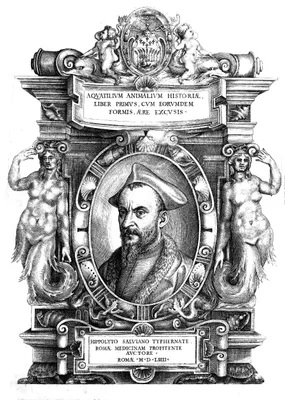
Salviani taught at the University of Rome until 1568, after which he was chief physician to the House of Farnese and three successive popes, Pope Julius III, Pope Marcellus II and Pope Paul IV. "Salviani’s work …
2010 CE
#8367
Arab painting: Text and image in illustrated Arabic manuscripts. Edited by Anna Contadini.
2009 CE
#14083
Ardipithecus ramidus and the paleobiology of early hominids.
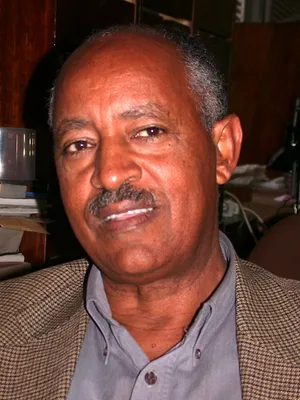
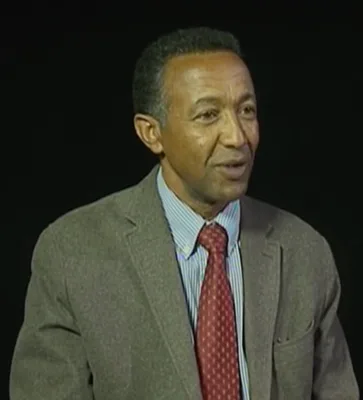
The authors provide evidence that Ardipithecus may be the beginning of the evolutionary pathway that eventually led to hominids. This pathway was distinct from the evolutionary pathway that led to extant African apes.…
1839 CE
#5517
Auffindung von Pilzen auf der Schleimhaut der Speiseröhre einer Typhus-Leiche.
Discovery of Candida albicans, which Berg (No. 5518) showed to be the causal organism in thrush.
1892 CE
#235
Aufsätze über Vererbung und verwandte biologische Fragen.
Weismann produced experimental evidence that acquired characters are not transmitted.
1774 CE
#203.7
Ausfürliche Nachricht von neuentdeckten Zoolithen, unbekannter vierfüsiger Thiere…
Esper was the first to record the finding, in Gailenreuth Cave, of human bones alongside the remains of unknown and probably extinct animals. The implications of this dramatic observation published in a color plate bo…
1925 CE
#211.1
Australopithecus africanus: The man-ape of South Africa.
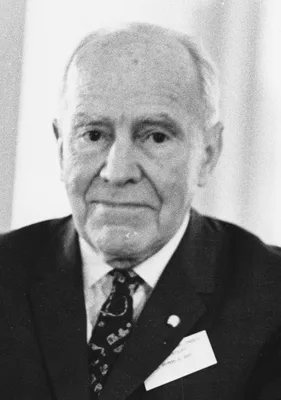
First report on Dart's discovery in 1924 of the first member of the genus Australopithecus, the first hominin found in Africa. In their 150th anniversary issue published on November 4, 2019 the editors of Nature inclu…
1994 CE
#7276
Australopithecus ramidus, a new species of early hominid from Aramis, Ethiopia.
Between 1992 and 1994 White and his team discovered the first Ardipithecus ramidus fossils in the Middle Awash area of Ethiopia. They named their discovery Ardipithecus ramidus (‘ramid’ means ‘root&r…
2010 CE
#7280
Australopithecus sediba: A New Species of Homo-Like Australopith from South Africa.
Matthew Berger, the young son of Lee Berger, discovered the first specimen of Australopithecus sediba, the right clavicle of MH1, on the 15th of August in 2008. This species of Australopithecus dates to about 2 millio…