
Facets
Browse across eight MeSH (opens in new tab) facets — era, geography, science, specialty, technology, history, culture, and reference. Select one tag per group; counts update across the others.
Clear filtersFacet filters
Geography
Specialties & Disease
- Anatomy & Pathology 12
- Cardiology & Blood 6
- Neurology & Psychiatry 5
- Obstetrics & Reproductive 4
- Infectious Disease (General) 12
- Surgery & Anesthesia 14
- Public Health 28
- Immunology & Dermatology 7
- General Clinical Medicine 6
- Military Medicine 21
- Psychology 0
- Alternative & Fringe Medicine 24
- Pediatrics 3
- Ophthalmology & Vision 13
- ENT & Hearing 0
- Urology & Nephrology 1
- Gastroenterology & Hepatology 1
- Pulmonary & Respiratory 1
- Rheumatology, Rehab & Pain 0
- Internal, Emergency & Geriatric 0
- Veterinary Medicine 8
- Epidemiology & Demography 16
- Physiology & Embryology 1
- Dentistry 6
- Plagues & Epidemics 69
- Microbiology & Virology 44
Social & Historical Studies
Institutions & Culture
Reference & Scholarly Works
Drugs & Technology
483 entries match Africa & Middle East [Z01.058.500]
1984 CE
#8460
Medieval Islamic Medicine: Ibn Ridwan's Treatise "On the Prevention of Bodily Ills in Egypt". Translated and introduced by Michael W. Dols, with Arabic text by Adil S. Gamal.
2007 CE
#9350
Medieval Islamic medicine.
1975 CE
#9250
Medizin und Magie. Heilkunde und Geheimlehre des islamischen Zeitalters. [Medizingeschichtliche Miniaturen 1].
1973 CE
#9255
Medizinisches in Tausendundeiner Nacht: Ein literaturgeschichtlicher Beitrag zur islamischen Heilkunde.
1800 CE–1801 CE
#5837
Mémoire sur l’ophtalmie régnante en Egypte.
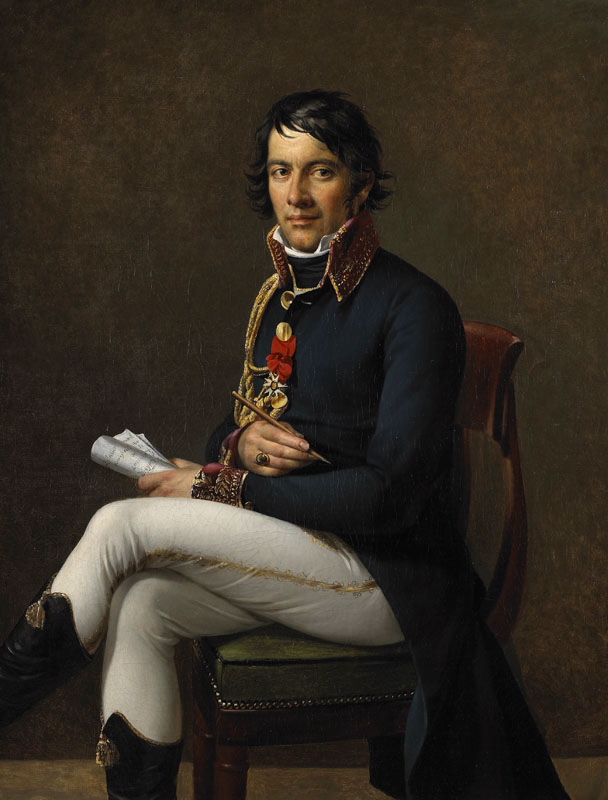
The great military surgeon Larrey served during the Napoleonic campaign in Egypt, where he was the first to observe the contagiousness of trachoma shortly after the successful invasion in 1798. The disease spread to E…
1802 CE
#8204
Mémoire sur le commerce des nègres au Kaire et sur les maladies auxquelles ils sont sujets en y arrivant.
Digital facsimile from BnF Gallica at this link. Also published in Mémoires sur l'Egypte: ... Publiés dans les années VII, VIII et IX, Volume 4, (An X) pp. 125-156.
1936 CE
#5815
Memorandum book of a tenth-century oculist for the use of modern ophthalmologists. A translation of the Tadhkirat.
The Tadhkirat al-Kahhalin was one of the oldest and best of the medieval Arabic works on ophthalmology. It carefully described 130 diseases of the eye and became the standard work on the subject in the Middle East. Ge…
1822 CE
#9071
Memoria sobre a virtude toenifuga da romeira, com observações zoologicas e zoonomicas relativas á toenea, e com huma estampa.
On the use of a root medicine to treat tapeworms, roundworms and similar parasites. The author refers to cases from Portuguese Africa, India and Brazil, and gives clinical observations based on his own case studies, s…
2013 CE
#10878
Middle East Respiratory Syndrome coronavirus in bats, Saudi Arabia.
Dated November 2013. The authors collected bat feces from sites in Bisha, Saudi Arabia found less than 1-12 kilometers from the place of employment or home of an index case-patient there, and performed total nucleic a…
2018 CE
#12567
Military medicine in Iraq and Afghanistan: A comprehensive review. Edited by Ian Greaves.

A report from the British Defence Medical Services.
1820 CE
#13116
Mirât ul-abd fi techrīhh azâ il-insân.
The first book on anatomy and medicine printed in Turkish. The title may be translated as Miroir des corps dans l'anatomie des membres de l''homme. The work was primarily derived from European sources and included 56 …
1980 CE
#8503
Mirau and his practice: A study of the ethnomedicinal repertoire of a Tanzanian herbalist.

1857 CE
#5269
Missionary travels and researches in South Africa.
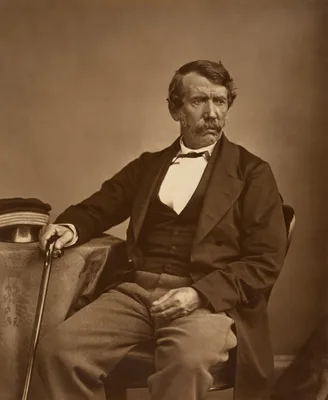
Livingstone gave an accurate account of the tsetse fly Glossina morsitans and of the disease in cattle following its bite (see pp. 80-83; picture of the tsetse fly on p. 571). In his time the bite of the fly was thoug…
1863 CE
#12657
Monograph on the Aye-Aye (Chiromys madagascariensis, Cuvier).
For the first 100 years after the first aye-aye was brought to Europe from Madagascar in the 1780s, debate persisted over whether it was a rodent, a primate, or most closely related to the kangaroo. Classification of …
2014 CE
#13528
Muslim midwives: The craft of birthing in the premodern Middle East.
2017 CE
#13529
Nahrungsmittel in der arabischen Medizin. Das Kitāb al-Aġḏiya wa-l-ašriba des Naǧīb ad-Dīn as-Samarqandī. Edition, Übersetzung und Kontext von Juliane Müller.
1941 CE
#6466
Native African medicine: With special reference to Its practice in the Mano tribe of Liberia.
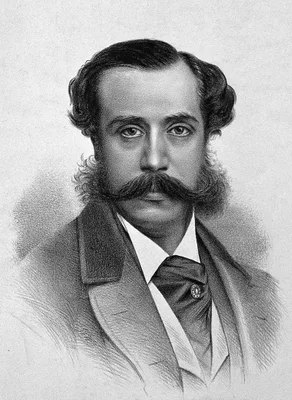
1756 CE
#5290
Natural history of Aleppo and parts adjacent.
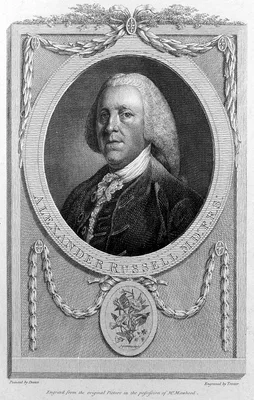
Includes (Chap, iv) a good account of “Aleppo boil”, which Russell found to be endemic in Aleppo. Digital facsimile from the Internet Archive at this link.
1952 CE
#10940
Neutralizing antibodies against certain recently isolated viruses in the sera of human beings residing in East Africa.
First report of human illness caused by Zika virus, detected in Uganda and Tanzania. 38 patients had neutralizing antibodies to Zika virus in their blood serum, proving that they had been infected by the virus. (Thank…
1995 CE
#7278
New four-million-year-old hominid species from Kanapoi and Allia Bay, Kenya.
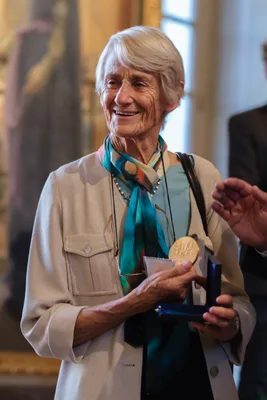
In 1965, a research team led by Bryan Patterson from Harvard University discovered a single arm bone (KNM-KP 271) of an early human at Kanapoi in northern Kenya, but without additional fossils Patterson could not conf…
2001 CE
#7279
New hominin genus from eastern Africa shows diverse middle Pliocene lineages.
In 1998 and 1999, working in the Lake Turkana region of northern Kenya, Meave Leakey and her team found a cranium and other fossil remains of a 3.5 million year old hominin with a mixture of features unseen in other e…
1961 CE
#10311
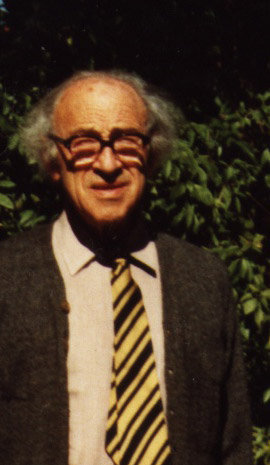
Northern Rhodesia in the days of the charter: A medical and social study, 1878-1924.
1842 CE
#13843
Notes and observations on the Ionian Islands and Malta: With some remarks on Constantinople and Turkey, and on the system of quarantine as at present conducted. 2 vols.
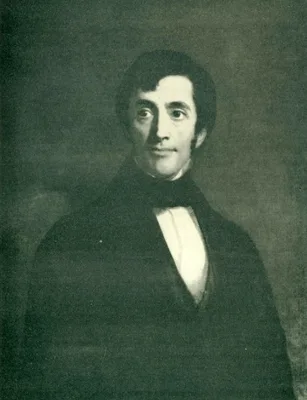
Digital facsimile from Google Books at this link.
1821 CE
#13115
Notice sur le premier ouvrage d'anatomie et de médecine, imprimé en Turc, à Constantinople, en 1820, intitulé Miroir des corps dans l'anatomie de l'homme envoyé et offert par S. Exc. L'Ambassadeur de France près la sublime porte a la Bibliothèque du Roi; Suivie du Catalogue des livres turcs, arabes et persans, imprimés à Contantinople, depuis l'introduction de l'Imprimerie, en 12726-27, jusqu'en 1820.

Bianchi characterized himself on the title page as Adj. Secretarty-Interpreter of the King for Oriental Languages. In this pamphlet he translated parts of the text of Chani-Zadeh and also translated the Table of Conte…
1896 CE
#5361
Notizen zur Helminthologie Aegyptens. Die Lebensgeschichte des Anchylostomum duodenale (Dub.).
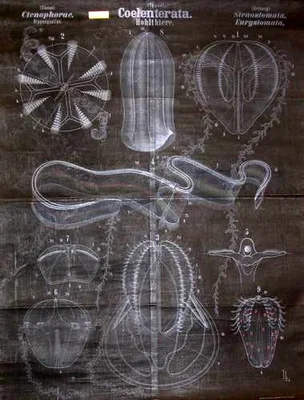
Looss elucidated the life cycle and mode of transmission of the hookworm. See also No. 5365. English translation in Kean (No. 2268.1).
1803 CE
#13611
Observations et réflexions sur le scorbut, d'après celui qui a régné parmi les troupes françaises formant la garnison d'Alexandrie (en Egypte), pendant le Blocus et le Siége de cette ville, en l'an IX (1801), par les Armées combinées des Turcs et des Anglais.
The author was a military surgeon on Napoleon's Egyptian campaign. Digital facsimile from BnF Gallica at this link. (32pp.)
1840 CE
#5267
Observations on the disease lethargus: with cases and pathology.

Clarke left a detailed account of African trypanosomiasis; he saw cases of the disease while serving as a colonial surgeon at Sierra Leone, and named it “narcoleptic dropsy”.
1801 CE
#12053
Observations sur la maladies appelée peste, le flux dissentérique, l'ophtalmie d'Égypte, et les moyens de s'en préserver. Avec des notions sur la fièvre jaune de Cadix, et les projet et plan d'un hôpital, pour le traitement maladies épidémiques et contagieuses.
At the time of publication Assalini, a military surgeon with Napoleon, characterized himself on the title page as "Docteur en Médecine et Chirugien de 1re classe de la Garde des Consuls..." Digital facsimile fr…
1532 CE
#9011
Octavii Horatiani reum medicarum Lib. Quatuor. I. Logicus, De curationibus omnium ferme morborum corporis humani, ad Euporistum. II. De acutis & chronicis passionibus, ad eundem. III. Gynecia, De mulierum accidentibus, & curis eorundem, ad Victoriam. IIII. De physica scientia, experimentorum liber, ad Eusebium filium. Albucasis. chirurgicorum omium primarii, lib. tres. I. De cauterio cum igne, & medicins acutis per singula corporis humani membra. Cum instrumentorum delimatione. II. De sectione & perforatione, phlebotomia, & ventosis. De vulternibus, & extractione sagittaru, & certeris similibus. Cum formis instrumentorum. III. De restuartione & curatione, dislocationis membrorum. Cum typis item instrumentorum.
In this, the first printed edition of Rerum medicarum libri quatuor by the late antique Byzantine physician Theodorus Priscianus, his work was misattributed to Octavianus Horatianus. Digital facsimile from Google Book…
2010 CE
#11076
Odorant reception in the malaria mosquito Anopheles gambiae.

Order of authorship in the original publication: Carey, Wang, ... Carlson. The authors showed that besides CO2, the odorant receptors in the malaria mosquistoes Anopheles gambiae are sensitive to other "mostly sweat" …
1921 CE
#11762
On a form of swine fever occurring in British East Africa (Kenya Colony).
First description of African Swine Fever. Montgomery was "Veterinary Adviser to the Government of Uganda, formerly Veterinary Pathologist to the East Africa Protectorate."
1903 CE
#5276
On the discovery of a species of trypanosoma in the cerebrospinal fluid of cases of sleeping sickness.
While in Uganda, Castellani discovered T. gambiense in human cerebrospinal fluid. A paper in Notes Rec. roy. Soc., 1973, 23, 93-110, discounts Castellani’s claim that although he first discovered trypanosomes in…
1864 CE
#5344.5
On the endemic haematuria of the Cape of Good Hope.
Like Cobbold, Harley expressed the view that a mollusc was the intermediate host in bilharziasis.
1875 CE
#5344.10
On the presence of a Filaria in “craw-craw”.
In 1874, while examining skin snips from craw-craw patients in Ghana, during his service on the H. M. S. Decoy, the Irish surgeon O’Neill discovered the subcutaneous microfilaria. This was the earliest known vis…
1572 CE
#10937
Opticae thesaurus: Alhazeni Arabis libri septem, nunc primum editi; Eiusdem liber De Crepusculis et nubium ascensionibus. Edited by Friedrich Risner.
The Arab mathematician, astronomer, and physicist of the Islamic Golden Age Alhazen made significant contributions to the principles of optics and the theory of visual perception in his Opticae thesaurus. Risner's edi…
1798 CE–1801 CE
#10577
Opuscules du C[itoy]en Desgenettes, Médecin en chef de l'Armée d'Orient.
A collection of nine separately printed pamphlets issued by Napoleon's press in Cairo during his Egyptian campaign. See J.-F. Hutin, "La littérature médicale de la campagne d'Égypte", Histoire des…
1824 CE
#2531
Origines contagii.
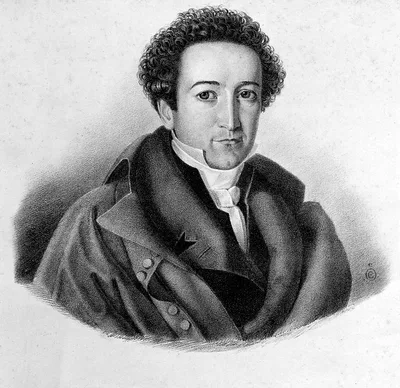
History of contagious disease in the ancient world through readings from the texts. A supplementary “Additamenta” was published in 1826. Digital facsimile of the 1824 edition from the Internet Archive at t…
2008 CE
#9239
Osmanli tibbi bilimler literaturu tarihi [History of the literature of medical sciences during the Ottoman period]. Edited by E. Ihsanoglu. [Îlim tarihi kaynaklari ve arastirmalari serisi 14, Osmanli bilim tarihi literatürü serisi 7]. 4 vols.
Comprehensive and detailed catalogue of Turkish medical writings produced during the Ottoman period from the 14th to early 20th centuries. "The main body of the book lists the medical works in chronological order unde…
2012 CE
#12804
Oswaldus Crollius und Daniel Sennert im frühneuzeitlichen Istanbul: Studien zur Rezeption des Paracelsismus im Werk des osmanischen Arztes Salih b. Nasrullāh Ibn Sallūm al-Halabī
Study of the "Al-Ṭibb al-jadīd al-kīmiyāʼī alladhī ikhtaraʻahu Barākalsūs (The new chemical medicine invented by Paracelsus), an Arabic compendium of alchemical works from early modern Europe by Salih ibn Nasrallah al…
2009 CE
#11242
Ottoman medicine: Healing and medical institutions, 1500-1700.
1946 CE
#6510
Outline of Arabic contributions to medicine and the allied sciences.
1875 CE
#2
Papyros Ebers: Das hermetische Buch über die Arzeneimittel der alten Ägypter in hieratischer Schrift, herausgegeben mit Inhaltsangabe und Einleitung versehen von Georg Ebers, mit Hieroglyphisch-Lateinischem Glossar von Ludwig [Christian] Stern, mit Unterstützung des Königlich Sächsischen Cultusministerium. 2 vols.
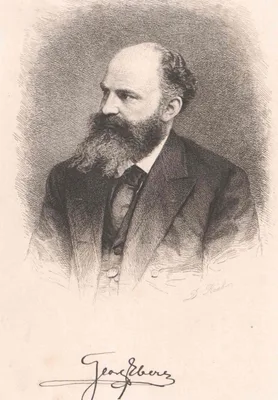
The Ebers Papyrus dates from about 1552 BCE. It measures 20.23 m. in length and 30 cm. in height, and is, along with the Edwin Smith Papyrus, one of the two most important surviving medical papyri. It was written in h…
1969 CE
#10675
Parasitic diseases in Africa and the Western Hemisphere. Early documentation and transmission by the slave trade.
1865 CE
#14037
Persien. Das Land und seine Bewohner. Ethnographische Schilderungen. 2 vols.
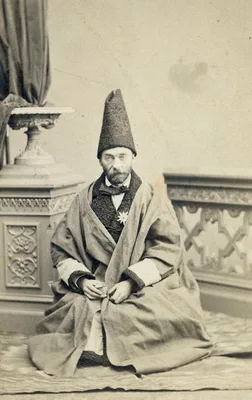
In this wide-ranging ethnographic study Polak provided the most authoritative account of his introduction of western medicine into Iran as well as the state of medicine in Iran generally. "Polak (1865, II, pp. 192-348…
1844 CE
#13074
Pharmacopoea Castrensis Ottomano. Pharmacopée militaire Ottomane.
The first original pharmacopoeia printed in the Ottoman Empire, with an original text by the Austrian physician Karl Ambros Bernard. The text of this pharmacopeia was in French and Latin, accompanied by Italian terms.…
1818 CE
#13075
Pharmacopoeia Geniki.
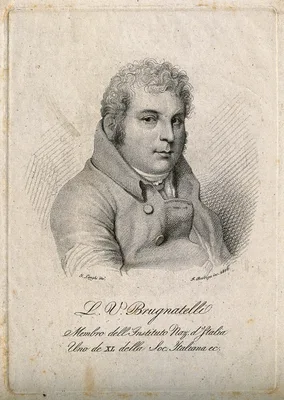
The first pharmacopeia printed in Turkey. This was a translation into Greek from Brugnatelli's Farmakopoea ad uso degli Speziali, e Medici Moderni della Repubblica Italiana. The printer in Istanbul was not identified.…
2018 CE
#10776
Piety and patienthood in medieval Islam.
2015 CE
#8274
Plague and empire in the early modern Mediterranean world: The Ottoman experience, 1347-1600.
2012 CE
#8492
Plague, quarantines and geopolitics in the Ottoman empire.
An examination of Ottoman plague treatises and writers from the Black Death until 1923.
1976 CE
#214.3
Plio-Pleistocene hominid discoveries in Hadar, Ethiopia.

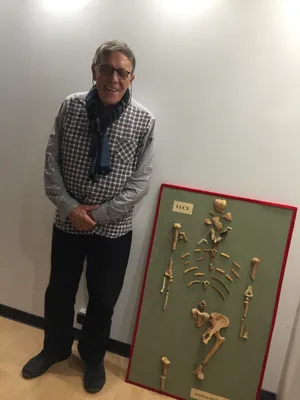
Report on the Afar fossils (formally classified and named Australopithiecus afaranesis in 1998) representing a minimum of 35 and a maximum of 65 individuals, all about 3,000,000 years old. The most famous of these, AL…