
Monograph on the Aye-Aye (Chiromys madagascariensis, Cuvier).
Publication Details
London: Printed by Taylor and Francis, 1863 CE.
For the first 100 years after the first aye-aye was brought to Europe from Madagascar in the 1780s, debate persisted over whether it was a rodent, a primate, or most closely related to the kangaroo. Classification of the Aye-Aye remained debatable because of the aye-aye’s odd combination of behavioral and morphological traits: continuously growing front teeth, batlike ears, a foxlike tail, abdominal mammary glands, claws on most digits, and spindly, dexterous middle fingers. It uses its middle finger to tap along a branch and moves its ears forward and back to help locate hollow channels within the wood created by wood-boring insect larvae. Once it detects a channel, the aye-aye uses its specialized front teeth to pry open the wood and then inserts one of its fingers to extract the larvae.
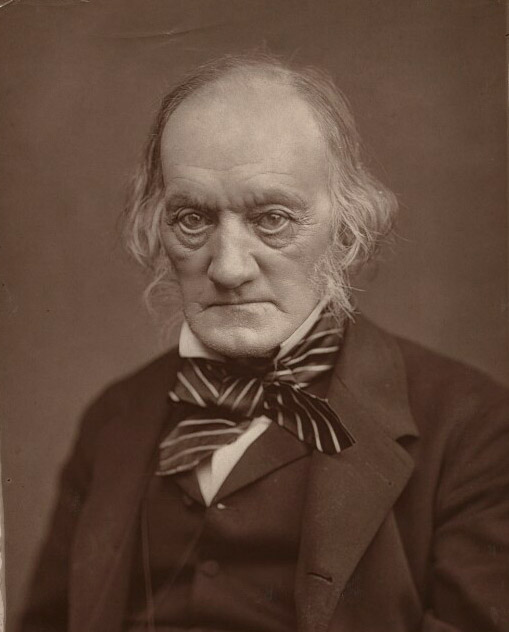
All of these unique specialized features caught the attention of comparative anatomist Richard Owen who presented the evidence for classifying the Aye-Aye as a primate in this monograph that is beautifully illustrated by Joseph Wolf.
Digital facsimile from Google Books at this link.
Browse Tags
Thematic Classifications
| Catalog Metadata | Reference Information |
|---|---|
| Entry Number | #12657 |
| Permanent Link | https://staging.historyofmedicine.com/entry/14901 |
| Author Bio Link | Wikipedia ↗ |
| External URL | monograph-on-the-ayeaye-chiromys-madagascariensis-cuvier |
Geographic Context
Publication place: London