
Facets
Browse across eight MeSH (opens in new tab) facets — era, geography, science, specialty, technology, history, culture, and reference. Select one tag per group; counts update across the others.
Clear filtersFacet filters
Geography
Specialties & Disease
- Anatomy & Pathology 5
- Cardiology & Blood 0
- Neurology & Psychiatry 2
- Obstetrics & Reproductive 6
- Infectious Disease (General) 1
- Surgery & Anesthesia 24
- Public Health 15
- Immunology & Dermatology 4
- General Clinical Medicine 12
- Military Medicine 1
- Psychology 1
- Alternative & Fringe Medicine 10
- Pediatrics 3
- Ophthalmology & Vision 4
- ENT & Hearing 0
- Urology & Nephrology 4
- Gastroenterology & Hepatology 0
- Pulmonary & Respiratory 0
- Rheumatology, Rehab & Pain 1
- Internal, Emergency & Geriatric 3
- Veterinary Medicine 0
- Epidemiology & Demography 2
- Physiology & Embryology 0
- Dentistry 5
- Plagues & Epidemics 6
- Microbiology & Virology 1
Social & Historical Studies
Institutions & Culture
Reference & Scholarly Works
Drugs & Technology
228 entries match Medieval [K01.400.500] · Europe & United Kingdom [Z01.542]
1520 CE–1522 CE
#8344
[Vol. 1:] Primus Avi. Canon. Avicenna, medicorum principis, Canonum liber (translatus a Gerardo Cremonensi), una cum lucidissima Gentilis Fulgi. expositione, qui merito is Speculator appellatus, additis annotationibus omnium auctoritatum and priscorum and recentiorum auctorum (edente Barthomomeo Tantuccio) .... - [Vol. 2:] Secundus Canon Avic., Cum exquisitissima Gentilis Fulg. expositione. Demum Plinii auctoritates, secundum annotata capita in de Simplicibus nuperrime addite. - [Vol.3:] Tertius Can. Avic., Cum amplissima Gentilis Fulgi. expositione. Demum commentaria nuper addita, videlicet Jacobi de Partibus super "Fen" VI and XIIII. Item Jo. Matthei de Gradi super "Fen" XXII, quia Gentilis in eis defecit. - [Vol. 4:]: Secunda pars Gentilis super tertio Avic. Cum supplementis Jacobi de Partibus, Parisiensis, ac Joannis Matthei de Gradi, Mediolanensis, ubi Gentilis vel breviter vel tacite pertransivit. - [Vol.5:] Quartus Canon Avicenna, cum preclara Gentilis Fulginatis exhibits. Thadei item Florentini expositio super secunda "Fen" ejusdem. Gentilis Florentini iterum super duos primos tractatus quinte "Fen". Quintus etiam Canon, cum ejusdem Gentilis Fulginatis lucidissima exhibits. Canticorum liber, cum commento Averroys, translatus ex arabico a magistro Armegando Blasii, Libellus de Viribus cordis translatus ab Arnaldo de Villanova). Omnia accuratissime revisa atque castigata ....
![AVICENNA, [Abū ʿAlī al-Ḥusayn ibn ʿAbd Allāh ibn Al-Hasan ibn Ali ibn Sīnā] (980 – 1037)](/media/portraits/9572)
The commentary by Gentile da Foligno upon Avicenna's Canon was among the most influential medical texts of the Later Middle Ages. See Roger K. French, Canonical medicine: Gentile da Foligno and scholasticism (Leiden: …
1509 CE
#8445
Medicinae Pliniae libri quinque finiunt foeliciter.
The Medicina Plinii was an anonymous compilation of remedies dating to the early 4th century CE ."The excerptor, saying that he speaks from experience, offers the work as a compact resource for travelers in dealing wi…
2006 CE
#8366
Monica H. Green & Linne R. Mooney: Gilbertus Anglicus, "The Sickness of Women," IN: Sex, Aging and Death in a Medieval Medical Compendium: MS Trinity College Cambridge R.14.52, Its Language, Scribe, and Texts. Edited by M. Teresa Tavormina. Vol. 2., pp. 455-568.

"Gilbertus's Compendium medicinae was translated into Middle English in the early 15th century.[4] The gynecological and obstetrical portions of that translation were soon excerpted and circulated widely as an indepen…
1923 CE
#8552
"Magistri Salernitani nondum cogniti": A contribution to the history of the Medical School of Salerno. By Pietro Capparoni. With a foreward by D'Arcy Power. (Wellcome Historical medical Museum. Research Studies in Medical History No. 2).
Physicans from the medical school at Salerno who were unknown to de Renzi (No. 6518). Digital facsimile from the Internet Archive at this link.
1933 CE
#5815.1
(Al-morchid fi'l-kohhl) ou, Le guide d'oculistique: Ouvrage inédit de l'oculiste arabe-espagnol, Mohammad ibn Qassoum ibn Aslam al-Ghafiqi (XIIe siècle); traduction des parties ophtalmologiques d’après le manuscrit conservé à la bibliothèque de l’Escurial par Max Meyerhof.
2016 CE
#7518
A census of Greek medical manuscripts: From Byzantium to the Renaissance.
An amended and updated index of Diels' catalogue (No. 6767), and a list of items missed or overlooked in Diels, or located since.
2011 CE
#8439
A Cretan healer's handbook in the Byzantine tradition: Text, translation and commentary.

1991 CE–2007 CE
#7415
A history of medicine. 6 vols.
Vol. 1: Primitive and Ancient Medicine (1991/1995), Vol. 2: Greek Medicine (1996), Vol. 3: Roman Medicine (1998), Vol. 4: Byzantine and Islamic Medicine (2001), Vol. 5: Medieval Medicine (2003), Vol. 6: Renaissance Me…
1934 CE
#8876
A leechbook or collection of medical receipts of the fifteenth century: The text of ms. no. 136 of the Medical Society of London, together with a transcript into modern spelling, transcribed and edited with an introduction, notes and appendix by Warren R. Dawson.
1963 CE
#7413
A pharmaceutical view of Abulcasis al-Zahrawi in moorish Spain.
1456 CE
#6818
Aderlasskalender.
The Aderlasskalender for the year 1457, also known as the Laxierkalender, was issued in Mainz, printed in the type of the 36-line Bible, presumably in 1456. It survives in only one incomplete copy in the Biblioth&egra…
1475 CE
#6789
Aggregator, sive de medicinis simplicibus.
First printed edition of an encyclopedic dictionary of medicine, containing a large number of medical recipes based upon Greek and Arabic sources. Dondi completed the work in 1355. Manuscripts of his text are preserve…
2007 CE
#8557
Alphita: Edición crítica y comentario de Alejandro García González. Edizione Nazionale La Scuola Medica Salernitana, 02.
Alphita, farina ordei idem, an anonymous collection of glosses, documents the linguistic renewal of the medical and botanical technical lexicon, derived from Greco-Latin as well as Arabic sources, at the School of Sal…
2009 CE
#9809
An Old French herbal (Ms Princeton U.L. Garrett 131). Edited by Tony Hunt.
First edition of the earliest Old French herbal in verse— "a surprisingly comprehensive work (3188 octosyllables), based on an eleventh-century Latin treatise 'De viribus herbarum' attributed to a certain 'Macer…
1931 CE
#6522
An old Icelandic medical miscellany. MS. Royal Irish Academy 23 D 43, with supplement from MS. Trinity College (Dublin) L.2.27. Edited by Henning Larsen.
1478 CE
#361
Anatomia.
First dated printed edition of the first medieval book devoted solely to anatomy, written by Mondino for his students in 1316. An earlier, but undated edition, of which only 3 copies are recorded, appeared in Padua ab…
1926 CE
#8362
Anatomies de Mondino dei Luzzi et de Guido de Vigevano. Par Ernest Wickersheimer.
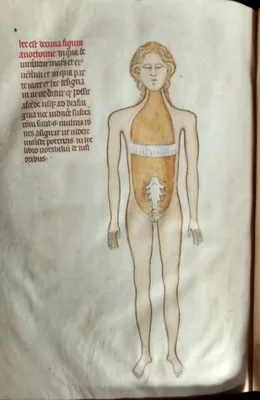
Facsimile of the 1478 edition of Mondino's Anothomia along with the text and 18 plates from Guido de Vigevano's (fl. 14th century) Anathomia. Vigevano's manuscript, completed in 1345, is MS. 569 in the Musée Co…
2012 CE
#7140
Anglicus ortus. A verse herbal of the twelfth century. Edited and translated by Winston Black.
Written in Latin verse, the Anglicus ortus describes in considerable detail the medicinal uses of 160 plants. Edition based on collation of the five extant manuscripts of the text, plus parallel Latin text and English…
1999 CE
#12992
Anglo-Norman literature: A guide to texts and manuscripts.
This standard work catalogued nearly 1000 manuscripts, including medical texts.
1994 CE–1997 CE
#8578
Anglo-Norman Medicine I: Roger Frugard's Chirurgia and the Practica Brevis of [Johannes] Platearius. II: Shorter treatises. Edited by Tony Hunt. 2 vols.
Vol. 1: First published edition of two 13th century Anglo-Norman medical treatises translated from Latin. Matthaeus Platearius and his brother Johannes were the sons of a female physician from the Salerno school who w…
1981 CE
#8335
Anglo-Saxon amulets and curing stones.
1952 CE
#6546
Anglo-Saxon magic and medicine: Illustrated specially from the semi-pagan text "Lacnunga,"
1993 CE
#8334
Anglo-Saxon medicine.
1979 CE
#8559
Anglo-Saxon plant remedies and the Anglo-Saxons.
1975 CE
#8448
Anglo-Saxon prose.

Includes translations of medical material. Third revised and enlarged edition (Gloucester, England: Choir Press, 2017).
2001 CE
#8357
Anglo-Saxon remedies, charms, and prayers from British Library MS Harley 585: The ‘Lacnunga’. Edited and translated with introduction, appendices and commentary and bibliography by Edward Pettit. 2 vols.
Digital facsimile of British Library MS Harley 585 from the British Library at this link.
1471 CE
#1789
Antidotarium. Add: Quid pro quo; Synonyma.
This work, which first circulated in manuscript in 1140, was the first formulary to be printed. It consists of 139 prescriptions and includes the original formula for the “anesthetic sponge” (spongia somni…
2016 CE
#11049
Arabian drugs in early medieval Mediterranean medicine.
1476 CE
#52
Articella seu opus artis medicinae. Con: Johannitius: Isagoge ad tegni Galeni. Philaretus: De pulsibus; Theophilus Protospatharius: De urinis. Hippocrates: Aphorismi (comm: Galenus; tr: Constantinus Africanus); Prognostica (comm: Galenus); De regimine acutorum morborum (comm: Galenus; tr: Gerardus Cremonensis). Galenus: Liber Tegni, sive Ars medica (comm: Hali; tr: Gerardus Cremonensis).
![GALEN, [Κλαύδιος Γαληνός; Galen of Pergamon] (129 – 216)](/media/portraits/21)
![HIPPOCRATES, [Ἱπποκράτης; Hippocrates of Kos] (-460 – -370)](/media/portraits/50)
A collection of Greek, Roman and Byzantine texts on medicine, written in Latin, that was mainly used as medical school textbook or reference manual between the 13th and 16th centuries. The Articella grew around a synt…
1987 CE
#6565.02
Avicenna in Renaissance Italy. The Canon and medical teaching in Italian Universities after 1500.
2017 CE
#10627
Avicenne et la médecine en Italie. Le Canon dans les universités (1200-1350).
1527 CE
#7202
Avicenne liber canonis medicinae. Cum castigationibus Andree Bellunensis.
Revised and improved text of the Canon and other works of Avicenna by Andrea Alpago of Belluno, who had acquired a deep understanding of both the language and the subject during his thirty years of service as physicia…
1866 CE
#8963
Botanik der spaeteren Griechen vom dritten bis dreizehnten Jahrhuntert.
Digital facsimile from the Internet Archive at this link.
1497 CE
#1790
Breviarium medicinae. Tr: Gerardus Cremonensis. Add: Serapion the Younger: In medicinis simplicibus. Tr: Simon a Cordo Januensis and Abraham Judaeus Tortuosiensis. Galenus: De virtute centaureae; Johannes Platearius: Practica brevis; Matthaeus Platearius: De simplici medicina "Circa instans".
Serapion the Elder and Serapion the Younger were Syrian Christians who wrote in Arabic. Breviarum medicinae was an abridgement of the opinions of the Greek and Arabic physicians concerning diseases and their treatment…
1475 CE
#276.1
Buch der Natur.
The first printed book to contain illustrations of animals, and the first notable scientific book in German. It discusses animals, birds, fish, anatomy, physiology, plagues, the medicinal value of plants and stones, e…
1971 CE
#9439
Chaucer's physician: Medicine and literature in fourteenth-century England.
1898 CE
#12617
Chirugie de Guillaume de Salicet achevée en 1275. Traduction et commentaire par Paul Pifteau.
![SALICETO, Guglielmo da [WILLIAM OF SALICETO] (1210 – 1277)](/media/portraits/6798)
Original edition limited to 200 copies. Digital facsimile from Google Books at this link.
1478 CE
#3666.83
Chirurgia [French]. Translated by Nicolaus Panis.
Guy de Chauliac studied medicine and surgery in Montpellier and Paris, and served as the personal physician to Popes Clement VI, Innocent VI and Urban V. His Chirurgia magna, written in the early 1360s, remained a sta…
1500 CE–1501 CE
#3666.82
Chirurgia cum formis instrumentorum (Tr: Gerardus Cremonensis). IN: Guy de Chauliac: Chirurgia parva. Add: Albulcasis: Chirurgia cum formis instrumentorum. Jesus filius Hali: De oculis (Tr: Dominicus Marrochinus). Canamusali de Baldach: De oculis.
The surgical section of Albucasis’s Altasrif, the first rational, complete and illustrated treatise on surgery and surgical instruments. The author was an Arab Muslim physician and surgeon who lived in Al-Andalu…
1544 CE
#4406.1
Chirurgia e graeco in latinum conversa.
This elegantly printed and illustrated small folio included 210 text woodcuts, most probably after drawings by the school of Francesco Salviati (Francesco de'Rossi). It was issued from the press operated by Pierre Gau…
1498 CE
#12925
Chirurgia. Add: Brunus Longoburgensis: Chirurgia magna et minor; Bonaventura de Castello: Recepta aquae balnei de Porrecta; Theodoricus Cerviensis: Chirurgia; Rolandus: Libellus de chirurgia; Lanfrancus Mediolanensis: Chirurgia; Rogerius: Practica; Leonardus Bertapalia: Recollectae super quarto libro Avicennae.
This late 15th century edition of the surgery of Guy de Chauliac also contained the first printed editions of various lesser-known medieval surgeries such as those by Bruno da Longoburgo and Leonardo Bertapaglia. It a…
1480 CE
#12984
Chirurgia. Edited by Matthaeus Moretus.
Argelata was a pupil of Guy de Chauliac, and professor at Bologna. He is supposed to have done the autopsy on Pope Alexander V, who died suddenly on May 3, 1410. ISTC No. ia00951000. Digital facsimile from U.S. Nation…
2002 CE
#8230
Clavis commentariorum der antiken medizinischen Texte.
A key to literature on commentaries on Greek and Latin medical writers up to the 12th century— primarily Late Antique authors, who were active before 600 CE. It takes account of commentaries on Galen in particul…
1852 CE–1859 CE
#49
Collectio Salernitana: Ossia documenti inediti, e trattati di medicina appartenenti alla scuola medica Salernitana, raccolti ed illustrati da G.E.T Henschel, C. Daremberg, E.S. deRenzi; premessa la storia della scuola e publicati a cura di Salvatore de Renzi. 5 vols.
The School of Medicine at Salerno dispelled the stagnation of medicine which had persisted throughout the early Middle Ages. Its masters were the first medieval physicians to cultivate medicine as an independent scien…
1482 CE
#48
Colliget.
The Kitab-al-Kullyat or Colliget (Book of Universals) was an “attempt to found a system of medicine upon the neo-Platonic modification of Aristotle’s philosophy” (Garrison, p. 132). Averroës was…
1472 CE
#2070
Conciliator differentiarum philosophorum et medicorum. Add: De venenis.
Includes the first printed book on toxicology; one of the more elegantly printed of medical incunabula, printed in folio format. For an English translation, see Ann. med. Hist., 1924, 6, 26-53. ISTC No. ip00431000. Di…
1994 CE
#8309
Constantine the African and ‘Alī Ibn al-‘Abbās al-Mağdūsī: The Pantegni and related texts. Edited by Charles Burnett and Danielle Jacquart.
The first book on Constantine the African, which sheds light on the School of Salerno, with which Constantine was associated, and the formation of a medical corpus in the High Middle Ages.
1983 CE
#12956
Constantini Liber de coitu: El tratado de andrología de Constantino el Africano. Edited by Enrique Montero Cartelle.
1992 CE
#8447
Das ‚Lorscher Arzneibuch‘. Ein medizinisches Kompendium des 8. Jahrhunderts (Codex Bambergensis medicinalis 1). Text, Übersetzung und Fachglossar. (Philosophische Dissertation Würzburg 1989) (Sudhoffs Archiv, Beiheft 28).
Digital facsimile of the original manuscript with the transcription and translation by Ulrich Stoll from Staatsbibliothek Bamberg at this link.
1939 CE
#8449