
Facets
Browse across eight MeSH (opens in new tab) facets — era, geography, science, specialty, technology, history, culture, and reference. Select one tag per group; counts update across the others.
Clear filtersFacet filters
Geography
Specialties & Disease
- Anatomy & Pathology 59
- Cardiology & Blood 48
- Neurology & Psychiatry 49
- Obstetrics & Reproductive 10
- Infectious Disease (General) 2
- Surgery & Anesthesia 14
- Public Health 31
- Immunology & Dermatology 60
- General Clinical Medicine 168
- Military Medicine 8
- Psychology 9
- Alternative & Fringe Medicine 3
- Pediatrics 3
- Ophthalmology & Vision 26
- ENT & Hearing 19
- Urology & Nephrology 13
- Gastroenterology & Hepatology 10
- Pulmonary & Respiratory 5
- Rheumatology, Rehab & Pain 3
- Internal, Emergency & Geriatric 1
- Veterinary Medicine 1
- Epidemiology & Demography 31
- Physiology & Embryology 34
- Dentistry 8
- Plagues & Epidemics 55
- Microbiology & Virology 49
Social & Historical Studies
Institutions & Culture
Reference & Scholarly Works
168 entries match General Clinical Medicine [G02] · Diagnostics & Imaging [E01]
2013 CE
#10564
Design for information: An introduction to the histories, theories, and best practices behind effective information visualizations.
Visually splendid; includes frequent comparisons of modern computer representations with historical examples.
1945 CE
#3104
Detection of weak and “incomplete” Rh agglutinins: a new test.
Coombs’s test for detecting antibodies in various clinical scenarios, such as Rh disease and blood transfusion. With A. E. Mourant and R. R. Race. A fuller description appears in Brit. J. exp. Path.,1945, 26, 25…
1913 CE
#5066
Die Diphtherietoxin – Hautreaktion des Menschen als Vorprobe der prophylaktischen Diphtherieheilseruminjektion.
Schick developed his test for use as an indication as to whether or not prophylactic injections of antitoxin are necessary in children already exposed to diphtheria. English translation in J. Mt. Sinai Hosp., 1938, 5,…
1913 CE
#3647
Die Farbstoffe des Blutserums. 1. Eine quantitative Bestimmung des Bilirubins im Blutserum.

The van den Bergh test.
1908 CE
#2340
Die kutane und konjunktivale Tuberkulinreaktion, ihre Bedeutung für Diagnostik und Prognose der Tuberkulose.
Wolff-Eisner’s conjunctival tuberculin reaction.
1902 CE
#2625
Die Lehre von den Geschwülsten. 2 vols.
“With this book the microscopical epoch in the evolution of the knowledge of cancer may be said to have been brought to a close” (Haagensen).
1885 CE
#2503
Die Methoden der Bakterienforschung.
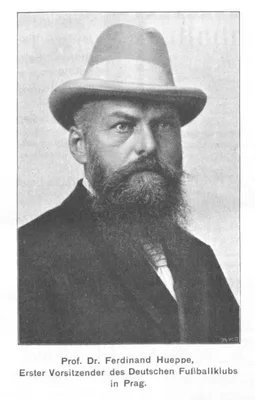
Hueppe, a colleague of Koch, wrote an admirable manual on bacteriological methods, a subject to which he gave several original contributions. English translation, New York, 1886.
1934 CE
#269.4
Die Methoden der Fluoreszenzmikroskopie. In: Abderhalden, Handbuch der biologischen Arbeitsmethoden, Abt. II, Teil 3, pp. 3307-37.
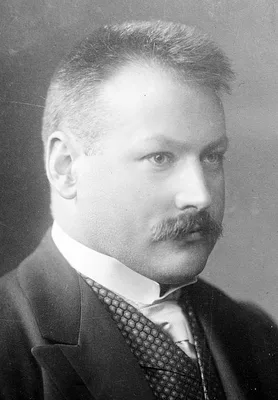
Modern methods of fluorescence microscopy were developed by Haitinger.
1908 CE
#12385
Die von Pirquet'sche Hautreaktion und die intravenöse Tuberkulinbehandlung.
First publication on the The Mantoux test or Mendel–Mantoux test (also known as the Mantoux screening test, tuberculin sensitivity test, Pirquet test, or PPD test for purified protein derivative) is a tool for s…
2011 CE
#8686
Disease maps: Epidemics on the ground.
Well-written and beautifully illustrated in color. Unfortunately the bibliography contains many errors.
1968 CE
#273.2
Early history of the electron microscope.
1887 CE
#2505.1
Eine kleine Modification des Koch’schen Plattenverfahrens.
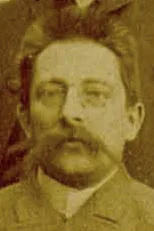
Petri dish. A similar dish was described by Cornil and Babès (see No. 2501) and by Nicati and Rietsch, Arch. Physiol. norm. path., 1885, 6, 72. Petri was an assistant of Koch.
1906 CE
#2402
Eine serodiagnostische Reaktion bei Syphilis.
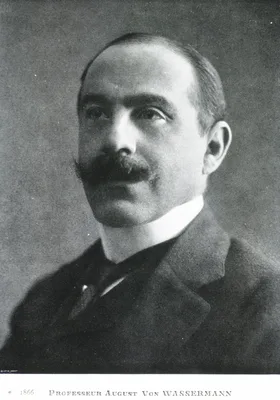
The “Wassermann reaction”, a specific diagnostic blood test for syphilis, and a modification of the complement-fixation reaction of Bordet and Gengou. With A. Neisser and C. Bruck.
1912 CE
#2840
Electro-cardiography and its importance in the clinical examination of heart affections.
1934 CE
#2864
Electrocardiograms that represent the potential variations of a single electrode.
Unipolar leads. With F. D. Johnston, A. G. MacLeod, and P. S. Barker.
1937 CE
#12832
Electrophoresis of serum globulin. II- Electrophoretic analysis of normal and immune sera.
Tiselius showed that an antibody that he produced in a rabbit by immunizing it with albumin (ovalbumin) was clearly located in the gamma globulin fraction. He summarized the paper with this statement: "Investigation o…
1936 CE
#2865.1
Elektrographische Diagnostik der Herzmuskelerkrankungen.
Introduction of the vectorcardiogram.
1891 CE
#7243
Entsefalometriya mozga cheloveka v otnoshenii k polu, vozrastu i cherepnomu ukazatelyu [in Cyrillic].
In 1889, nearly 20 years before Horsley and Clarke published their paper on the use of stereotaxy to examine the brain, Dmitrii Zernov, a professor of anatomy at Moscow University, invented the first prototype of a st…
1971 CE
#12601
Enzyme-linked immunosorbent assay (ELISA). Quantitative assay of immunoglobulin G.
Perlmann (principal investigator) and Engvall conceptualized and developed the very commonly used enzyme-lined immunosorbent assay (ELISA) that uses antibodies to detect proteins and other different immunogens. The as…
1919 CE–1920 CE
#3850
Epinephrin hypersensitiveness test in the diagnosis of hyperthyroidism.
Goetsch devised a skin reaction test for use in the diagnosis of hyperthyroidism
1778 CE–1793 CE
#8222
Geographische Geschichte des Menschen und der allgemein verbreiteten vierfüßigen Thiere: nebst einer hieher gehörigen Zoologischen Weltcharte. 3 vols.
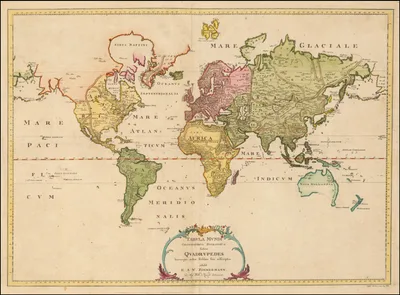
Digital facsimile from the Bayerische StaatsBibliothek at this link.
1963 CE–1966 CE
#273
Geschichte der Mikroskopie. 3 vols.
A biographical history.
1989 CE
#13312
God bless the microscope! A history of the Royal Microscopical Society over 150 years.
1822 CE
#7695
Grundtræk til en almindelig Plantegeographie.
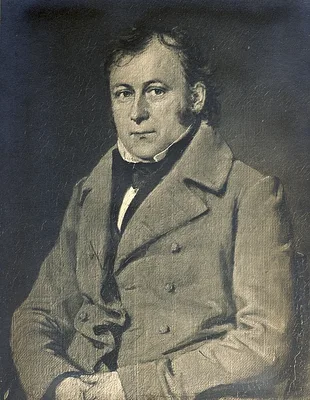
The first atlas of the geography of plants, including distribution maps for the eastern and western hemisphere. Schouw translated the work into German and had the translation published the following year: Grundzü…
1967 CE
#2419.4
Haemagglutination test utilizing pathogenic Treponema pallidum for the sero-diagnosis of syphilis.
Treponemal hemagglutination (TPHA) test.
1926 CE
#2650
Haemagglutinegehalte van het bloedserum bij carcinoompatiënten.
Bendien test for the diagnosis of cancer. He published books in German and English on this subject in 1931. Modification by E. C. Lowe, Brit. med. J., 1932, 2, 1060.
1848 CE–1854 CE
#270
Het mikroskoop, deszelfs gebruik, Geschiedenis en tegewoordige Toestand. Eeen handbooek voor natuur - en geneeskundigen. 4 vols.
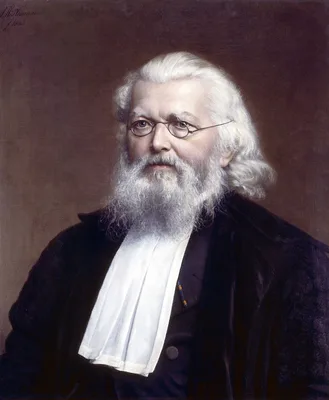
Exhaustive history of the microscope. The work was translated into German, appearing (second edition) in 1866; this last was reprinted Amsterdam, 3 vols., 1970. Digital facsimile of the first edition in Dutch from wel…
1971 CE
#7405
Histology of the human eye.
Hogan and Alvarado's work was the first book on histology of the eye to include electron microscopy. It also reproduced spectacular three-dimensional representations of ocular ultrastructures by Joan Esperson Weddell.
1653 CE
#260
Historiarum et observationum medico-physicarum centuria prima (-secunda).
The first work to apply microscopy to medicine. Borel described 200 observations and applications; he probably saw the blood corpuscles and Sarcoptes scabiei.
1983 CE
#272
History of staining by Harold J. Cohn. 3rd edition by George C. Lusk and Frederick H.Kasten.
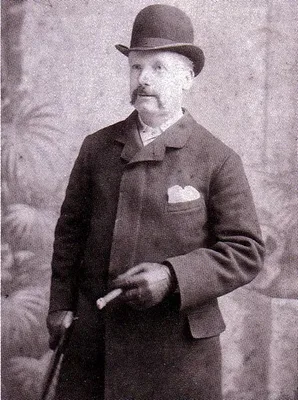
2020 CE
#12117
Infectious mononucleosis diagnosed by Downey cells: Sometimes the old ways are better.
The Downey cell method for the diagnosis of infectious mononucleosis remains effective and cost-effective nearly 100 years after it was discovered: "An 18-year-old woman visited her physician because she had a fever, …
1908 CE
#2341
Intradermo-réaction de la tuberculine.
Mantoux’s intradermal tuberculin skin test.
1807 CE
#265.1
Kort bericht der trapsgewijze verbeteringen aan achromatische verrekijkers.
Van Deijl introduced an achromatic objective.
1908 CE
#5065
Kutanreaktion beil Impfung mit Diphtherietoxin.
The Schick test for the determination of susceptibility to diphtheria.
1991 CE
#12938
Mapping the brain and its functions: Integrating enabling technologies into neuroscience research. Edited by Constance M. Pechura and Joseph B. Martin. Committee on a National Neural Circuitry Database....
The digital edition is available from nap.edu at this link.
2012 CE
#7692
Mapping the nation: History and cartography in nineteenth-century America.
Includes medical, statistical cartography.
2004 CE
#10508
Mapping the Victorian social body.
"The cholera epidemics that plagued London in the nineteenth century were a turning point in the science of epidemiology and public health, and the use of maps to pinpoint the source of the disease initiated an explos…
1972 CE
#10505
Medical geography: Techniques and field studies. Ediited by N. D. McGlashan
Chapter 5: "Computers and mapping in medical geography" by R. W. Armstrong appears to be one of the earliest reviews of this subject.
1865 CE
#1511.1
Method att objectivera effecten av ljusintryck pa retina.
Discovery of the electroretinogram, the beginning of the use of electrophysiological methods for studying visual systems.
1665 CE
#262
Micrographia, or some physiological descriptions of minute bodies made by magnifying glasses; with observations and inquiries thereupon.
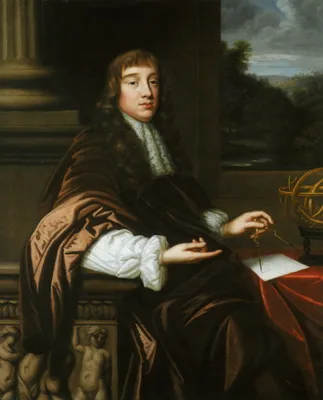
Hooke, at one time research assistant to Robert Boyle, was one of the greatest inventive geniuses of all time. This was the first book devoted entirely to microscopical observations, and also the first book to pair it…
1678 CE
#13233
Microscopium, or some new discoveries made with and concerning microscopes. Lectures and Collections made by Robert Hooke, Secretary of the Royal Society, pages 81-112.
On his title page Hooke listed the contents of this section as follows: "Mr. Leeuwenhoeck's two letters concerning some late microscopical discoveries. "The author's discourse and description of microscopes, improved …
1936 CE
#269.6
Microscopy with ultra-violet light. A simplification of method.

1904 CE
#269.1
Mikrophotographische Untersuchungen mit ultraviolettem Licht.
The ultraviolet light microscope was conceived and designed by Köhler.
2021 CE
#13234
Neutron tomography of Van Leeuwenhoek’s microscopes.

Order of authorship in the original publication: Cocquyt, Zhou, Plomp, van Eijck. I Abstract "The technique of neutron tomography has, after 350 years, enabled a first look inside the iconic single-lens microscopes of…
1837 CE
#8803
Notes on the medical topography of Calcutta.
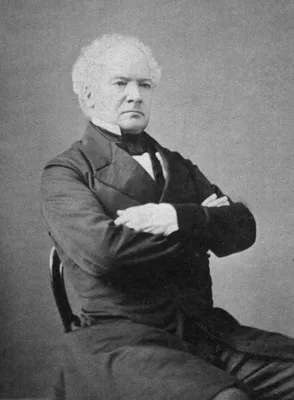
Digital facsimile from the Internet Archive at this link.
1827 CE
#13262
Notice of some microscopic observations of the blood and animal tissues.
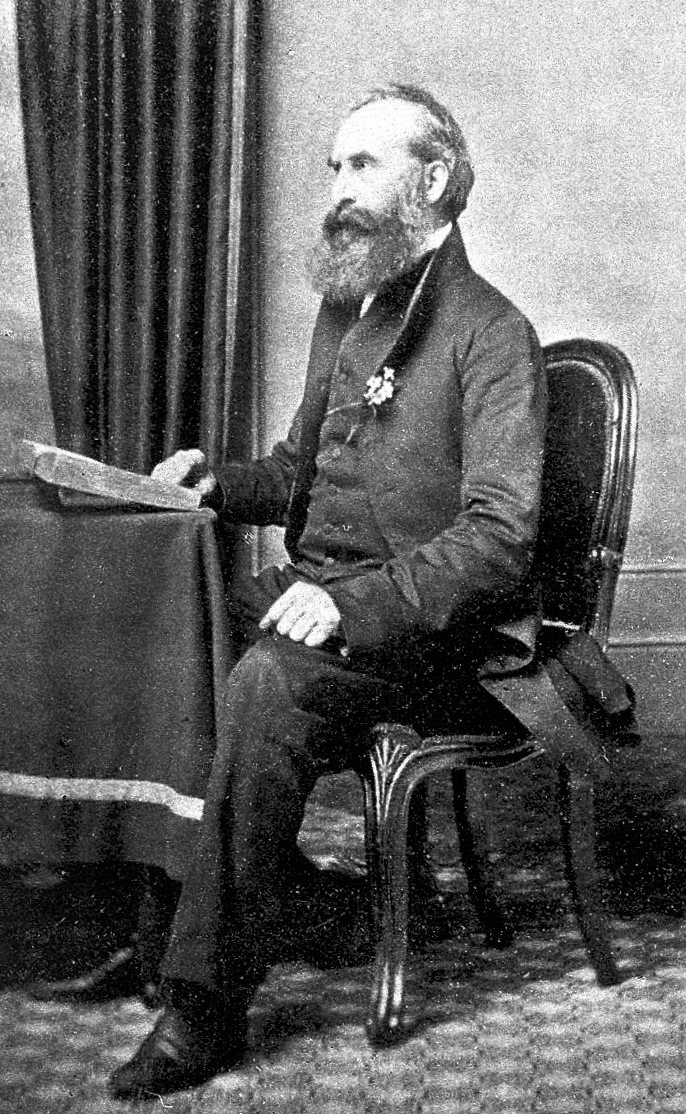
Hodgkin and Lister determined that blood cells are bioconcave discs and accurately measured their diameter as "1/5000 of an inch." Digital facsimile from Google Books at this link.
1691 CE
#264
Observationes circa viventia, quae in rebus non viventibus reperiuntur. Cum micrographia curiosa siue Rerum minutissimarum obseruationibus, quæ ope microscopij recognitæ ad viuum exprimuntur. His accesserunt aliquot animalium testaceorum icones non antea in lucem editae. Omnia curiosorum naturæ exploratorum vtilitati & iucunditati expressa & oblata.
Illustrates several early microscopes, including the famous microscopes of the Bolognese Joseph Campani. Contradicting Redi, Bonanni tried to show that spontaneous generation was possible in animals "without blood and…
1685 CE–1686 CE
#263
Oculus artificialis teledioptricus sive telescopium. 3 pts.
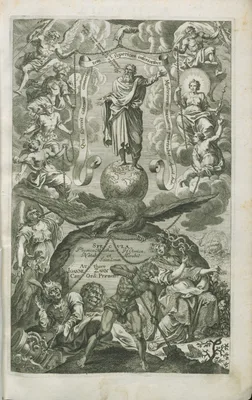
Includes the first complete history of early microscopes.
1878 CE
#268.1
On a large-angled immersion objective, without adjustment collar; with some observations on “numerical aperture”.
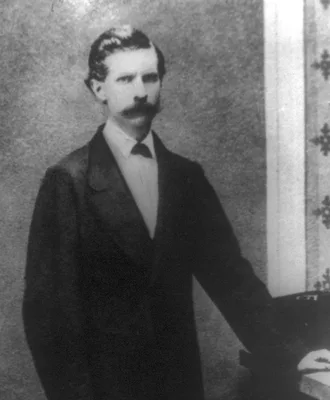
Stephenson suggested the oil immersion lens system to Abbe, who developed it.
1827 CE
#266.1
On Mr. Tulley’s thick aplanatic object-glasses, for diverging rays; with an account of a few microscopic test objects.
Goring was an Edinburgh medical practitioner. He commissioned Tulley and others to make various modifications to the microscope. The above paper reports the first effective achromatic object-glass.