
Facets
Browse across eight MeSH (opens in new tab) facets — era, geography, science, specialty, technology, history, culture, and reference. Select one tag per group; counts update across the others.
Clear filtersFacet filters
Geography
Specialties & Disease
- Anatomy & Pathology 8
- Cardiology & Blood 7
- Neurology & Psychiatry 25
- Obstetrics & Reproductive 13
- Infectious Disease (General) 2
- Surgery & Anesthesia 30
- Public Health 99
- Immunology & Dermatology 6
- General Clinical Medicine 23
- Military Medicine 107
- Psychology 1
- Alternative & Fringe Medicine 29
- Pediatrics 6
- Ophthalmology & Vision 2
- ENT & Hearing 0
- Urology & Nephrology 0
- Gastroenterology & Hepatology 3
- Pulmonary & Respiratory 1
- Rheumatology, Rehab & Pain 2
- Internal, Emergency & Geriatric 5
- Veterinary Medicine 1
- Epidemiology & Demography 38
- Physiology & Embryology 6
- Dentistry 7
- Plagues & Epidemics 81
- Microbiology & Virology 30
Social & Historical Studies
Institutions & Culture
Reference & Scholarly Works
Drugs & Technology
8 entries match United States [Z01.058] · Anatomy & Pathology [G02.149 / C23]
2002 CE
#8384
A traffic of dead bodies: Anatomy and embodied social identity in nineteenth century America.
1829 CE
#11760
Address to the community, on the necessity of legalizing the study of anatomy
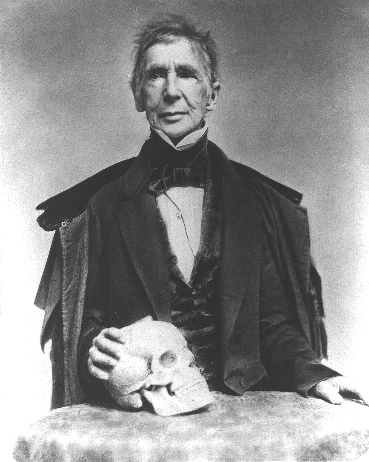
The petition to the Massachusetts legislature to legalize "the procuring of subjects for anatomical dissections" (from George Hayward's printed notice on the verso of the title page). Nine members of the Massachusetts…
1857 CE–1877 CE
#333
Contributions to the natural history of the United States. 5 vols.
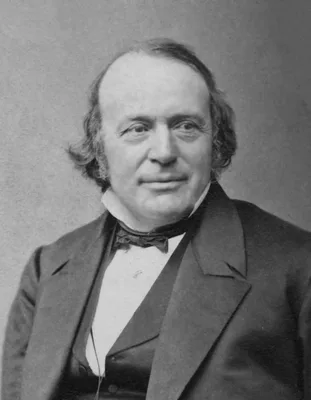
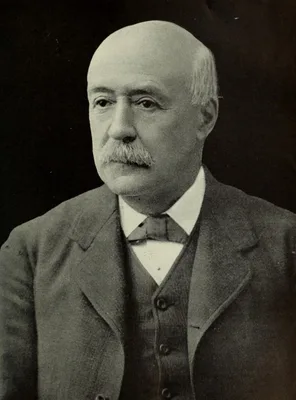
Vols. 1-4 by Louis Agassiz were published from 1857-1862; Vol. 5, North American starfishes by Alexander Agassiz, appeared in 1877. Louis Agassiz was, for his time, the leading comparative anatomist in America and a v…
1839 CE
#201
Crania Americana; or, A comparative view of the skulls of various aboriginal nations of North and South America. To which is prefixed an essay on the varieties of the human species.
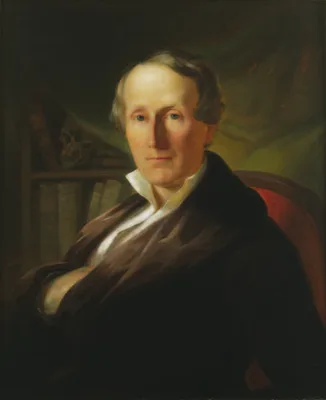
In his day Morton was the most eminent craniologist in the United States. He had a collection of nearly 1,000 skulls. In this work, which described both modern and fossil skulls, Morton described fractures and anthrop…
2009 CE
#7567
Dissection: Photographs of a rite of passage in American medicine 1880-1930.
1876 CE
#14060
Explorations of the aboriginal remains of Tennessee.
The first major discussion of human skeletal pathology in American archeological samples. Jones introduced histopathological techniques in analysis of paleopathological material. Digital facsimile from Google Books at…
1763 CE
#10989
Observations on some of the diseases of the parts of the human body. Chiefly taken from the dissections of morbid bodies.
Clossy, an Irish physician, previously at Trinity College, Dublin, gave the first anatomy classes and dissections at King’s College in New York City (now Columbia) in 1763. Clossy worked closely with other King&…
1831 CE
#11759
Report of the Select Committee of the House of Representatives ... legalizing the study of anatomy.
This was the first law passed in the United States consigning the bodies of those who died in workhouses, hospitals, and similar institutions, the bodies of whom were "unclaimed," to medical schools for dissection. "S…