
Facets
Browse across eight MeSH (opens in new tab) facets — era, geography, science, specialty, technology, history, culture, and reference. Select one tag per group; counts update across the others.
Clear filtersFacet filters
Geography
Specialties & Disease
- Anatomy & Pathology 15
- Cardiology & Blood 0
- Neurology & Psychiatry 0
- Obstetrics & Reproductive 0
- Infectious Disease (General) 0
- Surgery & Anesthesia 0
- Public Health 0
- Immunology & Dermatology 0
- General Clinical Medicine 0
- Military Medicine 0
- Psychology 0
- Alternative & Fringe Medicine 0
- Pediatrics 0
- Ophthalmology & Vision 0
- ENT & Hearing 0
- Urology & Nephrology 0
- Gastroenterology & Hepatology 0
- Pulmonary & Respiratory 0
- Rheumatology, Rehab & Pain 0
- Internal, Emergency & Geriatric 0
- Veterinary Medicine 0
- Epidemiology & Demography 0
- Physiology & Embryology 0
- Dentistry 0
- Plagues & Epidemics 0
- Microbiology & Virology 0
Social & Historical Studies
Institutions & Culture
Reference & Scholarly Works
Drugs & Technology
15 entries match Modern [K01.400.504] · Europe & United Kingdom [Z01.542]
1852 CE–1859 CE
#416
Anatome topographica sectionibus per corpus humanum congelatum triplici directione ductis illustrata. 8 pts.
Pirogov was the greatest of Russian surgeons. He introduced the teaching of applied topographical anatomy in Russia. His atlas of 220 plates represents the first use on a grand scale of frozen sections in anatomical i…
1739 CE
#13152
Anatomia do corpo humano, recopilada com doutrinas medicas, chimicas, filosoficas, mathematicas, com indices, e estampas, representantes todas as partes do corpo humano.
The first textbook of anatomy published by a Portuguese author in Portuguese. Digital facsimile from Google Books at this link.
1831 CE
#9995
Anatomy. Copy of a letter from the council of the Royal College of Surgeons in London, to Viscount Melbourne.
On December 5, 1831, the notorious London "resurrection men" John Bishop and Thomas Williams were executed for the murder of an itinerant fourteen-year-old (known only as the "Italian Boy"), whose corpse they had then…
1832 CE
#9993
Anatomy. Proceedings at the National Political Union, respecting legislative interference in the study of anatomy, and the supply of bodies for anatomical research.
Digital facsimile from the Internet Archive at this link.
1862 CE
#7621
Catalogue of the osteological portion of specimens contained in the Anatomical Museum of the University of Cambridge.
Digital facsimile from the Internet Archive at this link.
1721 CE
#11314
Catalogus rerum memorabilium quae in theatro anatomico academia, quae Lugduni Batavorum floret, demonstantur per Franciscum Schuyl.
Numerous editions and translations of the catalogue of the anatomical museum of the University of Leiden were published, probably to supply the needs of medical students from various countries. Digital facsimile of th…
1662 CE
#7690
Cista medica Hafniensis: variis consiliis, curationibus, casibus rarioribus, Vitis medicorum Hafniensium, aliisq; ad rem medicam, anatomicam, botanicam & chymicam spectantibus referta. Accedit eiusdem Domus anatomica brevissime descripta.
Histories of famous physicians in Copenhagen along with the description of the building designed for the teaching of anatomy there, designated the "Anatomy House". Bartholin's Domus anatomica brevissime descripta was …
1893 CE–1903 CE
#10367
Descriptive catalogue of the anatomical and pathological specimens in the museum of the Royal College of Surgeons of Edinburgh. 3 Vols. Vols. 1 & 2 by Charles W. Cathcart; Vol. 3 by Theodore Shennan. Vol. 1.- The skeleton and organs of motion.
Digital facsimile of vol. 1 from the Biodiversity Heritage Library at this link.
1834 CE–1840 CE
#10380
Descriptive catalogue of the preparations in the Museum of the Royal College of Surgeons in Ireland. Vol. I. (Anatomy). Vol. 2. (Pathology).
Digital facsimile from the Internet Archive at this link.
1842 CE
#10381
Muséum d'anatomique pathologique de la Faculté de Médecine de Paris, ou Musée Dupuytren. Publié au nom de la Faculté. 2 vols. and atlas.
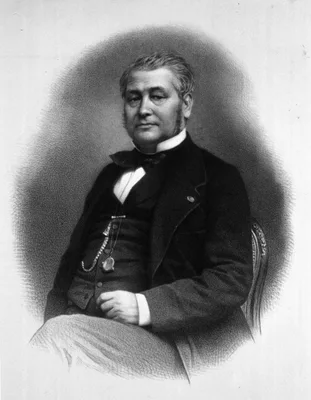
Plates lithographed after drawings by Émile Beau. Digital facsimile from BnFGallica at this link.
1828 CE
#7096
Report from the select committee on anatomy. House of Commons, 22 July 1828.
In the first half of 1828, in response to increasing calls for reform, the British Parliament appointed a committee to "enquire into the manner of obtaining subjects for dissection by schools of Anatomy and the State …
2009 CE
#11313
The finger of God: Anatomical practice in seventeenth-century Leiden.
1937 CE–1960 CE
#10200
Topographische Anatomie des Menschen. Lehrbuch und Atlas der regionär-stratigraphischen Präparation. 4 vols. in 7. Vol. 1 in 2 pts: Brust un Brustgliedmasse, 1937; Vol. 2 in 2 pts: Bauch, Becken und Beckengliedmasse, 1941; Vol. 3: Der Hals, 1952; Vol. 4 in 2 pts: Topographische und stratigraphischen Anatomie des Kopfes, 1957, 1960.
Pernkopf's anatomy is remarkable for the intricacy of its detailed images and its "regional stratigraphic" approach, i.e. "multiple layers of dissection with an emphasis on fascia shown and reflected, approaching the …
1831 CE–1854 CE
#7246
Traité complet de l'anatomie de l'homme, comprenant la médecine opératoire. 16 vols.
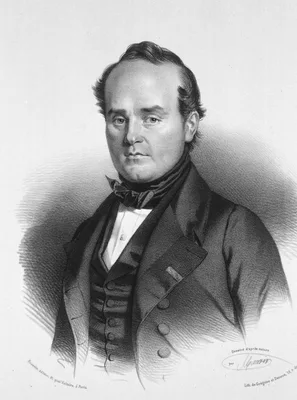
With over 2000 pages of text and 726 lithographed plates (incorporating 3604 individual figures), this work is the most comprehensive, and perhaps the most beautiful anatomical surgical atlas of the 19th century. It w…
1853 CE
#7241
Ueber einen neuen Muskel am Duodenum des Menschens, über elastische Sehnnen, und einige andere anatomische Verhãltnisse.
Treitz, a Czech pathologist, discovered the muscle at the duodenojejunal junction, later called “muscle of Treitz”; the fold of peritoneum over the muscle of Treitz is known as the "ligament of Treitz."