
Facets
Browse across eight MeSH (opens in new tab) facets — era, geography, science, specialty, technology, history, culture, and reference. Select one tag per group; counts update across the others.
Clear filtersFacet filters
Geography
Specialties & Disease
- Anatomy & Pathology 77
- Cardiology & Blood 0
- Neurology & Psychiatry 13
- Obstetrics & Reproductive 5
- Infectious Disease (General) 0
- Surgery & Anesthesia 12
- Public Health 4
- Immunology & Dermatology 1
- General Clinical Medicine 48
- Military Medicine 9
- Psychology 0
- Alternative & Fringe Medicine 3
- Pediatrics 1
- Ophthalmology & Vision 5
- ENT & Hearing 6
- Urology & Nephrology 7
- Gastroenterology & Hepatology 1
- Pulmonary & Respiratory 0
- Rheumatology, Rehab & Pain 0
- Internal, Emergency & Geriatric 1
- Veterinary Medicine 0
- Epidemiology & Demography 0
- Physiology & Embryology 9
- Dentistry 5
- Plagues & Epidemics 7
- Microbiology & Virology 1
Social & Historical Studies
Institutions & Culture
Reference & Scholarly Works
Drugs & Technology
6 entries match Early Modern [K01.400.475] · ENT & Hearing [C09]
1549 CE
#8931
Dialogus de re medica compendiaria ratione, præter quædam alia, universam Anatomen humani corporis perstringens, summè necessarius omnibus Medicinæ canditatis.
The first Spanish medical book based on the writings of Vesalius, written by Vesalius’s student Pedro Jimeno, whose activities “constituted the cornerstone of the Valencian School of Anatomy and the Spanis…
1572 CE–1573 CE
#1539
Externarum et internarum principalium humani corporis partium tabulae.
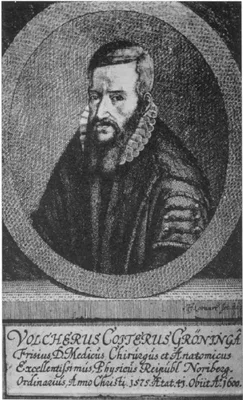
Coiter made several important contributions to the study of human anatomy, and was the first to elevate comparative anatomy to the rank of an independent branch of biology. His Externarum et internarum principalium hu…
1603 CE
#1541
In Galeni librum de ossibus.
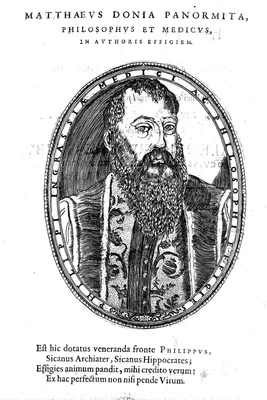
Ingrassia is by some accredited with the discovery of the stapes; he also observed the sound-conducting capacity of the teeth.
1536 CE
#1536
Liber introductorius anatomiae sive dissectionis corporis humani; in quo quam plurima membra, operationes, & utilitates tam ab antiquis, quam a modernis praetermissa manifestantur.
A practical manual for dissection, showing how to carry out an anatomy from the first incision onwards. Massa based his work on his experience gained from numerous dissections that he had undertaken in the hospital of…
1561 CE
#1208
Observationes anatomicae.
Observationes anatomicae, a work of 232 leaves printed in the comparatively small octavo format, with no illustrations, was the only work Fallopio published before his death from tuberculosis at age thirty-nine, and i…
1563 CE–1564 CE
#1093
Opuscula anatomica.
Eustachius is credited with several anatomical discoveries, among them the tensor tympani muscle and the Eustachian tube, published in his chapter entitled De auditus organis. In the last respect, however, he was anti…