
Anatomia humani corporis, centum et quinque tabulis, per artificiosiss. G. de Lairesse ad vivum delineatis.
Publication Details
Amsterdam: vid. J. à Someren, 1685 CE.
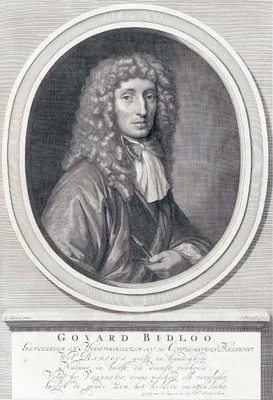
This large folio by Dutch physician, anatomist, poet, and playwright Govert Bidloo contains an engraved title, engraved portrait of Bidloo by Abraham Bloteling after Gérard de Lairesse and 105 engraved plates after Lairesse, probably by Bloteling and Peter and Philip van Gunst. Notably, the work of de Lairesse was featured on the title page.
Lairesse displayed his figures with everyday realism and sensuality, contrasting the raw dissected parts of the body with the full, soft surfaces of undissected flesh surrounding them; placing flayed, bound figures in ordinary nightclothes or bedding; setting objects such as a book, a jar, a crawling fly in the same space as a dissected limb or torso. He thus brought the qualities of Dutch still-life painting into anatomical illustration, and gave a new, darker expression to the significance of dissection. De Lairesse’s images of dissected pregnancies and premature infants also reflect compassion—a quality unusual in art that was intended primarily to be scientific. In 1690 Bidloo's publishers issued an edition in Dutch, and in 1698 William Cowper issued an expanded English with new text using Bidloo's original plates, crediting Bidloo, but without Bidloo's permission, resulting in a famous plagiarism dispute in the era before copyright.
For further details see the entry at HistoryofInformation.com at this link.
Thematic Classifications
| Catalog Metadata | Reference Information |
|---|---|
| Entry Number | #385 |
| Permanent Link | https://staging.historyofmedicine.com/entry/602 |
| Author Bio Link | Wikipedia ↗ |
| External URL | anatomia-humani-corporis-centum-et-quinque-tabulis-per-artificiosiss-g-de-lairesse-ad-vivum-delineatis |
Geographic Context
Publication place: Amsterdam