
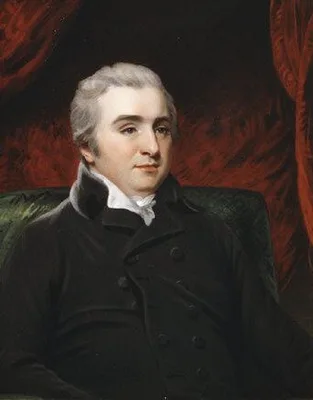
BAILLIE, Matthew (1761 – 1823)
1761 – 1823
6 entries in the GMN corpus.
Image source Henry Bone · This file was donated to Wikimedia Commons as part of a project by the Metropolitan Museum of Art . See the Image and Data Resources Open Access Policy · CC0
1788 CE
#2280
An account of a remarkable transportation of the viscera.
Baillie recorded a case of congenital dextrocardia with complete situs inversus viscerum. Reprinted in Willius & Keys, Cardiac classics, 1941, pp. 257-62.
1789 CE
#6021
An account of a particular change of structure in the human ovarium.
Matthew Baillie’s notable anatomico-pathological studies on dermoid cysts of the ovary. Also published in Lond. med. J., 1789, 10, 322-32.
1793 CE
#2281
The morbid anatomy of some of the most important parts of the human body.
Baillie was a nephew and pupil of William Hunter. The above is the first systematic textbook of morbid anatomy, treating the subject for the first time as an independent science. See also Nos. 2736, 3167.1. Baillie wa…
1794 CE
#6157.1
An anatomical description of the human gravid uterus and its contents.
Hunter’s text for No. 6157, edited and published by Matthew Baillie after William Hunter's death. Digital facsimile from Google Books at this link.
1797 CE
#2736
The morbid anatomy of some of the most important parts of the human body. 2nd ed.
First clinical description of chronic obstructive pulmonary emphysema. The lung on which Baillie performed an autopsy before describing this condition is said to have been that of Samuel Johnson. P. 46: Baillie sugges…
1799 CE–1803 CE
#2282
A series of engravings, accompanied with explanations, which are intended to illustrate the morbid anatomy of some of the most important parts of the human body.
The first systematic atlas of pathology. This work was intended to illustrate No. 2281, but, with its extensive descriptive text for each plate, it may be appreciated separately. The black & white engravings were prep…