
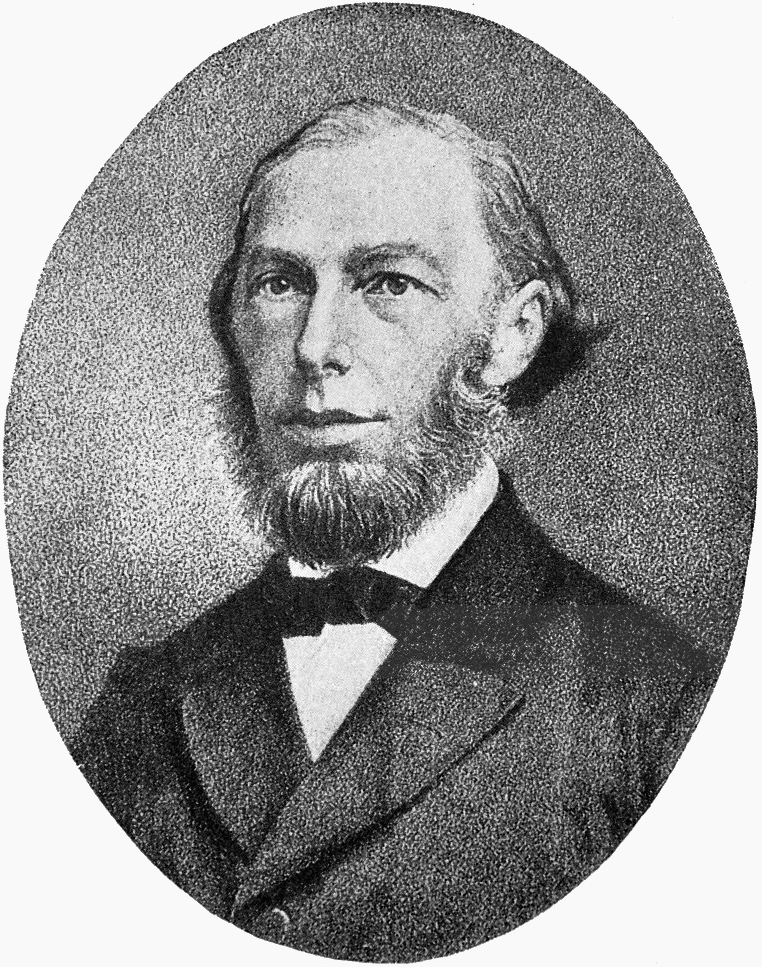
SCHULTZE, Max Johann Sigismund (1825 – 1874)
1825 – 1874
7 entries in the GMN corpus.
Image source Unknown author Unknown author · gettyimages.co.uk · Public domain
1858 CE
#1561
Ueber die Endigungsweise des Hörnerven im Labyrinth.
Schultze’s great monographs on the nerve-endings of the sense organs were of prime importance in the development of the science of histology. Besides that dealing with the internal ear, he wrote others dealing w…
1861 CE
#117
Ueber Muskelkörperchen und das, was man eine Zelle zu nennen habe.
Schultze showed the cell to be a clump of nucleated protoplasm, stating that each muscle fibre or primitive muscle bundle was developed from a single myoblast by successive divisions of its cell or nucleus. His work s…
1862 CE
#936
Untersuchungen über den Bau der Nasenschleimhaut, namentlich die Structur und Endigungsweise der Geruchsnerven bei dem Menschen und den Wirbelthieren.
Schultze’s classic paper on the nerves to the neuro-epithelium in the special sense organs marks an epoch in histology. He described the cells of the olfactory muccous membrane, “Schultze’s cells&rdq…
1863 CE
#118
Das Protoplasma der Rhizopoden und der Pflanzenzellen.
Schultze showed that protoplasm is practically identical in all living cells.
1863 CE
#488
Observationes nonnulae de ovorum ranarum segmentatione, quae “Furchungsprocess” dicitur.
Best contemporary description of the segmentation furrowing of the egg.
1865 CE
#1271
Untersuchungen über Gehirn und Rückenmark des Menschen und der Säugethiere. Nach dem Tode des Verfassers Herausgegeben und Bevortwortet von Max Schultze.
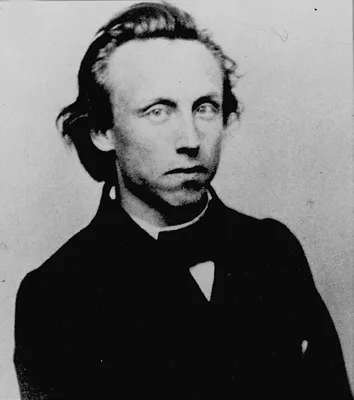
Deiters showed that each nerve-cell possesses an axis-cylinder or nerve-fiber process. His name is perpetuated in “Deiters’ cells” and “nucleus”. Dieters died of typhus in 1863 at the age…
1866 CE
#1512
Zur Anatomie und Physiologie der Retina.
One of the greatest of all histologists, Max Schultze is remembered by ophthalmologists for his monograph on the nerve-endings in the retina.