
Facets
Browse across eight MeSH (opens in new tab) facets — era, geography, science, specialty, technology, history, culture, and reference. Select one tag per group; counts update across the others.
Clear filtersFacet filters
Geography
Specialties & Disease
- Anatomy & Pathology 3
- Cardiology & Blood 5
- Neurology & Psychiatry 7
- Obstetrics & Reproductive 3
- Infectious Disease (General) 3
- Surgery & Anesthesia 13
- Public Health 30
- Immunology & Dermatology 13
- General Clinical Medicine 0
- Military Medicine 10
- Psychology 0
- Alternative & Fringe Medicine 25
- Pediatrics 2
- Ophthalmology & Vision 2
- ENT & Hearing 0
- Urology & Nephrology 2
- Gastroenterology & Hepatology 4
- Pulmonary & Respiratory 1
- Rheumatology, Rehab & Pain 0
- Internal, Emergency & Geriatric 1
- Veterinary Medicine 2
- Epidemiology & Demography 21
- Physiology & Embryology 4
- Dentistry 8
- Plagues & Epidemics 79
- Microbiology & Virology 33
Social & Historical Studies
Institutions & Culture
Reference & Scholarly Works
Drugs & Technology
33 entries match Americas (non-U.S.) [Z01.107] · Microbiology & Virology [C01.748]
1994 CE
#12436
A new coccidian parasite (Apicomplexa: Eimeriidae) from humans.
Based on very high magnification electron transmission micrographs and contrast microscopy, Ortega and colleagues fully characterized the parasite and named it Cyclospora cayetanensis n. sp., naming it after Universid…
1795 CE
#5336.3
An essay on the malignant pestilential fever introduced into the West Indian Islands from Boullam, on the coast of Guinea, as it appeared in 1793 and 1794.
Chisholm, "Surgeon to his Majesty's Ordnance in Grenada," was apparently the first to observe the mode of transmission of the Guinea worm, Dracunculus medinensis. Chishom was also one of the first to recognize that th…
2007 CE
#11934
Bacteremia, fever, and splenomegaly caused by a newly recognized Bartonella species.
The authors described an organism resembling, but different from, Bartonella bacilliformis (Oroya fever) on a patient returning from Peru. The patient recalled numerous insect bites on her legs and feet during her tri…
1895 CE
#5293.1
Beitrag zum klinischen und bacteriologischen Studium der brasilianischen Framboesie oder “Boubas”.
“Breda’s disease” – Brazilian yaws. English translation New Sydenham Society, 1897.
1856 CE
#5183.2
Clinica médica. Abcesos del higado.
Jimenez gave a classic account of liver abscess in amoebiasis.
1993 CE
#12435
Cyclospora species - A new protozoan pathogen of humans.
Ortega and colleagues identified a novel parasite resembling C. muris in the feces of Peruvian patients and 2 U.S. patients, with symptoms resembling those of infections with Cryptosporidium. The parasite infected bot…
1938 CE
#5308.1
Demonstratión de un treponema en el borde activo un caso de pinto de las manos y pies y en la linfa de ganglios superficiales (reporte preliminar).
B. Saenz, J. Grau Triana, and J. Alfonso Armenteros indicated that pinta is caused by a treponeme, T. carateum.
1794 CE
#8004
Demostracion de las eficaces virtudes nuevamente descubiertas en las raices de dos plantas de Nueva-España, especies de ágave y de begónia, para la curacion del vicio venéreo y escrofuloso ...
Balmis conducted experimental trials on the effectiveness of two Mexican plants, agave and begonia, which were believed, according to folk medicine practices in Mexico, to cure syphilis and scrofula. The trials confir…
1909 CE
#5533
Descripción de elementos endo-globulares hallados en las enfermos de fiebre verrucosa.
The causal organism of Oroya fever and verruga peruana, endemic in Peru, was named Bartonella bacilliformis after Barton, who was one of the first to observe it.
1799 CE
#9070
Ensaios sobre algumas enfermidades d'Angola....
Azeredo noted that the tropical fevers found in Brazil and Angola were very similar. He claimed to have achieved excellent results with his “new method” of treatment, which included the use of quinine, nux…
1769 CE
#5304
Essay on the natural history of Guiana, in South America. Containing a description of many curious productions in the animal and vegetable systems of that country. Together with an account of the religion, manners, and customs of several tribes of its Indian inhabitants. Interspersed with a variety of literary and medical observations. In several letters....
Bancroft was an English physician who lived for many years in South America. He noted the transmission of yaws by flies (p. 385 of his book). Digital facsimile from the Internet Archive at this link.
1928 CE
#5396.1
Experiments relating to the pathology and the etiology of Mexican typhus (tabardillo).
Mooser differentiated murine from epidemic typhus. The causative organism was later named Rickettsia mooseri.
2017 CE
#10945
Genomic epidemiology reveals multiple introductions of Zika virus into the United States.
Order of authorship in the original publication: Grubaugh, Ladner, Kraemer. The authors found that the Zika virus was introduced into Florida at least 4 times, but perhaps as many as 40 times, before it was detected, …
1648 CE
#2263.1
Historia naturalis Brasiliae.
Piso's study of the natural history of Brazil was also a pioneer work on tropical medicine, and also the largest work from the standpoint of format published by the Elzeviers. The folio includes De medicina brasiliens…
1895 CE
#5530
La erupción en la enfermedad de Carrión (verruga peruana).
“Carrion’s disease” (Oroya fever) was named by the Peruvian physician Ernesto Odriozola, after Daniel Alcides Carrión Garcia (1859-85), a student. In order to prove or disprove the connection …
1958 CE
#12215
Les champignons hallucinogenes du Mexique. Études ethnologiques, taxinomiques, biologiques, physiologiques et chimiques.
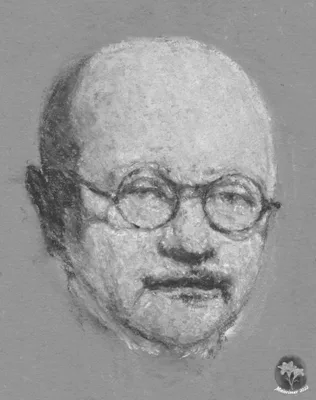
1914 CE
#5536
Les grains botryomycotiques. Leur signification en pathologie et en biologie générales.
Thèse de Paris, No. 267, 1914. Magrou showed botriomycosis (granuloma pyogenicum) to be due to a staphylococcus.
1822 CE
#9071
Memoria sobre a virtude toenifuga da romeira, com observações zoologicas e zoonomicas relativas á toenea, e com huma estampa.
On the use of a root medicine to treat tapeworms, roundworms and similar parasites. The author refers to cases from Portuguese Africa, India and Brazil, and gives clinical observations based on his own case studies, s…
1904 CE
#5299
Note on the occurrence of Leishman–Donovan bodies in “cachexial fevers” including kala-azar.
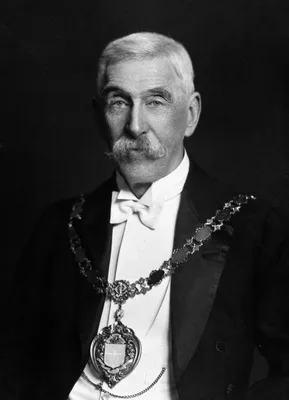
Rogers demonstrated the Leishman–Donovan bodies in kala-azar. See also the same journal, 1904, 2, 645-50. At about the same time Bentley reported similar findings in India.
1888 CE
#5512.1
Note sur la maladie des boeufs de la Guadeloupe, connue sous le nom de farcin.
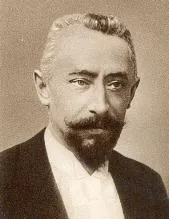
The first pathogenic aerobic actinomycete to be described. It was later named Nocardia farcinica and is probably identical with N. asteroides.
1868 CE
#5344.6
Noticiar preliminar sobre vermes de uma especie ainda nao descripta, encontrados na urina de doentes de hematuria intertropical no Brazil.
In 1866 Wucherer saw the embryo form of the filaria worm. Later the name Wuchereria bancrofti was applied to it. English translation in Kean (No. 2268.1).
1909 CE
#5283
Nova tripanozomiaze humana. Estudos sobre a morfolojia e o ciclo evolutivo do Schizotrypanum cruzi n.gen., n.sp., ajente etiolojico de nova entidade morbida do homen.
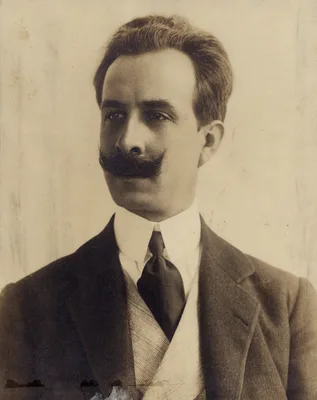
Chagas discovered T. cruzi, causal organism in American trypanosomiasis (“Chagas’s disease”). Partial English translation in Kean (No. 2268.1).
1892 CE
#5528.2
Pentastomas.
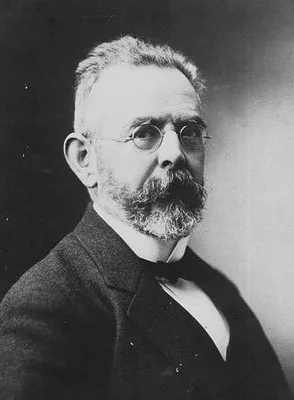
Posadas (No. 5528.1) and Wernicke, a professor pathology in Buenos Aires, were the first to report cases of coccidioidomycosis. German translation of Wernicke’s paper in Zbl. Bakt., 1892, 12, 859-61.
1962 CE
#10920
Powassan virus: Field investigations in Northern Ontario, 1959-1961.
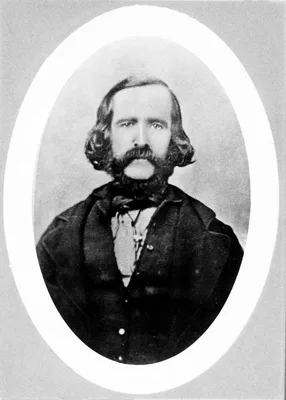
The authors isolated a virus from the brain of a child who died of encephalitis in Powassan, Ontario, and named it the Powassan virus. They posited a tick vector and possible rodent natural hosts. (Thanks to Juan Weis…
1770 CE
#5336.2
Sur un ver trouvé sous la conjunctive, à Maribou, isle Saint-Domingue.

First description of the worm Loa loa. Mongin was a French surgeon working in the West Indies. English translation in Kean (No. 2268.1).
1910 CE
#5380.1
The etiology of the typhus fever (tabardillo) of Mexico City. A further preliminary report.
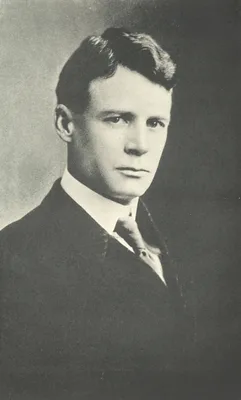
Demonstration of the causal organism of typhus.
1901 CE
#9372
The etiology of yellow fever: An additional note.
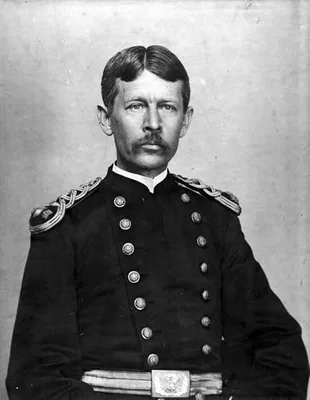
"The article describes a series of experiments conducted to explore how yellow fever is propagated from individual to individual and how the contagium is spread within households. The study was conducted in an experim…
1776 CE
#13364
Traité des pians.
One of the earliest medical publications printed in Haiti. Duvivier, Bibliographie générale et méthodique d'Haiti, 2, p. 197.
1908 CE
#5532.1
Uma mycose pseudococcidica localisada na bocca e observada no Brazil. Contribuiçao ao conhocimento das hyphoblastomycoses americanas.
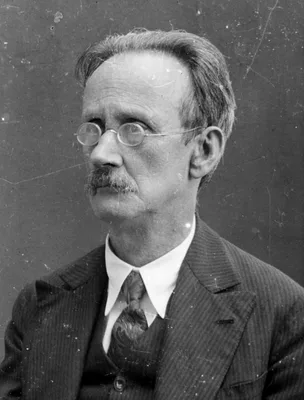
South American blastomycosis.
1900 CE
#4131.1
Un nuevo esporozoario parásito del hombre. Dos casos encontrados en pólipos nasales: Tesis presentada para optar al grado de doctor en medicina.
Rhinosporidiosis first described. Digital facsimile from bibliomedicinadigital.fmed.uba.ar at this link.
1892 CE
#5528.1
Un nuovo caso de micosis fungoides con psorospermias.
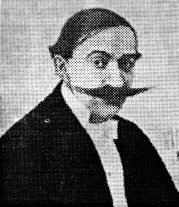
As an intern in Buenos Aires, Posadas described an Argentine soldier who had a dermatological problem since 1889. Posadas had seen the patient while a medical student in 1891, and skin biopsies revealed organisms rese…
1908 CE
#5534.1
Un nuovo protozoa parassito de’ conigli incontrato nelle lesioni anatomiche d’una malattia che ricorda in molti punti il kala azar dell’uomo.
Splendore discovered Toxoplasma in a rabbit; it was named T. cuniculi.
2016 CE
#10942
Wolbachia blocks currently circulating Zika virus isololates in Brazilian Aedes aegypti mosquitoes.
Order of authorship in the original paper: Dutra, Rocha, Moreira. The authors infected lab populations of mosquitos with Wolbachia pipientis, a common parasitic microbe that infects a high proportion of insects. They …