
Facets
Browse across eight MeSH (opens in new tab) facets — era, geography, science, specialty, technology, history, culture, and reference. Select one tag per group; counts update across the others.
Clear filtersFacet filters
Geography
Specialties & Disease
- Anatomy & Pathology 3
- Cardiology & Blood 5
- Neurology & Psychiatry 7
- Obstetrics & Reproductive 3
- Infectious Disease (General) 3
- Surgery & Anesthesia 13
- Public Health 30
- Immunology & Dermatology 13
- General Clinical Medicine 0
- Military Medicine 10
- Psychology 0
- Alternative & Fringe Medicine 25
- Pediatrics 2
- Ophthalmology & Vision 2
- ENT & Hearing 0
- Urology & Nephrology 2
- Gastroenterology & Hepatology 4
- Pulmonary & Respiratory 1
- Rheumatology, Rehab & Pain 0
- Internal, Emergency & Geriatric 1
- Veterinary Medicine 2
- Epidemiology & Demography 21
- Physiology & Embryology 4
- Dentistry 8
- Plagues & Epidemics 79
- Microbiology & Virology 33
Social & Historical Studies
Institutions & Culture
Reference & Scholarly Works
Drugs & Technology
21 entries match Americas (non-U.S.) [Z01.107] · Epidemiology & Demography [N02.350 / K01.400.680]
2003 CE
#10183
A pest in the land: New World epidemics in a global perspective.
2000 CE
#7976
A population history of the United States. Edited by Michael R. Haines and Richard H. Steckel.
From Pre-Columbian times to the present.
1995 CE
#10083
Aboriginal health in Canada: Historical, cultural, and epidemiological perspectives.
Revised second edition, same publisher, 2006.
1998 CE
#10574
Born to die: Disease and New World conquest, 1492-1650.
"The biological mingling of the previously separated Old and New Worlds began with the first voyage of Columbus. The exchange was a mixed blessing: It led to the disappearance of entire peoples in the Americas, but it…
1982 CE
#10572
Demographic collapse: Indian Peru, 1520-1620.
The first in depth study of the demographic effects of the Spanish conquest. Cook estimated population size on the basis of archaeology, carrying capacity of the agricultural systems, disease mortality, depopulation r…
1806 CE
#13161
Dissertation sur la fièvre-jaune qui a régné épidémiquement à Saint-Domingue, et qui a fait tant de ravages dans l'Armée expéditionnaire, en l'an X et en l'an XI, et sur les causes qui l'ont rendue si funeste.
Describes the yellow fever epidemic that swept through French troops on the island of Saint Domingue (Haiti) in 1802. In the midst of the slave uprising that led to the island’s independence, Napoleon sent an ex…
1985 CE
#8820
Doctors and slaves: A medical and demographic history of slavery in the British West Indies.
1992 CE
#8005
Enfermedad y sociedad en la crisis colonial del antiguo régimen: Nueva Granada en el tránsito del siglo XVIII al XIX, las epidemias de viruelas.
1965 CE
#7933
Epidemic disease in Mexico City 1761-1813: An administrative, social, and medical study.

1911 CE
#5460.1
Fiebre amarilla y fiebre espiroquetal; endemias y epidemias en Muzo, de 1907 a 1910.
Franco, J. Martínez-Santamaria, and G. Toro-Villa described epidemics of yellow fever spread by mosquitoes other than Ae. aegypti. Later F. L. Soper, et al., Amer. J. Hyg., 1933, 18, 555-87, substantiated this.
2017 CE
#10945
Genomic epidemiology reveals multiple introductions of Zika virus into the United States.
Order of authorship in the original publication: Grubaugh, Ladner, Kraemer. The authors found that the Zika virus was introduced into Florida at least 4 times, but perhaps as many as 40 times, before it was detected, …
1969 CE
#8936
História da febre-amarela no Brasil.
Digital facsimile from bvsms.saude.gov.br at this link.
2010 CE
#9389
Mosquito empires: Ecology and war in the Greater Caribbean, 1620-1914.
"explores the links among ecology, disease, and international politics in the context of the Greater Caribbean - the landscapes lying between Surinam and the Chesapeake - in the seventeenth through early twentieth cen…
2002 CE
#7983
Native society and disease in colonial Ecuador.
1759 CE
#1770
Observations on the changes of the air and the concomitant epidemical diseases, in the Island of Barbados.
Hillary included good accounts of lead colic and infective hepatitis, and probably the first description of sprue (celiac disease).
1991 CE
#10984
Plague: A story of smallpox in Montreal.
1788 CE
#9896
Recherches, mémoires et observations sur les maladies épizootiques de Saint-Dominique, recueillis & publiés par le Cercle des Philadelphes du Cap-François.
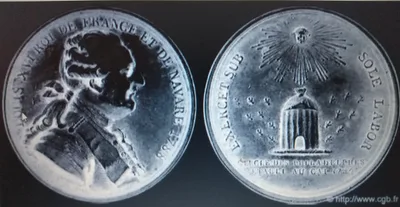
The Cercle des Philadelphes, of which Charles Arthaud was president, was an academic scientific society in Saint-Domingue, in existence between 1784 and 1791. It was the most prominent academic society in the Americas…
1900 CE
#5457
The etiology of yellow fever. A preliminary note.
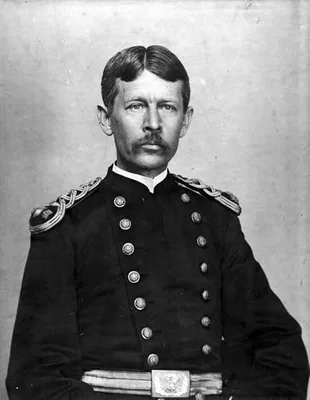
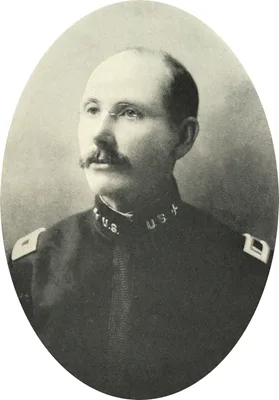
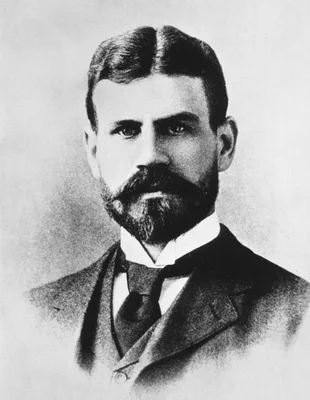
First definite proof that the organism causing yellow fever is transmitted to man by the mosquito Aëdes aegypti. During the period spent by these workers in the investigation of the disease in Cuba Lazear and Car…
1994 CE
#10084
The health of Native Americans: Towards a biocultural epidemiology.
1694 CE
#8930
Trattado unico da constituiçam pestilencial de Pernambuco, offerecido a ElRey N.S. por ser servido ordenar por seu Governador aos Medicos da America, que assistem aonde ha este contagio, que o compusessem para se conferirem pelos Coripheos da Medicina aos dictames com que he trattada esta pestilencial febre.
The first scientific description of yellow fever in Brazil by the first European physician to treat the disease in Brazil, and perhaps in all of Latin America. It includes the description of the first autopsy of a yel…
2016 CE
#10942
Wolbachia blocks currently circulating Zika virus isololates in Brazilian Aedes aegypti mosquitoes.
Order of authorship in the original paper: Dutra, Rocha, Moreira. The authors infected lab populations of mosquitos with Wolbachia pipientis, a common parasitic microbe that infects a high proportion of insects. They …