
Facets
Browse across eight MeSH (opens in new tab) facets — era, geography, science, specialty, technology, history, culture, and reference. Select one tag per group; counts update across the others.
Clear filtersFacet filters
Geography
Specialties & Disease
- Anatomy & Pathology 8
- Cardiology & Blood 7
- Neurology & Psychiatry 25
- Obstetrics & Reproductive 13
- Infectious Disease (General) 2
- Surgery & Anesthesia 30
- Public Health 99
- Immunology & Dermatology 6
- General Clinical Medicine 23
- Military Medicine 107
- Psychology 1
- Alternative & Fringe Medicine 29
- Pediatrics 6
- Ophthalmology & Vision 2
- ENT & Hearing 0
- Urology & Nephrology 0
- Gastroenterology & Hepatology 3
- Pulmonary & Respiratory 1
- Rheumatology, Rehab & Pain 2
- Internal, Emergency & Geriatric 5
- Veterinary Medicine 1
- Epidemiology & Demography 38
- Physiology & Embryology 6
- Dentistry 7
- Plagues & Epidemics 81
- Microbiology & Virology 30
Social & Historical Studies
Institutions & Culture
Reference & Scholarly Works
Drugs & Technology
30 entries match United States [Z01.058] · Microbiology & Virology [C01.748]
1900 CE
#5530.3
A new pathogenic mould (formerly described as a protozoon: Coccidioides immitis pyogenes). Preliminary report.
Recognition that the protozoan was the pathogenic phase of a mycelial fungus.
2012 CE
#10915
A new phlebovirus associated with severe febrile illness in Missouri.
Order of authorship in the original paper: McMullan, Folk, Kelly. Discovery of a new Phlebovirus, which the authors name the "Heartland virus" and with high probability that Amblyoma is the tick vector. Digital facsim…
1900 CE
#5456
A note on the interval between infecting and secondary cases of yellow fever from the records of yellow fever at Orwood and Taylor, Mississippi, in 1898.
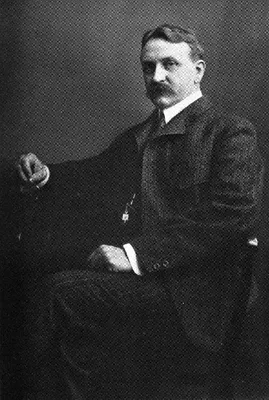
Carter's determination of the incubation period yellow fever influenced the direction of Reed’s researches, and was instrumental in the discovery of the mode of transmission of the yellow fever virus.
1970 CE
#10887
Babesiosis in a Massachusetts resident.

Order of authorship in the original paper was Western, Benson, Gleason. First report of babesiosis in a non-immuncompromised patient, confirming the potential wide spread of this tick-transmitted illness. (Thanks to J…
2014 CE
#10930
Clinical care of two patients with Ebola virus disease in the United States.

Report on Ebola virus disease management from the Emory University unit and its specialists detailing the diagnosis, management, complications and expectations of this illness for infectious disease physicians. The au…
1926 CE
#5396
Clinical observations on endemic typhus (Brill’s disease) in Southern United States.
Maxcy described murine (flea-borne) typhus (“Maxcy’s disease”).
1950 CE
#5546.1
Colorado tick fever. Isolation of the virus from Dermacentor andersoni in nature and a laboratory study of the transmission of the virus in the tick.
Isolation of the virus of Colorado tick fever. With M. S. Miller and E. R. Mugrage.
1998 CE
#10900
Ehrlichia chaffeensis in Missouri ticks.

Order of authorship in the original paper: Roland, Everett, Cyr. Using PCR, the authors demonstrated that the tick Amblyoma americanum (the Lone Star Tick) was the insect vector of Ehrlichia chaffeensis. Digital facsi…
1999 CE
#10903
Ehrlichia ewingii, a newly recognized agent of human Ehrlichiosis.

Order of authorship in the original publication: Buller, Arens, Hmiel. The authors confirmed that the agent of human granulocytic ehrlichiosis (HGE), is Ehrlichia ewingii, a pathogen carried by dogs and known in that …
2011 CE
#10904
Emergence of a new pathogenic Ehrlichia species, Wisconsin and Minnesota, 2009.
Order of authorship in the original publication: Pritt, Sloan, Johnson. Discovery of a new species of Ehrlichia, initially denoted as "Wisconsin and Minnesota, 2009," that was not related to E. chaffeensiis or E. ewin…
1933 CE
#4656
Encephalitis: studies on experimental transmission.
Isolation of the St. Louis encephalitis virus. With C. Armstrong and H. A. McCordock.
1934 CE
#4688
Experimental lymphocytic choriomeningitis of monkeys and mice produced by a virus encountered in studies of the 1933 St. Louis encephalitis epidemic.
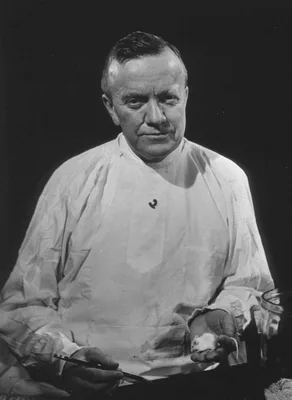
Isolation of the virus of benign lymphocytic choriomeningits.
2017 CE
#10945
Genomic epidemiology reveals multiple introductions of Zika virus into the United States.
Order of authorship in the original publication: Grubaugh, Ladner, Kraemer. The authors found that the Zika virus was introduced into Florida at least 4 times, but perhaps as many as 40 times, before it was detected, …
1979 CE
#10888
Human babesiosis on Nantucket Island, USA: Description of the vector, Ixodes dammini, N. Sp. (Acarina: Ixodidae)
Order of authorship in the original paper was Spielman, Clifford, Piesman. The authors identified and described the insect vector of Babesiosis. This was a new species; the same species causes Lyme disease. (Thanks to…
1994 CE
#10901
Human granulocytic Ehrlichiosis in the Upper Midwest United States. A new species emerging?
Order of authorship in the original paper: Bakken, Dumler, Chen. First description of the Ehrlichia ewingii species of Ehrlichiosis (HGE) from a patient in Duluth, Minnesota, though the infectious agent was not yet na…
2016 CE
#10922
Identification of a novel pathogenic Borrelia species causing Lyme borreliosis with unusually high spirochaetemia: A descriptive study.
Order of authorship in the original publication: Pritt, Mead, Johnson. Discovery of Lyme Borreliosis or Borrelia mayonii, a new variant of B. burgdorferi. (Thanks to Juan Weiss for this reference and its interpretation.)
1995 CE
#10889
Infection with a Babesia-like organism in Northern California.
Order of authorship in the original paper was Persing, Herwaldt, Glaser. First report of a Basisa duncani infection in humans (4 patients). The authors designated the infection as Babesia (WA1) strain transmitted by I…
1893 CE
#5529
Investigations into the nature, causation and prevention of Texas or Southern cattle fever.
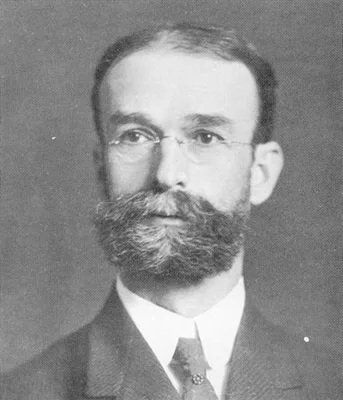
U.S. Bureau of Animal Industry, Bulletin No. 1. Discovery of the parasite of Texas cattle fever, Pyrosoma bigeminum, and proof that its transmission is due to the cattle tick, Boöphilus bovis. This was the first …
1999 CE
#10954
Isolation of West Nile virus from mosquitoes, crows, and a Cooper's hawk in Connecticut.

First definite identification of the West Nile virus in the Western hemisphere. This paper was immediately followed in the same issue of Science by Lanciott, R.S., Roehrig, J.T., Deubet, V. et al, "Origin of the West …
2016 CE
#10944
Local mosquito-borne transmission of Zika virus - Miami - Dade and Broward counties, Florida, June-August 2016.
First report on Zika virus infections in the U.S., tracing the area of infection to a specific square mile, creating a buffer zone around the area, targeting it for spraying and mosquito collection, intervention, mass…
2003 CE
#9806
Medical mycology in the United States: A historical analysis (1894–1996).
2015 CE
#10917
Novel thogotovirus associated with febrile illness and death, United States, 2014.
Order of authorship in the original paper: Kosoy, Lambert, Hawkinson, Staples. Discovery of a new tick-borne Thogotovirus named by the authors "Bourbon virus" after Bourbon County, Kansas. (Thanks to Juan Weiss for th…
1851 CE
#12086
Observations on the medical topography and diseases (especially diarrhoea) of the Sacramento Valley, California, during the Years 1849, 1850.
Stillman was personal physician to Leland Stanford, the first governor of California, and was a partner of railroad magnate Mark Hopkins from their days on board a ship to California in 1849. Stillman was also co-foun…
1889 CE
#10885
Preliminary observations on the microorganism of Texas fever.
First report on the discovery of a Babesia, cause of Babesiosis. Smith first observed the microscopic organism in the summer of 1886, but mentioned Babes's work in this paper, perhaps resulting in Babes being credited…
2017 CE
#10906
Proposal to reclassify Ehrlichia muris as Ehrlichia muris subsp. muris subsp. nov. and description of Ehrlichia muris subsp. eauclairensis subsp. nov., a newly recognized tick borne pathogen of humans.
Order of authorship in the original publication: Pritt, Allderdice, Sloan. By extremely complex genotyping methods and fine electron microscopic analysis of the organism, the authors showed that the infectious agent i…
1899 CE
#5377
Some observations on the so-called spotted fever of Idaho.
Rocky Mountain spotted fever first described.
1958 CE
#4661.2
St. Louis encephalitis in 1933; observations on epidemiological features.
In a report to the Surgeon General in 1933, Lumsden concluded that the Culex mosquito was the vector of the St. Louis encephalitis virus. His report was not published until 1958.
1842 CE
#10064
The history, diagnosis, and treatment of typhoid and of typhus fever: With an essay on the diagnosis of bilious remittent and of yellow fever.
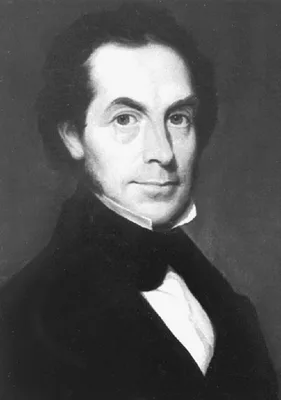
Bartlett's book contains the first complete description of typhoid fever in English. In 1908 Osler wrote, "The chief interest of the work today lies in the remarkably accurate picture which is given of typhoid fever--…
1870 CE–1888 CE
#2171
The medical and surgical history of the War of the Rebellion, 1861-65. 6 vols.
UNITED STATES. War Dept. Surgeon General
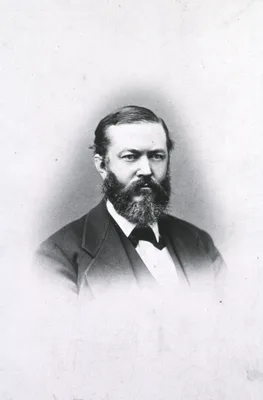
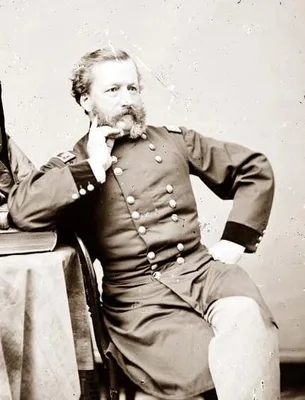
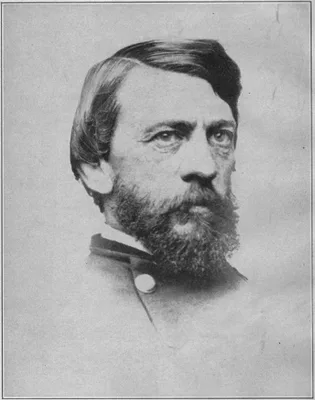
Written by Woodward, Smart, Otis, and Huntington under the direction of Joseph K. Barnes, Surgeon General of the Army. This massive, graphically illustrated set has been called the “first comprehensive American …
1906 CE
#5378
The transmission of Rocky Mountain spotted fever by the bite of the wood-tick (Dermacentor occidentalis).
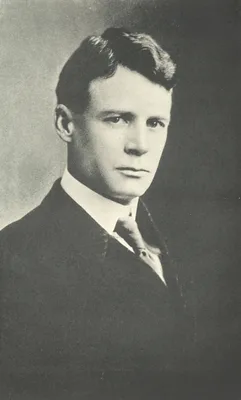
Ricketts (who himself died of typhus) demonstrated that the wood tick Dermacentor andersoni is a vector of Rocky Mountain spotted fever.