
Facets
Browse across eight MeSH (opens in new tab) facets — era, geography, science, specialty, technology, history, culture, and reference. Select one tag per group; counts update across the others.
Clear filtersFacet filters
Geography
Specialties & Disease
- Anatomy & Pathology 2
- Cardiology & Blood 0
- Neurology & Psychiatry 0
- Obstetrics & Reproductive 1
- Infectious Disease (General) 0
- Surgery & Anesthesia 0
- Public Health 27
- Immunology & Dermatology 0
- General Clinical Medicine 19
- Military Medicine 12
- Psychology 0
- Alternative & Fringe Medicine 7
- Pediatrics 0
- Ophthalmology & Vision 0
- ENT & Hearing 0
- Urology & Nephrology 0
- Gastroenterology & Hepatology 0
- Pulmonary & Respiratory 0
- Rheumatology, Rehab & Pain 0
- Internal, Emergency & Geriatric 0
- Veterinary Medicine 0
- Epidemiology & Demography 3
- Physiology & Embryology 0
- Dentistry 7
- Plagues & Epidemics 2
- Microbiology & Virology 0
Social & Historical Studies
Institutions & Culture
Reference & Scholarly Works
Drugs & Technology
138 entries match United States [Z01.058] · Professions & Education [M01 / N02]
1994 CE
#10090
Secret doctors: Ethnomedicine of African Americans.
"Based on an ethnographic study of the traditional medicine of African Americans in the rural southern United States, this work concentrates on the original Louisiana Territory, with its Native and African American in…
2010 CE
#10342
Shadows in the valley: A cultural history of illness, death, and loss in New England, 1840-1916.
"...The study is organized for the most part around disease categories and the life cycle, so that the cultural framework of people's habits and values often seems secondary. Most of what we learn about illness and de…
1977 CE
#12609
Standard history of the medical profession of Philadelphia by Burton A. Konkle, with the collaboration of James M. Anders ... [et al.] ; edited by Frederick P. Henry. Revised by Lisabeth M. Holloway, with an index and bibliography.
1897 CE
#12608
Standard history of the medical profession of Philadelphia. Edited by Frederick P. Henry, with the collaboration of James M. Anders....
"The materials of the first five chapters were collected by an experienced historian in the employ of the publishers"--Pref. 2nd ed; 1977, identifies as Burton Alva Konkle. Digital facsimile from the Hathi Trust at th…
2002 CE
#12320
Stanford University School of Medicine and the predecessor schools: An historical perspective.
Digital format only, available from lane.stanford.edu at this link: https://lane.stanford.edu/med-history/wilson/chap01.html
1875 CE
#7818
Statistics, medical and anthropological, of the Provost-Marshal-General's Bureau, derived from records of the examination for military service in the armies of the United States during the late War of the Rebellion, of over a million recruits.... 2 vols.
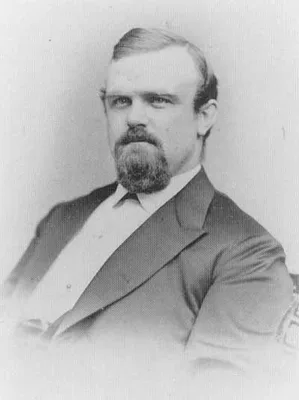
Digital facsimile from the Internet Archive at this link.
2021 CE
#13271
Strong hearts and healing hands: Southern California Indians and field nurses, 1920-1950.
2017 CE
#9973
Teeth: The story of beauty, inequality, and the struggle for oral health in America.
1984 CE
#10988
The American Clinical and Climatological Association: 1884-1984.
1986 CE
#10986
The Association of American Physicians, 1886-1986: A century of progress in medical science.
"The Association of American Physicians is a nonprofit, professional organization founded in 1885 by seven physicians, including Dr. William Osler and Dr. William Henry Welch, for “the advancement of scientific …
1999 CE
#10053
The black stork: Eugenics and the death of "defective" babies in American medicine and motion pictures since 1915.
1870 CE
#13032
The boys in white: The experience of a hospital agent in and around Washington.
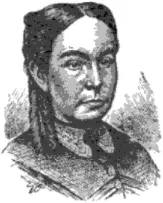
An account of the author's experiences as a nurse working in Washington, D.C. hospitals during the U.S. Civil War. Wheelock became known as the "Florence Nightingale of Michigan." Digital facsimile from the Hathi Trus…
2013 CE
#13284
The California Institute for Regenerative Medicine. Science, governance, and the pursuit of cures
The California Institute for Regenerative medicine was the first state-fund institution that provided stable, in-state funding on a very large scale for biomedical research. "The California Institute for Regenerative …
c. 1903 CE
#10827
The College of Physicians and Surgeons, New York, and its founders, officers, instructors, benefactors and alumni: A history. Edited by John Shrady. 2 vols.
A massive history of nearly 1200 pages issued by the publisher of the similarly huge history of the Rush Medical College (No. 10826). Digital facsimile from the Hathi Trust at this link.
1900 CE
#9475
The ethno-botany of the Coahuilla Indians.
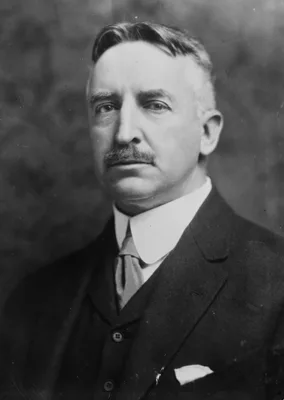
"The ʔívil̃uqaletem (or Ivilyuqaletem) are Native Americans of the inland areas of southern California.[2] Their original territory included an area of about 2,400 square miles (6,200 km2). The traditional Cahu…
1837 CE
#10411
The family nurse; or companion of the frugal housewife. Revised by a member of the Massachusetts Medical Society.
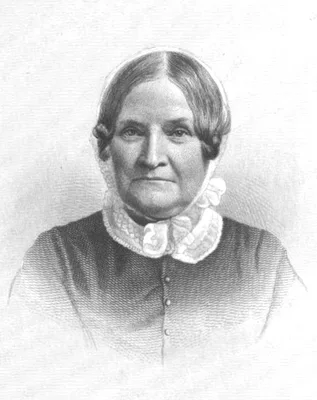
Child was was an abolitionist, women's rights activist, Native American rights activist, novelist, journalist, and opponent of American expansionism. Her journals, both fiction and domestic manuals, reached wide audie…
1864 CE
#8994
The female spy of the union army. The thrilling adventures, experiences, and escapes of a woman nurse, spy, and scout, in hospitals, camps and battlefields.
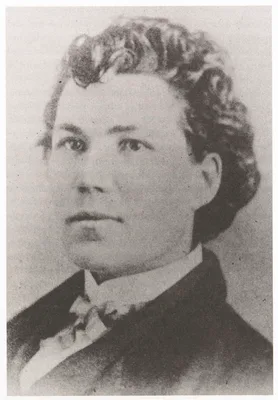
Digital facsimile of a reprint of the 1864 edition from the Internet Archive at this link. Reissued in 1865 as Nurse and spy in the Union Army: Containing the adventures and experience of a woman in hospitals, camps, …
1949 CE
#11726
The first medical college in Vermont: Castleton, 1818-1862.
Digital facsimile from the Internet Archive at this link.
1968 CE
#9157
The formation of the American medical profession: The role of institutions, 1780-1860.
1994 CE
#10084
The health of Native Americans: Towards a biocultural epidemiology.
1775 CE
#7505
The history of the American Indians; particularly those nations adjoining to the Missisippi [sic] East and West Florida, Georgia, South and North Carolina, and Virginia: containing an account of their origin, language, manners, religious and civil customs, laws, form of government, punishments, conduct in war and domestic life, their habits, diet, agriculture, manufactures, diseases and method of cure... With observations on former historians, the conduct of our colony governors, superintendents, missionaries, & c. Also an appendix, containing a description of the Floridas, and the Missisippi [sic] lands, with their productions--the benefits of colonizing Georgiana, and civilizing the Indians--and the way to make all the colonies more valuable to the mother country....
The author characterized himself on the title page as "a Trader with the Indians and a Resident in their Country for Forty Years." Digital facsimile from the Internet Archive at this link.
1904 CE
#10826
The Jefferson Medical College of Philadelphia: Benefactors, alumni, hospital, etc., its founders, officers, instructors, 1826-1904: A history. Edited by George M. Gould. 2 vols.
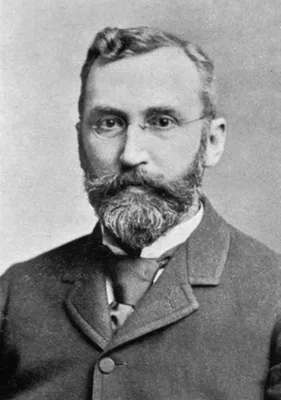
A massive history, consisting of nearly 1100 pages. Digital facsimile from the Hathi Trust at this link.
1948 CE–1963 CE
#10981
The Johns Hopkins Hospital and the Johns Hopkins University School of Medicine: A chronicle. 3 vols.
Vol. 1: Early Years 1867-1893; Vol. 2: 1893-1905; Vol. 3: 1905-1914.
1998 CE
#10182
The land of prehistory: A critical history of American anthropology.
1837 CE
#10107
The medical student; or, aids to the study of medicine. Including a glossary of the terms of the science, and of the mode of prescribing,--bibliographical notices of medical works; the regulations of different medical colleges of the union, &c. &c.
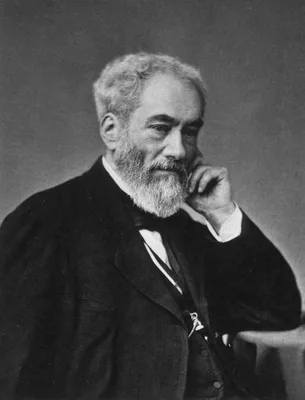
A remarkable survey of medical education in the U.S. at the time, with a thorough analysis of the different medical schools and the courses they offered, and an extensively annotated bibliography of 195 recommended me…
1892 CE
#6452.1
The medicine-men of the Apache.
Bourke, a U.S. Army officer with experience on the American Indian frontier, was a pioneer student of native American medicine and anthropology. Digital facsimile from the Internet Archive at this link.
2005 CE
#10026
The modern art of dying: A history of euthanasia in the United States.
1876 CE
#10412
The people's medical advisor.
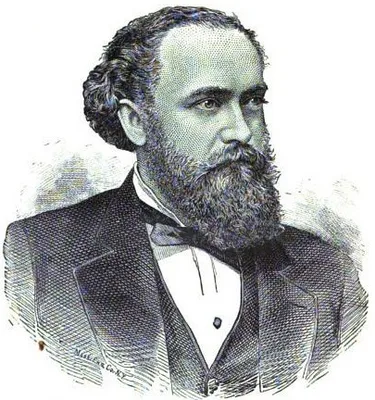
A graduate of the Eclectic Medical College in Cincinnati, Vaughn was a member of the New York State Senate (31st D.) in 1878 and 1879, and was elected as a Republican to the 46th United States Congress, holding office…
1886 CE
#10350
The relation of hospitals to medical education.
Withington, pp. 18-22, proposed Bills of Rights for subjects of experiments "to secure patients again any injustice from the votaries of science." Digital facsimile from the Internet Archive at this link.
1982 CE
#6596.6
The social transformation of American medicine: The rise of a sovereign profession and the making of a vast industry.
2010 CE
#9002
This birth place of souls: The Civil War nursing diary of Harriet Eaton edited with an introduction by Jane E. Schultz.
2008 CE
#7929
This republic of suffering: Death and the American Civil War.
1867 CE
#13345
Three years in field hospitals of the Army of the Potomac.
Digital facsimile from Google Books at this link.
2013 CE
#10062
Transforming the culture of dying: The work of the Project on Death in America.
"Over a period of almost 10 years, the work of the Project on Death in America (PDIA) played a formative role in the advancement of end of life care in the United States. The project concerned itself with adults and c…
1791 CE
#7770
Travels through North & South Carolina, George, East & West Florida, the Cherokee country, the extensive territories of the Muscogulges, or Creek confederacy, and the country of the Chactaws [sic]...
Digital facsimile of London, 1794 second edition from the Internet Archive at this link.
1965 CE
#10991
Two centuries of medicine. A History of the School of Medicine, University of Pennsylvania.
2016 CE
#10421
Vanishing America: Species extinction racial peril, and the origins of conservation.
"Nineteenth-century citizens of European descent widely believed that Native Americans would eventually vanish from the continent. Indian society was thought to be tied to the wilderness, and the manifest destiny of U…
1946 CE
#11725