
Facets
Browse across eight MeSH (opens in new tab) facets — era, geography, science, specialty, technology, history, culture, and reference. Select one tag per group; counts update across the others.
Clear filtersFacet filters
Geography
Specialties & Disease
- Anatomy & Pathology 6
- Cardiology & Blood 2
- Neurology & Psychiatry 2
- Obstetrics & Reproductive 1
- Infectious Disease (General) 0
- Surgery & Anesthesia 8
- Public Health 9
- Immunology & Dermatology 2
- General Clinical Medicine 4
- Military Medicine 0
- Psychology 0
- Alternative & Fringe Medicine 3
- Pediatrics 2
- Ophthalmology & Vision 9
- ENT & Hearing 0
- Urology & Nephrology 1
- Gastroenterology & Hepatology 0
- Pulmonary & Respiratory 0
- Rheumatology, Rehab & Pain 0
- Internal, Emergency & Geriatric 0
- Veterinary Medicine 2
- Epidemiology & Demography 0
- Physiology & Embryology 1
- Dentistry 4
- Plagues & Epidemics 2
- Microbiology & Virology 2
Social & Historical Studies
Institutions & Culture
Reference & Scholarly Works
Drugs & Technology
2 entries match Medieval [K01.400.500] · Africa & Middle East [Z01.058.500] · Immunology & Dermatology [C19 / C20 / C17]
1473 CE
#43
Canon medicinae [Latin] (Lib I-V) (Tr: Gerardus Cremonensis) (5 vols.)
![AVICENNA, [Abū ʿAlī al-Ḥusayn ibn ʿAbd Allāh ibn Al-Hasan ibn Ali ibn Sīnā] (980 – 1037)](/media/portraits/9572)
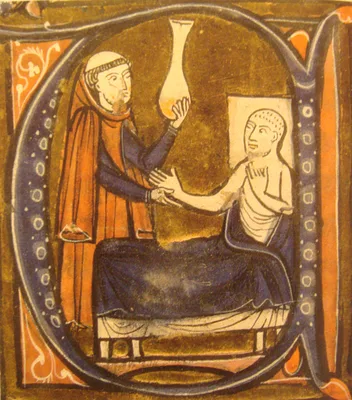
Avicenna is said to have written more than 100 books, most of which have perished. He wrote on the etiology of epilepsy and described diabetes, noticing the sweetish taste of the urine. His Canon is one of the most fa…
1490 CE
#47
Liber Teisir, sive rectificatio medicationis et regiminis. Antidotarium. Translated from Arabic into Hebrew by Jacobus Hebraeus; into Latin by Paravicius. Add: Averroes: Colliget.
This is a Latin translation from a Hebrew version dating from 1280. Avenzoar, the greatest Muslim physician of the Western Caliphate, described the itch-mite, Sarcoptes scabiei, serous pericarditis, mediastinal absces…