
Observations on the locomotor system of Medusae. 3 pts.
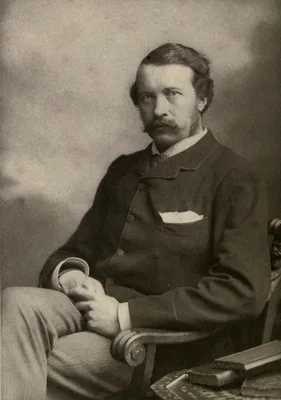
Publication Details
Phil. Trans., 166, 269-313; 167, 659-752; 171, 161-202. 1877 CE–1880 CE.
Charles Sherrington described the significance of Romanes' research on jellyfish in terms of its impact on cardiac physiology: "Romanes's observations carried out with simple means were novel and fundamental. The questions which he put to the swimming-bell [medusa or jelly-fish] and answered from it, led, it is not too much to say, to the development of modern cardiology. Medusa swims by the beat of its bell, and Romanes examining it discovered there and analyzed the two phenomena now recognized world-over in the physiology of the heart, and there spoken of as the 'pace-maker' and 'conduction-block'" (Sherrington quoted in W. Bruce Fye, "The origin of the heart beat: A tale of frogs, jellyfish and turtles," Circulation 76 (1987) 493-500.
Romanes’ work with electro-stimulation directly influenced W. H. Gaskell in his artificial production of heart block, the name for which Gaskell based on an expression of Romanes. See No. 829.
Browse Tags
Thematic Classifications
| Catalog Metadata | Reference Information |
|---|---|
| Entry Number | #632 |
| Permanent Link | https://staging.historyofmedicine.com/entry/573 |
| Author Bio Link | Wikipedia ↗ |
| External URL | observations-on-the-locomotor-system-of-medusae |