
On the anatomy and physiology of the vertebrates. 3 vols.
Publication Details
London: Longmans, Green, 1866 CE–1868 CE.
Vol. 1. Fishes and reptiles; Vol. 2. Birds; Vol. 3. Mammals. The most important work on the subject after Cuvier, based entirely on personal observations.
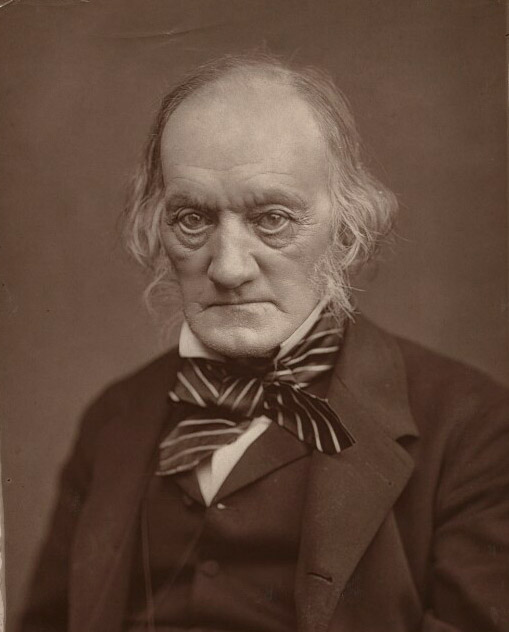
Owen entitled his 40th and concluding chapter "Derivative hypothesis of life and species." Despite the major role he played in the mid-nineteenth century debate over evolution, Owen never wrote a major treatise on the subject, and this 40-page chapter represents his longest and most detailed statement of his position concerning the theory of evolution by natural selection. Contrary to popular belief, Owen was not an anti-evolutionist, but he held that Darwinian natural selection did not satisfactorily explain the process of speciation. Owen instead theorized that new species arose from “an innate tendency to deviate from parental type, operating through periods of adequate duration” (Derivative Hypothesis, p. 22). Owen believed that evolution was a teleological rather than an unguided process, “a movement towards a pre-ordained goal; and mutations were not randomly useful or useless, but a logical embroidering on the [fundamental] archetype” (Rupke, Richard Owen, pp 248-49).
Browse Tags
Thematic Classifications
| Catalog Metadata | Reference Information |
|---|---|
| Entry Number | #336 |
| Permanent Link | https://staging.historyofmedicine.com/entry/224 |
| Author Bio Link | Wikipedia ↗ |
| External URL | on-the-anatomy-and-physiology-of-the-vertebrates |
Geographic Context
Publication place: London