
Sulla fina anatomia degli organi centrali del sistema nervoso.
Publication Details
Milan: U. Hoepli, 1886 CE.
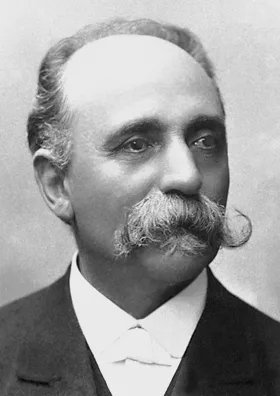
Golgi’s histological studies made a clear conception of the nervous system possible for the first time. He demonstrated the existence of multipolar nerve-cells (Golgi cells) by means of his silver nitrate stain, and described the “Golgi apparatus” and “Golgi type II” nerve cells – cells with short axons ramified within the cortex. This discovery was first published as a series of papers in Riv. sper. Freniat., 1882-85. The discovery became chiefly known from the German translation, Untersuchungen über den feineren Bau des centralen und peripherischen Nervensystems (1894).
In 1906 Golgi shared the Nobel Prize in Physiology or Medicine with Ramón y Cajal "in recognition of their work on the structure of the nervous system."
In 2000 Marina Bentivoglio and Larry W. Swanson translated, with an historical introduction, Golgi's paper on the mamalian hippocampus as it appeared in the 1886 work as "On the fine structure of the pes Hippocampi major (with plates XIII-XXIII)", Brain Research Bulletin 54 (2001) 461-483.
Thematic Classifications
| Catalog Metadata | Reference Information |
|---|---|
| Entry Number | #1416 |
| Permanent Link | https://staging.historyofmedicine.com/entry/2103 |
| Author Bio Link | Wikipedia ↗ |
| External URL | sulla-fina-anatomia-degli-organi-centrali-del-sistema-nervoso |
Geographic Context
Publication place: Milan