
Recherches sur la force du coeur aortique.
Publication Details
Paris: De L'Imprimerie de Didot le jeune, 1828 CE.
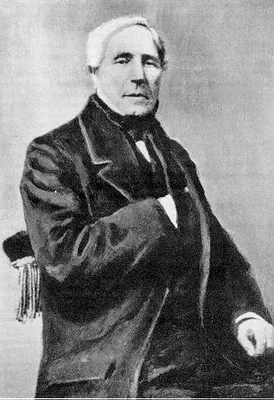
Poiseuille was the first after Stephen Hales to make any important addition to the knowledge of the physiology of circulation. In his graduation thesis, above, he described a “hemodynamometer” invented by himself and which he used to repeat some of Hales’s blood-pressure experiments. With his hemomanometer, a mercury manometer, which was a great improvement on the long tube used by Hales, Poiseuille showed that the blood-pressure rises and falls on expiration and inspiration, and measured the degree of arterial dilatation produced by each heart beat. English translation in Edinb. med. surg. J., 1829, 32, 28-38. See also his paper in J. Physiol. exp. path., 1828, 8, 272-305. Digital facsimile from the Internet Archive at this link.
Browse Tags
Thematic Classifications
| Catalog Metadata | Reference Information |
|---|---|
| Entry Number | #767 |
| Permanent Link | https://staging.historyofmedicine.com/entry/2024 |
| Author Bio Link | Wikipedia ↗ |
| External URL | recherches-sur-la-force-du-coeur-aortique |
Geographic Context
Publication place: Paris