
Restoration of circadian behavioral rhythms by gene transfer in Drosophila.
Publication Details
Nature, 312, 752-754. 1984 CE.
"At The Rockefeller University in the early 1980s, Young and his two lab members, Ted Bargiello and Rob Jackson, further investigated the circadian period gene in Drosophila. They constructed segments of recombinant Drosophila DNA, amplified them in bacteria, and injected them in per mutant animals. A locomotor behavior monitor was used to assay behavioral activity. The team watched and recorded fly activity through the day and night to show that the fly restored circadian behavioral rhythms by transferring a functional per gene" (Wikipedia article on Michael W. Young).
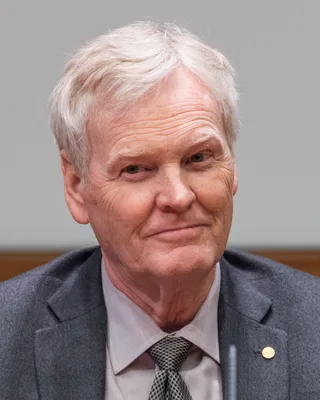
In 2017 Michael Young shared the Nobel Prize in Physiology or Medicine with Jeffrey C. Hall and Michael Rosbash “for their discoveries of molecular mechanisms controlling the circadian rhythm.”
Thematic Classifications
| Catalog Metadata | Reference Information |
|---|---|
| Entry Number | #14265 |
| Permanent Link | https://staging.historyofmedicine.com/entry/16586 |
| Author Bio Link | Wikipedia ↗ |
| External URL | restoration-of-circadian-behavioral-rhythms-by-gene-transfer-in-drosophila |