
Facets
Browse across eight MeSH (opens in new tab) facets — era, geography, science, specialty, technology, history, culture, and reference. Select one tag per group; counts update across the others.
Clear filtersFacet filters
Geography
Specialties & Disease
- Anatomy & Pathology 0
- Cardiology & Blood 1
- Neurology & Psychiatry 4
- Obstetrics & Reproductive 0
- Infectious Disease (General) 0
- Surgery & Anesthesia 1
- Public Health 3
- Immunology & Dermatology 0
- General Clinical Medicine 0
- Military Medicine 0
- Psychology 1
- Alternative & Fringe Medicine 11
- Pediatrics 0
- Ophthalmology & Vision 0
- ENT & Hearing 0
- Urology & Nephrology 0
- Gastroenterology & Hepatology 0
- Pulmonary & Respiratory 0
- Rheumatology, Rehab & Pain 0
- Internal, Emergency & Geriatric 0
- Veterinary Medicine 0
- Epidemiology & Demography 0
- Physiology & Embryology 0
- Dentistry 0
- Plagues & Epidemics 2
- Microbiology & Virology 0
Social & Historical Studies
Institutions & Culture
Reference & Scholarly Works
Drugs & Technology
65 entries match Pharmacology & Therapeutics [D01 / E02] · Race, Ethnicity & Colonial Medicine [K01.900.850]
1801 CE
#1838.2
The American herbal, or materia medica.
The first herbal both produced and printed in the United States, as opposed to those which were reprints of European works. Includes information on native American remedies. Digital facsimile from the Medical Heritage…
1672 CE
#7007
The American physician : or, a treatise of the roots, plants, trees, shrubs, fruit, herbs, etc., growing in the English Plantations in America ; ... whereunto is added a discourse of the Cacao-nut-Tree, and the use of its fruit ; with all the ways of making Chocolate
The earliest work in English on the medicinal virtues of North American tropical plants. Based on first-hand observations made in the West Indies, Evidence suggests that Hughes began his career in 1651 with a privatee…
1900 CE
#9475
The ethno-botany of the Coahuilla Indians.
"The ʔívil̃uqaletem (or Ivilyuqaletem) are Native Americans of the inland areas of southern California.[2] Their original territory included an area of about 2,400 square miles (6,200 km2). The traditional Cahu…
1911 CE
#9347
The ethno-botany of the Gosiute Indians of Utah.
Digital facsimile from the Internet Archive at this link.
1936 CE
#9304
The ethnobiology of the Chiricahua and Mescalero Apache: A. the use of plants for food, beverages and narcotics. Ethnobiological studies in the American Southwest, Vol. 3. Biological series (Vol. 4, No. 5); Bulletin, University of New Mexico, whole, (No. 297).
1932 CE
#9283
The ethnobotany of the Acoma and Laguna Indians. M.A. thesis.
1836 CE
#9524
The Indian vegetable family instructer: Containing the names and descriptions of all the most useful herbs and plants that grow in this country, with their medicinal qualities annexed; also, a treatise on many of the lingering diseases to which mankind are subject, ... with a large list of recipes, which have been carefully selected from Indian prescriptions ... Designed for the use of families in the United States.
1801 CE
#9897
The medical assistant, or Jamaica practice of physic: Designed chiefly for the use of families and plantations.
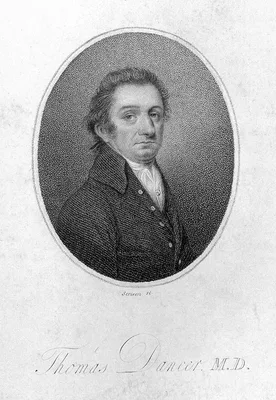
Digital facsimile from the U.S. National Library of Medicine at this link.
1938 CE
#13291
The peyote cult.
The history of the study of the cult, the various botanical questions surrounding peyote, its physiological action and the various ethnological, psychological and historical questions involved in its diffusion.
1932 CE
#7003
The Swimmer manuscript. Cherokee sacred formulas and medicinal prescriptions, by James Mooney, revised, completed and edited by Frans M. Olbrechts. Smithsonian Institution, Bureau of American Ethnology Bulletin 99.
Digital facsimile from the Internet Archive at this link.
1988 CE
#9291
The use of medicinal plants by the Alaska natives.
1980 CE
#10736
The way of the shaman: A guide to power and healing.

1928 CE
#9271
Use of plants by the Chippewa Indians. Smithsonian Institution-Bureau of American Ethnology Annual Report 44.
Digital facsimile from the Internet Archive at this link.
1919 CE
#9287
Uses of plants by the Indians of the Missouri River region. Thirty-third annual report of the Bureau of American Ethnology, 1911-1912.
Medicinal and edible plants used by the Dakota, Omaha/Ponca, Winnebago and Pawnee peoples. Gilmore reports on 180 plants, and offers 16 pages of tables of names in various languages. Digital facsimile from the Biodive…
1979 CE
#8595
Uses of plants for the past 500 years.
Reissued as Medicinal and other uses of North American plants: A historical survey with special reference to the Eastern Indian tribes (1989).