
Facets
Browse across eight MeSH (opens in new tab) facets — era, geography, science, specialty, technology, history, culture, and reference. Select one tag per group; counts update across the others.
Clear filtersFacet filters
Geography
Specialties & Disease
- Anatomy & Pathology 12
- Cardiology & Blood 6
- Neurology & Psychiatry 5
- Obstetrics & Reproductive 4
- Infectious Disease (General) 12
- Surgery & Anesthesia 14
- Public Health 28
- Immunology & Dermatology 7
- General Clinical Medicine 6
- Military Medicine 21
- Psychology 0
- Alternative & Fringe Medicine 24
- Pediatrics 3
- Ophthalmology & Vision 13
- ENT & Hearing 0
- Urology & Nephrology 1
- Gastroenterology & Hepatology 1
- Pulmonary & Respiratory 1
- Rheumatology, Rehab & Pain 0
- Internal, Emergency & Geriatric 0
- Veterinary Medicine 8
- Epidemiology & Demography 16
- Physiology & Embryology 1
- Dentistry 6
- Plagues & Epidemics 69
- Microbiology & Virology 44
Social & Historical Studies
Institutions & Culture
Reference & Scholarly Works
Drugs & Technology
44 entries match Africa & Middle East [Z01.058.500] · Microbiology & Virology [C01.748]
1940 CE
#10951
A neurotropic virus isolated from the blood of a native in Uganda.
Order of authorship in the original paper: Smithburn, Hughes, Burke. In 1937 the authors isolated a virus from the blood of an adult female with fever from the Omogo West Nile district of Uganda, and named it West Nil…
1795 CE
#5336.3
An essay on the malignant pestilential fever introduced into the West Indian Islands from Boullam, on the coast of Guinea, as it appeared in 1793 and 1794.
Chisholm, "Surgeon to his Majesty's Ordnance in Grenada," was apparently the first to observe the mode of transmission of the Guinea worm, Dracunculus medinensis. Chishom was also one of the first to recognize that th…
1883 CE
#5923
Bericht über die Thätigkeit der deutschen Cholerakommission in Aegypten und Ostindien.
Koch–Weeks bacillus, Hemophilus conjunctivitidis, or Hemophilus aegyptius. Koch discovered the bacilli of two varieties of Egyptian conjunctivitis. See also No. 5930.
2014 CE
#10879
Brief report: Evidence for camel-to-human transmission of MERS coronavirus.
Dated June 26, 2014. Using viral genomics and PCR, the Saudi authors demonstrated that full genome sequences of a man, and the camel he had contact with, were identical. Available from nejm.org at this link. (Thanks t…
2012 CE
#10877
Brief Report: Isolation of a novel coronavirus from a man with pneumonia in Saudi Arabia.
This paper, dated November 8, 2012, characterized the virus up to and including its genome sequence, including radiology and imaging findings, lab findings, diagnosis and management. The authors tentatively named the …
2014 CE
#10929
Clinical illness and outcomes in patients with Ebola in Sierra Leone.
Order of authorship in the original paper: Schieffelin, Shaffer, Goba. The authors used "quantitative reverse-transcriptase-polymerase-chain-reaction assays to assess the load of Ebola virus (EBOV, Zaire species) in a…
2016 CE
#10925
Discovery and description of Ebola Zaire virus in 1976 and relevance to the West African epidemic during 2013-2016.

A first hand account of events as they occurred in Yambuku in 1976, including the causes and reasons for the spread of Ebola within the Yambuku Mission hospital, the probable index event/patient (not identified), and …
1852 CE
#5339
Ein Beitrag zur Helminthographia humana aus brieflichen Mittheilungen des Dr. Bilharz in Cairo, nebst Bemerkungen von C. T. v. Siebold.
Discovery, in 1851, of Schistosoma haematobium, the parasite of bilharziasis. Bilharz was Professor of Zoology at Cairo. English translation in Rev. infect. Dis., 1984, 4, 727-32, and in Kean (No. 2268.1).
2005 CE
#12113
Emergence of unique primate T-lymphotropic viruses among central African bushmeat hunters.


Order of authorship in the original publication: Wolfe, Heniene, Carr ...Birx.... "As of 2016, 301 terrestrial mammals were threatened with extinction due to hunting for bushmeat including primates, even-toed ungulate…
2014 CE
#10928
Emergence of Zaire Ebola virus disease in Guinea.
Order of authorship in the original paper: Baize, Pannetier, Oestereich. The authors used PCR, viral sequencing, and phylogenetic analysis to track down the index case, a two-year-old child in Meliandou village, Gu&ea…
1799 CE
#9070
Ensaios sobre algumas enfermidades d'Angola....
Azeredo noted that the tropical fevers found in Brazil and Angola were very similar. He claimed to have achieved excellent results with his “new method” of treatment, which included the use of quinine, nux…
1931 CE
#5541
Enzootic hepatitis or Rift Valley fever. An undescribed virus disease of sheep, cattle and man from East Africa.

First description.
1891 CE
#5272
Étude sur les parasites du sang chez les paludiques.
Nepveu, whilst in Algeria, was the first to see trypanosomes in human blood.
1986 CE
#9331
Evidence for human infection with an HTLV III/LAV-like virus in Central Africa, 1959.

Order of authorship in the original paper: Nahmias, Weiss, Yao...Kanki, Essex. The authors presented evidence for the first or earliest infection with HIV in a human. This paper reported on a patient from Kinshasa, Za…
1674 CE
#5336.1
Exercitatio de vena Medinensi, ad mentem Ebn Sinae [Ibn Sina] sive de dracunaculis veterum. Specimen exhibens novae versionis ex Arabico, cum commentario uberiori. Cui accedit altera, de vermiculis capillaribus infantium.
An exhaustive survey of dracontiasis, or guinea worm disease, based on the Arabic writings of Avicenna. Digital facsimile from Google Books at this link.
1977 CE
#10923
Isolation and partial characterization of a new virus causing acute haemorrhagic fever in Zaire.
The first of three papers published in Lancet back to back describing the discovery of Ebola Virus Disease. In this paper the authors described isolation of the virus, imaged it with an electron microscope, and named …
1986 CE
#10788
Isolation of a new human retrovirus from West African patients with AIDS.
HIV-2 was discovered essentially simultaneously by French and U.S. teams. This was the first publication by the French team. Order of authorship of the original publication was Clavel, Guettard, Brun-Vezinet. See thei…
1977 CE
#7866
Isolation of Marburg-like virus from a case of haemorrhagic fever in Zaire.
Ebola virus, named after the Ebola River where an outbreak occurred in 1976. Specifically the outbreak was centered in Yambuku, a small village in Mongala Province in northern Democratic Republic of the Congo (formerl…
1854 CE
#5355
Klinische und anatomische Beobachtungen über die Krankheiten von Aegypten.
Griesinger connected the worm of ankylostomiasis with Egyptian chlorosis, a condition in which the worm had previously been noted without its being considered the causal agent (pp. 555-61). Apparently Bilharz in 1853 …
1490 CE
#47
Liber Teisir, sive rectificatio medicationis et regiminis. Antidotarium. Translated from Arabic into Hebrew by Jacobus Hebraeus; into Latin by Paravicius. Add: Averroes: Colliget.
This is a Latin translation from a Hebrew version dating from 1280. Avenzoar, the greatest Muslim physician of the Western Caliphate, described the itch-mite, Sarcoptes scabiei, serous pericarditis, mediastinal absces…
1800 CE–1801 CE
#5837
Mémoire sur l’ophtalmie régnante en Egypte.
The great military surgeon Larrey served during the Napoleonic campaign in Egypt, where he was the first to observe the contagiousness of trachoma shortly after the successful invasion in 1798. The disease spread to E…
1822 CE
#9071
Memoria sobre a virtude toenifuga da romeira, com observações zoologicas e zoonomicas relativas á toenea, e com huma estampa.
On the use of a root medicine to treat tapeworms, roundworms and similar parasites. The author refers to cases from Portuguese Africa, India and Brazil, and gives clinical observations based on his own case studies, s…
2013 CE
#10878
Middle East Respiratory Syndrome coronavirus in bats, Saudi Arabia.
Dated November 2013. The authors collected bat feces from sites in Bisha, Saudi Arabia found less than 1-12 kilometers from the place of employment or home of an index case-patient there, and performed total nucleic a…
1952 CE
#10940
Neutralizing antibodies against certain recently isolated viruses in the sera of human beings residing in East Africa.
First report of human illness caused by Zika virus, detected in Uganda and Tanzania. 38 patients had neutralizing antibodies to Zika virus in their blood serum, proving that they had been infected by the virus. (Thank…
1896 CE
#5361
Notizen zur Helminthologie Aegyptens. Die Lebensgeschichte des Anchylostomum duodenale (Dub.).
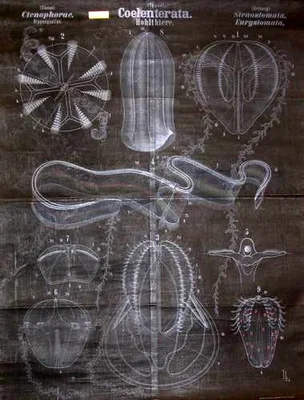
Looss elucidated the life cycle and mode of transmission of the hookworm. See also No. 5365. English translation in Kean (No. 2268.1).
1801 CE
#12053
Observations sur la maladies appelée peste, le flux dissentérique, l'ophtalmie d'Égypte, et les moyens de s'en préserver. Avec des notions sur la fièvre jaune de Cadix, et les projet et plan d'un hôpital, pour le traitement maladies épidémiques et contagieuses.
At the time of publication Assalini, a military surgeon with Napoleon, characterized himself on the title page as "Docteur en Médecine et Chirugien de 1re classe de la Garde des Consuls..." Digital facsimile fr…
1903 CE
#5276
On the discovery of a species of trypanosoma in the cerebrospinal fluid of cases of sleeping sickness.
While in Uganda, Castellani discovered T. gambiense in human cerebrospinal fluid. A paper in Notes Rec. roy. Soc., 1973, 23, 93-110, discounts Castellani’s claim that although he first discovered trypanosomes in…
1864 CE
#5344.5
On the endemic haematuria of the Cape of Good Hope.
Like Cobbold, Harley expressed the view that a mollusc was the intermediate host in bilharziasis.
1875 CE
#5344.10
On the presence of a Filaria in “craw-craw”.
In 1874, while examining skin snips from craw-craw patients in Ghana, during his service on the H. M. S. Decoy, the Irish surgeon O’Neill discovered the subcutaneous microfilaria. This was the earliest known vis…
1969 CE
#10675
Parasitic diseases in Africa and the Western Hemisphere. Early documentation and transmission by the slave trade.
2016 CE
#11375
Protective monotherapy against lethal Ebola virus infection by a potently neutralizing antibody.
The cited paper was immediately followed in the same issue of Science by: John Misasi, Morgan A. Gilman, Masaru Kanekiyo et al, "Structural and molecular basis for Ebola virus neutralization by protective human antibo…
1915 CE–1916 CE
#5350.4
Reports of the results of the bilharzia mission in Egypt, 1915.
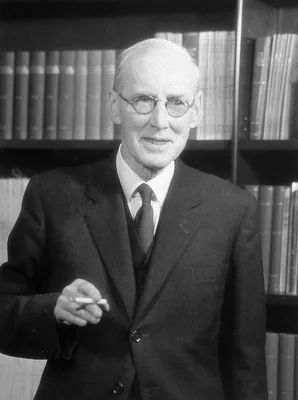
Leiper identified the snail responsible for the transmission of Schistosoma mansoni and S. haematobium.
1985 CE
#10789
Serological evidence for virus related to Simian T-Lymphotropic retrovirus III in residents of West Africa.
First report of the discovery of what became known as HIV-2 by the U.S. research group led by Kanki. This group published before the French group, but the French group had reported their data one day prior to the U.S.…
2012 CE
#10876
Severe respiratory illness associated with a novel coronavirus - Saudi Arabia and Qatar, 2012.
Reports on the first two patients affected by a "new" coronavirus. The first patient, hospitalized in June 2012, died, and the other was in both pulmonary and renal failure. In this paper the CDC referenced a website …
1902 CE
#5274
Some clinical notes on a European patient in whose blood a trypanosoma was observed.
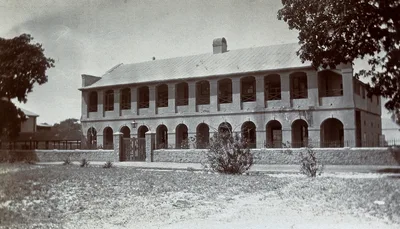
In 1901 Forde saw (but did not at first recognize as such) trypanosomes in the blood of a patient in Gambia. (See No. 5275.)
1905 CE–1911 CE
#5365
The anatomy and life history of Agchylostoma duodenale Dub. A. monograph. 2 pts.
Vols. 3 and 4 of Records of the School of Medicine, Cairo. In 1898 Looss discovered that hookworm larvae can penetrate the skin. His monograph epitomized all knowledge of the condition to 1911.
1927 CE
#5350.8
The insect transmission of Onchocerca volvulus (Leuckart, 1893), the cause of worm nodules in man in Africa.
The fly Simulium damnosum shown to be the vector of onchocerciasis.
1905 CE
#5318
The nature of tick fever in the eastern part of the Congo Free State.
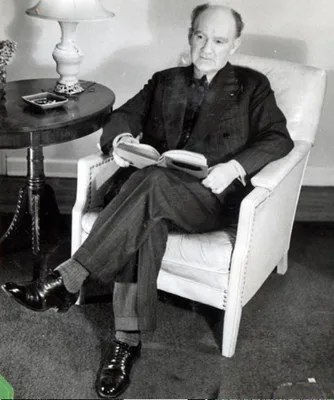
Independently of Ross and Milne, Dutton and Todd demonstrated relapsing fever in monkeys conveyed by infected ticks, Omithodorus moubata. The organism was named Sp. (now Borrelia) duttoni. Both Dutton and Todd contrac…
1906 CE
#5111.1
Über Cholera- und choleraähnliche Vibrionen unter den aus Mekka zurückkehrenden Pilgern.
Isolation of El Tor vibrio, a particular strain of the bacterium Vibrio cholerae. Gotschlich first identified this strain in 1905 at a quarantine camp on the Sinai Peninsula in El Tor, Egypt . The vibrios were found i…
1944 CE
#8470
Une maladie Égyptienne: l'hématurie parasitaire.
1940 CE
#4661
Virus filtrant pathogène pour l’homme et les animaux de laboratoire, et à affinité meningée et pulmonaire.
“Durand’s disease” – D virus infection. Durand isolated the virus from his own blood. See also the paper by G. M. Findlay, Trans. roy. Soc. trop. Med., 1942, 35, 303-18.
1952 CE
#7864
Zika virus (I). Isolations and serological specificity.

First description of Zika virus, an arbovirus native to Africa. The authors named the virus after the Zika forest in Uganda, where they were searching for Yellow Fever. Instead they isolated a new virus in samples tak…
1952 CE
#10939
Zika virus. (II). Pathogenicity and physical properties.
Dick's second paper on the Zika virus, immediately following his first paper in the same volume of the same journal (see no. 7864). First statement that the Aedes aegypti mosquito is the vector of transmission of the …
1886 CE
#5186
Zur Aetiologie der Dysenterie in Aegypten.
Kartulis discovered amoebae in liver abscess. It was principally through the work of Kartulis that amoebae came to be considered the cause of dysentery in man.