
Facets
Browse across eight MeSH (opens in new tab) facets — era, geography, science, specialty, technology, history, culture, and reference. Select one tag per group; counts update across the others.
Clear filtersFacet filters
Geography
Specialties & Disease
- Anatomy & Pathology 12
- Cardiology & Blood 6
- Neurology & Psychiatry 5
- Obstetrics & Reproductive 4
- Infectious Disease (General) 12
- Surgery & Anesthesia 14
- Public Health 28
- Immunology & Dermatology 7
- General Clinical Medicine 6
- Military Medicine 21
- Psychology 0
- Alternative & Fringe Medicine 24
- Pediatrics 3
- Ophthalmology & Vision 13
- ENT & Hearing 0
- Urology & Nephrology 1
- Gastroenterology & Hepatology 1
- Pulmonary & Respiratory 1
- Rheumatology, Rehab & Pain 0
- Internal, Emergency & Geriatric 0
- Veterinary Medicine 8
- Epidemiology & Demography 16
- Physiology & Embryology 1
- Dentistry 6
- Plagues & Epidemics 69
- Microbiology & Virology 44
Social & Historical Studies
Institutions & Culture
Reference & Scholarly Works
Drugs & Technology
69 entries match Africa & Middle East [Z01.058.500] · Plagues & Epidemics [C01.252]
1940 CE
#10951
A neurotropic virus isolated from the blood of a native in Uganda.
Order of authorship in the original paper: Smithburn, Hughes, Burke. In 1937 the authors isolated a virus from the blood of an adult female with fever from the Omogo West Nile district of Uganda, and named it West Nil…
1779 CE
#9501
A physical journal kept on board H. M. Ship Rainbow during three voyages to the coast of Africa and the West Indies, in the years 1772, 1773, and 1774: To which is prefixed, a particular account of the remitting fever which happened on board of His Majesty's Sloop Weasel, on that coast, in 1769.
2000 CE
#10033
A Plague of paradoxes: Aids, culture, and demography in Northern Tanzania.
1831 CE
#10790
A practical medico-historical account of the western coast of Africa: Embracing a topographical description of its shores, rivers, and settlements, with their seasons and comparative healthiness: Together with the causes, symptoms, and treatment, of the fevers of western Africa, and a similar account respecting the other diseases which prevail there.

Digital facsimile from the Internet Archive at this link.
1958 CE–1959 CE
#2660.12
A sarcoma involving the jaws in African children.
Burkitt’s lymphoma (African lymphoma), first described in detail by Sir Albert Cook, a medical missionary, but not published by him.
2020 CE
#12596
A sensory appendage protein protects malaria vectors from pyrethroids.
Researching how the malarial mosquito A. gambiae developed resistance to common pyrethroid insecticides, the authors discovered how natural selection had enabled this insect population to develop resistance. They anal…
1791 CE
#9522
A treatise of the plague: Containing an historical journal, and medical account, of the plague, at Aleppo, in the years 1760, 1761, and 1762.
Digital facsimile from the Internet Archive at this link.
1803 CE
#5266
An account of the native Africans in the neighbourhood of Sierra Leone; to which is added, an account of the present state of medicine among them. 2 vols.
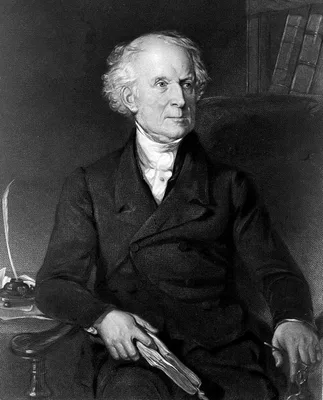
In his travels in Africa, Winterbottom, physician to the Colony of Sierra Leone (now Republic of Sierra Leone) on the west coast of Africa, saw sleeping sickness, which he described in vol. 2, pp. 29-31, as a species …
1795 CE
#5336.3
An essay on the malignant pestilential fever introduced into the West Indian Islands from Boullam, on the coast of Guinea, as it appeared in 1793 and 1794.
Chisholm, "Surgeon to his Majesty's Ordnance in Grenada," was apparently the first to observe the mode of transmission of the Guinea worm, Dracunculus medinensis. Chishom was also one of the first to recognize that th…
1858 CE
#5270
Arsenic as a remedy for the tsetse bite.
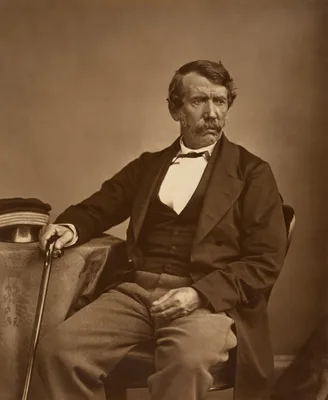
Livingstone was probably the first to administer arsenic for the treatment of “nagana”, a disease of horses caused by trypanosomes. This followed a suggestion by James Braid. Digital facsimile from PubMedC…
1883 CE
#5923
Bericht über die Thätigkeit der deutschen Cholerakommission in Aegypten und Ostindien.
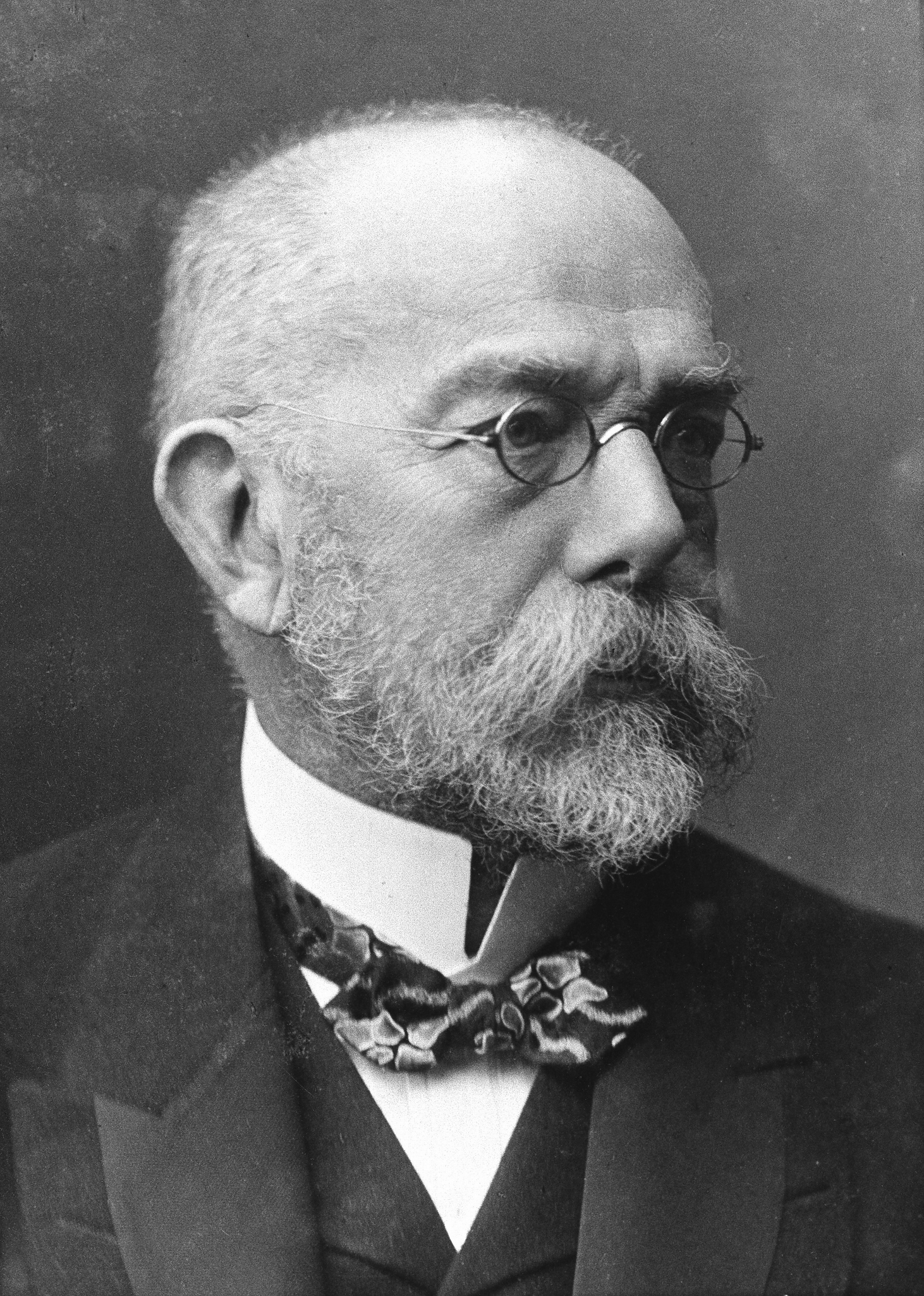
Koch–Weeks bacillus, Hemophilus conjunctivitidis, or Hemophilus aegyptius. Koch discovered the bacilli of two varieties of Egyptian conjunctivitis. See also No. 5930.
2001 CE
#10091
Black death, white medicine: Bubonic plague and the politics of public health in colonial Senegal, 1914-1945.
2006 CE
#11041
Chimpanzee reservoirs of pandemic and nonpandemic HIV-1.

Order of authorship in the original paper: Keele, Van Heuverswyn, Li, Hahn. Definitive proof that SIVcpz circulated and existed in wild chimps in a given area of Africa, and that a mutation of this specific SIV in Afr…
1876 CE
#10681
Cholera epidemics in East Africa. An account of the several diffusions of the disease in the country from 1821 till 1872, with an outline of the geography, ethnology, and trade connections of the regions through which the epidemics passed.
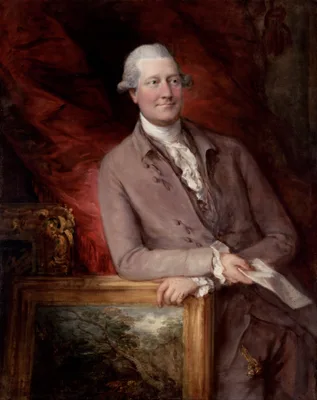
Digital facsimile from the Internet Archive at this link.
1799 CE
#9070
Ensaios sobre algumas enfermidades d'Angola....
Azeredo noted that the tropical fevers found in Brazil and Angola were very similar. He claimed to have achieved excellent results with his “new method” of treatment, which included the use of quinine, nux…
1931 CE
#5541
Enzootic hepatitis or Rift Valley fever. An undescribed virus disease of sheep, cattle and man from East Africa.

First description.
2019 CE
#13797
Eradicating smallpox in Ethiopia. Peace Corps Volunteers' Accounts of their Advantures, Challenges and Achievements. Edited by James W. Skelton, Gene L. Bartley, John Scott Porterfield, Alan Schnur.
1891 CE
#5272
Étude sur les parasites du sang chez les paludiques.
Nepveu, whilst in Algeria, was the first to see trypanosomes in human blood.
1986 CE
#9331
Evidence for human infection with an HTLV III/LAV-like virus in Central Africa, 1959.

Order of authorship in the original paper: Nahmias, Weiss, Yao...Kanki, Essex. The authors presented evidence for the first or earliest infection with HIV in a human. This paper reported on a patient from Kinshasa, Za…
1896 CE
#11077
Further report on the tsetse fly disease or nagana, in Zululand.
In this more-detailed follow-up to his "preliminary" paper of 1895 published in Durban, South Africa, Bruce provided definitive proof that the Trypanosoma was the cause of nagana, and the tsetse fly was the vector of …
1999 CE
#10031
Histories of sexually transmitted diseases and HIV/AIDS in Sub-Saharan Africa. Edited by Philip W, Setel, Milton J. Lewis, and Maryinez Lyons.
1997 CE
#8237
Ibn Al-Jazzār on sexual diseases and their treatment: A critical edition of Zād al-musāfir wa-qūt al-hādir. Translated and edited by Gerrit Bos.
1858 CE
#12482
Impressions of Western Africa. With remarks on the diseases of the climate and a report on the peculiarities of trade up the rivers in the Bight of Biafra.
Digital facsimile from Google Books at this link.
2000 CE
#8504
Indigenous theories of contagious disease.
1986 CE
#10788
Isolation of a new human retrovirus from West African patients with AIDS.
HIV-2 was discovered essentially simultaneously by French and U.S. teams. This was the first publication by the French team. Order of authorship of the original publication was Clavel, Guettard, Brun-Vezinet. See thei…
1988 CE
#11542
La médecine coloniale: Mythe et réalités.
1970 CE
#5546.4
Lassa fever, a new virus disease of man from West Africa. I. Clinical description and pathological findings.
An arenovirus infection first noted in Lassa, N. E. Nigeria, in 1969. With J. M. Baldwin, D. J. Gocke, and J. M. Troup.
1970 CE
#5546.5
Lassa fever, a new virus disease of man from West Africa. III. Isolation and characterization of the virus.
Preliminary note in Nature (Lond.), 1970, 227, 174. Lassa Hemorrhagic Fever is endemic to the West African countries of Nigeria, Guinea, Liberia and Sierra Leone.
1932 CE
#12051
Le pèlerinage de la Mecque au point de vue religieux, social et sanitaire par le docteur Duguet. Avec un préface de Justin Godart.
"Duguet also served as inspector general of health services of Lebanon and Syria under the French Mandate and was responsible for the medical supervision of the pilgrimage to Mecca. The first part of the book gives so…
1996 CE
#7922
Médecine coloniale et grandes endémies en Afrique 1900-1960. Lèpre, trypanosomiase humaine et onchocercose.
1843 CE
#10737
Medical history of the expedition to the Niger during the years 1841-42, comprising an account of the fever which led to its abrupt termination.
McWilliam included a history of yellow fever, pathology, description of symptoms, sequences, causes, treatment. He also described the state of medicine among the Africans. He specifically described the ventilation of …
1800 CE–1801 CE
#5837
Mémoire sur l’ophtalmie régnante en Egypte.
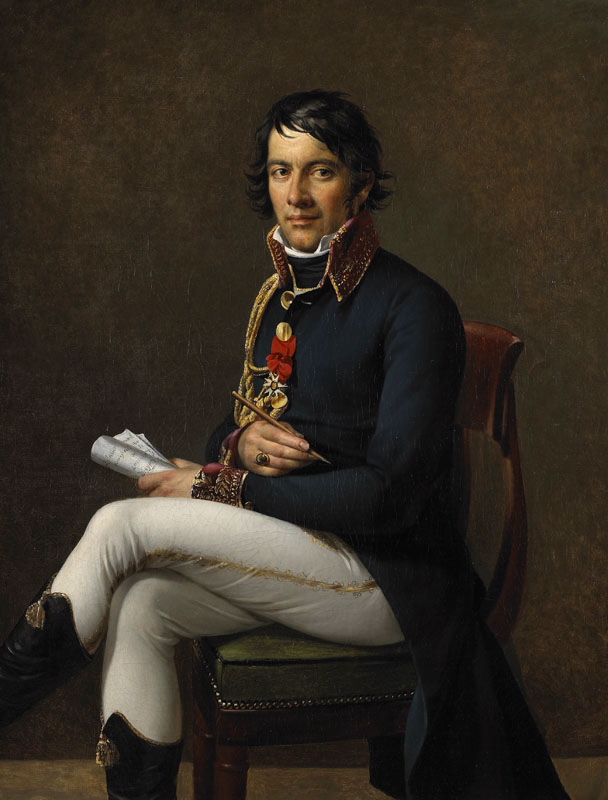
The great military surgeon Larrey served during the Napoleonic campaign in Egypt, where he was the first to observe the contagiousness of trachoma shortly after the successful invasion in 1798. The disease spread to E…
1822 CE
#9071
Memoria sobre a virtude toenifuga da romeira, com observações zoologicas e zoonomicas relativas á toenea, e com huma estampa.
On the use of a root medicine to treat tapeworms, roundworms and similar parasites. The author refers to cases from Portuguese Africa, India and Brazil, and gives clinical observations based on his own case studies, s…
1857 CE
#5269
Missionary travels and researches in South Africa.
Livingstone gave an accurate account of the tsetse fly Glossina morsitans and of the disease in cattle following its bite (see pp. 80-83; picture of the tsetse fly on p. 571). In his time the bite of the fly was thoug…
1756 CE
#5290
Natural history of Aleppo and parts adjacent.
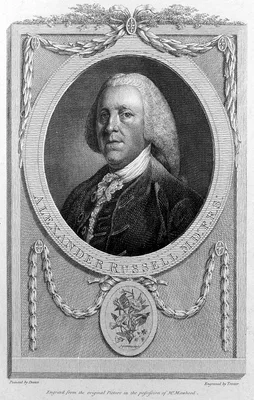
Includes (Chap, iv) a good account of “Aleppo boil”, which Russell found to be endemic in Aleppo. Digital facsimile from the Internet Archive at this link.
1952 CE
#10940
Neutralizing antibodies against certain recently isolated viruses in the sera of human beings residing in East Africa.
First report of human illness caused by Zika virus, detected in Uganda and Tanzania. 38 patients had neutralizing antibodies to Zika virus in their blood serum, proving that they had been infected by the virus. (Thank…
1840 CE
#5267
Observations on the disease lethargus: with cases and pathology.

Clarke left a detailed account of African trypanosomiasis; he saw cases of the disease while serving as a colonial surgeon at Sierra Leone, and named it “narcoleptic dropsy”.
1801 CE
#12053
Observations sur la maladies appelée peste, le flux dissentérique, l'ophtalmie d'Égypte, et les moyens de s'en préserver. Avec des notions sur la fièvre jaune de Cadix, et les projet et plan d'un hôpital, pour le traitement maladies épidémiques et contagieuses.
At the time of publication Assalini, a military surgeon with Napoleon, characterized himself on the title page as "Docteur en Médecine et Chirugien de 1re classe de la Garde des Consuls..." Digital facsimile fr…
2010 CE
#11076
Odorant reception in the malaria mosquito Anopheles gambiae.

Order of authorship in the original publication: Carey, Wang, ... Carlson. The authors showed that besides CO2, the odorant receptors in the malaria mosquistoes Anopheles gambiae are sensitive to other "mostly sweat" …
1903 CE
#5276
On the discovery of a species of trypanosoma in the cerebrospinal fluid of cases of sleeping sickness.
While in Uganda, Castellani discovered T. gambiense in human cerebrospinal fluid. A paper in Notes Rec. roy. Soc., 1973, 23, 93-110, discounts Castellani’s claim that although he first discovered trypanosomes in…
1864 CE
#5344.5
On the endemic haematuria of the Cape of Good Hope.
Like Cobbold, Harley expressed the view that a mollusc was the intermediate host in bilharziasis.
1875 CE
#5344.10
On the presence of a Filaria in “craw-craw”.
In 1874, while examining skin snips from craw-craw patients in Ghana, during his service on the H. M. S. Decoy, the Irish surgeon O’Neill discovered the subcutaneous microfilaria. This was the earliest known vis…
1798 CE–1801 CE
#10577
Opuscules du C[itoy]en Desgenettes, Médecin en chef de l'Armée d'Orient.
A collection of nine separately printed pamphlets issued by Napoleon's press in Cairo during his Egyptian campaign. See J.-F. Hutin, "La littérature médicale de la campagne d'Égypte", Histoire des…
2015 CE
#8274
Plague and empire in the early modern Mediterranean world: The Ottoman experience, 1347-1600.
2012 CE
#8492
Plague, quarantines and geopolitics in the Ottoman empire.
An examination of Ottoman plague treatises and writers from the Black Death until 1923.
1895 CE
#5273
Preliminary report on the tsetse fly disease or nagana, in Zululand.
In 1895 Bruce found that nagana, the tsetse fly disease of Zululand, was due to a trypanosome (T. brucei). He described a hematozoon in the blood of the affected animals that had not been previously described. Digital…
1898 CE
#2457
Reise-Bericht über Rinderpest, Bubonenpest in Indien und Afrika, Tsetse-oder Surrakrankheit, Texasfieber, tropische Malaria, Schwarzwasserfieber.
1721 CE
#10651
Relation des différentes espèces de peste qui reconnaissent les orientaux, des précautions & des remèdes qu'ils prennent pour empêcher la communication & le progrès; et ce que nous devons faire à leur exemple pour nous en préserver, & nous en guérir.
Gaudereau worked as a missionary in Turkey, Armenia, Persia, and India, facing plague outbreaks several times. In Turkey he almost succumbed to the plague, himself, but was cured using local remedies. These remedies a…
1915 CE–1916 CE
#5350.4
Reports of the results of the bilharzia mission in Egypt, 1915.
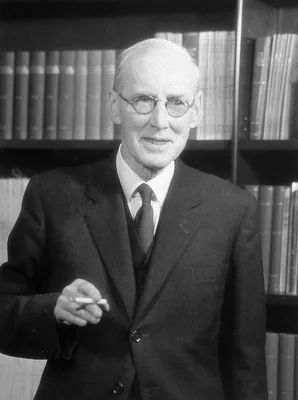
Leiper identified the snail responsible for the transmission of Schistosoma mansoni and S. haematobium.
1903 CE–1919 CE
#5277
Reports of the Sleeping Sickness Commission of the Royal Society, 1903-1912. 17 pts.

Bruce and D.N. Nabarro were sent to Africa by the Royal Society to study sleeping sickness, and in their report they showed that the tsetse fly was the vector of trypanosomiasis. They also found that Gambia fever and …