
Facets
Browse across eight MeSH (opens in new tab) facets — era, geography, science, specialty, technology, history, culture, and reference. Select one tag per group; counts update across the others.
Clear filtersFacet filters
Geography
Specialties & Disease
- Anatomy & Pathology 8
- Cardiology & Blood 2
- Neurology & Psychiatry 12
- Obstetrics & Reproductive 3
- Infectious Disease (General) 5
- Surgery & Anesthesia 13
- Public Health 38
- Immunology & Dermatology 10
- General Clinical Medicine 78
- Military Medicine 25
- Psychology 3
- Alternative & Fringe Medicine 16
- Pediatrics 4
- Ophthalmology & Vision 6
- ENT & Hearing 0
- Urology & Nephrology 0
- Gastroenterology & Hepatology 1
- Pulmonary & Respiratory 2
- Rheumatology, Rehab & Pain 1
- Internal, Emergency & Geriatric 2
- Veterinary Medicine 7
- Epidemiology & Demography 18
- Physiology & Embryology 1
- Dentistry 5
- Plagues & Epidemics 90
- Microbiology & Virology 42
Social & Historical Studies
Institutions & Culture
Reference & Scholarly Works
Drugs & Technology
18 entries match Asia & Pacific [Z01.586] · Epidemiology & Demography [N02.350 / K01.400.680]
2020 CE
#12119
A new coronavirus associated with human respiratory disease in China.


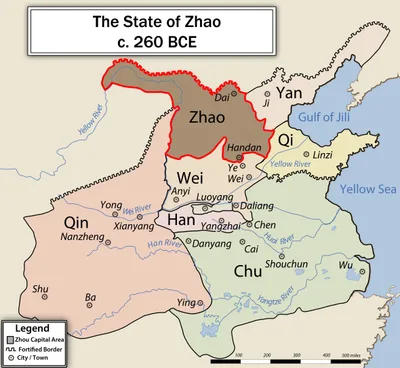
Order of authorship in the original publication: Wu, Zhao...Holmes, Zang. This was the first paper written in China, and published in a Western language, on the first COVID-19 patient admitted to any Wuhan hospital on…
2020 CE
#12074
A pneumonia outbreak associated with a new coronavirus of probable bat origin.

This article was published in Nature on 3 February 2020. Prior to that a version with a different title and numerous other co-authors was published in bioRxiv on 23 January 2020, as "Discovery of a novel coronavirus a…
1923 CE
#12109
A treatise on influenza, with special reference to the pandemic of 1918.
Sen, company doctor on the Hurmutty Tea Estate in Assam, estimated that the pandemic killed about 15,000,000 people in India.
1832 CE
#10463
A treatise on the epidemic cholera, as it has prevailed in India; together with the reports of the medical officers, made to the medical boards of the presidencies of Bengal, Madras, and Bombay, for the purpose of ascertaining a successful mode of treating that destructive disease; And a critical examination of all the works that have hitherto appeared on the subject.
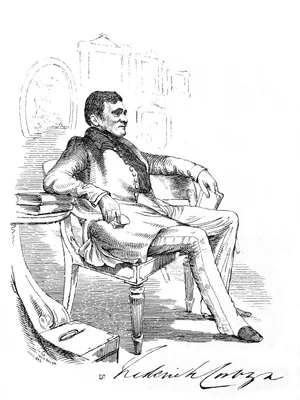
Corbyn mapped the history of cholera in India within British regimental stations. He included the date of each reported outbreak in a table of British regimental locations to describe the temporal progression of the d…
1936 CE
#4659
A virus isolated in 1935 epidemic of summer encephalitis in Japan.
T. Taniguchi, M. Hosokawa, and S. Kuga established a virus etiology for Japanese B encephalitis.
1884 CE
#9422
An epitome of the reports of the medical officers to the Chinese Imperial Maritime Customs Office from 1871 to 1882. With chapters on the history of medicine in China: Materia medica: Epidemics: Famine: Ethnology: And chronology in relation to medicine and public health.
Apart from studies of common diseases, public health issues, and epizootics, this work contains a chapter on opium smoking and a chapter on the castration of Chinese eunuchs, of which there were around a thousand work…
1993 CE
#8811
Colonizing the body: State medicine and epidemic disease in nineteenth-century India.
An authoritative account of the way that medicine was practiced in India in adaptation to the situation faced by physicians and the state in India, focusing on three major epidemic diseases: smallpox, cholera plague.
1987 CE
#12107
Death and disease in Southeast Asia: Explorations in social, medical, and demographic history. Edited by Norman G. Owen.
2002 CE
#13567
Invisible invaders: Smallpox and other diseases in Aboriginal Australia 1780-1880.
"An epidemic of smallpox among Aboriginal people around the infant colony of Sydney in 1789 puzzled the British, for there had been no cases on the ships of the First Fleet. Where, then, did the epidemic come from? "A…
1780 CE
#5469
Korte aantekening wegens eene algemeene ziekte, doorgaans genaamd knokkel-koorts.
Bylon described an epidemic of dengue which appeared in the Dutch East Indies in 1779, the first definite description of the disease. O. H. P. Pepper published a photographic reproduction of the article in Ann. med. H…
1907 CE
#12138
Plague in Queensland, 1900-1907.
Ham was Queensland's first Commissioner of Public Health. Extensively illustrated. Digital facsimile from the Internet Archive at this link.
1917 CE
#4648
The Australian epidemics of an acute polio-encephalomyelitis (X disease).
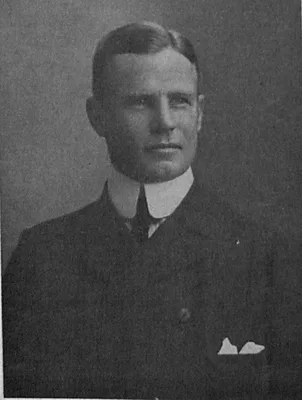
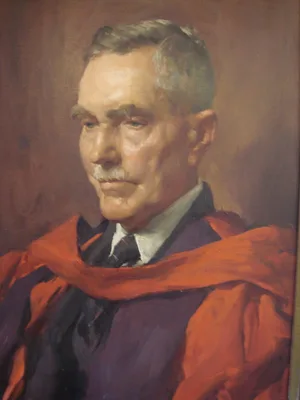
Campbell was Australia's first neurologist. This paper described Murray Valley encephalitis (Australian X disease). Cleland and Campbell isolated a virus from the cerebral tissue of three patients.
2015 CE
#11923
The influenza pandemic in Japan, 1918-1920: The first world war between humankind and a virus. Translation by Lynne E. Riggs and Takechi Manbu.

1941 CE
#5301.2
The transmission of Leishmania tropica by the bite of Phlebotomus papatasii.

Proof of the transmission of L. tropica by P. papatasii.
1942 CE
#5302
Transmission of Indian kala-azar to man by the bites of Phlebotomus argentipes, Ann. and Brun.
Successful transmission of kala-azar to man by the bite of Phlebotomus argentipes reported, showing it to be the vector of Leishmania. With H. E. Shortt and L. A. P. Anderson.
1934 CE
#4657
Übertragung des Virus von Encephalitis epidemica auf Affen.
Experimental transmission of Japanese B encephalitis.
1928 CE
#4654
Ueber die Encephalitis epidemica in Japan.
Japanese encephalitis distinguished from encephalitis lethargica.
1897 CE
#5128
Ueber die Pestepidemie in Formosa.
Ogata considered the flea (principally Xenopsylla cheopis) to be the principal, if not the sole, vector of bubonic plague infection.