
Facets
Browse across eight MeSH (opens in new tab) facets — era, geography, science, specialty, technology, history, culture, and reference. Select one tag per group; counts update across the others.
Clear filtersFacet filters
Geography
Specialties & Disease
- Anatomy & Pathology 0
- Cardiology & Blood 0
- Neurology & Psychiatry 1
- Obstetrics & Reproductive 0
- Infectious Disease (General) 0
- Surgery & Anesthesia 2
- Public Health 10
- Immunology & Dermatology 0
- General Clinical Medicine 0
- Military Medicine 3
- Psychology 0
- Alternative & Fringe Medicine 5
- Pediatrics 1
- Ophthalmology & Vision 0
- ENT & Hearing 0
- Urology & Nephrology 0
- Gastroenterology & Hepatology 0
- Pulmonary & Respiratory 0
- Rheumatology, Rehab & Pain 1
- Internal, Emergency & Geriatric 1
- Veterinary Medicine 0
- Epidemiology & Demography 0
- Physiology & Embryology 0
- Dentistry 0
- Plagues & Epidemics 2
- Microbiology & Virology 0
Social & Historical Studies
Institutions & Culture
Reference & Scholarly Works
96 entries match United States [Z01.058] · Pharmacology & Therapeutics [D01 / E02]
1843 CE
#10512
A flora of the state of New-York, comprising full descriptions of all the indigenous and naturalized plants hitherto discovered in the state; with remarks on their economical and medicinal properties. 2 vols.
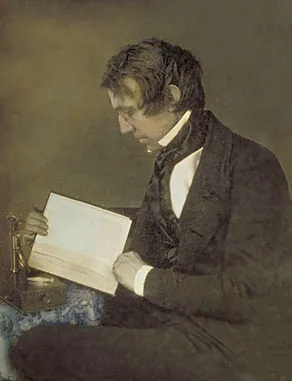
For a long time this was the most comprehensive botany of any U.S. state. Digital facsimile from Biodiversity Heritage Library at this link.
1924 CE–1929 CE
#7097
A bibliography of American natural history. The pioneer century. The role played by the scientific societies; scientific journals; natural history museums and botanic gardens; state geological and natural history surveys; federal exploriing expeditions in the rise and progress of American botany, geology, mineralogy, paleontology and zoology. 3 vols.
Digital facsimile from the Internet Archive at this link.
1826 CE
#10513
A compendium of the flora of the northern and middle states, containing generic and specific descriptions of all the plants, exclusive of the cryptogamia, hitherto found in the United States, north of the Potomac.
Published after Torrey's appointment as profess or chemistry at West Point, in a small, handy format for botanical students, that "its small size will enable them to use it without inconvenience in their herborization…
2015 CE
#10275
A Cree healer and his medicine bundle: Revelations of indigenous wisdom: Healing plants, practices, and stories.

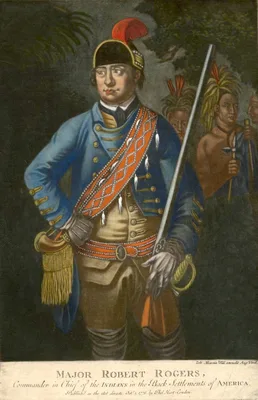
"With the rise of urban living and the digital age, many North American healers are recognizing that traditional medicinal knowledge must be recorded before being lost with its elders. A Cree Healer and His Medicine B…
1969 CE
#8415
A guide to medicinal plants of Appalachia. (U.S.D.A. Forest Service Research Paper NE-138).;
Digital facsimile from www.fs.fed.us at this link.
1821 CE–1824 CE
#13911
A sketch of the botany of South-Carolina and Georgia. 2 vols.
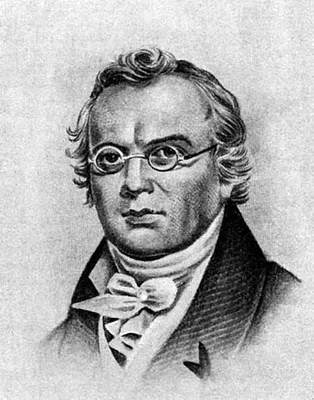
A founding work of botany of the American South, containing first botanical descriptions of many species. Initially published in parts from 1816 to 1824. Digital facsimile from Biodiversity Heritage Library at this link.
1822 CE
#10068
A treatise on the materia medica, intended as a sequel to the Pharmacopoeia of the United States: Being an account of the origin, qualities and medical uses of the articles and compounds, which constitute that work, with their modes of prescription and administration.
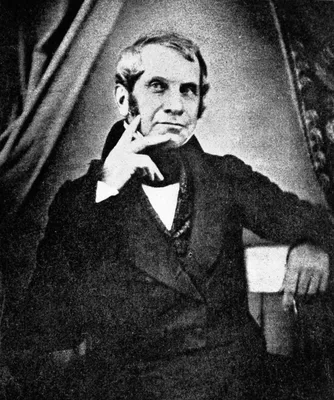
Bigelow, who with Lyman Spalding, was largely responsible for the creation and publication in 1820 of the first U.S. pharmacopeia, published this valuable explanatory and supplementary volume two years later. It was p…
2013 CE
#12102
Alcohol and opium in the Old West: Use, abuse and influence.
2005 CE
#8045
Alcoholism in America, from Reconstruction to Prohibition.
2004 CE
#8044
Altering American Consciousness: The history of alcohol and drug use in the United States, 1800-2000.
2001 CE
#10115
America's botanico-medical movements: Vox populi.
1961 CE
#11420
America's pre-pharmacopeial literature.
2004 CE
#9799
American household botany: A history of useful plants 1620-1900.
1817 CE–1820 CE
#1842
American medical botany, being a collection of the native medicinal plants of the United States, containing their botanical history and chemical analysis, and properties and uses in medicine, diet and the arts. 3 vols.
Bigelow was professor of materia medica and botany at Harvard. This work included native American remedies. It was the first book printed in the United States to include color plates printed in color. See R.J. Wolfe, …
1887 CE
#8716
American medicinal plants; an illustrated and descriptive guide to the American plants used as homoeopathic remedies: Their history, preparation, chemistry and physiological effects. Illustrated by the author.
Plates printed by chromolithography. Digital facsimile from the Internet Archive at this link.
1745 CE
#2094
An essay on the West-India dry-gripes… to which is added, an extraordinary case in physick.
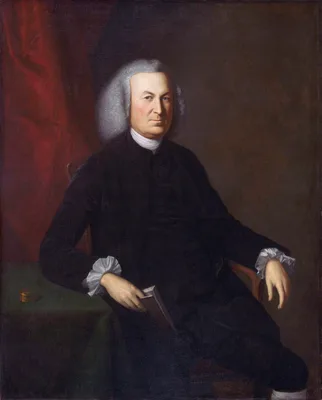
Cadwalader, an American pupil of Cheselden, left a classical account of lead colic and lead palsy. This was later shown by Benjamin Franklin, printer of the above work, to be due to the consumption of Jamaica rum whic…
1785 CE
#1836.1
Arbustrum Americanum: the American grove, or, an alphabetical catalogue of forest trees and shrubs…
Like his cousin, John Bartram (No. 1832), Marshall maintained a private botanical garden. According to W. Darlington the above work is “the first truly indigenous botanical essay published in the Western Hemisph…
2017 CE
#8517
Balm of America: Patent medicine collection.
http://americanhistory.si.edu/collections/object-groups/balm-of-america-patent-medicine-collection "The Smithsonian Institution began to collect objects related to health and medicine in 1881. It first obtained exampl…
1963 CE
#7868
Botanic manuscript of Jane Colden, 1724-1766. Edited by H.W. Rickett and E.C. Hall.
Colden was the first distinguished American woman botanist. Her work is known only from an untitled manuscript by her on the flora of the lower Hudson River Valley of New York that is preserved in the Natural History …
1814 CE
#9641
Botanic medicine: A new and complete American medical family herbal: Wherein is displayed the true properties and medical virtues of the plants, indigenous to the United States of America, together with Lewis' secret remedy newly discovered, which has been found infallible in the cure of that dreadful disease hydrophobia, produced by the bite of a mad dog.
Henry wrote that he had been a captive of the Indians during the Creek War and that he incorporated what he learned during his captivity. His work was one of the first illlustrated herbals published in the United Stat…
1956 CE
#7238
Botanical exploration of the trans-Mississippi West 1790-1850.
Reprinted with a new introduction and bibliographical supplement by Stephen Dow Beckham, Corvallis, OR: Oregon State University Press, 1991.
1975 CE
#9270
Cherokee plants their uses - a 400 year history.
2004 CE
#9766
Civil War pharmacy: A history of drugs, drug supply and provision, and therapeutics for the Union and Confederacy.
1798 CE
#9309
Collections for an essay towards a materia medica of the United States. Read before the Philadelphia Medical Society, on the twenty-first of February, 1798.
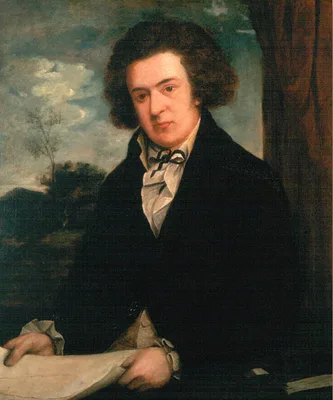
Digital facsimile of the 1798 edition from the U.S. National Library of Medicine at this link. Digital facsimile of the much-expanded third edition (1810) from Google Books at this link.
1982 CE
#9775
Dark paradise: Opiate addiction in America before 1940.
Enlarged edition retitled: Dark paradise: A history of opiate addiction in America (2002).
1751 CE
#1832
Descriptions, virtues, and uses of sundry plants of these northern parts of America, and particularly of the newly discovered Indian cure for the venereal disease.
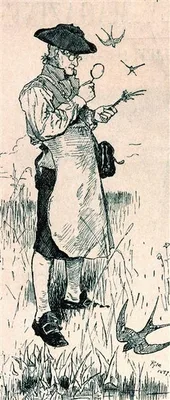
Bartram founded one of the first botanical gardens in America (at Kingsessing). Linnaeus referred to him as the “greatest natural botanist in the world”. A few copies of this 7-page work printed by Benjami…
2002 CE
#8903
Drugs in America: A historical reader. [Compiled by] David F. Musto.
1803 CE
#9310
Elements of botany, or outlines of the natural history of vegetables.
The first American textbook of botany. Digital facsimile of the revised 1804 London edition from the Hathi Trust at this link.
1933 CE
#9348
Ethnobotany of the Forest Potawatomi Indians.
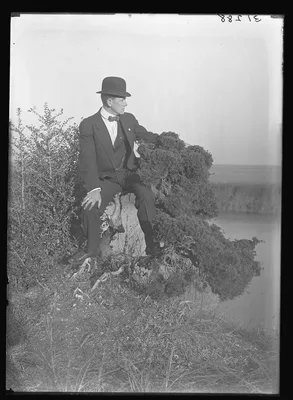
Digital facsimile from swsbm.com at this link.
1939 CE
#9323
Ethnobotany of the Hopi. Bulletin No. 15.
1923 CE
#9294
Ethnobotany of the Menomini Indians.
Digital facsimile from spiritoftherivers.wikispaces.com at this link.
1928 CE
#9289
Ethnobotany of the Meskwaki Indians.
1944 CE
#9282
Ethnobotany of the Navajo. Monographs of the School of American Research, No. 8.
Digital facsimile from uair.library.arizona.edu at this link.
1932 CE
#9295
Ethnobotany of the Ojibwe Indians.
Digital facsimile from nwic.edu at this link.
1916 CE
#9346
Ethnobotany of the Tewa Indians. Bureau of American Ethnology Bulletin 55.
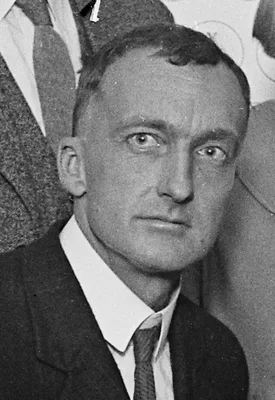
Digital facsimile from the Internet Archive at this link.
1915 CE
#9293
Ethnobotany of the Zuñi Indians. Thirtieth annual report of the Bureau of American Ethnology.
Digital facsimile from swsbm.com at this link.
1734 CE
#9675
Every man his own doctor: or, The poor planter's physician. Prescribing plain and easy means for persons to cure themselves of all, or most of the distempers, incident to this climate, and with very little charge, the medicines being chiefly of the growth and production of this country.
The first medical hand-book for lay persons written and published in America. It is probable that this book was first published in 1734, though the earliest recorded copy or copies appear to be the "second edition" wi…
1814 CE
#7876
Flora Americae septentrionalis; or, a systematic arrangement and description of the plants of North America. Containing, besides what have been described by preceding authors, many new and rare species, collected during twelve years travels and residence in that country. 2 vols.
The first survey of all plants of North America above Mexico, including more than 3,000 species and 470 genera; describes more than 100 species collected by the Lewis and Clark expedition. Digital facsimile from Botan…
1803 CE
#12399
Flora Boreali-Americana, sistens caracteres plantarum quas in America septentrionali collegit et detexit Andreas Michaux, Instituti Gallici Scientiarum, necnon Societatis Agriculturae Caroliniensis socius. Tabulis Aeneis 51 ornata [after Pierre-Joseph Redouté]. 2 vols.
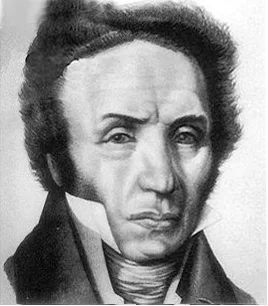
"The French government sent Michaux to the United States to collect North American seeds, shrubs, and trees ; he landed at New York City on 1 October, accompanied by his son [François-André Michaux] and …
1743 CE
#12478
Flora Virginica exhibens plantas quas v. c. Johannes Clayton in Virginia observavit atque collegit. Easdem method sexuali-disposuit, ad genera propria retulit, nominbus specificis insignivit, & minus cognitas descriptsit.
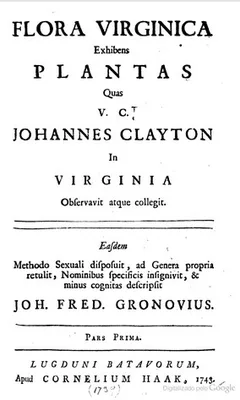
The first flora of Virginia. As stated on the title page, Gronovius, a Dutch botanist, based this work on specimens collected by the Virginia plant collector and botanist John Clayton. While Clayton supplied the speci…
2001 CE
#9280
Healing plants: Medicine of the Florida Seminole Indians.
1996 CE
#9787
Hep-cats, narcs, and pipe dreams: A history of America's romance with illegal drugs.
1767 CE
#7679
Hortus Europae americanus, or, A collection of 85 curious trees and shrubs: the produce of North America, adapted to the climates and soils of Great-Britain, Ireland, and most parts of Europe, &c together with their blossoms, fruits and seeds, observations on their culture, growth, constitution and virtues, with directions how to collect, pack up and secure them in their passage.
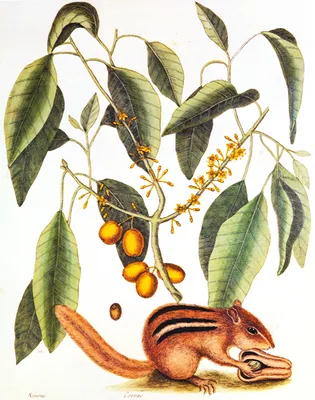
Digital facsimile from the Biodiversity Heritage Library at this link. First published as Hortus Britanno-Americanus (1763).
1885 CE
#10575
Indigenous flowers of the Hawaiian Islands: Forty-four plates painted in water-colours and described by Mrs. Francis Sinclair, Jr.
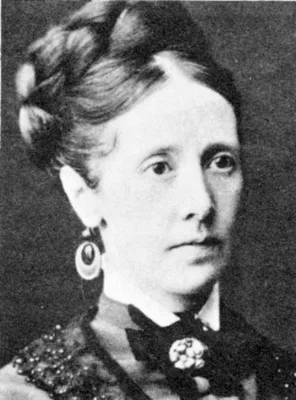
The first color-illustrated book on Hawaiian flora. "The following collection of flowers was made upon the islands of Kauai and Niihau, the most northern of the Hawaiian archipelago. It is not by any means a large col…
1997 CE
#8544
Iroquois medical botany.
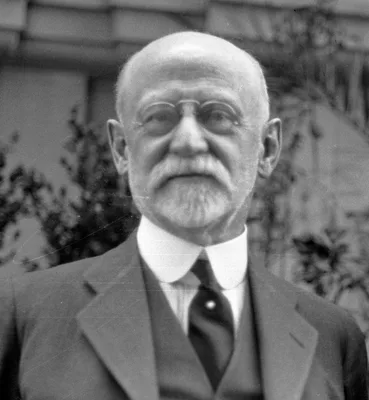
"The first book to provide a guide to understanding the use of herbal medicines in traditional Iroquois culture. The world view of the Iroquois League or Confederacy - the Mohawk, Oneida, Onondaga, Cayuga, Seneca, and…
2011 CE
#7805
Knowing nature: Art and science in Philadelphia, 1740-1840. Edited by Amy R. W. Meyers with the assistance of Lisa L. Ford.
Large format, finely produced with excellent color plates.
1787 CE
#1837
Materia medica Americana, potissimum regni vegetabilis.
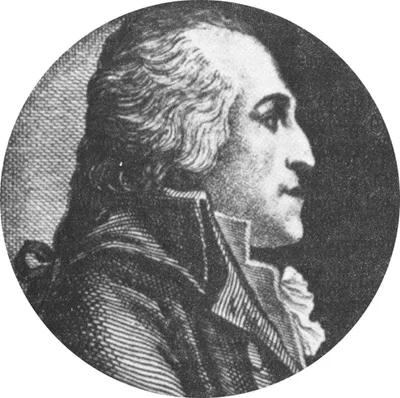
Schoepff came to America in 1777 as a surgeon with the Hessian troops employed by the British Forces. He returned to Germany in 1784 and compiled the first full American materia medica, describing about 400 plants, in…
1847 CE
#8545
Medical botany: or, Descriptions of the more important plants used in medicine, with their history, properties, and mode of administration.
The author intended to update and correct the earlier works on American materia medica by Barton, Bigelow and Rafinesque, and to make this information available at a reasonable price. Digital facsimile from the Biodiv…
1828 CE–1830 CE
#1849
Medical flora; or, manual of the medical botany of the United States of North America. Containing a selection of above 100 figures and descriptions of medical plants, with their names, qualities, properties, history &c; and notes or remarks on nearly 500 equivalent substitutes. 2 vols.
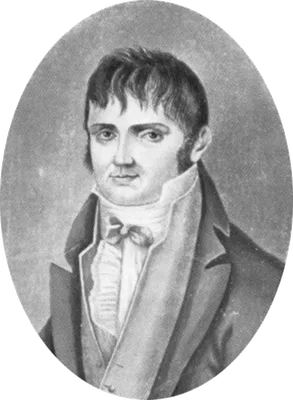
Rafinesque was a great botanist, conchologist, archaeologist, and economist. Born in a suburb of Istanbul, he was also a world citizen and a prolific writer with 939 works to his credit. He died in extreme poverty in …
1999 CE
#9292
Medicinal flora of the Alaska natives. A compilation of knowledge from literary sources of Aleut, Alutiiq, Athabascan, Eyak, Haida, Inupiat, Tlingit, Tsimshian, and Yupik traditional healing methods using plants.
Digital facsimile from uaa.alaska.edu at this link.