
Facets
Browse across eight MeSH (opens in new tab) facets — era, geography, science, specialty, technology, history, culture, and reference. Select one tag per group; counts update across the others.
Clear filtersFacet filters
Geography
Specialties & Disease
- Anatomy & Pathology 0
- Cardiology & Blood 0
- Neurology & Psychiatry 1
- Obstetrics & Reproductive 0
- Infectious Disease (General) 0
- Surgery & Anesthesia 2
- Public Health 10
- Immunology & Dermatology 0
- General Clinical Medicine 0
- Military Medicine 3
- Psychology 0
- Alternative & Fringe Medicine 5
- Pediatrics 1
- Ophthalmology & Vision 0
- ENT & Hearing 0
- Urology & Nephrology 0
- Gastroenterology & Hepatology 0
- Pulmonary & Respiratory 0
- Rheumatology, Rehab & Pain 1
- Internal, Emergency & Geriatric 1
- Veterinary Medicine 0
- Epidemiology & Demography 0
- Physiology & Embryology 0
- Dentistry 0
- Plagues & Epidemics 2
- Microbiology & Virology 0
Social & Historical Studies
Institutions & Culture
Reference & Scholarly Works
Drugs & Technology
5 entries match United States [Z01.058] · Alternative & Fringe Medicine [G02.403.750 / M01] · Pharmacology & Therapeutics [D01 / E02]
2015 CE
#10275
A Cree healer and his medicine bundle: Revelations of indigenous wisdom: Healing plants, practices, and stories.

"With the rise of urban living and the digital age, many North American healers are recognizing that traditional medicinal knowledge must be recorded before being lost with its elders. A Cree Healer and His Medicine B…
1887 CE
#8716
American medicinal plants; an illustrated and descriptive guide to the American plants used as homoeopathic remedies: Their history, preparation, chemistry and physiological effects. Illustrated by the author.
Plates printed by chromolithography. Digital facsimile from the Internet Archive at this link.
1963 CE
#7868
Botanic manuscript of Jane Colden, 1724-1766. Edited by H.W. Rickett and E.C. Hall.
Colden was the first distinguished American woman botanist. Her work is known only from an untitled manuscript by her on the flora of the lower Hudson River Valley of New York that is preserved in the Natural History …
1798 CE
#8654
The influence of metallic tractors on the human body, in removing various painful inflammatory diseases, such as rheumatism, pleurisy, some gouty affections, &c. &c: Lately discovered by Dr. Perkins, of North America; and demonstrated in a series of experiments and observations....by which the importance of the discovery is fully ascertained, and a new field of enquiry opened in the modern science of Galvanism, or animal electricity
In 1795 Dr. Elisha Perkins (1741-1799) of Connecticut introduced the use of “Metallic Tractors” for the treatment of a wide range of disorders, including pains in the head, face, teeth, breast, side, stoma…
2001 CE
#9408
The people's doctors: Samuel Thomson and the American Botanical Movement 1790-1860.
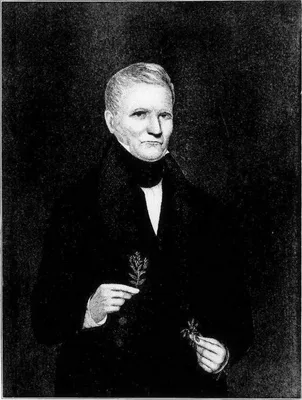
"Samuel Thomson, born in New Hampshire in 1769 to an illiterate farming family, had no formal education, but he learned the elements of botanical medicine from a "root doctor," who he met in his youth. Thomson sought …