
Facets
Browse across eight MeSH (opens in new tab) facets — era, geography, science, specialty, technology, history, culture, and reference. Select one tag per group; counts update across the others.
Clear filtersFacet filters
Geography
Specialties & Disease
- Anatomy & Pathology 1
- Cardiology & Blood 1
- Neurology & Psychiatry 1
- Obstetrics & Reproductive 1
- Infectious Disease (General) 0
- Surgery & Anesthesia 1
- Public Health 12
- Immunology & Dermatology 0
- General Clinical Medicine 0
- Military Medicine 5
- Psychology 0
- Alternative & Fringe Medicine 3
- Pediatrics 0
- Ophthalmology & Vision 0
- ENT & Hearing 0
- Urology & Nephrology 0
- Gastroenterology & Hepatology 1
- Pulmonary & Respiratory 0
- Rheumatology, Rehab & Pain 0
- Internal, Emergency & Geriatric 0
- Veterinary Medicine 0
- Epidemiology & Demography 3
- Physiology & Embryology 0
- Dentistry 0
- Plagues & Epidemics 6
- Microbiology & Virology 1
Social & Historical Studies
Institutions & Culture
Reference & Scholarly Works
Drugs & Technology
6 entries match United States [Z01.058] · Plagues & Epidemics [C01.252] · Zoology & Animal Sciences [K01.900.500.750]
1794 CE
#5453.1
A narrative of the proceedings of the black people during the late awful calamity in Philadelphia, in the year 1793: and a refutation of some censures thrown upon them in some late publications.

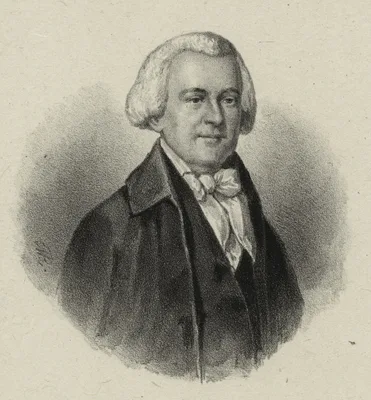
A refutation of slights by Matthew Carey in his Short account of the malignant fever, lately prevalent in Philadelphia (1793; No. 5451) to the important contributions of black people, many of whom served as nurses and…
1793 CE
#5451
A short account of the malignant fever, lately prevalent in Philadelphia: With a statement of the proceedings that took place on the subject in different parts of the United States.

Carey was a Philadelphia publisher and economist rather than a physician. In this little book, which passed through four editions in a few months, Carey left a graphic description of the great yellow fever epidemic of…
1981 CE
#8091
Bad blood: The Tuskegee syphilis experiment.

"From 1932 to 1972, the United States Public Health Service conducted a non-therapeutic experiment involving over 400 black male sharecroppers infected with syphilis. The Tuskegee Study had nothing to do with treatmen…
1979 CE
#10888
Human babesiosis on Nantucket Island, USA: Description of the vector, Ixodes dammini, N. Sp. (Acarina: Ixodidae)
Order of authorship in the original paper was Spielman, Clifford, Piesman. The authors identified and described the insect vector of Babesiosis. This was a new species; the same species causes Lyme disease. (Thanks to…
2011 CE
#10360
Miraculous plagues: An epidemiology of early New England narrative.
1832 CE
#10812
Observations on the epidemic now prevailing in the city of New-York; called the Asiatic or spasmodic cholera; with advice to the planters of the South, for the medical treatment of their slaves.
Digital facsimile from the Internet Archive at this link.