
Facets
Browse across eight MeSH (opens in new tab) facets — era, geography, science, specialty, technology, history, culture, and reference. Select one tag per group; counts update across the others.
Clear filtersFacet filters
Geography
Specialties & Disease
- Anatomy & Pathology 0
- Cardiology & Blood 1
- Neurology & Psychiatry 1
- Obstetrics & Reproductive 2
- Infectious Disease (General) 0
- Surgery & Anesthesia 1
- Public Health 5
- Immunology & Dermatology 0
- General Clinical Medicine 2
- Military Medicine 5
- Psychology 0
- Alternative & Fringe Medicine 6
- Pediatrics 0
- Ophthalmology & Vision 0
- ENT & Hearing 0
- Urology & Nephrology 0
- Gastroenterology & Hepatology 1
- Pulmonary & Respiratory 0
- Rheumatology, Rehab & Pain 0
- Internal, Emergency & Geriatric 0
- Veterinary Medicine 0
- Epidemiology & Demography 7
- Physiology & Embryology 0
- Dentistry 0
- Plagues & Epidemics 8
- Microbiology & Virology 0
Social & Historical Studies
Institutions & Culture
Reference & Scholarly Works
Drugs & Technology
8 entries match United States [Z01.058] · Plagues & Epidemics [C01.252] · Race, Ethnicity & Colonial Medicine [K01.900.850]
1794 CE
#5453.1
A narrative of the proceedings of the black people during the late awful calamity in Philadelphia, in the year 1793: and a refutation of some censures thrown upon them in some late publications.
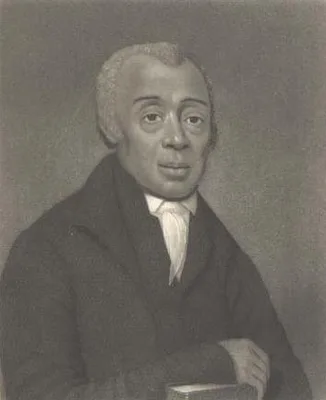
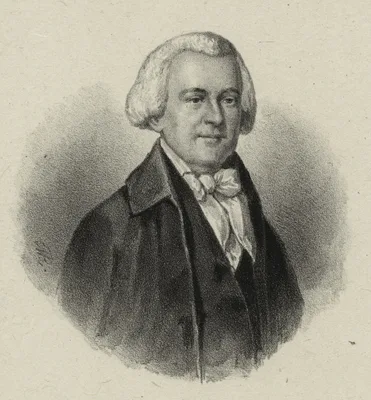
A refutation of slights by Matthew Carey in his Short account of the malignant fever, lately prevalent in Philadelphia (1793; No. 5451) to the important contributions of black people, many of whom served as nurses and…
1793 CE
#5451
A short account of the malignant fever, lately prevalent in Philadelphia: With a statement of the proceedings that took place on the subject in different parts of the United States.
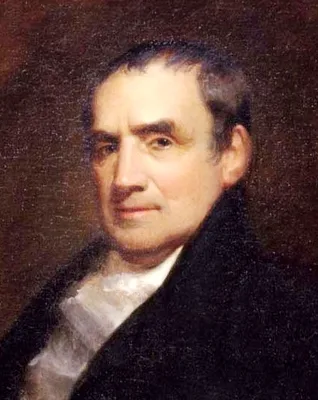
Carey was a Philadelphia publisher and economist rather than a physician. In this little book, which passed through four editions in a few months, Carey left a graphic description of the great yellow fever epidemic of…
1981 CE
#8091
Bad blood: The Tuskegee syphilis experiment.

"From 1932 to 1972, the United States Public Health Service conducted a non-therapeutic experiment involving over 400 black male sharecroppers infected with syphilis. The Tuskegee Study had nothing to do with treatmen…
2015 CE
#7504
Cherokee medicine, colonial germs: An indigenous nation’s fight against smallpox, 1518–1824.
1751 CE
#1832
Descriptions, virtues, and uses of sundry plants of these northern parts of America, and particularly of the newly discovered Indian cure for the venereal disease.
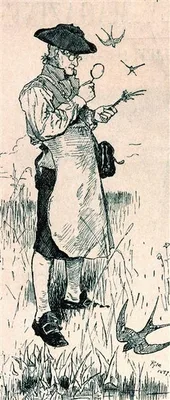
Bartram founded one of the first botanical gardens in America (at Kingsessing). Linnaeus referred to him as the “greatest natural botanist in the world”. A few copies of this 7-page work printed by Benjami…
1832 CE
#10812
Observations on the epidemic now prevailing in the city of New-York; called the Asiatic or spasmodic cholera; with advice to the planters of the South, for the medical treatment of their slaves.
Digital facsimile from the Internet Archive at this link.
2005 CE
#10515
Plague and fire: Battling black death and the 1900 burning of Honolulu's Chinatown.
2012 CE
#7891