
Facets
Browse across eight MeSH (opens in new tab) facets — era, geography, science, specialty, technology, history, culture, and reference. Select one tag per group; counts update across the others.
Clear filtersFacet filters
Geography
Specialties & Disease
- Anatomy & Pathology 0
- Cardiology & Blood 1
- Neurology & Psychiatry 1
- Obstetrics & Reproductive 1
- Infectious Disease (General) 0
- Surgery & Anesthesia 1
- Public Health 3
- Immunology & Dermatology 0
- General Clinical Medicine 0
- Military Medicine 4
- Psychology 0
- Alternative & Fringe Medicine 3
- Pediatrics 0
- Ophthalmology & Vision 0
- ENT & Hearing 0
- Urology & Nephrology 0
- Gastroenterology & Hepatology 1
- Pulmonary & Respiratory 0
- Rheumatology, Rehab & Pain 0
- Internal, Emergency & Geriatric 0
- Veterinary Medicine 0
- Epidemiology & Demography 3
- Physiology & Embryology 0
- Dentistry 0
- Plagues & Epidemics 4
- Microbiology & Virology 0
Social & Historical Studies
Institutions & Culture
Reference & Scholarly Works
Drugs & Technology
31 entries match United States [Z01.058] · Zoology & Animal Sciences [K01.900.500.750] · Race, Ethnicity & Colonial Medicine [K01.900.850]
1835 CE
#3440.1
A case of introsussception in which an operation was successfully resorted to…in December, 1831.

First operation for intussusception in the United States, performed in Rutherford County, Tennessee. The patient was a negro slave; the operation was a complete success. Reported by Wilson’s pupil, W.W. Thompson.
1794 CE
#5453.1
A narrative of the proceedings of the black people during the late awful calamity in Philadelphia, in the year 1793: and a refutation of some censures thrown upon them in some late publications.
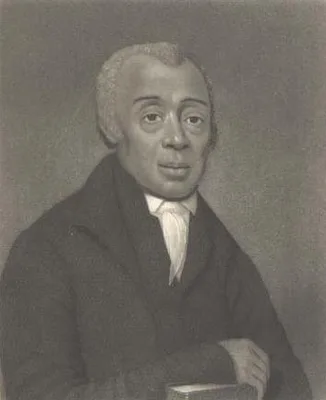
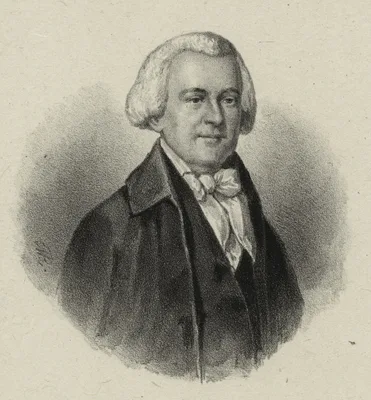
A refutation of slights by Matthew Carey in his Short account of the malignant fever, lately prevalent in Philadelphia (1793; No. 5451) to the important contributions of black people, many of whom served as nurses and…
2000 CE
#7976
A population history of the United States. Edited by Michael R. Haines and Richard H. Steckel.
From Pre-Columbian times to the present.
1793 CE
#5451
A short account of the malignant fever, lately prevalent in Philadelphia: With a statement of the proceedings that took place on the subject in different parts of the United States.
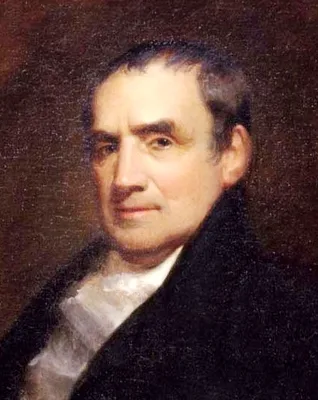
Carey was a Philadelphia publisher and economist rather than a physician. In this little book, which passed through four editions in a few months, Carey left a graphic description of the great yellow fever epidemic of…
2014 CE
#7754
African American medicine in Washington, D.C.: Healing the capital during the Civil War Era.
Concerns the role of African American nurses, doctors and surgeons during the American Civil War.
1981 CE
#8091
Bad blood: The Tuskegee syphilis experiment.

"From 1932 to 1972, the United States Public Health Service conducted a non-therapeutic experiment involving over 400 black male sharecroppers infected with syphilis. The Tuskegee Study had nothing to do with treatmen…
2006 CE
#8090
Birthing a slave: Motherhood and medicine in the Antebellum South.
2010 CE
#8085
Black physicians in the Jim Crow South.
1977 CE
#9288
Childbirth in the ghetto: Folk beliefs of negro women in a North Philadelphia hospital ward.
2001 CE
#10335
Dying in the City of the Blues: Sickle cell anemia and the politics of race and health.
"Set in Memphis, home of one of the nation's first sickle cell clinics, Dying in the City of the Blues reveals how the recognition, treatment, social understanding, and symbolism of the disease evolved in the twentiet…
1983 CE
#8082
Educating black doctors: A history of Meharry Medical College.
1984 CE
#10327
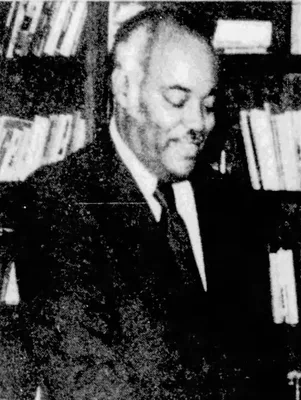
History of the black physician in Indianapolis 1870 to 1980.
2008 CE
#10798
Intensely human: The health of the black soldier in the American Civil War.

1977 CE
#10803
Medical history of a Civil War regiment: Disease in the sixty-fifth United States Colored Infantry.
1978 CE
#7047
Medicine and slavery. The diseases and health care of blacks in antebellum Virginia.
1672 CE
#1826.1
New-Englands rarities discovered: in birds, beasts, fishes, serpents, and plants of that country. Together with the physical and chyrurgical remedies wherewith the natives constantly use to cure their distempers, wounds, and sores…
The first detailed account of the natural history and botany of North America, including the first extensive study of native North American medicine.
1832 CE
#10812
Observations on the epidemic now prevailing in the city of New-York; called the Asiatic or spasmodic cholera; with advice to the planters of the South, for the medical treatment of their slaves.
Digital facsimile from the Internet Archive at this link.
2010 CE
#7752
Practicing medicine in a black regiment: The Civil War diary of Burt G. Wilder, 55th Massachusetts, edited by Richard M. Reid.
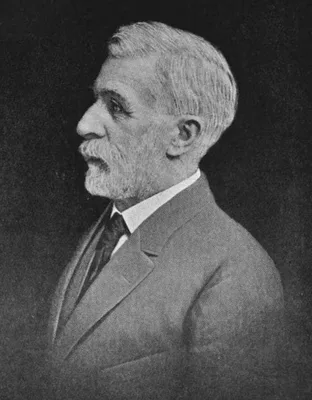
Wilder was a Harvard-trained white physician assigned to one of the first African American regiments in the American Civil War.
2007 CE
#10371
Race & medicine in nineteenth and early twentieth-century America.
1994 CE
#10090
Secret doctors: Ethnomedicine of African Americans.
"Based on an ethnographic study of the traditional medicine of African Americans in the rural southern United States, this work concentrates on the original Louisiana Territory, with its Native and African American in…
2012 CE
#8206
Sex, sickness, and slavery: Illness in the antebellum South.
1998 CE
#8205
Slavery and medicine: Enslavement and medical practices in antebellum Louisiana.
1936 CE
#9304
The ethnobiology of the Chiricahua and Mescalero Apache: A. the use of plants for food, beverages and narcotics. Ethnobiological studies in the American Southwest, Vol. 3. Biological series (Vol. 4, No. 5); Bulletin, University of New Mexico, whole, (No. 297).
1935 CE
#9303
The ethnobiology of the Papago Indians. Ethnological Studies in the American Southwest II.
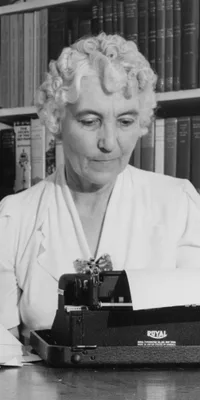
"The Tohono O’odham ... are a Native American people of the Sonoran Desert, residing primarily in the U.S. state of Arizona and the Mexican state of Sonora. Tohono O’odham means "Desert People." The federa…
1939 CE
#6594
The first Negro medical society. A history of the Medico-Chirurgical Society of the District of Columbia.
A detailed history of the “first American Negro medical society formed in America and probably in the world”. Cobb was the first black American medical historian of note.
1951 CE
#6596.1
The health of slaves on southern plantations.
Chiefly from contemporary MS records.
1912 CE
#7050
The Negro in medicine.
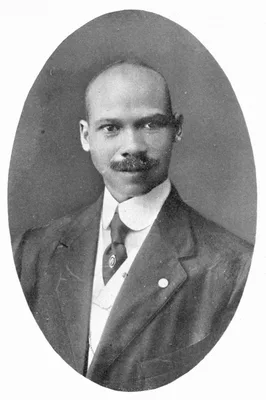
An early publication on the medical problems of blacks written by a black physician. Kenney served as school physician at Tuskegee University, was the first director of the John A. Andrew Memorial Hospital at Tuskegee…
2012 CE
#9977
The New Encyclopedia of Southern Culture: Volume 22: Science and medicine. Edited by James G. Thomas, Jr. & Charles Reagan Wilson.

1807 CE
#7049
The planter's and mariner's medical companion: treating, according to the most successful practice, I. The diseases common to warm climates and on ship board. II. Common cases in surgery, as fractures, dislocations, &c. &c. III. The complaints peculiar to women and children. To which are subjoined a dispensatory, shewing how to prepare and administer family medicines, and a glossary giving an explanation of technical terms.
Ewell, then practicing in Savannah, Georgia, wrote this self-help book for southern residents, directing his book toward plantation owners. It was "the constant friend of a large number of slave-masters. In emergencie…
2018 CE
#10755
To raise up the man farthest down: Tuskegee University's advancements in human health, 1881-1987.
2002 CE
#9624